How to Get Rid of Cockroaches in the Kitchen (Step by Step)
Roaches in the kitchen? Follow the removal plan, gel bait placement, void dusts, and the 2 to 4 week timeline, without foggers that scatter them deeper.

In this guide
The roaches running across your counter at night are almost certainly German cockroaches, a small tan species that lives its whole life indoors.
Unlike the big roaches that wander in from sewers and basements, German cockroaches breed inside the home, and the kitchen is where they breed fastest. Getting rid of them takes a program, not a single product, and the order of steps matters as much as the products.
Droppings like pepper flakes in cabinet corners, egg cases behind the fridge, and roaches scattering when a cupboard opens at night all point the same way. Our guide to the signs of a cockroach infestation covers how to confirm the problem before you spend anything.
Quick answer. Start with a full cleanout, then let gel bait do the killing. Place small dots of gel in cabinet hinges, drawer slides, and appliance gaps, dust dry voids with boric acid, and keep other food and water away so roaches eat the bait. Expect a steady decline over 2 to 4 weeks.
Why the Kitchen Is the Hub
A German cockroach needs food, water, warmth, and a tight hiding place, and a kitchen is the one room that offers all four within a few feet, with water in sink traps, grease behind the stove, and crumbs where counters meet cabinets.
The hiding places are easy to underestimate. University of Illinois Extension lists the main harborages as cracks around cabinets, spaces in and under stoves, refrigerators, and dishwashers, and crevices behind drawers and beneath the sink.
Appliance motors add steady warmth, so the gap behind your refrigerator stays warm, dark, and almost never disturbed.
Females make the kitchen problem worse because a female German cockroach carries her egg case on her body until the eggs are nearly ready to hatch.
The next generation is born in the same warm harborage, not out in the open where sprays can reach it.
What You Need
- Gel cockroach bait in syringe tubes, ideally two products with different active ingredients
- Boric acid or silica gel dust with a small bulb duster
- Vacuum cleaner with a crevice tool
- Kitchen degreaser and scrub pads
- Sticky monitoring traps
- Flashlight
- Caulk for sealing gaps
- Trash bags for cardboard and clutter
The Removal Plan, Step by Step
Step 1. Clean Out, Degrease, and Vacuum
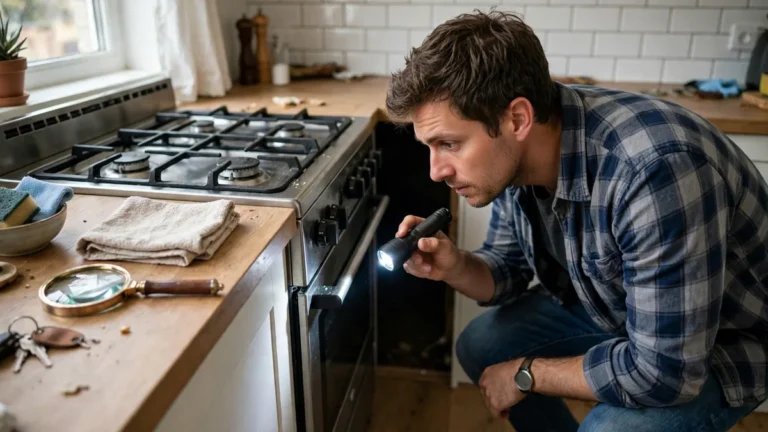
Empty the cabinets around the sink, the drawers near the stove, and the cabinet that holds the trash. You are hunting the grease film, spilled food, and droppings that feed the population, and all of it goes before bait goes down.
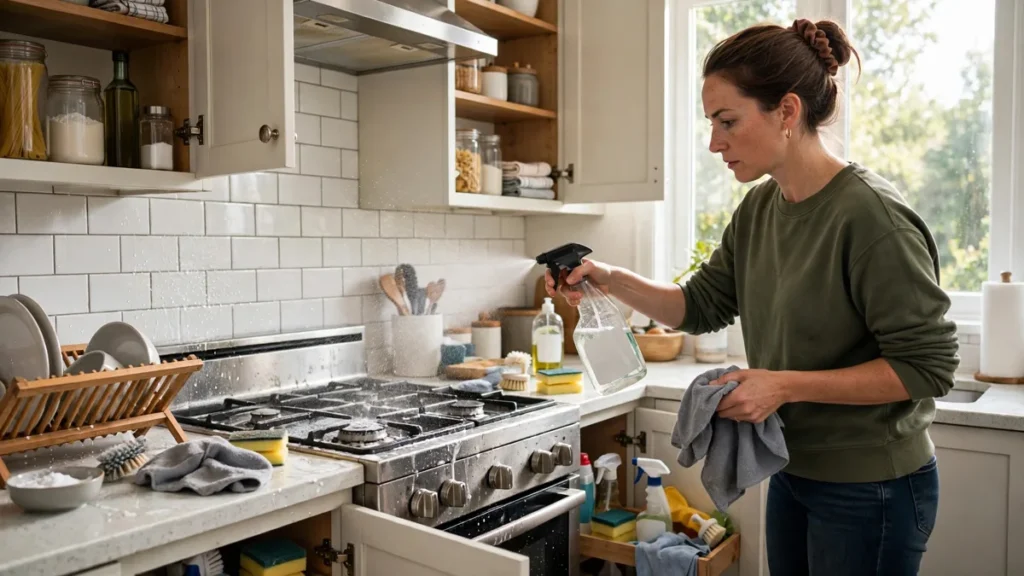
Scrub greasy surfaces with degreaser, especially the stove sides, the range hood, and the floor under the appliances. Bait competes with every crumb and grease smear in the room, and it loses in a dirty kitchen.
Then vacuum every crack you can reach with the crevice tool, along cabinet seams, drawer tracks, and the gaps beside the stove and dishwasher. Vacuuming pulls out live roaches, shed skins, and egg cases in one pass, plus the droppings that draw more roaches to the same spots.
Empty the vacuum into a bag, seal it, and take it outside as soon as you finish.
Finish by removing cardboard boxes, paper grocery bags, and stacked newspapers from the kitchen and pantry. Corrugated cardboard is a favorite harborage, and no treatment holds while it stays.
Step 2. Place Gel Bait Where Roaches Actually Live
Gel bait is the main tool for German cockroaches, and UC IPM recommends gel baits and bait stations placed near cockroach hiding areas. It works because the roaches do the distribution themselves, carrying the poison back to the harborage, where others pick it up from droppings and dead bodies.
Many small placements always beat a few big ones.
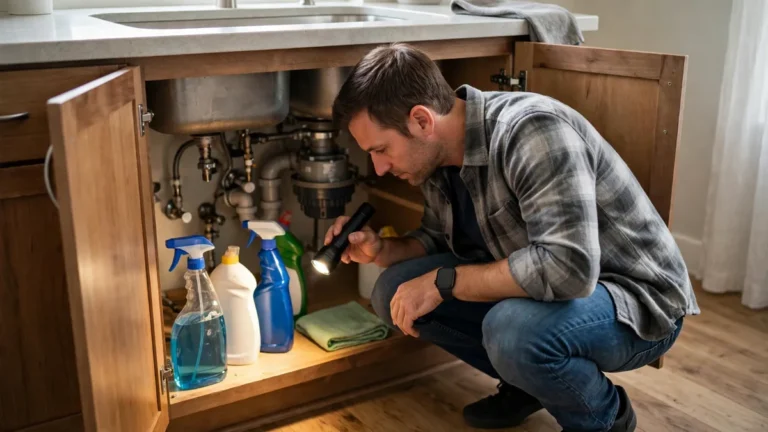
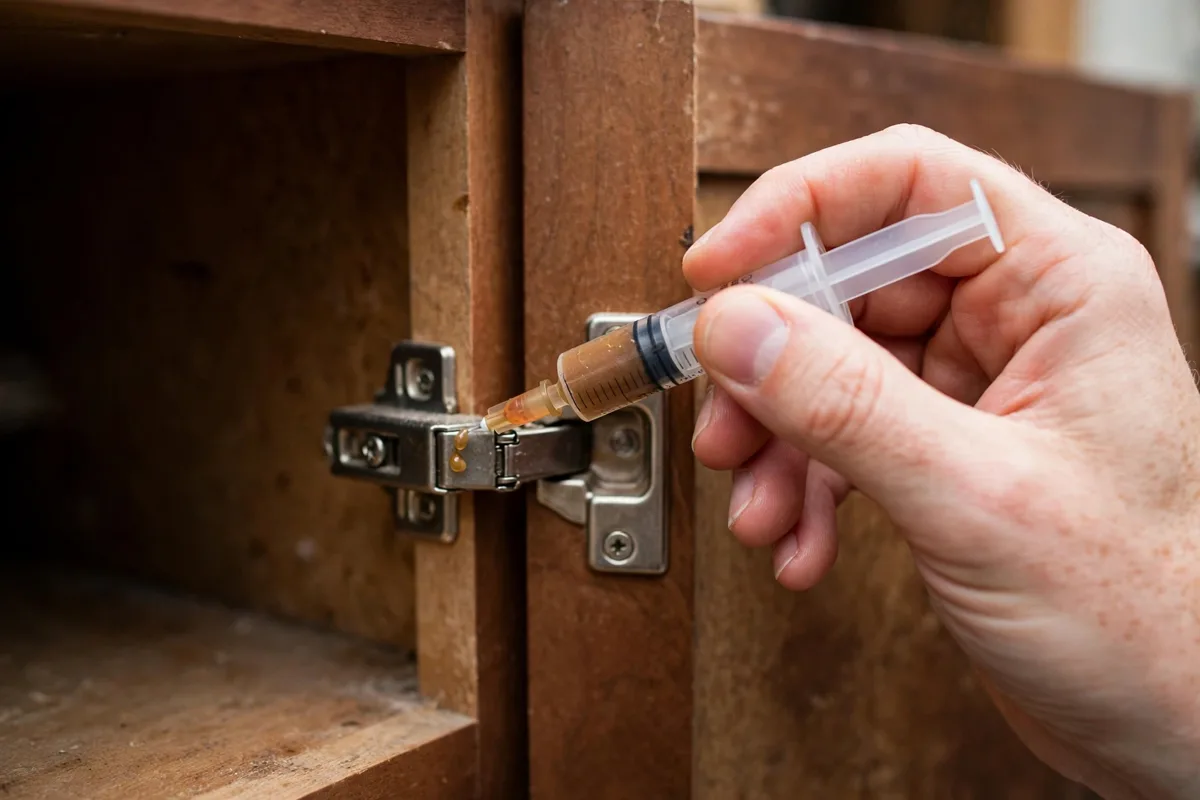
Put a pea-sized dot of gel or smaller in each cabinet hinge, along drawer slides, and in the corners where cabinets meet the wall. Add dots around the pipes under the sink, behind the refrigerator, along the dishwasher frame, and in the gaps beside and behind the stove. In a heavy spot, placements every foot or so are normal, and one kitchen can take dozens of dots.
Keep bait off open counters and away from food and dishes, and never wash it off during normal cleaning.
If a dot disappears in a day or two, roaches are feeding there, so replace it and add more nearby.
From this point on, keep every spray away from the bait. UC IPM warns that aerosol sprays repel and disperse cockroaches, and apartment IPM guidance adds that even non-repellent sprays can reduce bait performance, so spraying near bait undoes the whole program.
Step 3. Dust the Voids That Bait Cannot Reach
Boric acid and silica dusts cover the places gel cannot go, such as wall voids, under the refrigerator, and the hollow cabinet frame. UC IPM notes these dusts are very effective in undisturbed hiding places as long as they stay dry.
Apply a thin film with the bulb duster, a layer you can barely see. Thick piles fail because roaches walk around them, and dust that gets wet clumps and stops working, so save it for dry voids, out of reach of children and pets.
Step 4. Starve the Survivors While the Bait Works
For the next few weeks, the kitchen must offer nothing that competes with the bait. Wipe counters and the stove nightly, wash dishes instead of leaving them in the sink, and put pet food away after feeding.
Fix the drip under the sink, and dry the sink and counters before bed each night.
Take trash out nightly, and store flour, cereal, and snacks in sealed containers.
None of this kills roaches by itself, but it pushes hungry roaches toward the bait dots, where you want them feeding.
Step 5. Monitor, Refresh, and Rotate if Numbers Stall
Set sticky traps under the sink, behind the refrigerator, and beside the stove, and check them twice a week. The counts are your evidence of whether the population is falling or holding steady.
Refresh gel dots as they dry out or get eaten, and expect the work to take weeks rather than days.
UC IPM cautions that it may take 7 days or longer before you see fewer cockroaches, so a busy trap on day three is not a failure.
If trap counts stay flat after two weeks of clean baiting, the population may be avoiding your bait, a known problem called bait aversion. Switch to a different gel with a different active ingredient, and keep using one product at a time, the rotation the Pests in the Home extension program recommends. A flat trap line means switch products, not add more gel.
What Does Not Work Well
Foggers sit at the top of this list. UC IPM advises against foggers and bug bombs because they repel and disperse cockroaches without killing them, and the Pacific Northwest Insect Management Handbook does not recommend over-the-counter sprays and foggers either, since they scatter roaches through the structure and into neighboring units.
German cockroaches do not live along baseboards, they live in tight cracks near food and water, so baseboard spray lands where roaches rarely walk and pushes the ones in walls deeper into hiding.
Ultrasonic plug-in devices appear on no extension recommendation list.
| Method | Where it works | Where it fails |
|---|---|---|
| Gel bait | Cracks, hinges, and appliance gaps near food and water | Surfaces contaminated by spray residue, and wet spots where gel breaks down |
| Boric acid or silica dust | Dry wall voids, under appliances, hollow cabinet frames | Wet areas, open counters, and thick piles roaches walk around |
| Sticky traps | Monitoring under sinks and behind appliances | Control on their own, since they catch a fraction of the population |
| Foggers and bug bombs | Open, empty rooms against exposed insects | Kitchens, where roaches hide in cracks and scatter to new rooms |
| Baseboard sprays | Outdoor species that wander inside by accident | German cockroaches living in harborages, and any surface near gel bait |
How Long Removal Takes
A typical kitchen shows a clear drop in sightings within one to two weeks of clean baiting. Dead roaches in traps and fewer live ones at night are the first signs the program is working.
The reason it cannot finish faster is the egg case, called an ootheca. University of Illinois Extension reports that each case holds 30 to 48 eggs, eggs hatch in about a month, and a female produces four to eight cases in her life. Bait and dust do not kill eggs inside the case, so new nymphs keep emerging for weeks, and each wave has to find the bait and eat it.
Plan on 2 to 4 weeks of steady decline for a normal infestation, and longer when roaches have spread into walls and other rooms. Judge progress by trap counts week to week, not by whether you saw one roach on a given night.
When the Job Is Beyond DIY
Apartments with shared walls are the hardest case, because roaches move between units through plumbing chases and wall voids. You can clear your kitchen and still be reinfested from an untreated neighbor unit, which is why building-wide programs outperform unit-by-unit efforts.
Call a professional when roaches appear in daylight across several rooms, when trap counts stay high after a bait rotation, or when the building itself needs treatment. For heavy infestations, UC IPM also recommends a licensed professional.
A good professional starts with a structured inspection and monitoring program instead of a one-time spray. They rotate commercial baits on a schedule, add insect growth regulators that stop nymphs from reaching breeding age, and dust voids a homeowner cannot reach. In apartment buildings, they coordinate treatment across neighboring units, often the piece that decides whether the problem ends.
Walk away from any company whose whole plan is a fogger.
Keep Them Out Once They Are Gone
Leave traps in place for a few weeks after counts reach zero, and keep refreshing a little bait in the worst old hotspots.
When a full month passes with empty traps, the removal job is done and the job changes to prevention.
That second job has its own playbook, covered in our guide to keeping cockroaches out of an apartment without chemicals, which covers the sealing, storage, and cleaning habits that stop the next infestation before it starts.
Frequently Asked Questions
How long does gel bait take to work on German cockroaches?
UC IPM says it may take 7 days or longer to see fewer roaches, and full control of a kitchen usually takes 2 to 4 weeks. The bait is slow on purpose, because a roach that dies at the dot cannot carry the poison back to the harborage. A kitchen that still shows roaches on day five is not a failed program.
Why do I still see roaches after spraying?
Most sprays repel as much as they kill, so survivors scatter into walls and new rooms instead of dying. Spray residue near bait also makes roaches avoid the bait, which is why spraying and baiting should never run at the same time. The roaches did not multiply, they moved.
Where should I put gel bait in the kitchen?
Think hinges, not counters. Cabinet hinges, drawer slides, under-sink pipe gaps, the dishwasher frame, and the warm gaps behind the fridge and stove are the placements that get eaten. Use many small dots, and refresh any dot that disappears.
Is boric acid safe to use around children and pets?
Used as directed, boric acid belongs in dry, enclosed voids where children and pets cannot reach it, never on open counters or food-prep floors. Read the label, apply a thin film, and keep the container stored out of reach.
Can I clear German cockroaches from an apartment by myself?
A light infestation in one kitchen can be cleared with the cleanout and baiting program above, but when roaches are moving through shared walls from untreated neighbors, the building has to be treated as a whole, and that takes the landlord and a professional.

Nathan Ellis
Nathan Ellis writes about cockroaches and other indoor pests that commonly appear in homes. His work explains different species, their habits, and the signs they leave behind. He enjoys turning detailed research into helpful...
View all guides →