
Pest Control Hiring Guide
Do you actually need a professional? And if you do, how do you hire one without being overcharged or misled? An honest guide from the homeowner’s side.
- No companies recommended
- Nothing to sell you
- Works for any country
Do you need a professional at all?
Not every pest problem needs one. A few ants in the kitchen is not the same as termites in a roof beam. Here is the short version, pest by pest. The quiz at the top gives you a personal answer.
Termites
Pro neededDIY is fine when: Rarely. You cannot judge hidden damage yourself.
Call a pro when: At any sign: mud tubes, hollow-sounding wood or discarded wings. Start with an inspection.
Bed bugs
Pro neededDIY is fine when: Only while you are still checking that they are bed bugs.
Call a pro when: Once you find live bugs, shed skins or dark spots on bedding. DIY alone rarely clears them.
Rats and mice
DependsDIY is fine when: One or two mice, caught quickly, and you can seal the entry points.
Call a pro when: Noises in walls or ceilings, droppings in several rooms, rats, or gnawed wires.
Cockroaches
DependsDIY is fine when: You see the odd one and can fix food, water and gaps.
Call a pro when: You see them in daylight, in several rooms, or find egg cases. Shared buildings need coordinated treatment.
Ants
Usually DIYDIY is fine when: A few trails, and bait works within one to two weeks.
Call a pro when: Trails in several rooms, sawdust-like debris near damp wood, or they keep coming back.
Mosquitoes
Usually DIYDIY is fine when: You can remove standing water and repair screens.
Call a pro when: Swarms persist near your home anyway, or there is a local disease warning.
Spiders
Usually DIYDIY is fine when: Common house spiders: clean and seal gaps.
Call a pro when: You suspect a dangerous species, there are many egg sacs, or someone has a serious bite reaction.
The 2-week rule
DIY is worth trying for two weeks, not two months. Setting a deadline stops you spending money on one product after another while the problem sits there.
How to run your two weeks
Use this only for pests where DIY is reasonable.
When the rule does not apply
Do not wait two weeks if:
- You suspect termites.
- Bed bugs are confirmed.
- You hear rodents in walls or ceilings.
- Someone has bites, stings or symptoms.
- The pest is already in many rooms.
7 red flags. Walk away from the first one you see.
Most companies are honest. A few use the same tricks again and again. If you spot any of these, stop and compare with another company.
A price with no inspection
A quote over the phone cannot know what is in your home, and it often grows once the technician arrives.
“Sign today” pressure
Urgency is a sales tactic. Apart from the exceptions in the 2-week rule, pests rarely get much worse in a day or two.
No proof of license or insurance
Where a license is required, a real company shows it without fuss. Insurance protects you if something is damaged.
Vague “general treatment”
If they cannot say which product, which method and which areas, you cannot judge the price or check the work.
A big upfront payment for a long contract
Paying months or years in advance locks you in, even if the service turns out to be poor.
A guarantee that is not in writing
“We guarantee it” means nothing if the paperwork does not say what is covered and for how long.
Scare tactics and unneeded extras
Whole-home fumigation for a few ants, an uninvited “inspector” at your door, or extras added to the quote are classic fear-selling.
Quotes and contracts, decoded
The price is only one line of a quote. Here is how to compare quotes properly, what a fair one contains, and what to read in the fine print.
The 3-quote rule
- Get three written quotes for the same job.
- Give every company the same photos and notes.
- Compare line by line, not just the total.
- Be wary of one far below the others (it may leave out work or add fees later) and of one far above (it may be padded).
- Use the Cost Calculator for a ballpark in dollars.
A fair quote shows
- The pest it is for
- Areas to be inspected and treated
- Method and products named
- Number of visits and dates
- Total price in dollars, every fee itemized
- Guarantee terms in writing
- Contract length and cancellation terms
- The technician’s license number, where required
Fine print to read
- Does the plan renew by itself, and how and when can I cancel?
- Cancellation fees or notice periods.
- Price increases at renewal.
- What the guarantee excludes, and any conditions such as keeping up paid visits.
- Other pests or structural damage that are not covered.
- The payment schedule.
Check the company, the methods and the safety
Rules differ from country to country, so these checks rely on your own local authorities rather than a fixed list.
Check the company
- License or registration where your country or region requires one. Verify it with the local regulator, not just a badge on the company website.
- Insurance that covers damage or injury during the work.
- A written inspection that names the pest and how it gets in.
- Recent reviews from several sources. Read the three-star ones for patterns.
- Trained technicians and, where it exists locally, trade association membership.
Safety for your family and pets
- Ask which products will be used, and to see the label or safety data sheet.
- Ask how long people and pets must stay away, and when it is safe to return.
- Tell the company about children, pets (including birds and fish tanks), pregnancy, asthma or allergies.
- Follow the preparation steps, such as clearing areas and covering or storing food.
- Do not add your own pesticides on top of the treatment unless the technician says it is fine.
Common treatment methods, in plain words
- Baiting: slow-acting bait the pest carries back to the nest. Common for ants and cockroaches.
- Targeted treatment: products applied at entry points and hiding places instead of sprayed everywhere.
- Traps and sealing: for rodents, where blocking the entry points matters as much as trapping.
- Heat or chemical treatment: used for bed bugs, usually over more than one visit.
- Termite treatment: soil, bait-station or whole-structure options, chosen after an inspection.
- Integrated pest management: inspection, sanitation, sealing and the lowest-risk treatment that works. A good provider can explain why a method suits your pest.
8 questions to ask before you hire
Keep this open on your phone while you talk to each company. Tick each question as you ask it. A good company answers all eight clearly, and in writing.
After the treatment
What you do after the visit decides whether the guarantee actually protects you.
Use the guarantee
- Note the service date and how long the guarantee lasts.
- Report any return of pests in writing, as soon as you see them.
- Ask for the retreatment the guarantee promises.
- Follow any conditions, such as sealing gaps, and keep proof that you did.
Keep the paperwork
- The signed quote and contract.
- Every service report and invoice.
- Product names used.
- Photos from before and after.
If there is ever a dispute, or you change provider, this history is your proof.
What results to expect
Ant bait often needs one to two weeks to reach the colony, and bed bugs usually need more than one visit. Ask for a timeline up front, and write down the date by which you expect to see a clear change.
Keep the cause fixed
- Seal gaps and entry points.
- Remove food and water sources.
- Fix moisture problems.
- Follow the technician’s prevention advice.
Hiring questions, answered
Do I need to leave home during treatment?
It depends on the method and the product. Some treatments need you out for a few hours, and bed bug heat treatments usually do. Ask before the visit and follow the written instructions.
Is a free inspection really free?
Sometimes, but not always. Ask in advance whether there is a fee and whether it is deducted if you book, and get the answer in writing.
Is a monthly or quarterly plan worth it?
It can be if the pest keeps returning. For a one-off problem, single visits are often cheaper. Divide the plan price by the single-visit price to see how many visits it takes to break even, and check how the plan renews.
Can I use my own products as well?
Ask the technician first. Mixing products can cancel the treatment or create safety risks, and some pests spread if they are sprayed during a baiting treatment.
What if the pests come back after the service?
Check what the guarantee covers and for how long, and call before it ends. Report the problem in writing and ask for the retreatment visit.
Ready to put a number on it?
Get a ballpark price, then compare it with the quotes you receive. Not sure what the pest is? Identify it first.
Guides to read before you hire
Costs, plans, what professionals use and when to call one. Each guide is about hiring or paying for pest control.
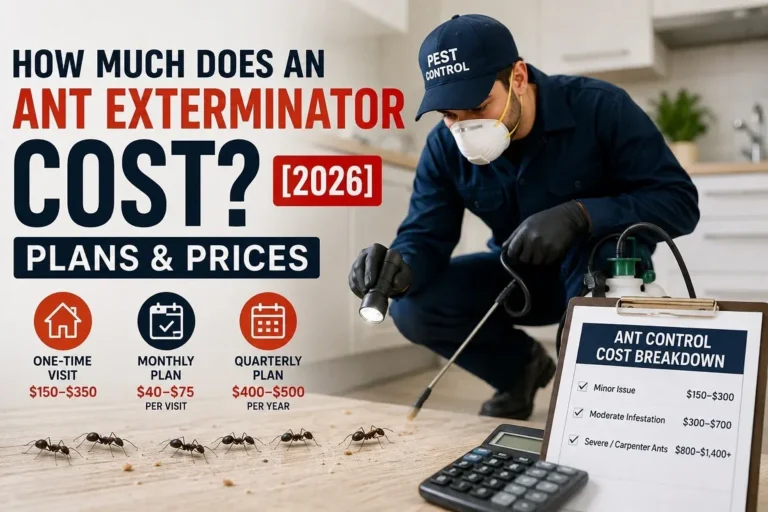 Ants
How Much Does an Ant Exterminator Cost? [2026] Plans & Prices
Ants marching across your kitchen counter are annoying. But the first question most homeowners ask is simple: how much will this cost...
Evan BrooksUpdated Oct 23, 2026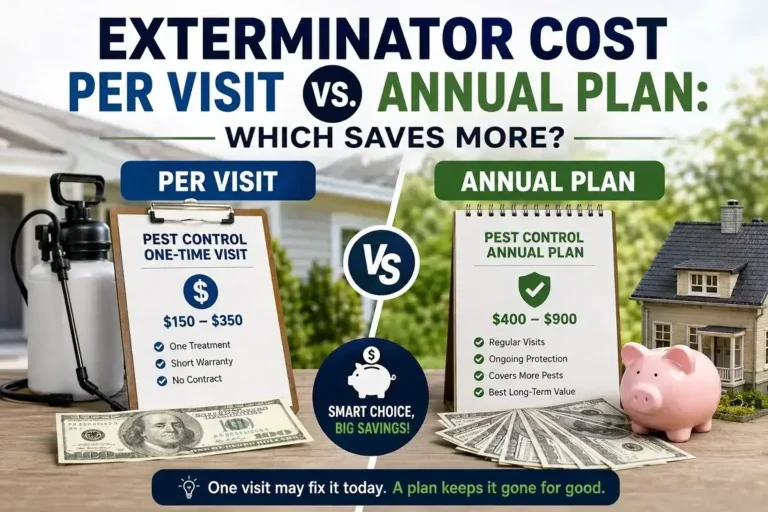 Ants
Per-Visit vs Annual Exterminator Cost: Which Saves More?
Comparing exterminator cost per visit against an annual plan comes down to one thing. How often do the ants come back? A...
Evan BrooksUpdated Oct 23, 2026 Ants
Save $200: Use the Same Ant Killer Products That Exterminators Use
When ants invade your home, your first thought might be to call a pest control company. A single visit can cost anywhere...
Evan BrooksUpdated Oct 17, 2026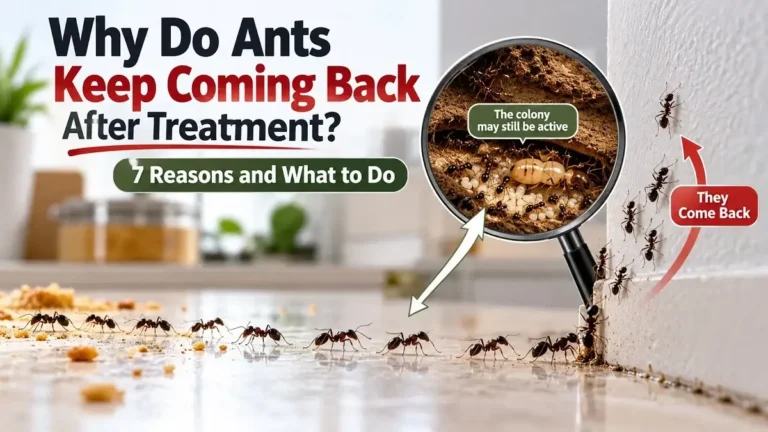 Ants
Why Do Ants Keep Coming Back After Treatment? 7 Reasons and What to Do
You treated the trail, cleaned the area, or put out ant bait. The ants disappeared, but a few days later they were...
Evan BrooksUpdated Oct 18, 2026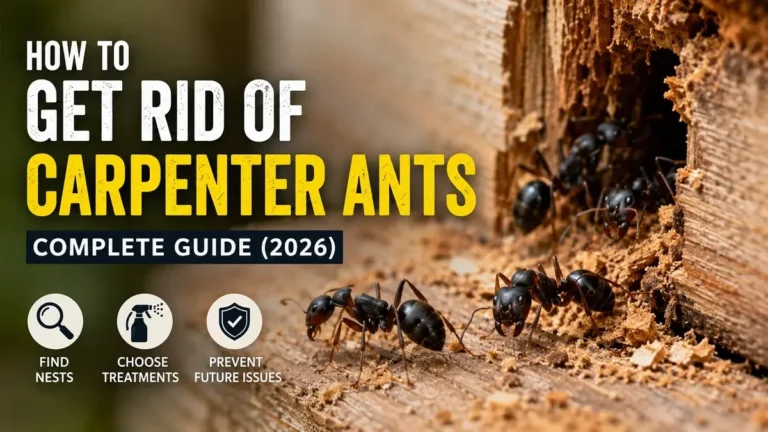 Ants
How to Get Rid of Carpenter Ants – Complete Guide (2026)
Maybe you saw one large black ant in your kitchen. Then, a day later, you saw several more, plus a small pile...
Evan BrooksUpdated Oct 18, 2026