
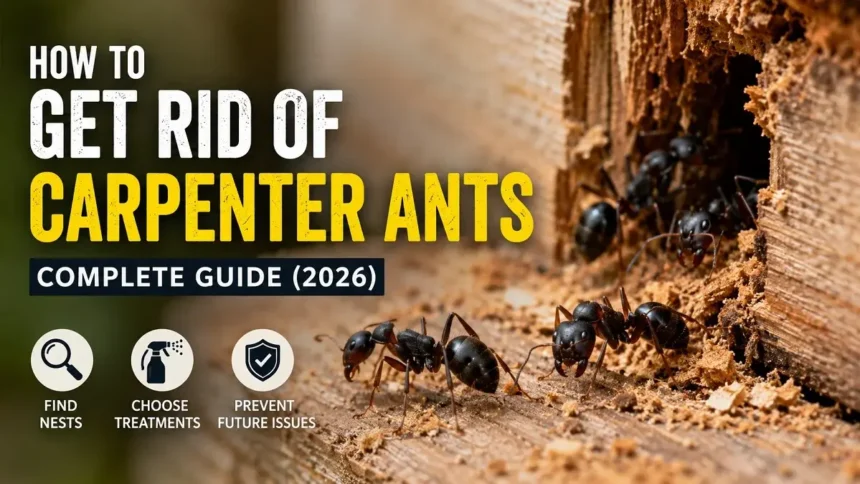
Maybe you saw one large black ant in your kitchen. Then, a day later, you saw several more, plus a small pile of sawdust near a window. If this sounds familiar, carpenter ants are likely in your home.
Carpenter ants don’t eat wood like termites do. Instead, they dig tunnels through damp or damaged wood to build their nests. Over time, these tunnels can weaken your home. This guide walks you through exactly how to get rid of carpenter ants, from spotting them early to stopping them for good.
- What Are Carpenter Ants?
- How to Identify Carpenter Ants
- How to Find the Carpenter Ant Nest
- How to Get Rid of Carpenter Ants: Best Methods
- DIY vs. Professional Carpenter Ant Removal
- Carpenter Ant Bites and Safety Around Kids and Pets
- How to Get Rid of Carpenter Ants for Good: Prevention Tips
- Common Carpenter Ant Myths
- Mistakes That Stop You From Getting Rid of Carpenter Ants
- How to Tell if Your Treatment Worked
- Frequently Asked Questions
- Final Thoughts
This guide is written mainly for U.S. homeowners. If you live in Canada, most of it still applies. In Australia, just adjust the seasons to match your climate.
What Are Carpenter Ants?
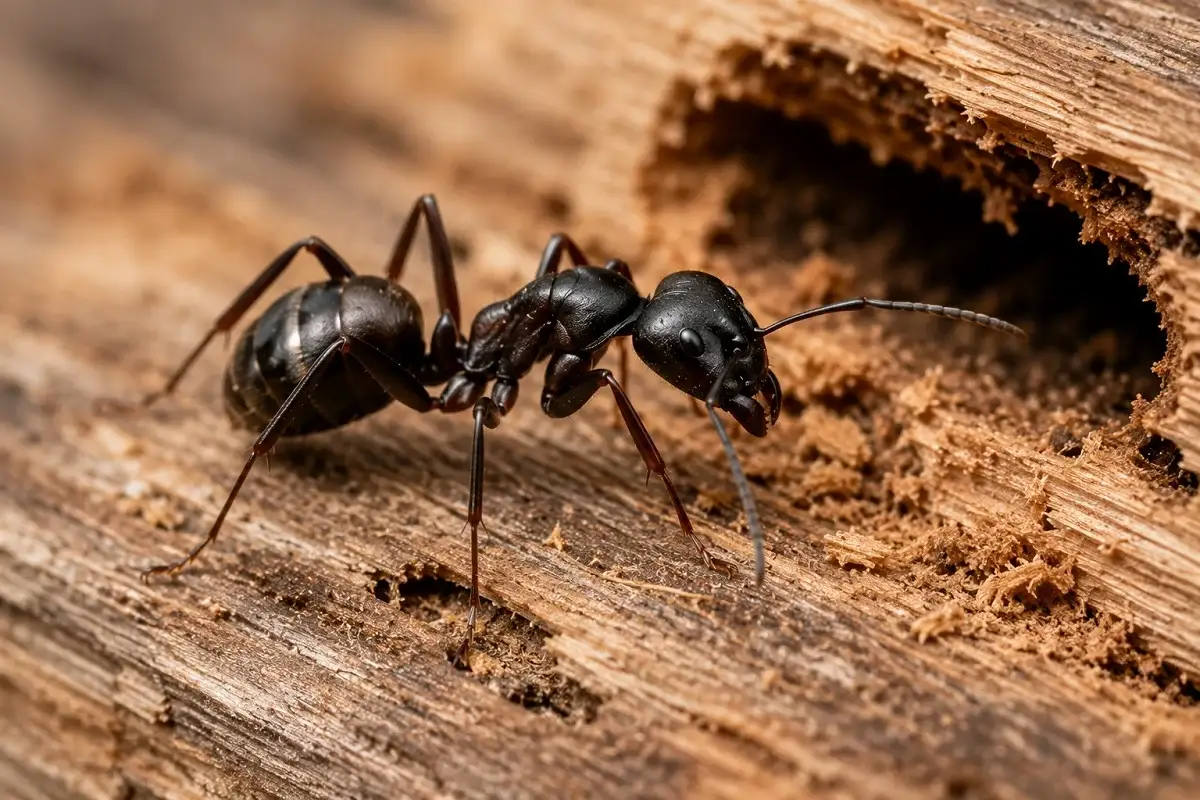
Carpenter ants rank among the largest ant species found near homes. Instead of eating wood, they dig through it to build smooth tunnels for their colony. Because damp wood is easier to dig, they often target areas with water damage.
Carpenter ants work more slowly than termites, but they can still cause costly damage if a colony hides in your walls for years. Repairs often cost a few hundred to several thousand dollars.
Carpenter ants often signal a moisture problem. According to the University of Minnesota Extension, fixing the leak matters just as much as removing the colony.
How to Identify Carpenter Ants
Before you choose a treatment, make sure carpenter ants are your actual problem, since people often confuse them with termites or common black ants.
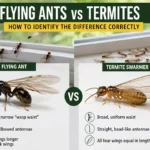
| Feature | Carpenter Ant | Termite | Common Black Ant |
|---|---|---|---|
| Size | ¼–½ inch | ¼–½ inch | ⅛–¼ inch |
| Color | Black or reddish-black | Cream or pale white | Black |
| Waist | Narrow and pinched | Wide and straight | Narrow and pinched |
| Antennae | Bent, like an elbow | Straight | Bent, like an elbow |
| Wings | Front pair longer than back pair | All four wings equal length | Rarely seen |
Watch for these clues around your home:
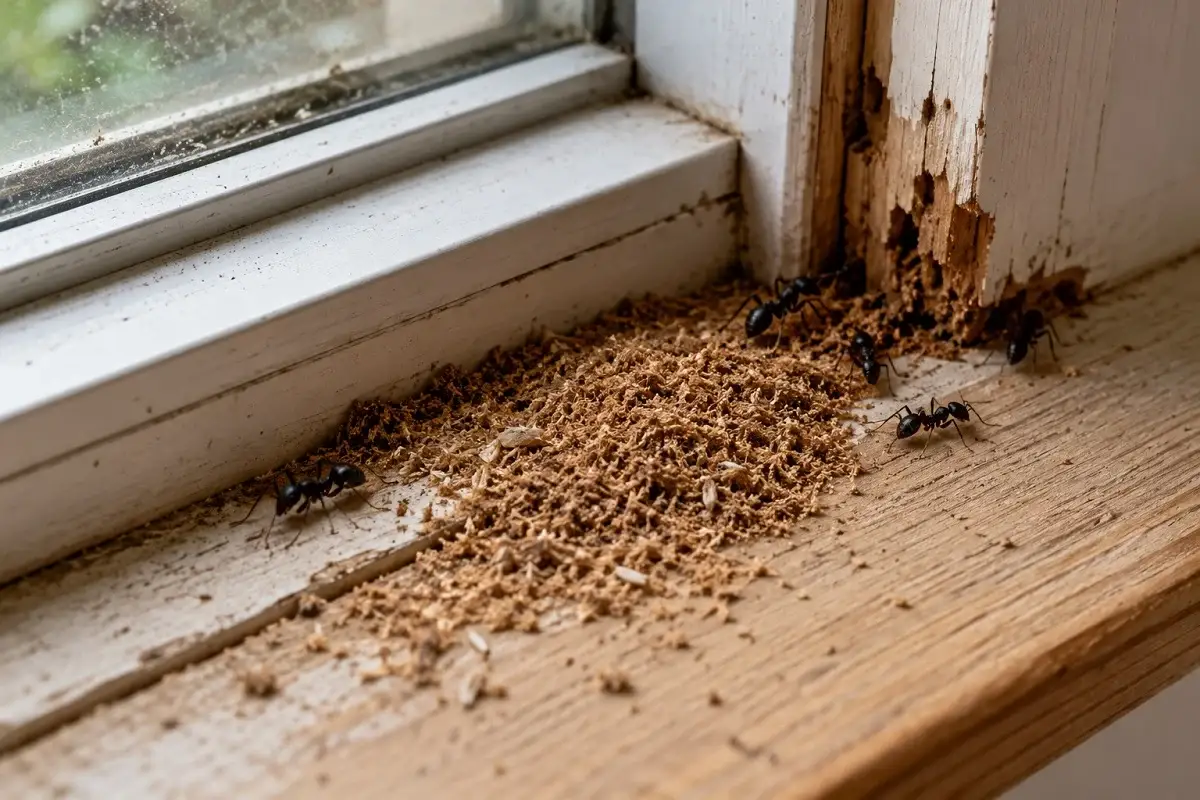
- Frass: small piles of sawdust-like material mixed with bug parts, near walls, windows, or trim
- Ant trails: long lines of worker ants, especially at night
- Hollow wood: wood that sounds hollow when tapped, since ants carve tunnels inside
- Rustling sounds: faint noises inside walls from large colonies
- Winged ants indoors: a sign that a mature colony already lives in your home
What Do Winged Carpenter Ants Mean?
Winged carpenter ants, also called swarmers, show up once a colony matures and gets ready to reproduce. This takes several years, so spotting them means a colony has probably lived there a while. Rutgers NJAES and the Smithsonian Institution both note that swarmers signal it’s time to inspect your home and start treatment soon.
The queen is much bigger than the workers and stays deep inside the main nest, so you’ll rarely spot her during an inspection.
Parent Colony vs. Satellite Colony
Carpenter ants often build more than one nest. The parent colony holds the queen, eggs, and larvae, while satellite colonies hold only worker ants. If you destroy a satellite colony but the parent survives, the ants keep coming back. Long-term control depends on finding the main nest, a point the University of Minnesota Extension also stresses.
How to Find the Carpenter Ant Nest
Finding the nest is often the hardest, yet most important, step. Spraying the ants you see might reduce activity briefly, but the problem usually continues if the main nest stays hidden. Start your search near existing moisture problems, then follow the ants back to their nest.
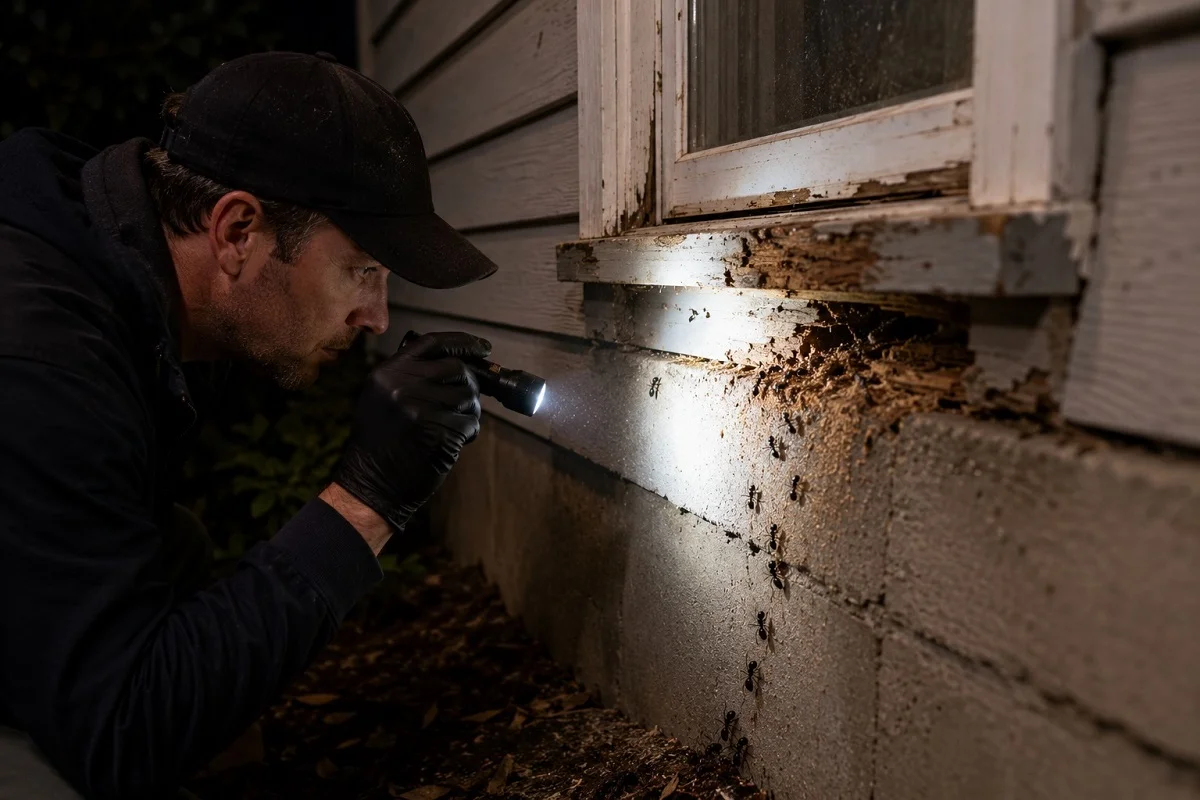
- Watch after sunset. Carpenter ants stay busiest at night. A flashlight helps you track them.
- Follow the trail. Worker ants travel between the nest and food. Watch where they enter or leave your home.
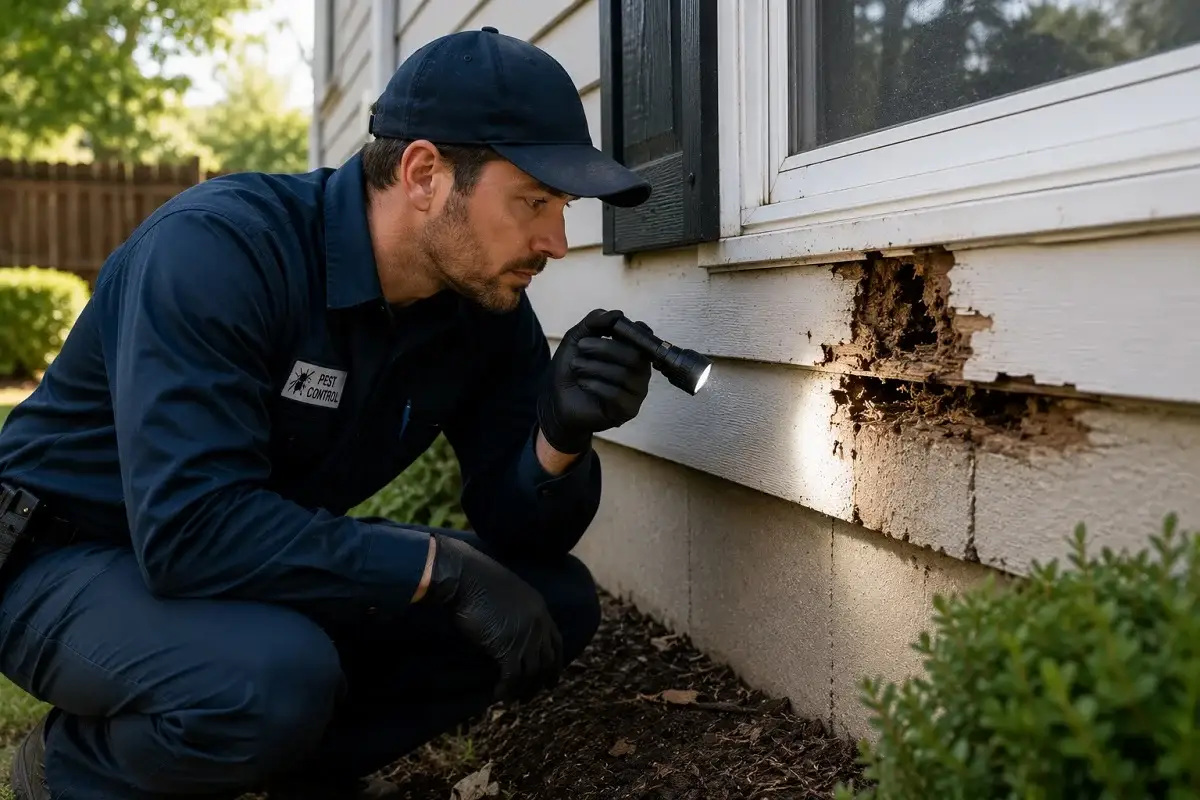
- Look for frass. Sawdust-like debris under walls or trim usually means a nest sits nearby.
- Tap on wood. Hollow-sounding wood may hide tunnels inside.
- Check likely spots. Focus on areas with moisture and damaged wood.
| Location | Why Carpenter Ants Choose It |
|---|---|
| Bathrooms and kitchens | Leaking pipes and steady moisture |
| Window frames and sills | Water damage from rain or condensation |
| Basements and crawl spaces | Dark, damp, and rarely disturbed |
| Attics | Roof leaks and nearby tree branches |
| Tree stumps and logs | Natural outdoor nesting sites |
| Firewood piles | Damp wood stored too close to the house |
How to Get Rid of Carpenter Ants: Best Methods
Once you find the nest, or at least where the ants enter, you can pick the right treatment. Here are four common methods for how to get rid of carpenter ants.
| Method | Typical Cost | Time to Work | Best For |
|---|---|---|---|
| Ant Baits | $10–30 | 1–3 weeks | Small or moderate infestations |
| Dust or Foam | $20–50 | 1–3 days | Accessible nests |
| Perimeter Treatment | $25–60 | Immediate protection | Prevention after treatment |
| Professional Service | $150–500+ | Usually 1–3 visits | Hidden or severe infestations |
Use ant baits. Baits work best as a first step because worker ants carry the bait back to the colony and share it with the rest of the nest. Place bait stations close to active trails, avoid spraying insecticide on feeding ants, and give the bait one to three weeks. If you kill worker ants too fast, they can’t carry the treatment back to the colony.
Apply dust or foam to the nest. If you can safely reach the nest inside a wall or beam, insecticidal dust or foam works faster than bait alone. Apply the product exactly as the label instructs, then let it spread through the colony before you disturb the area. Too much product may push the colony to move instead of dying out.
Protect the outside of your home. After you remove the colony, treat the outside foundation to lower the chance new ants move in. Seal cracks around doors, windows, and utility lines, and trim tree branches that touch the roof or siding.
Try natural remedies. Natural remedies may discourage carpenter ants, though they work less well against colonies that already exist. Food-grade diatomaceous earth works best in dry areas where ants travel, and boric acid is commonly mixed into slow-acting baits. Peppermint oil and cinnamon may repel ants near entry points, but neither removes a whole colony.
DIY vs. Professional Carpenter Ant Removal
You can handle many carpenter ant problems yourself, especially if you catch them early. Still, larger colonies hidden inside walls often need special tools and experience.
| Situation | DIY | Professional Help |
|---|---|---|
| You see only a few ants and can follow their trail | Usually a good option | Not usually needed |
| You found the nest in an easy-to-reach spot | Often effective | Optional |
| Ants keep returning after several weeks | May not solve the problem | Recommended |
| You hear activity in the walls but can’t find the nest | Difficult to treat | Recommended |
| You see major wood damage or several nesting sites | Not recommended | Best option |
DIY works well when the infestation stays small, you can follow the trail, and you see no serious structural damage. Call a professional if ants keep returning after two or three weeks, you can’t locate the parent nest, or you find major wood damage.
| Service | Typical Cost (US) |
|---|---|
| DIY bait or dust treatment | $10–50 |
| Professional inspection | $75–200 |
| Professional carpenter ant treatment | $150–500+ |
| Structural wood repairs (if needed) | $500–5,000+ |
Costs vary based on infestation size, location, and whether repairs are needed after removal.
Carpenter Ant Bites and Safety Around Kids and Pets
Carpenter ants can bite if you disturb their nest or trap one against your skin. Their jaws pinch hard enough to cause brief pain and mild redness, though they don’t carry venom or spread disease. Wash the area with soap and water, and apply a cold compress if it swells.
If children or pets live in your home, take a few extra steps before you treat for carpenter ants. Place products out of reach of curious kids and animals, use only food-grade diatomaceous earth in dry, undisturbed areas, and avoid insecticides near food prep surfaces or pet bowls. Store unused products in a locked cabinet, and wash your hands after handling any pest control product.
If accidental exposure happens, follow the first-aid steps on the product label, then contact your doctor, vet, or local poison control service.
How to Get Rid of Carpenter Ants for Good: Prevention Tips
Removing carpenter ants solves only part of the problem. If the conditions that attracted them stay the same, another colony may move in. Follow these habits to lower your risk of a repeat infestation.
Fix moisture problems. Repair leaking pipes, roofs, and faucets, and replace water-damaged or rotting wood.
Reduce outdoor nesting areas. Trim tree branches that touch your home, remove old stumps near the foundation, and keep firewood off the ground.
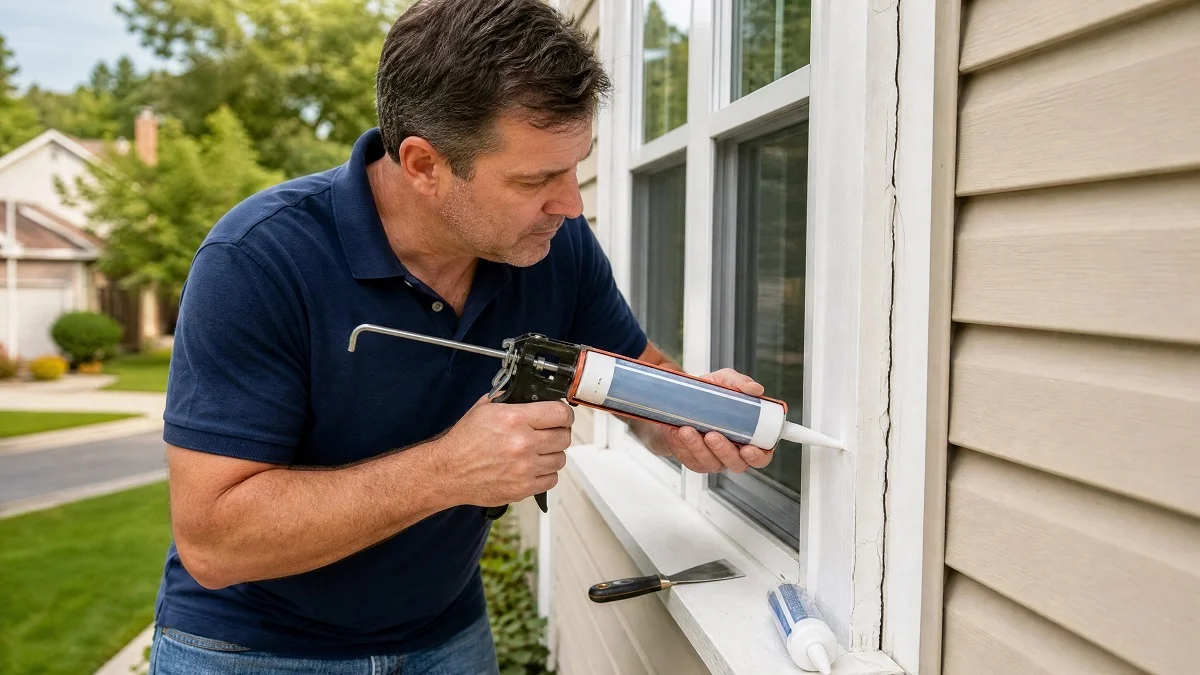
Block entry points. Seal cracks around doors, windows, and utility lines, and replace worn weather stripping.
Control food sources. Clean up spills quickly, store food in sealed containers, and manage aphids on nearby plants, since they attract ants.
| Season | What to Do |
|---|---|
| Spring | Check your home for moisture damage, seal entry points, and watch for winged ants. |
| Summer | Trim plants, remove outdoor nesting sites, and monitor ant activity. |
| Fall | Repair damaged wood, clean gutters, and seal cracks before cold weather arrives. |
| Winter | Check indoor areas for hidden nests and fix plumbing or roof leaks. |
A little seasonal maintenance keeps carpenter ants from returning year after year.
Common Carpenter Ant Myths
Wrong information can make an infestation harder to fix. Here are common myths, based on university extension research and established pest management practices.
| Myth | Reality |
|---|---|
| Carpenter ants eat wood. | They tunnel through it, but mainly eat insects and sugary food. |
| One spray kills the whole colony. | Surface sprays kill only the ants you see, not the nest. |
| Carpenter ants and termites are the same. | They’re different. Termites eat wood; carpenter ants only dig it. |
| Only old houses get them. | Any home with damp, damaged wood can attract them. |
| Once the ants disappear, it’s over. | Not always. Keep watching for several weeks to be sure. |
Mistakes That Stop You From Getting Rid of Carpenter Ants
Many treatments fail because homeowners focus on the ants they see instead of the colony they can’t.
| Mistake | Why It Fails | Do This Instead |
|---|---|---|
| Spraying repellent on trails | Scatters ants before they carry bait to the nest | Use slow-acting bait |
| Ignoring moisture | Damp wood keeps attracting ants | Repair leaks and damaged wood |
| Missing the parent nest | Queen survives if only satellites are treated | Follow trails carefully |
| Giving up too soon | Bait needs one to three weeks to work | Stay patient and monitor |
| Sealing gaps too early | Can trap ants inside walls | Remove the colony first |
How to Tell if Your Treatment Worked
Carpenter ant colonies don’t vanish overnight. You may still see a few worker ants for several days after treatment, so watch for signs that activity is steadily dropping instead of expecting instant results.
- No fresh frass: new sawdust-like debris stops showing up near windows or trim.
- Less activity: trails shrink each day until you rarely see ants indoors.
- No new winged ants: during swarming season, this is a good sign.
- No new nesting signs: no rustling in the walls or fresh wood damage.
If heavy activity continues after two or three weeks, inspect your home again for a hidden parent colony. If you still can’t find it, call a licensed pest control professional.
Frequently Asked Questions
How long does it take to get rid of carpenter ants?
It depends on colony size and method. Most baits reduce activity within days, but fully removing a colony usually takes one to three weeks.
Can carpenter ants damage a house?
Yes. They dig through wood to build nests, and years of activity can weaken your home and lead to costly repairs.
Are carpenter ants more active at night?
Yes. They’re mostly nocturnal, which makes night the best time to follow their trails to the nest.
Do carpenter ants bite people?
Rarely, and mainly when you disturb their nest directly. The bite causes brief pain and clears up on its own.
Will carpenter ants go away on their own?
Usually not. They’ll keep growing until you remove the nest or take away what attracted them.
Final Thoughts
Carpenter ants can feel frustrating, but you can control them more easily if you act early. Confirm carpenter ants are your actual problem, find the nest, choose the right treatment, and fix any moisture issues that attracted them.
Most small infestations respond well to patience, while larger or hidden colonies may need professional treatment. That’s how to get rid of carpenter ants for good, and regular seasonal checks will help you avoid another infestation.