
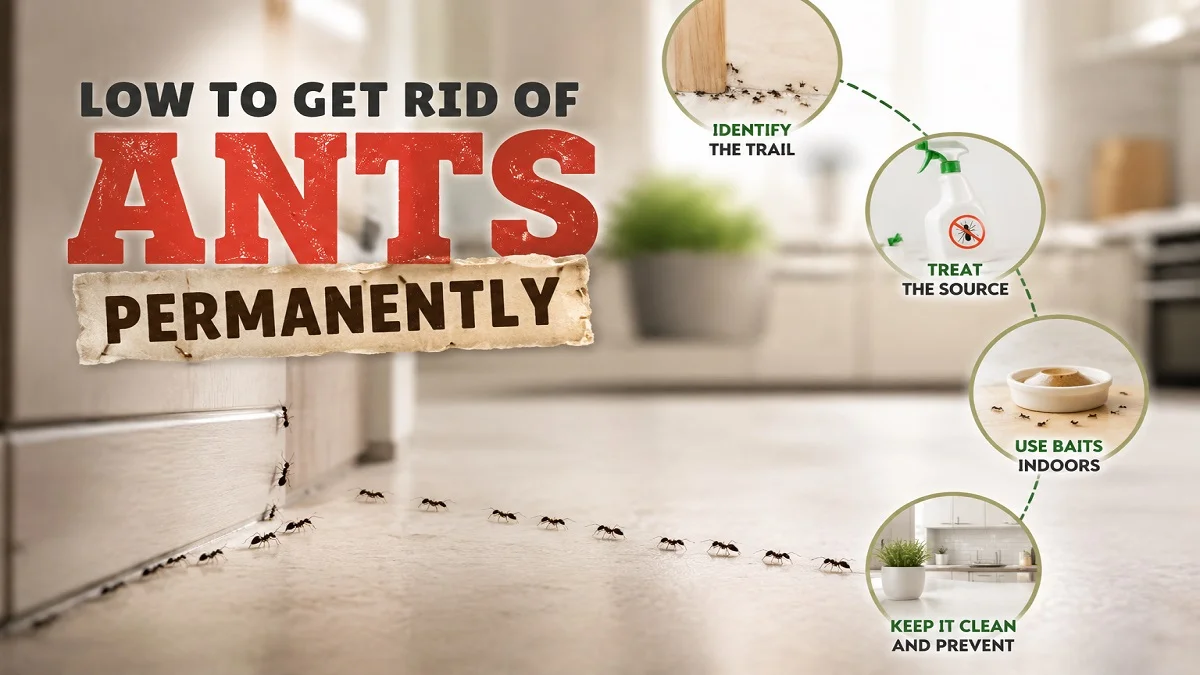
A line of ants marching across your kitchen counter is one of the most common household problems out there. You clean it up, spray it, and a day later they are back. That cycle is frustrating, but it is not random. Ants follow rules, and once you understand those rules, you can break the cycle for good.
This guide walks you through why ants show up, how to find where they are coming from, and how to get rid of them permanently using safe, DIY ant control methods. You will also get a room-by-room plan and a prevention checklist you can use all year.
- Why Are Ants Coming Into Your House?
- How Ants Find Food and Build Trails
- Signs of an Ant Infestation
- Common Types of House Ants and How They Differ
- Where Are Ants Coming From?
- How to Get Rid of Ants Permanently
- How Long Does It Take to Get Rid of Ants?
- Natural Methods
- Room-by-Room Solutions
- Why Ants Keep Coming Back
- Signs Your Treatment Is Working
- Prevention Checklist
- Common Mistakes
- FAQs
- Getting Rid of Ants Permanently Takes Patience
Why Are Ants Coming Into Your House?
Ants come inside for one simple reason: they are looking for food, water, or shelter. Your home offers all three. A few crumbs on the floor, a leaky pipe, or a warm spot behind a wall can be enough to attract a colony.
Weather plays a role too. Ants often move indoors when it gets too hot, too cold, or too wet outside. Rain can flood their nests, and dry heat can push them to search for a moisture source inside your walls or under your sink.
It only takes one ant to start a problem. A single scout ant that finds food will lead an entire colony straight to your kitchen within hours.
Different types of ants also have different habits. Some species prefer sweets, while others go after grease or protein. That is one reason a sugar-based bait works well on one type of ant and does almost nothing on another. Watching what your ants are drawn to can help you pick the right bait later on.
Season plays a part as well. Spring ant activity often signals a colony expanding after winter, and summer brings the heaviest indoor sightings as colonies forage more aggressively. You may also spot flying ants during this time. These are young queens and males leaving the nest to start new colonies, and seeing them indoors can mean a mature nest is already close to your home.
How Ants Find Food and Build Trails
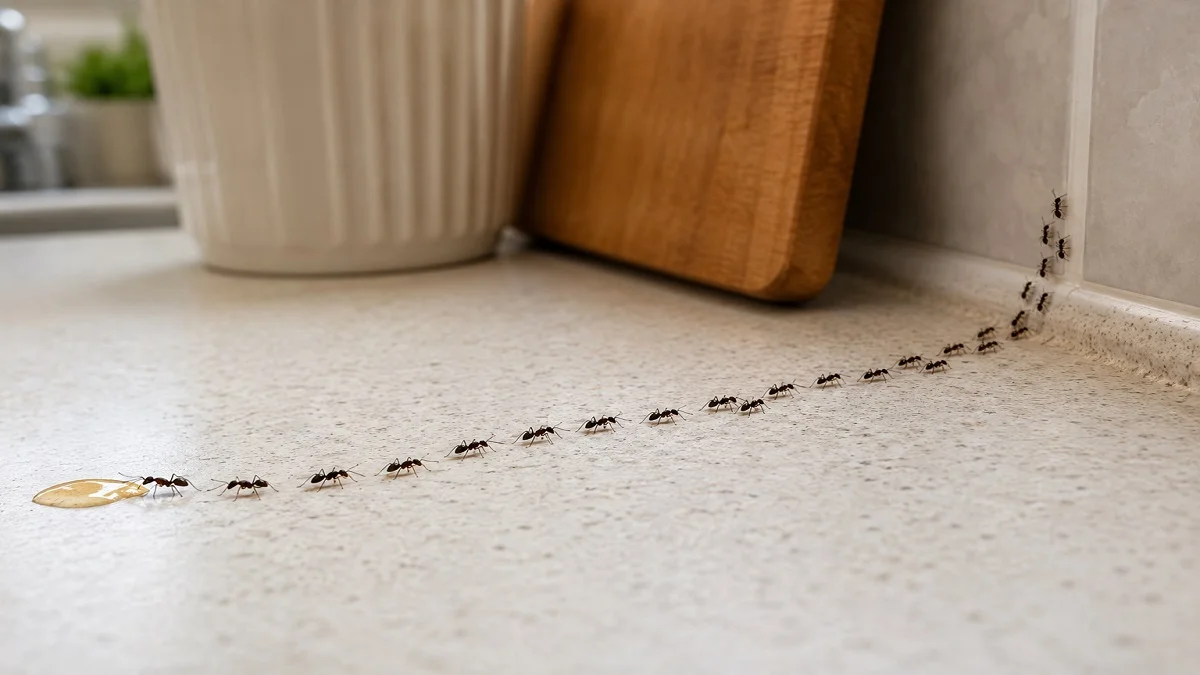
Every worker ant has a specific job, and the colony relies on scent to keep the whole system running. When a scout ant finds food, it eats a little, then heads back to the nest, leaving a food pheromone trail behind it.
Other worker ants pick up that scent and follow it straight to the food. As more ants travel the same path, the trail gets stronger, which is why you often see a steady line of ants instead of just one or two.
Removing visible ants only solves the surface problem because the colony continues sending new workers along the same scent trail. The trail stays behind on your counters and floors until you clean it away.
Signs of an Ant Infestation
A few ants near a window is not always a big deal, but certain signs point to a larger house ant infestation building inside your home.
- A steady line of ants that appears at the same time each day
- Small piles of dirt or wood shavings near baseboards or window frames
- Ants appearing in multiple rooms, not just the kitchen
- A faint musty smell in areas with high ant activity
- Winged ants indoors, which can signal a mature colony nearby
If you notice several of these signs together, the colony is likely already established somewhere inside or very close to your house. Pay attention to timing too. If you keep seeing indoor ants at the same hour each day, that pattern usually means a nest is nearby and following a steady feeding routine, rather than a few stray ants wandering in from outside.
Common Types of House Ants and How They Differ
Not every ant behaves the same way, and knowing which type you have can save you time. Here are the ones most often found inside homes.
Odorous house ants are small, dark brown or black, and give off a rotten coconut smell when crushed. They love sweets and are one of the most common ants found in kitchens.
Pavement ants are dark brown to black and usually nest under sidewalks, driveways, or along foundations. They eat both sweets and grease, so they often show up near any type of food.
Carpenter ants are larger and black or reddish black. Unlike other house ants, they chew through damp or damaged wood to build nests, which means an indoor sighting can point to a moisture problem inside a wall void or beam.
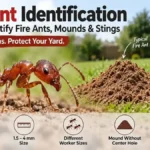
Fire ants are reddish brown with a painful sting. They are more common outdoors in yards and gardens, but they can wander inside while foraging for food.
Black ants and other sweet-loving ants are drawn mainly to sugar, fruit, and juice spills, while grease-loving and protein-loving species head straight for cooking oil, meat, and pet food. Matching your bait to what your ants prefer makes it far more effective.
Where Are Ants Coming From?
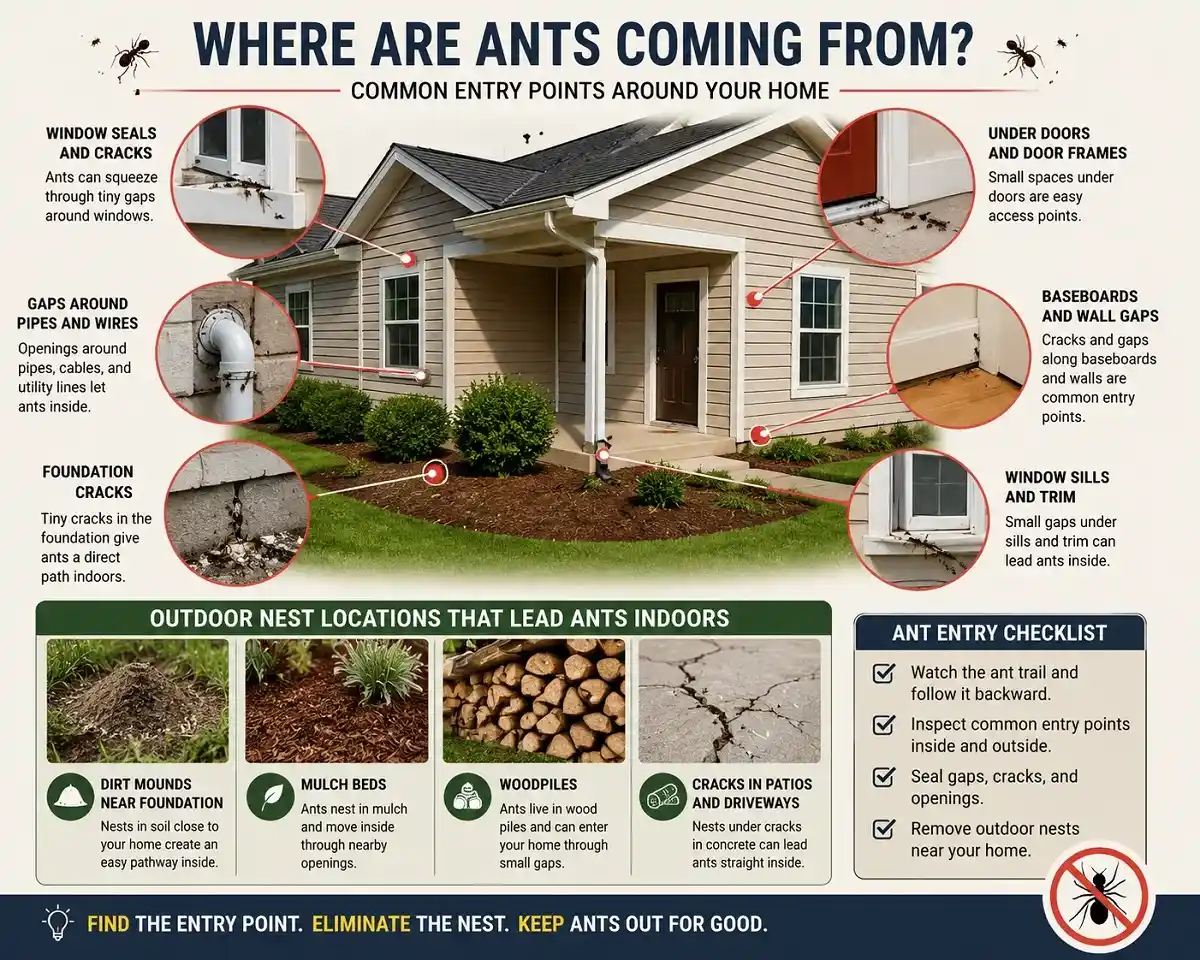
To solve an ant problem for good, you need to find the entry point, not just the ants you can see. Start by watching the trail. Ants almost always travel the shortest path between the nest and the food source.
Follow the line backward along baseboards, countertops, and door frames. Look closely at foundation cracks, gaps around pipes, spaces under doors, and window seals. These small openings are common entry points because ants can fit through gaps as thin as a credit card.
Outdoors, check for small mounds of dirt near soil that touches your house. Mulch beds, woodpiles, and cracks in a patio or driveway are also common nest locations that lead ants straight indoors.
How to Get Rid of Ants Permanently
Permanent ant control works only when you eliminate both the visible ants and the colony that keeps replacing them. Follow these steps in order for the best results.
Remove Food Sources
Start by taking away what attracted the ants in the first place. Wipe down counters, sweep crumbs from floors, and store food, including pet food, in sealed containers. Take out the trash regularly and rinse recyclables before storing them.
Clean Ant Trails
Since ants follow scent trails, cleaning is one of your most powerful tools. Wipe down the path you saw ants using with warm, soapy water or a vinegar and water mix. This breaks down the pheromone trail so new ants cannot find their way to the food.
Seal Entry Points
Once trails are cleared, seal the cracks and gaps ants used to get inside. Caulk around window frames, doors, and pipes. Fix any damaged screens and check weather stripping around exterior doors.
Ants choose cracks because these gaps offer a sheltered, direct path between the soil outside and the food inside. Even a gap as small as a sixteenth of an inch, about the width of a credit card, is wide enough for most house ants to pass through. Sealing removes that path completely rather than just making it harder to use. Wait until the colony is gone before sealing, or you risk trapping active ants inside your walls.
Remove the Colony
Cleaning and sealing stops the current wave of ants, but the colony itself, including its queen and larvae, is still active nearby. Using bait rather than spray is the most effective way to reach the nest, since worker ants carry it back and share it with the rest of the colony. Sprays only kill ants on contact and leave the nest untouched.
Place ant bait stations along the trail you identified earlier, not directly on top of food or cleaning products, since strong smells can push ants away from the bait. It is normal to see more ants right after placing bait, since more workers are out collecting it to bring back to the nest.
How Long Does It Take to Get Rid of Ants?
Most bait methods take one to two weeks to reach the full colony. This is normal and does not mean the bait has failed. Activity may increase slightly in the first few days as more workers search out the bait, then drop steadily over the following week. If you see little to no change after two full weeks, the bait may not match what that ant species prefers, or the station may not sit on an active trail.
Sealing and cleaning give faster visible results, often within a day or two, since they remove the ants you can see right away. Full colony removal always takes longer, because it depends on the ants doing the work of carrying bait back to the nest themselves.
Natural Methods
If you prefer to skip chemical pesticides, several natural ingredients can help repel indoor ants or disrupt their trails. These work best when combined with the cleaning and sealing steps above.
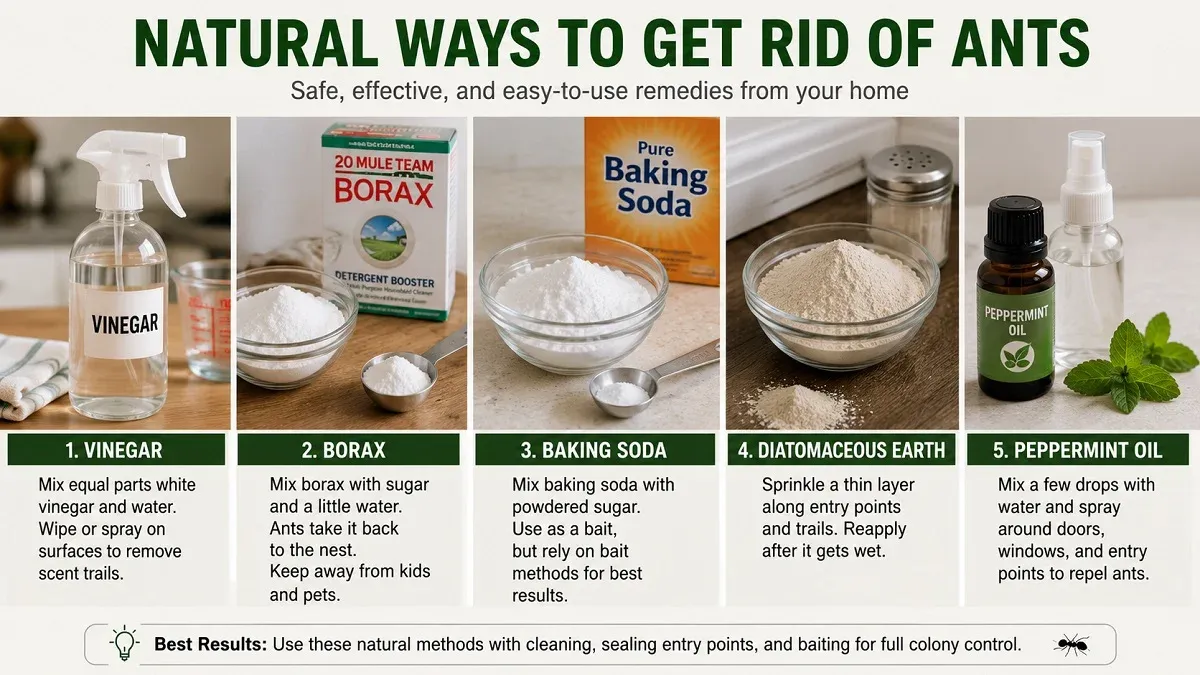
Vinegar
White vinegar mixed with equal parts water breaks down ant scent trails on contact. Wipe it along counters, doorways, and baseboards where you have seen ants. Vinegar does not kill ants, but it removes the scent path they rely on.
Use vinegar right after you spot a trail, since it works best on fresh scent marks. It will not reach the colony, so pair it with bait if ants keep returning after a few days of cleaning alone.
Borax
Borax mixed with sugar and a small amount of water creates a bait that worker ants carry back to the nest. The sugar attracts them, while the borax is toxic once ingested. Keep any borax mixture well out of reach of children and pets.
This works best for sweet-loving ants. If ants ignore a sugar-based mix after a few days, try a bit of peanut butter or bacon grease instead.
Baking Soda
Some people mix baking soda with powdered sugar as a bait, based on the idea that it reacts poorly with an ant’s digestive system. Evidence for this method is mixed, so treat it as a secondary option rather than your main line of defense.
Diatomaceous Earth
Diatomaceous earth is a fine powder made from fossilized algae. It damages the outer layer of an ant’s body, causing it to dry out. Sprinkle a thin layer along entry points and trails, and reapply after it gets wet.
This works best as a barrier at entry points rather than as bait, since ants avoid walking through thick powder. Pair it with bait for full colony removal.
Peppermint Oil
Ants dislike strong scents like peppermint, which can mask the pheromone trails they depend on. Mix a few drops of peppermint oil with water in a spray bottle and apply it around doors, windows, and other entry points as a repellent.
Here is how the five natural methods compare at a glance.
| Method | Removes Trail | Kills Colony | Best For |
| Vinegar | Yes | No | Fresh scent trails |
| Borax | No | Yes | Sweet-loving ants |
| Baking Soda | No | Uncertain | Backup option |
| Diatomaceous Earth | No | No | Blocking entry points |
| Peppermint Oil | Masks scent | No | Repelling at doors and windows |
Want the full breakdown with exact recipes and costs? Check out our guide: 7 DIY Ant Control Methods Under $5 That Really Work.
Room-by-Room Solutions
Each room attracts ants for a different combination of food, moisture, or shelter, so the approach should shift room to room.
Kitchen: Since kitchens contain both food and water, inspect hidden areas behind appliances and under cabinets where crumbs often collect.
Bathroom: Ants often enter bathrooms looking for a reliable moisture source. Check under the sink for leaks, wipe down damp surfaces, and seal gaps around pipes.
Bedroom: Ants in bedrooms usually trace back to nearby food, like snacks left on a nightstand, or an entry point through a window. Remove food and check window seals.
Living Room: Crumbs from snacks near couches and under cushions can draw ants in. Vacuum regularly and check baseboards along exterior walls.
Basement or Garage: These areas often connect directly to soil or the foundation, making them common entry zones. Check for cracks, seal them, and keep stored food in airtight containers.
Why Ants Keep Coming Back
If ants keep returning after you clean up, it usually means one part of the problem is still active. The most common reason is that the colony was never actually eliminated, so it keeps producing new workers even after the ones you see are gone.
Even a faint scent trail can guide new scout ants back to the same food source, and a nest just outside your foundation can keep finding new ways in even after you seal one entry point. This is why treating the source, not just the symptoms, matters so much.
Seasonal changes can also bring ants back even after a successful treatment. Many colonies produce new queens in spring, and those queens can start fresh nests, sometimes as a satellite colony branching off the original one. A yearly check of your home’s exterior helps you catch new activity before it turns into a full infestation again.
Signs Your Treatment Is Working
A drop in ant activity over the first week is the clearest sign your treatment is working. You should see fewer ants each day, with the trail thinning out rather than disappearing overnight.
Treatment is likely failing if ant numbers stay the same or grow after two full weeks, if ants avoid the bait completely, or if new trails keep appearing in different rooms. This usually means the bait does not match the ant species, entry points were sealed too early, or a second, separate colony is nearby.
If bait does not seem to be working, switch the bait type first, since sweet and grease-based baits attract different ants, and move the station directly onto the active trail before judging results again. If two or more rounds of bait and sealing still have not reduced activity, or you suspect carpenter ants damaging wood or a nest inside a wall you cannot reach, call a pest control professional, who can also confirm the exact ant species for a more precise treatment.
Prevention Checklist
Once your current ant problem is under control, these habits help keep it that way.
- Wipe down counters and floors after every meal
- Store food, including pet food, in sealed containers
- Take out the trash regularly and keep bins clean
- Fix leaky faucets and pipes to remove standing moisture
- Inspect exterior cracks every few months
- Trim plants and mulch so they do not touch the house directly
- Check under sinks and appliances for hidden crumbs or moisture
Common Mistakes
A few habits make ant problems worse instead of better. Avoiding these can save you weeks of frustration.
- Killing visible ants with spray instead of using bait, which leaves the colony untouched
- Cleaning up ants but not the scent trail they left behind
- Sealing entry points before removing the colony, which can trap ants inside
- Using too much bait at once, which can scare ants away before they carry it back to the nest
- Giving up on a method after just one day, when bait often takes one to two weeks to work
FAQs
How do you get rid of ants permanently?
Remove food sources, clean up scent trails with soapy water or vinegar, seal the cracks and gaps ants use to get inside, and use bait to reach the entire colony. Skipping the bait step is the main reason ants keep coming back, since sprays and cleaning only remove the ants you can see, not the nest itself.
How to 100% get rid of ants?
No method works instantly, but you get the closest to full removal by treating the whole cycle at once. Clean every trail, remove all easy food and water sources, seal entry points after the colony is gone, and let bait run for a full one to two weeks so it reaches the entire colony. Skipping any one of these steps usually leaves part of the colony alive.
What gets rid of ants the fastest?
Wiping down trails, as covered in the cleaning step above, gives the fastest visible relief. For full colony removal, bait remains the quickest method that actually works, even though it still takes about one to two weeks to finish the job.
Why should you not kill black ants?
Killing the visible ants you see does not stop the colony, since the queen keeps producing new workers. Squashing ants can also scatter their scent trail and push survivors to find new paths into your home, making the problem harder to track. It is more effective to let them carry bait back to the nest instead.
Getting Rid of Ants Permanently Takes Patience
Getting rid of ants permanently is less about one product and more about breaking the full cycle: food, trail, entry point, and colony. Clean up what attracts them, remove the paths they follow, seal the gaps they use, and target the nest itself rather than just the ants you can see.
Give bait methods time to work, since reaching the full colony can take one to two weeks. Once the colony is gone, the prevention habits above will keep your home a much less attractive target the next time ants come scouting.