Best Time to Treat Ants: Spring vs Fall — Which Wins?
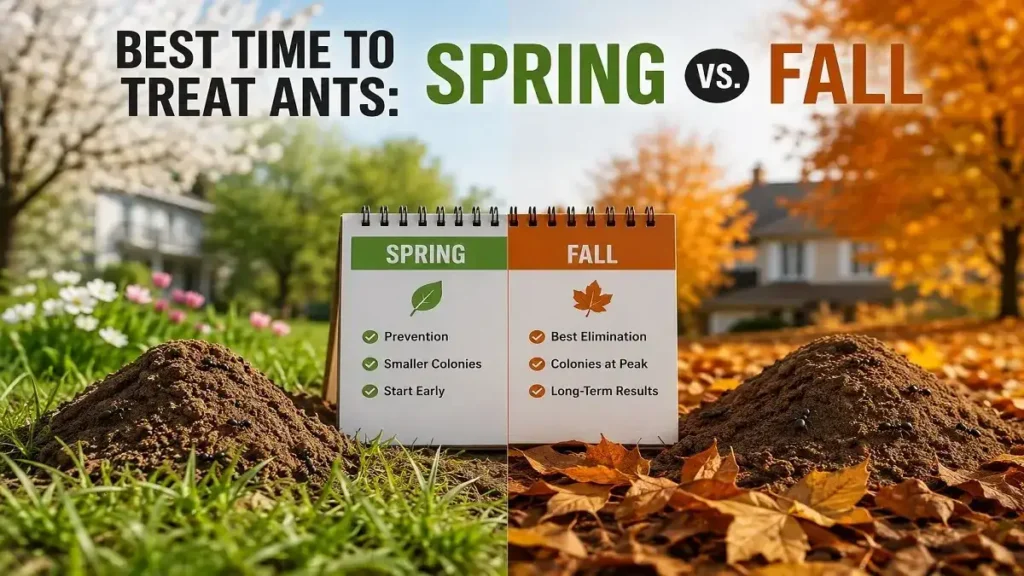
Trying to figure out when to kill ants? Spring is great for prevention, but fall is where the real magic happens. Here's exactly when to treat your yard.

In this guide
- Why Timing Matters for Ant Control
- Spring Treatment Guide (The Prevention Window)
- Fall Treatment Guide (The “Single Best” Window)
- Summer: What to Do in the Heat
- Winter: Can You Treat Ants in Winter?
- Fire Ants vs. Carpenter Ants: Timing Differences
- The “Chip Test”: How to Check Ant Activity
- Common Mistakes That Sabotage Your Treatment
- FAQ (Frequently Asked Questions)
- Conclusion
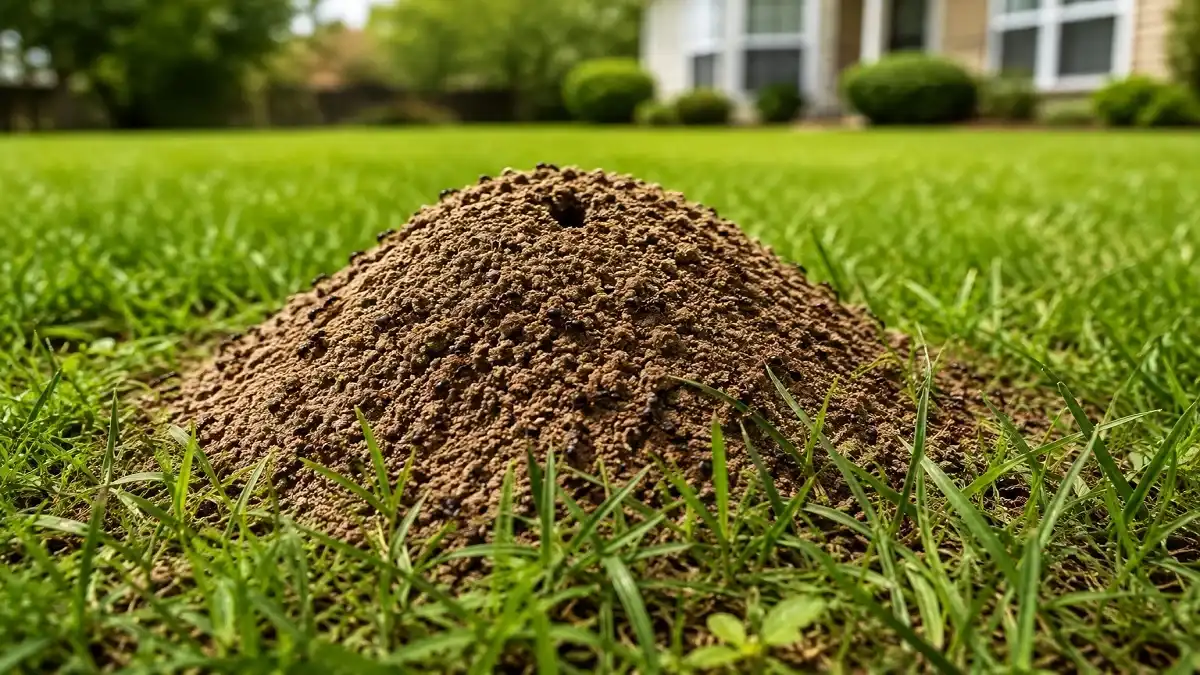
There’s nothing worse than heading out to your yard and finding ant mounds everywhere. Or worse, finding a trail of ants marching across your kitchen counter. It’s frustrating. You spray them, and a week later, they’re back like nothing happened.
So here’s the big question: is spring or fall the better time to treat ants?
The good news is, you don’t have to guess anymore. This guide will walk you through exactly when and how to treat ants, no matter what season it is, so you can finally land on permanent ant solutions instead of a quick fix. Here’s what we’ll cover:
- Spring treatment (this is your prevention window)
- Fall treatment (this is your best shot at real elimination)
- What to do if you have an ant problem in summer or winter
- How to handle different ants, like fire ants and carpenter ants
- Common mistakes that waste your time and money
Let’s get into it.
Why Timing Matters for Ant Control
Here’s the thing about ants: the ones you see crawling around are just the workers. They’re not the real problem. The real problem is hiding underground, the queen and her colony. If you only kill the workers on top, you haven’t solved anything. The queen just keeps making more.
That’s why timing matters so much. Ants only come out and look for food when the weather is right, usually between 70°F and 85°F. If it’s too hot or too cold, most of the colony stays underground, and any bait you put out just sits there.
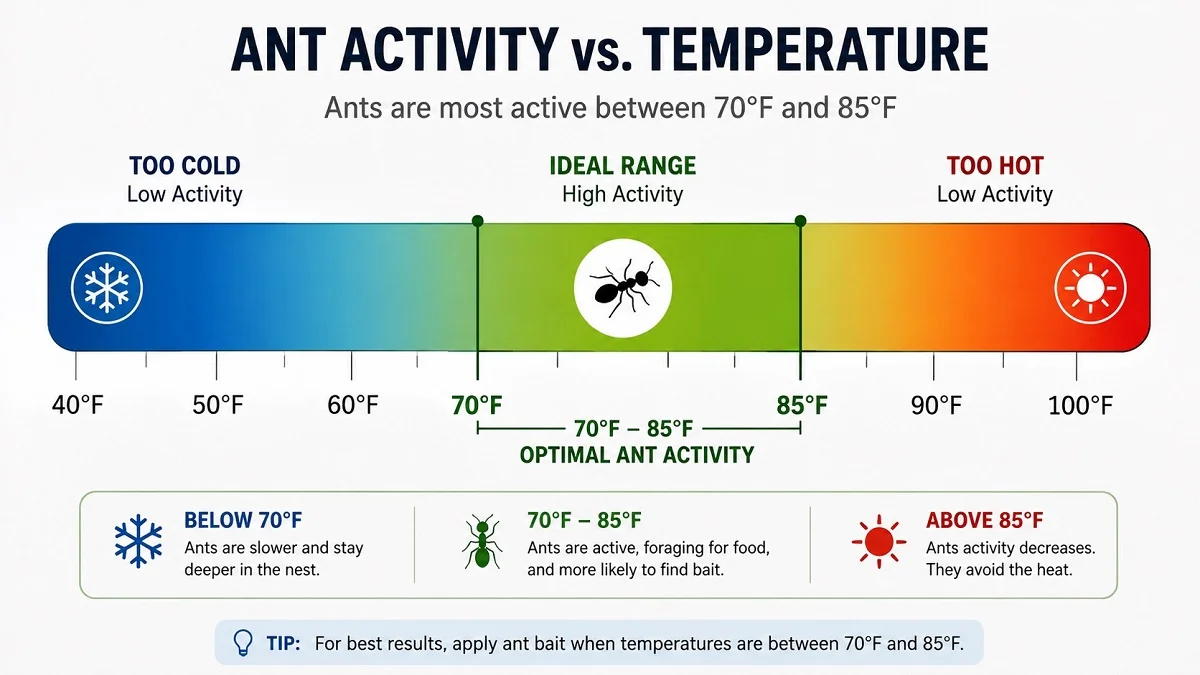
This is the difference between spring and fall in a nutshell:
- Spring: Ants are just waking up from winter. They’re hungry and searching hard for food. This makes spring a great time for prevention, since colonies are still small.
- Fall: Colonies have grown all summer and are now at their biggest. This makes fall the best time to really knock them down, especially with fire ants.
Keep this in mind as we go through each season below.
Spring Treatment Guide (The Prevention Window)
Why Spring Works
When ants wake up from winter, they’re starving. This means they’ll take almost any food source you offer, including bait. And since colonies just started growing again, they’re still small and easier to control. If you catch them now, you stop the problem before it becomes a bigger headache later in the year.
If you can only treat once a year, spring is the time to do it.
Best Months and Conditions
Aim for March, April, or May. Wait until the soil warms up to around 65°F to 70°F before you treat. A simple way to remember this is to plan your treatment around Easter weekend, or the first warm, dry week of spring.
Not sure if it’s warm enough yet? Try the chip test (we’ll cover it in detail later). Just drop a small piece of food near a mound and see how fast ants show up.
Spring Application Methods
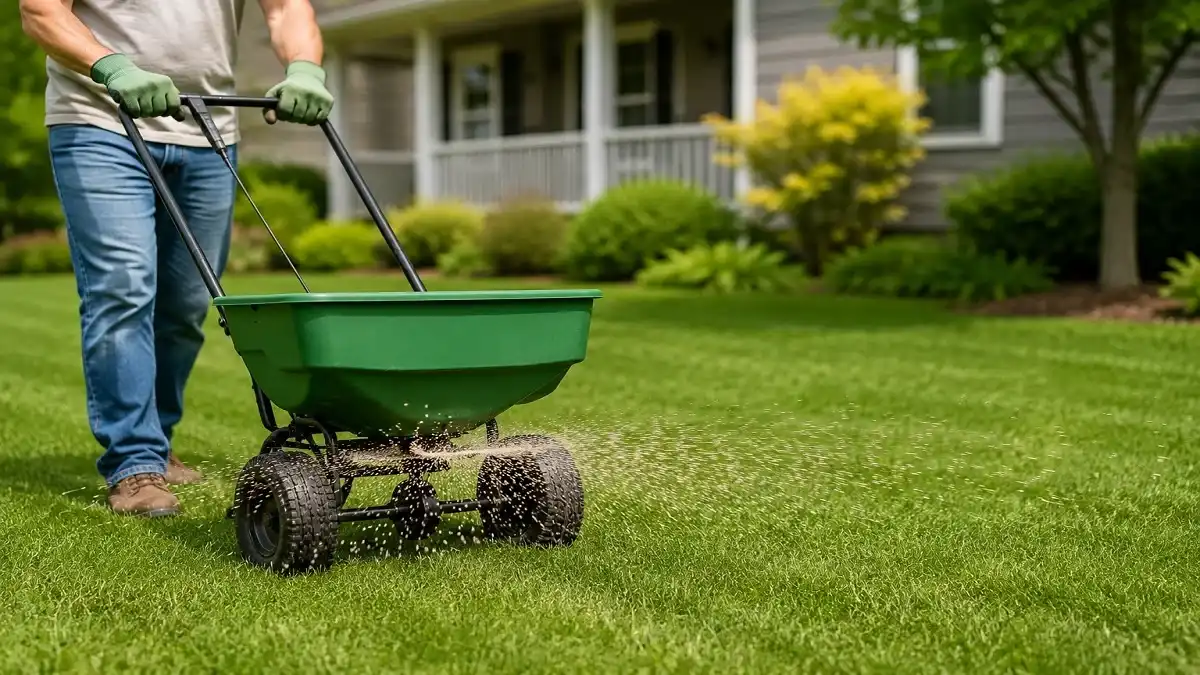
Use a broadcast bait. That means spreading small granules across your whole yard, not just dumping bait on top of the mounds you see. This helps because it also treats the smaller, hidden colonies you might not know about.
Protein-based baits tend to work better in spring, since the colony needs protein to feed and grow the young ants (called larvae). If your bigger issue is actually indoors, where sweet-loving trails show up on counters, it’s worth reading up on sugar ant control, since those baits work a little differently.
Here’s an important warning: don’t spray insecticide near your bait. The smell will scare ants away, and they won’t carry the bait back to the queen where it actually matters.
Fall Treatment Guide (The “Single Best” Window)
Why Fall Is the Best Time
Here’s something that might surprise you: several pest experts, including entomologists at the University of Georgia, point to fall as the single best time to treat fire ants. Let’s talk about why.
- Perfect temperatures. Fall weather (70–85°F) is exactly what ants like. They’re out foraging constantly, which means they’re much more likely to pick up your bait.
- The queen is closer to the surface. In fall, the queen and young ants haven’t burrowed deep for winter yet. This makes contact treatments more effective if you need them.
- Colonies are still manageable. Young colonies that started in spring have grown by fall, but they haven’t exploded into giant mounds yet. Treating now stops them before they get out of hand.
- Winter finishes the job. Bait weakens the colony, and then cold weather takes out whatever’s left. That means a much smaller ant problem next spring.
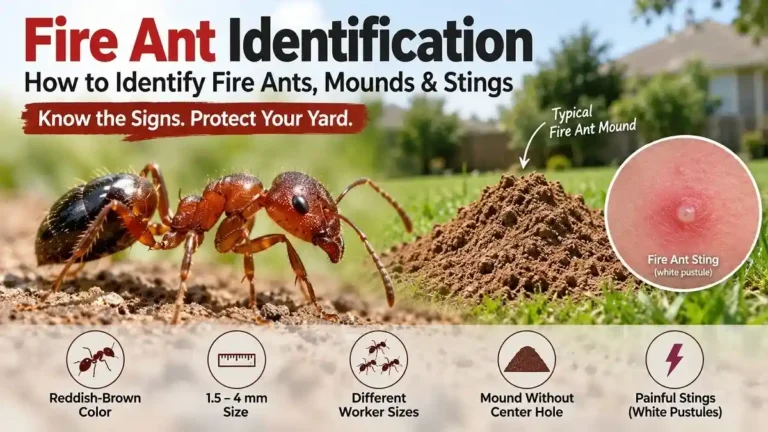
Not sure what’s actually living in your yard? It helps to identify fire ants before you commit to a treatment plan, since fire ants respond differently to bait than other species.
Best Months and Conditions
The sweet spot is late August through early October. A handy reminder is to treat around Labor Day.
This is important: one single mound left untreated in fall can turn into hundreds of new colonies by next summer. That’s how fast fire ants spread. Treating in fall stops this cycle before it starts.
Fall Application Methods
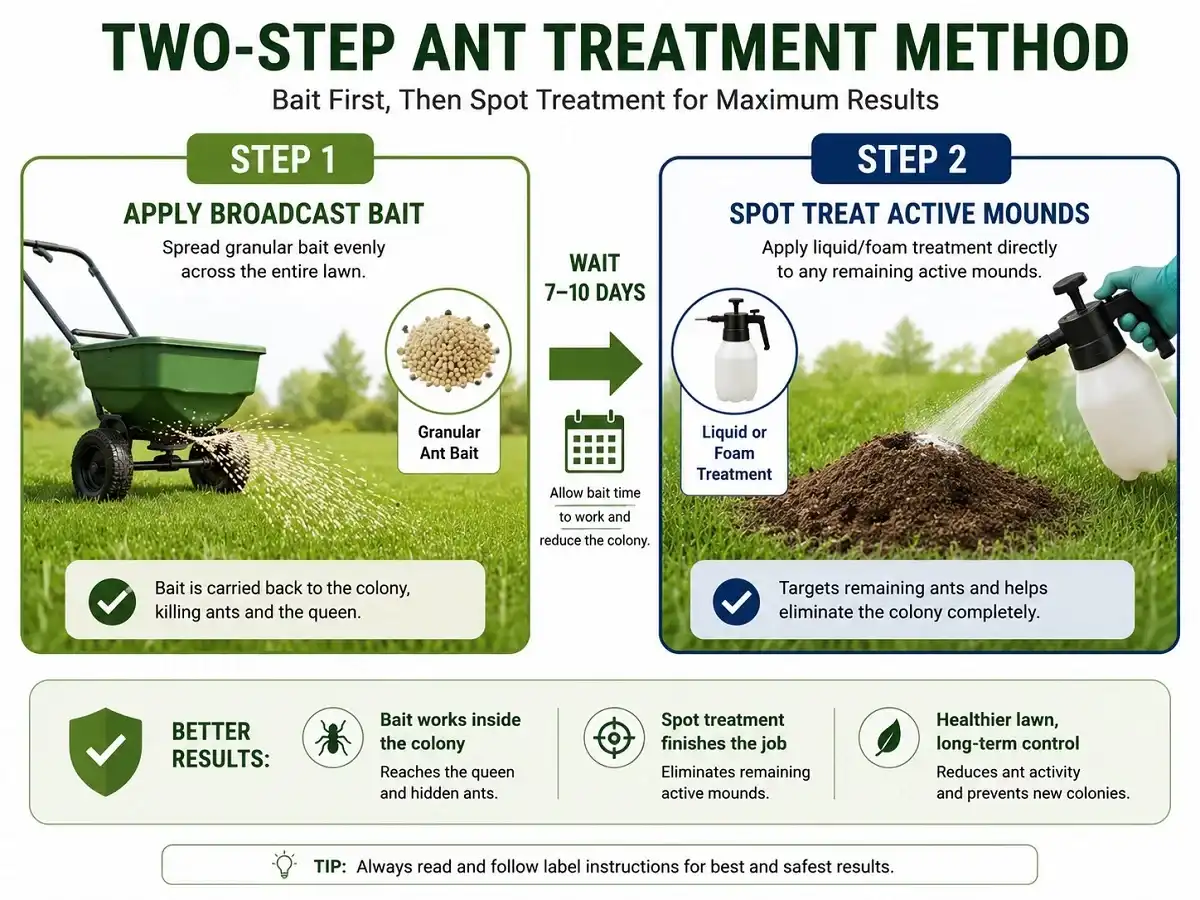
This is where the two-step method comes in:
- Step one: Broadcast bait across your entire yard, just like you did in spring.
- Step two: Wait 7 to 10 days, then check your mounds. Any mounds still active should get a direct treatment with a contact insecticide.
One more tip: sugar-based or liquid baits tend to work better in fall than protein baits do.
Summer: What to Do in the Heat
Summer is tricky. Once temperatures climb above 90°F, ants mostly stop foraging. They stay underground where it’s cooler. So if you put bait out in the middle of a hot summer day, you’re probably wasting it.
Here’s what to do instead:
- Treat in the late afternoon or early evening, once things cool down a bit.
- Focus on spot-treating the mounds you can actually see, instead of broadcasting bait across the whole yard.
- Buy fresh bait. Heat breaks down bait fast, and old bait just doesn’t work as well.
Winter: Can You Treat Ants in Winter?
Here’s something people often get wrong: ants don’t actually die in winter. They just go underground and slow way down, kind of like a light hibernation. This is called diapause.
You can still treat ants in winter, but only during a warm spell. Wait for a sunny day when the soil surface reaches at least 60°F. Midday, around 1 to 2 PM, is usually the warmest part of a winter day.
Since ants aren’t actively feeding much in winter, bait usually won’t work. Instead, use a contact poison dust on any mounds you can see.
Here’s a smart tip: treating between November and April, during a warm spell, can kill queens before they start laying eggs again in spring. That’s a small effort that can pay off big later.
Fire Ants vs. Carpenter Ants: Timing Differences
Not all ants behave the same way, so let’s break this down by type.
Fire Ants
- Best seasons: spring and fall
- Ideal temperature: 75°F to 95°F
- Strategy: broadcast bait across the whole yard, then treat individual mounds that are still active
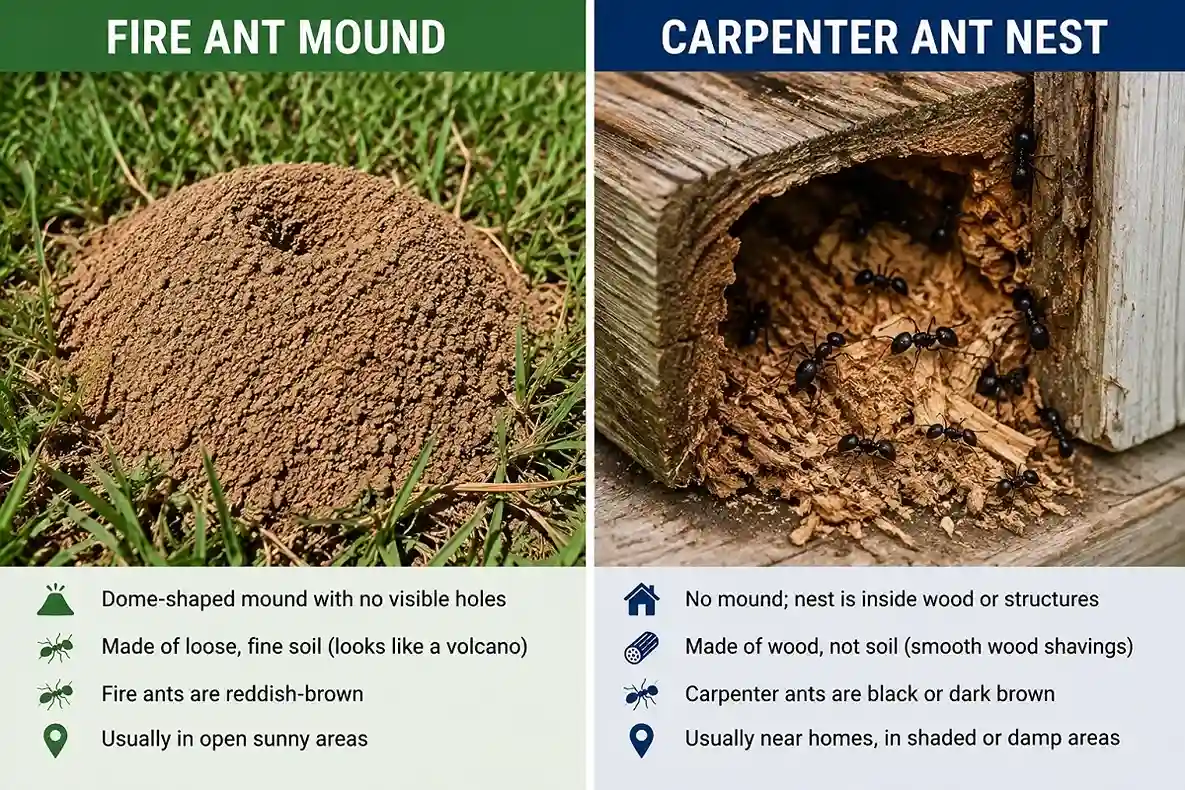
Carpenter Ants
- Active: March through October
- Best time to treat: spring, specifically April through June, since this is their mating season and they’re most active
- Strategy: spray around your home’s perimeter at dusk, and try to find and destroy their nest, which is often hiding in wet or rotting wood
One extra thing worth knowing: carpenter ants tend to prefer protein-based baits in spring, but switch to sugar-based baits in fall. If you’re seeing bigger black ants near damaged wood, it’s worth checking our full carpenter ant treatment guide for nest-specific advice.
The “Chip Test”: How to Check Ant Activity
Not sure if it’s the right time to treat? The chip test is a simple, no-cost way to check.
Here’s how to do it:
- Place a small piece of food, like a potato chip, a bit of hot dog, or a spoonful of peanut butter, near an ant mound or trail.
- Wait 30 minutes.
- Go back and check the food.
Now, here’s what the results mean:
- Ants show up in less than 30 minutes: Great, they’re actively foraging. This is a good time to treat.
- Ants don’t show up, or take longer than 30 minutes: Hold off. Wait for a warmer or cooler day, depending on the season.
Why does this matter so much? If ants aren’t out looking for food, they won’t carry your bait back to the queen. Without that, your whole treatment falls flat.
Common Mistakes That Sabotage Your Treatment
Even with good timing, a few common mistakes can ruin your results. Watch out for these:
- Spraying over bait. Pesticides repel ants, so they won’t touch the bait if they smell spray nearby. Pick one method at a time, not both together.
- Treating only visible mounds. There are almost always smaller, hidden colonies nearby. If you skip them, they’ll survive and take over.
- Applying bait before rain. Rain washes bait away before ants can carry it back. Wait for at least 24 to 48 hours of dry weather.
- Disturbing the mound. Poking or digging into a mound just scares the colony into moving somewhere new. You’ll lose them before you even start.
- Using old bait. Bait breaks down in heat and sunlight. Always grab fresh bait each season instead of using leftovers.
FAQ (Frequently Asked Questions)
What gets rid of ants immediately?
A simple mix of vinegar and water (equal parts) sprayed directly on ants will kill them on contact. It also breaks down their scent trail, which stops other ants from following the same path indoors. This works well as a quick fix while you’re dealing with black ants indoors and figuring out where they’re coming from.
When’s the best time to put down an ant killer?
Late afternoon or early evening during spring and fall works best. That’s when ants are most active and searching for food, so they’re more likely to take the bait.
What month do ants go away?
Ants don’t really disappear. They move underground once soil temperatures drop below about 65°F, which usually happens in late fall or early winter.
Is it better to kill ants or leave them?
It depends on the type. Fire ants or ants inside your home should be treated, since they can sting or cause damage. But ants outside that aren’t bothering anyone can actually be helpful. They aerate the soil and eat other pests.
Conclusion
Let’s bring it all together: spring is for prevention, fall is for elimination. Treat early in the year to stop colonies from growing, and treat again in fall to really knock down the ant population before winter.
Here’s your simple cheat sheet:
- One treatment a year? Go with spring, around April.
- Two treatments a year? Do spring and fall, around April and September.
- Dealing with fire ants? Don’t skip the fall treatment. It matters most for them.
A good trick is to mark your calendar around Easter, the Fourth of July, and Labor Day as reminders to check your yard. With the right timing, a little patience, and the tips above, you can put together a complete ant elimination guide for your own home instead of chasing the problem all year long.

Evan Brooks
Evan Brooks enjoys writing about ants and the way they live, build colonies, and adapt to different environments. His articles cover common ant species, nests, queens, seasonal activity, and everyday questions. He believes simple...
View all guides →