
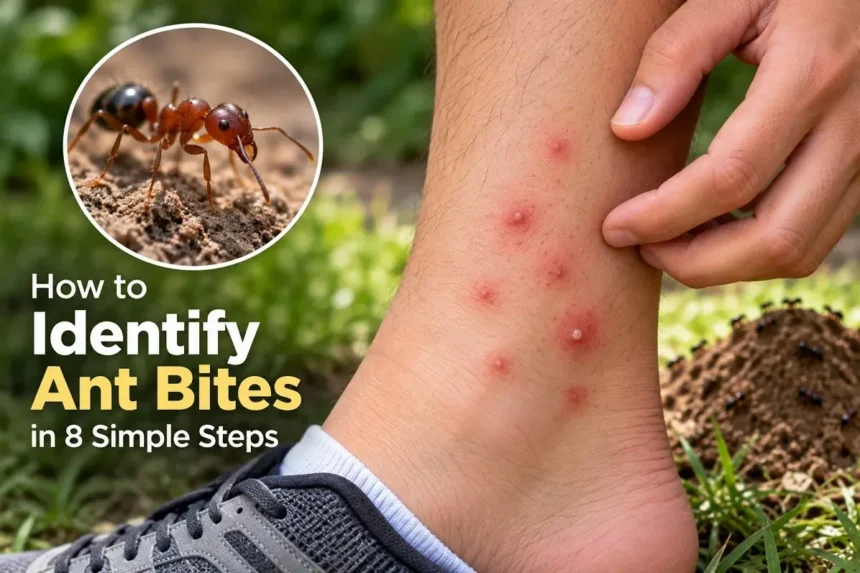
You notice a red bump on your ankle or hand. It may itch, burn, hurt, or start to swell. Is it an ant bite—and if so, what type of ant caused it?
The skin mark is only one clue. To identify ant bites, also consider how the reaction started, how many marks appeared, where you were, and whether you saw ants nearby.
- Ant Bite Identification Snapshot
- What Type of Ant Bit or Stung You?
- Ant Bite vs. Ant Sting: What’s the Difference?
- 8 Steps to Identify a Suspected Ant Bite
- Does This Look Like an Ant Bite?
- Ant Bites vs. Other Bug Bites
- What Should You Do If Ants Attack You?
- When Does an Ant Bite Need Urgent Medical Help?
- Saw the Ant? These Clues Can Help Identify It
- Identify the Encounter, Not Just the Bump
The ant can tell you even more. Fire ants, carpenter ants, field ants, pavement ants, and harvester ants do not all cause the same type of encounter.
This guide helps you connect the skin reaction with what actually happened.
Ant Bite Identification Snapshot
Look: Check for a raised bump, redness or skin discoloration, swelling, a blister, or a pustule.
Feel: Notice whether the area itches, burns, stings, or hurts.
Check the pattern: Look for one mark or several marks in the same area.
Think about exposure: Were you gardening, walking through grass, sitting outside, or standing near active ants?
Look for the ant: If possible, photograph the insect and the place where the encounter happened.
Fire-ant clue: A painful or burning sting can later develop a small white pustule.
What Type of Ant Bit or Stung You?
There is no simple skin test that can name the exact ant. Instead, compare what happened with the ants that are realistic possibilities in your area.
| What happened? | Ant to consider | What to check next |
|---|---|---|
| Several painful or burning stings after disturbing soil or a mound | Fire ants | The ants, mound, and your location |
| A large dark ant bites during direct contact | Carpenter ant | Ant size, nearby wood, and moisture |
| You disturb a lawn nest and workers bite | Field ants | A soil nest or mound nearby |
| Small dark ants are active around concrete cracks | Pavement ants | Trails entering pavement or foundation gaps |
| A painful encounter happens near a nest in dry, open ground | Harvester ants | The ant, nest type, habitat, and region |
These clues help narrow the possibilities. They should not be used to diagnose the species from a skin reaction.
Fire Ant Bites and Stings
What people call a fire ant bite is usually a bite-and-sting encounter.
A worker grips the skin with its jaws and then stings. This can cause sudden burning or stinging pain. The same worker can sting more than once.
Several ants may attack after a colony is disturbed. This can leave multiple painful marks around the feet, ankles, or lower legs.
A small blister can develop later and may form a white pustule.
Location matters too. Imported fire ants are established across much of the southern United States, including Texas. If you are in an area where fire ants occur and the encounter started after you stepped near a mound, they become a stronger possibility.
Still, don’t rely on the mound or skin reaction by itself. Seeing the ants makes the identification much stronger.
Carpenter Ant Bites
Carpenter ants are much larger than many common household ants. They can bite if handled, disturbed, or trapped against your skin.
They do not produce the same well-known pustule reaction linked with fire-ant stings.
If a large dark ant bit you, think about where you found it. Carpenter ants are often associated with wood, and nesting activity can be linked with damp or damaged wood.
Workers can also travel indoors from an outdoor colony. One large ant inside the house does not prove there is a nest in the wall.
If I actually saw the ant, I would photograph it before trying to identify the species from the bite.
What About Black Ant Bites?
“Black ant” describes color, not one species.
Several ants can look black or dark brown. A large carpenter ant and a tiny pavement ant, for example, can both appear dark but point to very different pest problems.
If the ant looked black, check:
- its approximate size;
- where you found it;
- whether it came from wood, soil, or concrete;
- where other workers are travelling; and
- whether several similar ants are nearby.
Color helps narrow the search, but size and location often tell you more.
Field Ant Bites
Field ants are mainly outdoor ants. Some species can bite when their nest is disturbed.
If the encounter happened while mowing, gardening, walking through a lawn, or moving something near a soil nest, inspect that area for concentrated ant activity.
A nearby mound or nest can be a stronger clue than the bite itself.
Pavement Ant Bites
Pavement ants are small ants commonly found around sidewalks, patios, concrete slabs, and foundations.
They can bite, but bites are not usually the main clue homeowners notice.
If small dark ants are involved, watch their trail. Workers repeatedly entering the same crack in concrete or along a foundation can help identify where they are coming from.
Harvester Ant Bites and Stings
Some harvester ants can deliver painful defensive bites or stings.
They are mainly outdoor ants and are more relevant in dry, open habitats in parts of the United States.
A painful ant encounter does not automatically mean fire ants. Harvester ants and other defensive species can also cause painful encounters.
If an ant seems “like a fire ant but worse,” don’t judge it by pain alone. Check the ant’s size and appearance, the type of nest, the habitat, and whether that species occurs in your region.
Ant Bite vs. Ant Sting: What’s the Difference?
An ant bites with its jaws. A sting comes from the rear of the ant and can inject venom.
Some ants only bite. Others can sting.
Fire ants do both. They use their jaws to grip the skin and then sting, which is why the painful reaction commonly called a “fire ant bite” is largely caused by the sting.
This difference becomes useful when you combine it with what you saw during the encounter.
8 Steps to Identify a Suspected Ant Bite
No single clue can confirm an ant bite. Work through the signs together.
Step 1: Check What the Ant Bite Looks Like
Ant bites and stings can cause small raised bumps, redness or skin discoloration, and localized swelling.
Some reactions itch. Others feel sore, painful, or tender.
Fire-ant stings can look different as they develop. A small blister may appear and later form a white pustule.
The exact reaction varies from person to person, so use appearance as your starting clue rather than the final answer.
Step 2: Check the Swelling
Look at how far the swelling extends beyond the mark.
A mild reaction may stay close to the bite or sting. Some people develop a larger local reaction.
Swelling alone cannot tell you which insect caused it, but it can help you track how the reaction is changing.
Step 3: Remember How It Felt at First
Think about the first few moments.
Did you feel a pinch? A sudden sting? Burning pain?
An ant’s jaws can cause a pinching sensation. A fire-ant sting often causes immediate stinging or burning.
That first feeling is more useful if you also saw ants or disturbed a nest.
Step 4: Watch for a Blister or White Pustule
A blister or pustule is particularly useful when fire ants are possible.
A fire-ant sting may begin with pain or burning. A bump or welt can follow, and a small blister may later form a white pustule.
If you also noticed reddish-brown ants or a mound nearby, compare the ants with our fire ant identification guide.
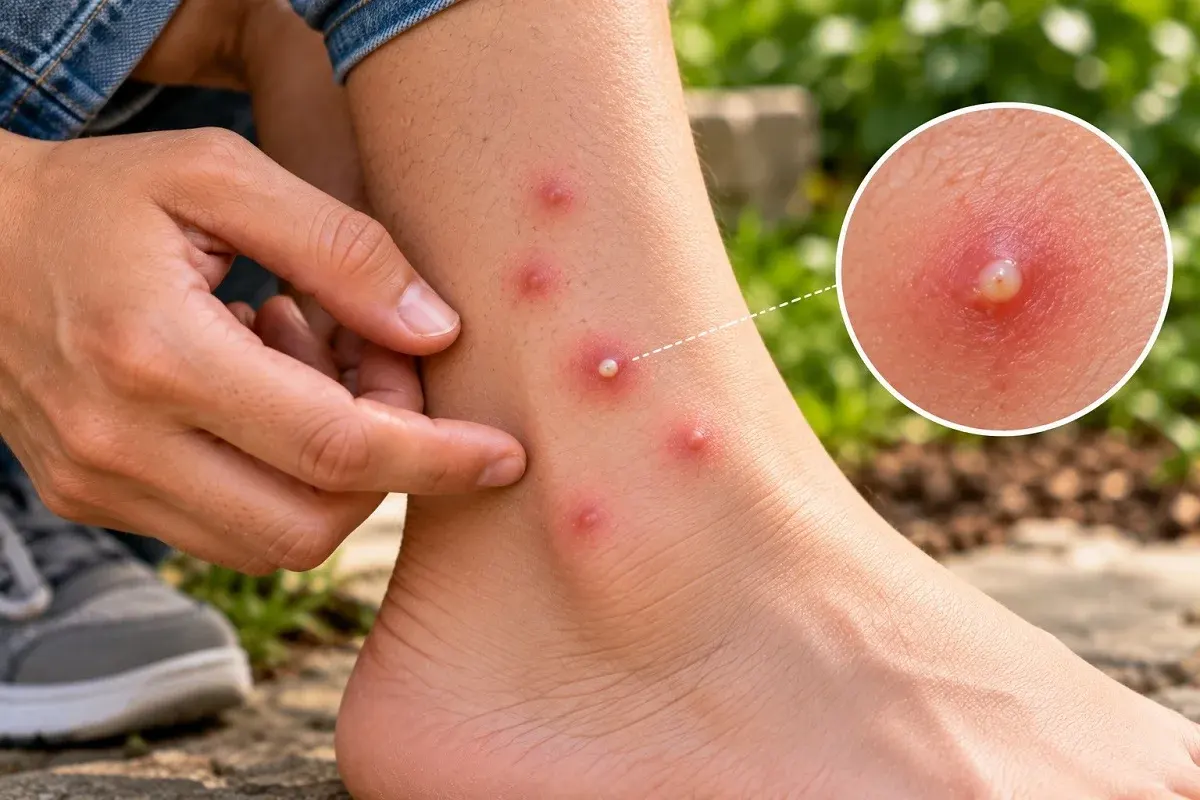
A typical fire-ant pustule does not automatically mean infection. Avoid scratching, squeezing, or opening it.
A blister without itching also does not prove that an ant caused the reaction. Other insect bites and skin conditions can blister. If you did not see ants or have a clear ant exposure, keep other causes in mind.
Step 5: Count the Marks and Check the Pattern
Look beyond the first bump.
Fire ants can sting repeatedly, and several workers may attack when a colony is disturbed. This can leave multiple marks in the same area.
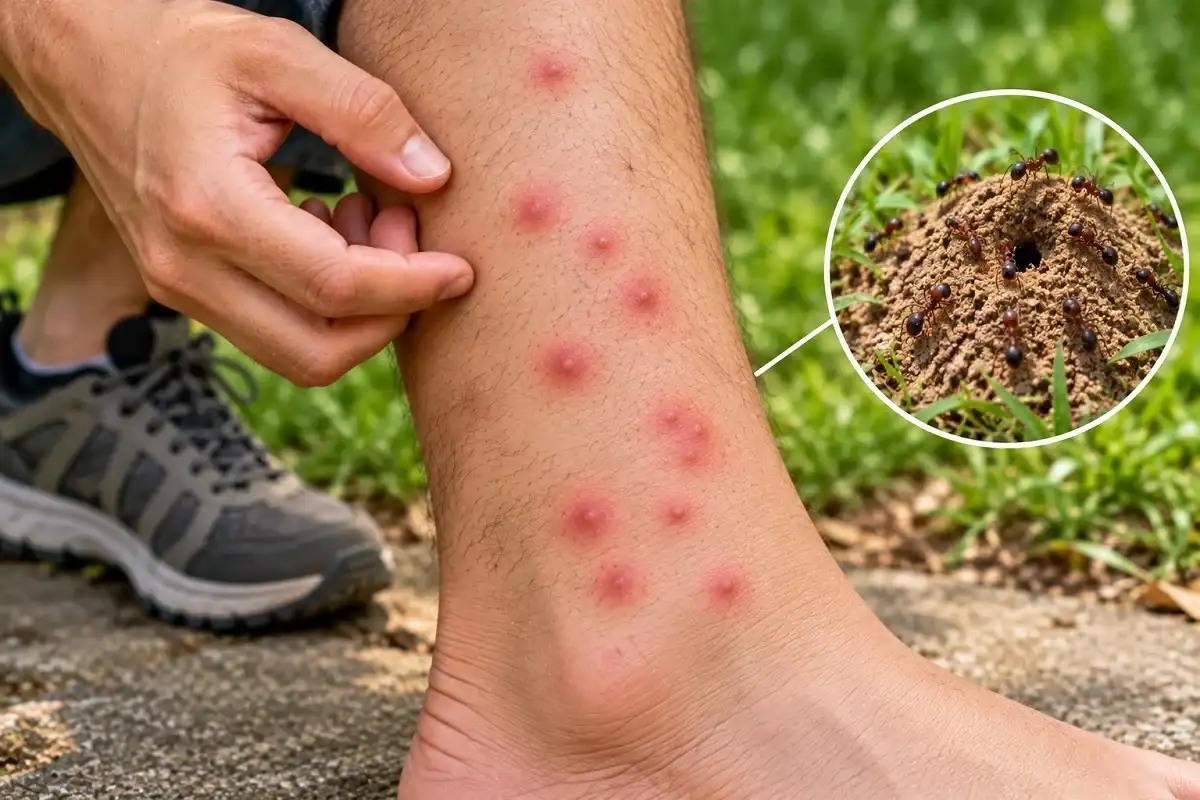
Clusters are not unique to ants. Use the pattern together with the other clues.
Step 6: Check Where the Marks Appeared
Body location can help reconstruct the encounter.
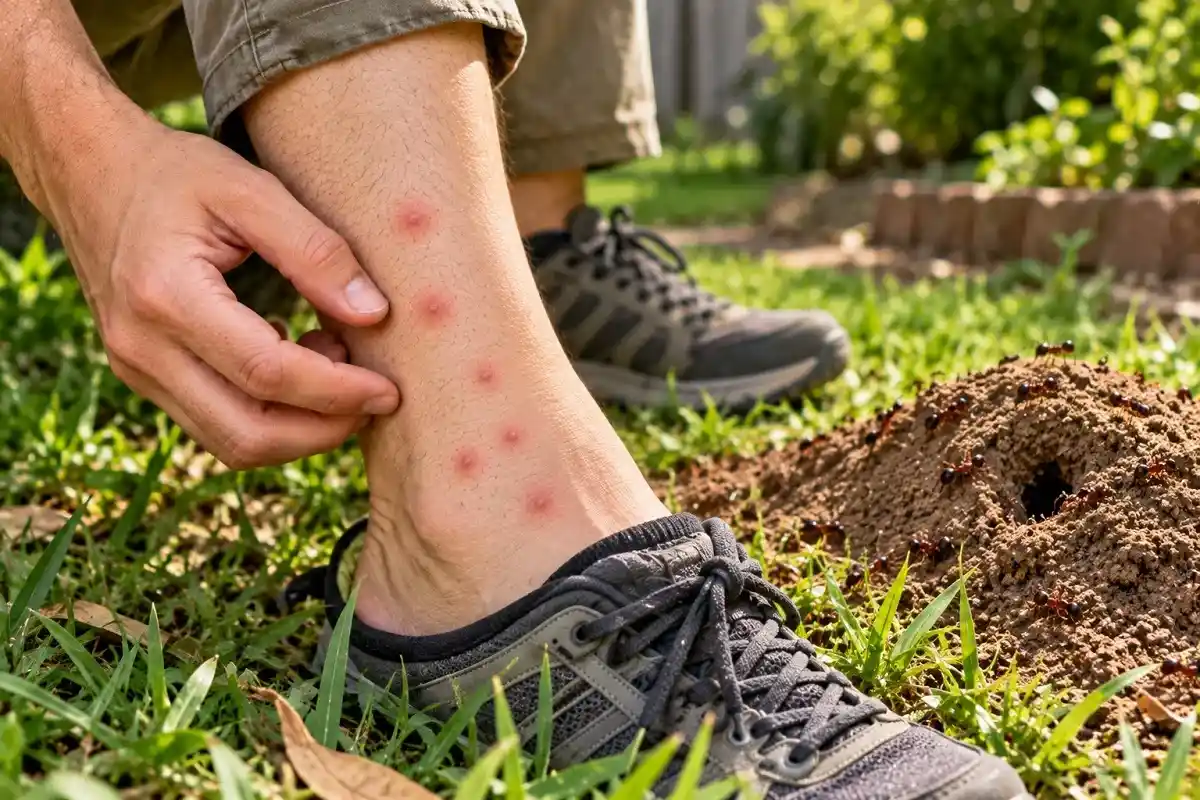
Feet, ankles, and lower legs are more likely to contact ants while you walk or stand outdoors. Hands may be exposed while gardening, moving objects, or working near a nest.
Where the marks appeared becomes more useful when it matches what you were doing.
Step 7: Reconstruct the Ant Encounter
Now think about what happened before the reaction started.
Were you walking through grass, gardening, sitting outside, moving something from the ground, or standing near a mound?
Did you see ants on your shoes, clothes, or skin?
Then connect that event with the type of ant.
Several painful stings after stepping beside a mound fit a different encounter from one large dark ant biting your hand after direct contact.
This step often provides more useful identification clues than studying the bump again.
Step 8: Watch How the Reaction Changes
Check the area over the next several hours.
Fire-ant stings can follow a useful sequence:
burning or stinging pain → localized bump → blister → white pustule.
Your reaction may not follow every stage. Focus on the overall sequence rather than expecting an exact timeline.
Does This Look Like an Ant Bite?
It could, but don’t judge it from appearance alone.
Use three questions instead:
Does the reaction fit?
Look at the bump, pain, itching, burning, swelling, blister, or pustule.
Does the exposure fit?
Were you around grass, soil, a mound, wood, or another place where ants were active?
Does the ant fit?
If you saw it, compare its size, color, behavior, and nesting area.
The case for an ant bite becomes stronger when the reaction and the encounter point in the same direction.
Ant Bites vs. Other Bug Bites
Ant bites can overlap with other insect bites, so a quick comparison can help when the evidence is unclear.
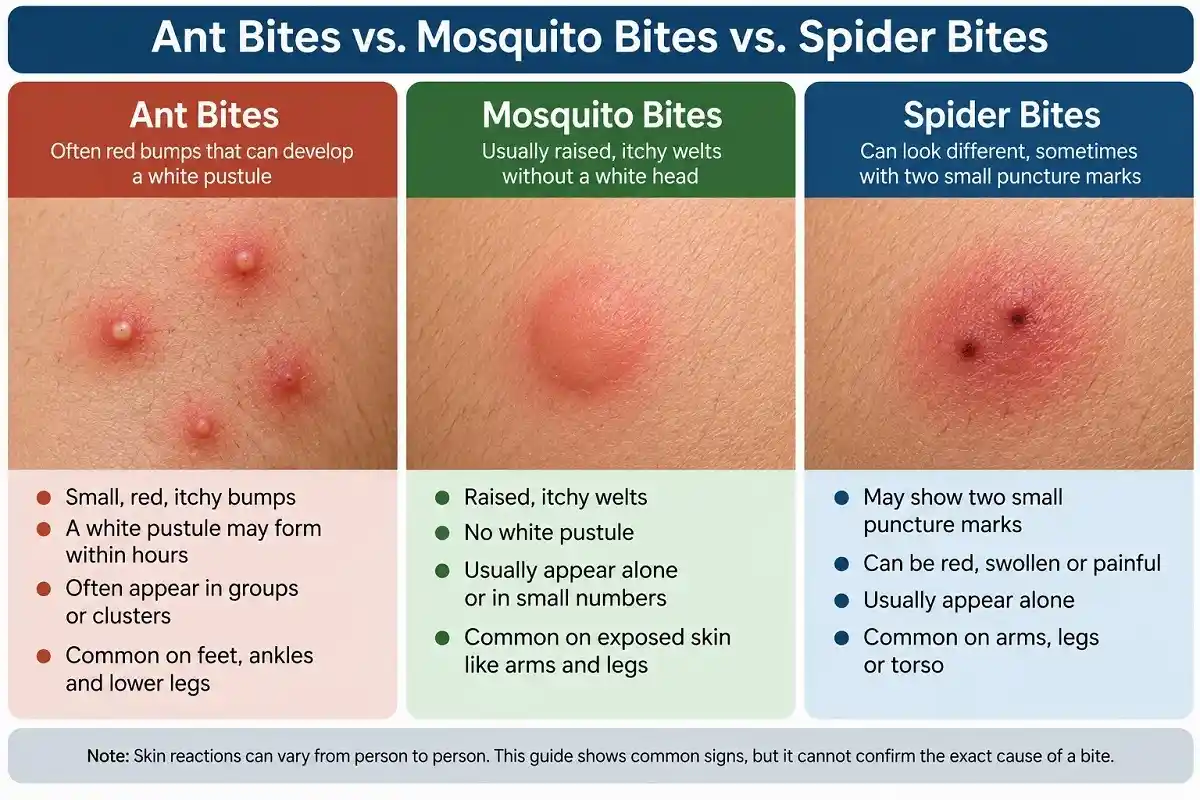
| Possible cause | Clues you may notice |
|---|---|
| Ant / Fire ant | Pain, burning, itching, or swelling. Fire-ant stings may later form small white pustules, and several stings can occur together. |
| Mosquito | Often a puffy, itchy bump. Several bites can occur. |
| Flea | Often small, very itchy bumps, sometimes close together. |
| Bed bug | Several itchy or swollen marks may appear together or in a line. The reaction can also be delayed. |
If the reaction does not fit the ant encounter, keep other possible causes in mind.
What Should You Do If Ants Attack You?
If ants are still crawling on you, move away from the nest or active area first and remove the ants from your skin and clothing.
Once you are clear of them, think about where the attack started.
Several ants quickly climbing onto your shoes or legs after you step near a mound is useful information. So is seeing one large ant bite after it becomes trapped against your skin.
For a mild local reaction, wash the area with soap and water. A cool compress can help with discomfort and swelling.
Avoid scratching or breaking a blister or pustule.
How to Avoid Another Ant Bite
Do not disturb an unknown ant mound with your hands or feet.
Wear closed shoes when walking or working around active nests. Gloves can also help when gardening or moving objects that have been sitting on soil.
If bites keep happening in the same part of your yard, identify the ants and locate the colony instead of simply avoiding that spot.
When Does an Ant Bite Need Urgent Medical Help?
A small reaction around the sting is different from symptoms affecting other parts of your body.
Do not wait to identify the ant before seeking emergency help.
Contact a healthcare professional if a reaction keeps getting worse, appears infected, or causes symptoms that concern you.
Saw the Ant? These Clues Can Help Identify It
If the ant is still nearby, photograph it safely. A clear picture of the insect may be more useful than another close-up of the skin.
Try to include something for scale.
Then look at where the ants are active:
Mound in a lawn: Check the ants themselves and whether fire ants occur in your region.
Large dark ants around wood: Carpenter ants become more relevant.
Small ants around concrete: Look for trails entering pavement, slab, or foundation cracks.
Ants indoors: Follow the trail and find where workers enter or disappear.
Our types of ants guide can help you compare the insect itself once you have these clues.
Identify the Encounter, Not Just the Bump
To identify ant bites, start with the reaction but connect it with what happened.
A painful cluster after stepping near a mound points in a different direction from a large dark ant biting during direct contact. The ant, location, and sequence of events can help you narrow the possibilities.
If you can safely photograph the ant, do it. That evidence may tell you far more about what bit or stung you than the bump alone.
If ants remain active where the encounter happened, identifying the colony can also help prevent the next bite.