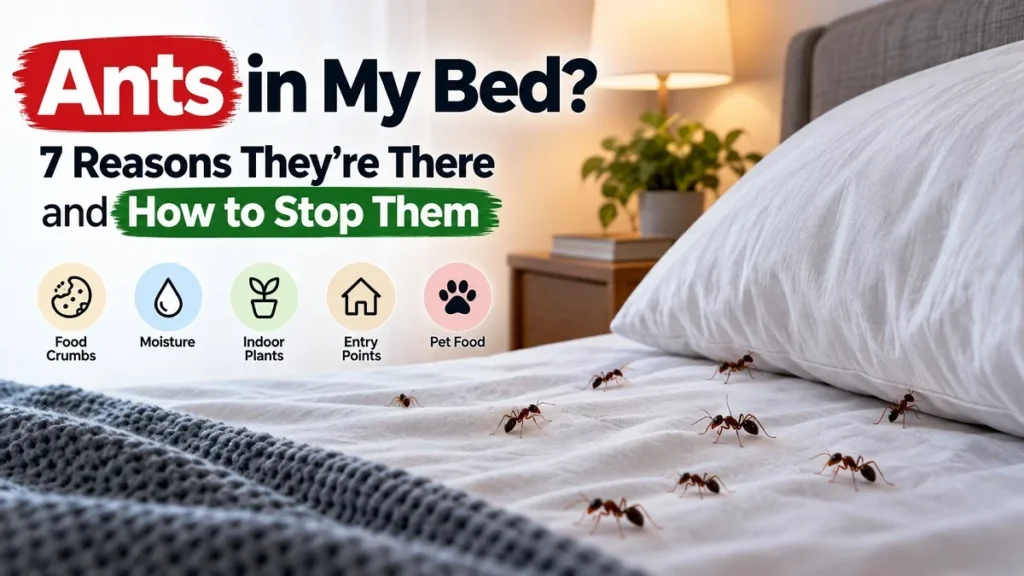
Ants in My Bed? 7 Reasons They’re There and How to Stop Them
Found ants in your bed? Learn 7 reasons they show up, where they may be coming from, and practical ways to get rid of them and keep them away.

In this guide
- Why Are There Ants in My Bed?
- 7 Reasons You Have Ants in Your Bed
- Why Are There Ants in My Bed When There Is No Food?
- Where Are the Ants Coming From?
- Do Ants Actually Live Inside Mattresses?
- Seeing Winged Ants in the Bedroom?
- How to Get Rid of Ants in Your Bed
- How to Prevent Ants From Coming Back
- When Do Ants in the Bed Mean a Bigger Problem?
- Frequently Asked Questions
- Don’t Just Clear the Bed—Find the Source
Finding ants crawling across your bed is unsettling, especially when you never eat there. You may clean the sheets and remove the ants, only to find another trail near the pillow, headboard, or bed frame later.
Food crumbs and sugary spills can attract ants, but they are not the only reasons ants end up on a bed. Moisture, a nearby nest, an indoor plant, pet food, or an entry point beside the bed can also be responsible.
Before spraying the mattress or replacing your bedding, find out where the ants are actually coming from. Here are seven likely reasons ants are getting onto your bed and practical ways to stop them.
Why Are There Ants in My Bed?
Ants may reach your bed while searching for food or water, traveling from a nearby nest, or simply following a route through the bedroom. Your bed can sometimes be in their path rather than the thing attracting them.
Seeing ants on your sheets also does not automatically mean they are living inside your mattress. The source may be a window gap, baseboard, wall void, houseplant, or another area close to the bed.
Watch where the ants come from before removing the entire trail. Their movement can give you useful clues about what is attracting them and where the colony may be located.
7 Reasons You Have Ants in Your Bed
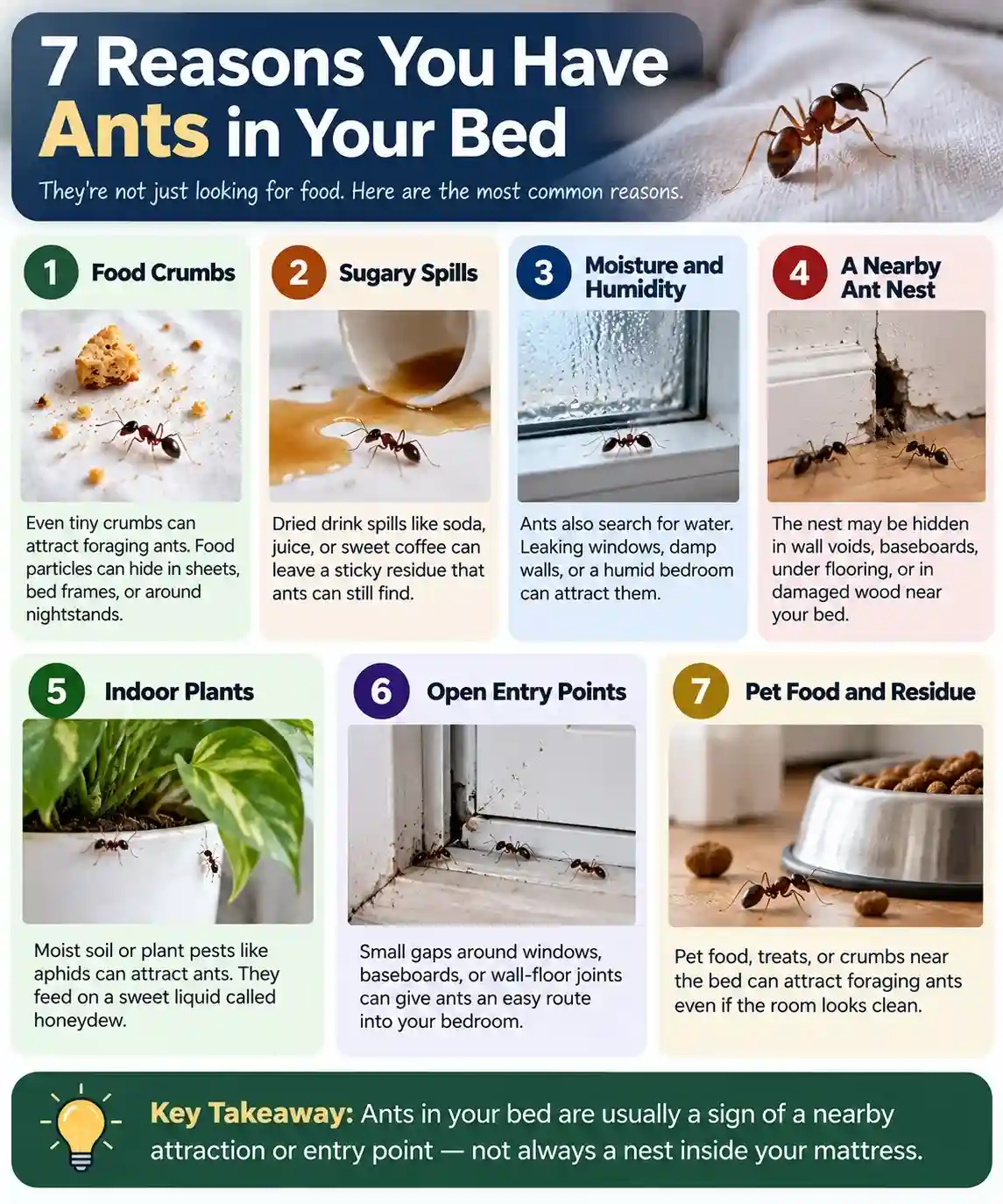
1. Food Crumbs
You do not need to see a pile of food for ants to find something worth eating. Tiny crumbs can collect between sheets, around the bed frame, under the bed, or beside a nightstand.
Cookies, crackers, chips, candy, and other snacks can leave small particles behind. Even if you ate in bed several days ago, ants may still discover food that cleaning missed.
If several ants gather around one part of the bed, inspect that area closely. Check mattress edges, bed-frame joints, the floor underneath, and nearby furniture.
2. Sugary Spills
A sweet drink can attract ants even after the liquid has dried. Soda, juice, sweet coffee, syrup, and similar liquids can leave a thin sugary residue behind.
Check your nightstand, floor, bed frame, and nearby furniture for old sticky spots. A small spill running down the side of furniture can be easy to miss.
Removing the ants without cleaning the residue leaves the original attraction in place.
3. Moisture and Humidity
If there is no food around your bed, start looking for moisture. Ants entering a home may also be searching for water.
Check for a leaking window, damp wall, condensation, spilled water, a humidifier, or moisture from an adjoining bathroom. An overwatered houseplant can also keep the surrounding area damp.
Watch whether the ants repeatedly move toward one moist area. Fixing that moisture source may be just as important as dealing with the ants themselves.
4. A Nearby Ant Nest
Ants may keep appearing on your bed because their nest is nearby. Some species can establish nests inside wall voids, behind baseboards, under flooring, or in other protected spaces.
A trail that repeatedly disappears into the same wall crack or baseboard gap deserves attention. The ants may only be crossing your bed because it is close to their route.
Large ants around damp or damaged wood need closer inspection. Carpenter ants can establish nests or satellite nests in structural spaces, including wall voids and moisture-damaged wood.
5. Indoor Plants
A plant beside your bed or bedroom window can sometimes be the real reason ants are nearby. Moist potting soil, the plant location, or insects feeding on the plant may attract ant activity.
Aphids and some scale insects produce a sweet substance called honeydew. Ants can feed on this honeydew, so the ants around your bed may actually be traveling toward a nearby plant.
Check the soil, pot rim, saucer, stems, and undersides of leaves. Sticky leaves or clusters of tiny plant pests can be an important clue.
6. Open Entry Points
Your bed may simply be close to the route ants use to enter the bedroom. Small openings around windows, baseboards, floors, and other structural gaps can provide access.
Look closely at the bed legs and headboard. If the headboard touches a wall with an active ant trail, workers can move directly from the wall onto the bed.
Sheets, blankets, curtains, or cables touching the floor or wall can also create an easy bridge onto the furniture.
7. Pet Food and Residue
If your pet spends time in the bedroom, check its food and treats rather than assuming the animal itself is the problem. Small pieces of pet food can attract foraging ants.
Look for kibble under furniture, treat crumbs on bedding, or a feeding bowl close to the bed. Food residue may remain even when the bedroom looks clean.
Clean the feeding area and wash bedding if food has been carried onto it. Keeping pet food away from the bed can remove one possible attraction.
Why Are There Ants in My Bed When There Is No Food?
If you never eat in bed, food crumbs may not be the cause. Ants can still appear because they are looking for water, traveling from a nearby nest, or using your bed as part of an established route.
Start with the area around the bed. Check windows, baseboards, damp walls, houseplants, and the point where the headboard meets the wall.
The ants may also be heading somewhere else. A bed sitting between their entry point and a useful resource can become part of the trail even when there is nothing to eat on it.
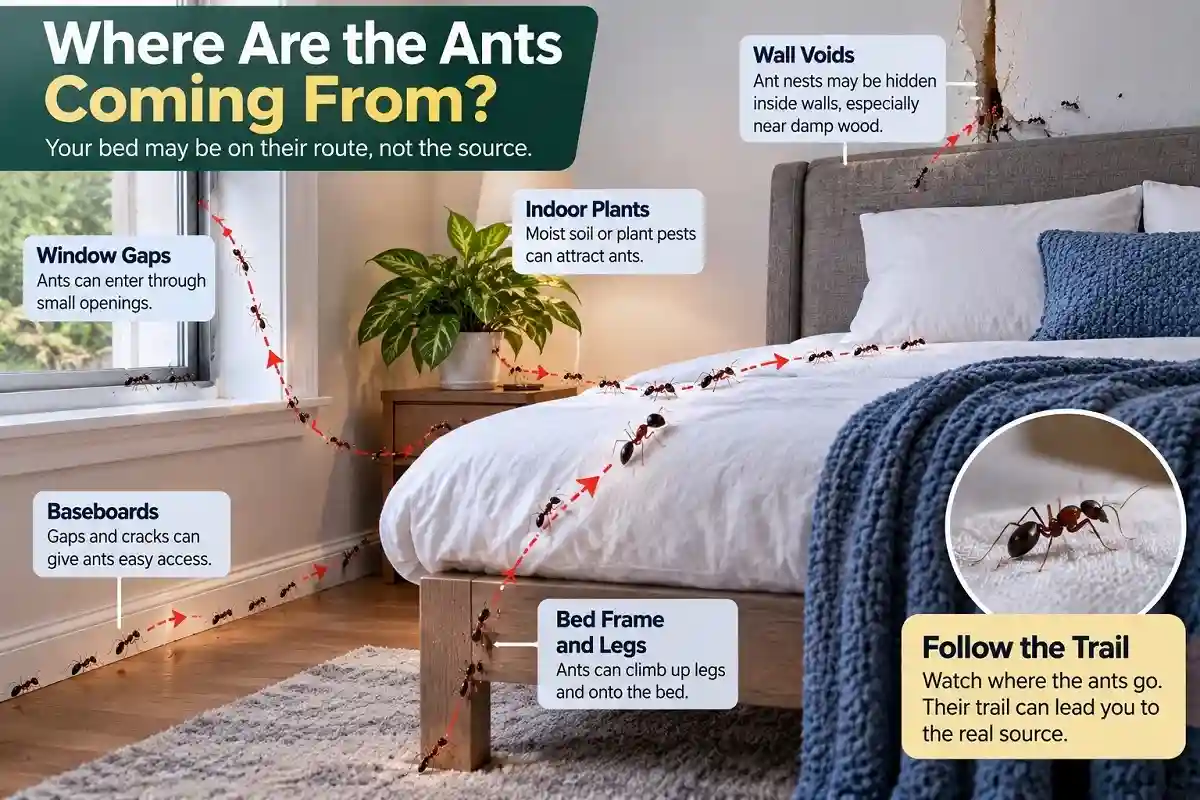
Where Are the Ants Coming From?
Before cleaning the next trail, watch a few ants for several minutes. See where they climb onto the bed and where they go when they leave it.
Ant workers can use chemical signals called pheromone trails to help other workers follow useful routes. A repeated trail can therefore lead you toward an entry point, food source, or nesting area.
Check the Bed
Inspect each bed leg, the frame, and the headboard. If most ants use the same leg or corner, follow their route toward the floor or wall.
Where practical, move the bed slightly away from the wall while investigating. Keep blankets and sheets from hanging onto the floor.
Check the Walls and Windows
Look along baseboards, window frames, wall-floor joints, and small cracks near the bed. Pay special attention to the exact point where the trail disappears.
Do not immediately seal an active opening before you understand the problem. If ants are nesting inside a structural space, sealing one route alone may not eliminate the colony.
Check Plants and Damp Areas
Inspect nearby plants, humid areas, leaking windows, and any plumbing close to the bedroom. These sources become especially important when you cannot find food.
Also note the ants’ size and color. If you are unsure what you are dealing with, identify the type of ant before choosing a control method.
Do Ants Actually Live Inside Mattresses?
Seeing ants on your mattress does not prove there is a colony living inside it. In many cases, the ants you see are workers traveling onto the bed from somewhere else.
Check the bed frame, headboard, floor, baseboards, windows, wall gaps, and nearby furniture before assuming the mattress is the source. A hidden route beside the bed is often more useful to investigate.
If ants repeatedly disappear into a damaged part of the bed frame or another enclosed space, inspect that particular area more closely.
Seeing Winged Ants in the Bedroom?
Winged ants are reproductive members of an ant colony rather than ordinary workers. Finding a single winged ant indoors does not automatically prove there is a nest inside your bedroom.
However, repeated swarms or large numbers of winged ants emerging indoors deserve closer attention. They can be a sign that a colony is established somewhere inside or close to the structure.
Make sure the insects are actually ants. Winged ants and termites can be confused at first glance, but they require different approaches to identification and control.
How to Get Rid of Ants in Your Bed
Do not focus only on killing the ants currently crawling across your sheets. A better approach is to clean the bed area, locate their route, remove what is attracting them, and target the colony when needed.
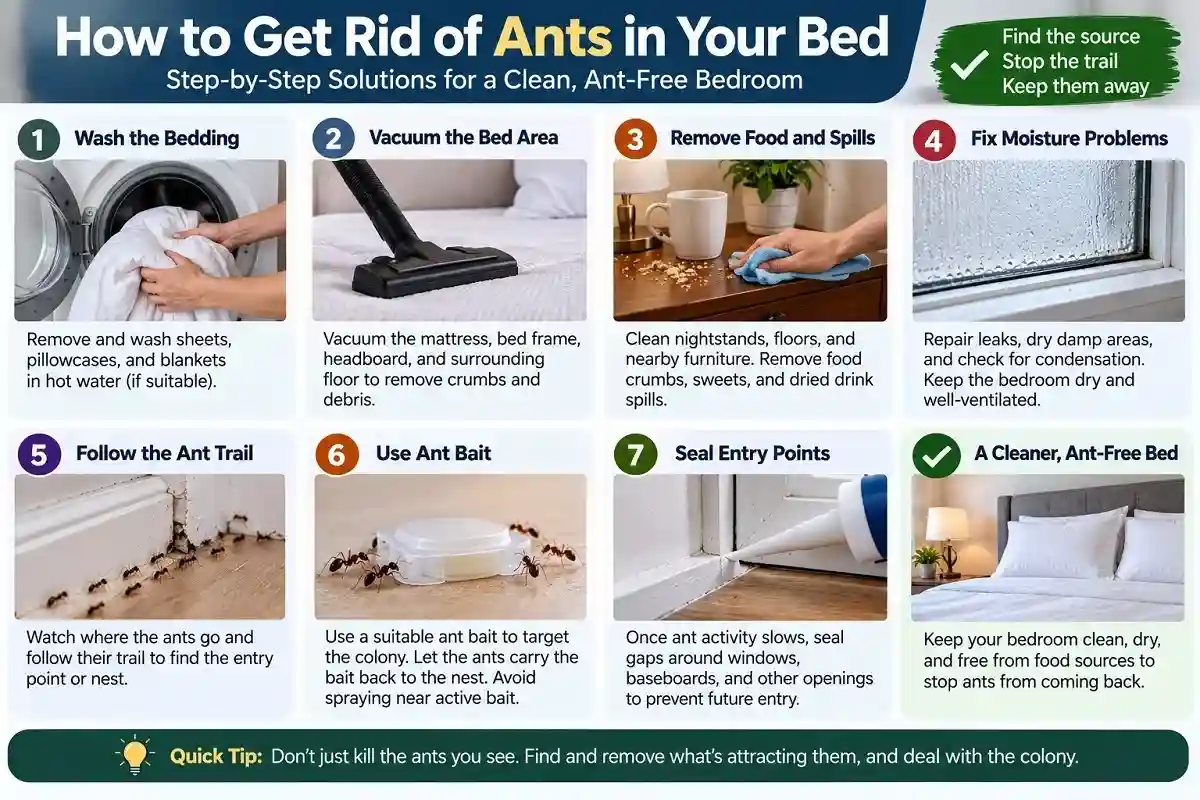
1. Wash the Bedding
Remove the sheets, pillowcases, blankets, and other washable bedding. Wash everything according to its care instructions.
Stripping the bed also makes it easier to inspect the mattress edges, bed frame, headboard, and surrounding area.
2. Vacuum the Bed Area
Vacuum the mattress surface, bed frame, floor, baseboards, and the area underneath nearby furniture. This helps remove crumbs, food particles, and other debris.
Pay extra attention to cracks and corners where small particles can collect.
3. Remove Food and Spills
Clean the nightstand, floor, bed frame, and other nearby surfaces. Look closely for dried drink residue rather than cleaning only visible crumbs.
Store snacks and pet food in sealed containers. If possible, avoid keeping open food beside the bed.
4. Fix Moisture Problems
Repair leaking windows or nearby plumbing and dry damp areas. Check humidifiers, plant saucers, and places where condensation regularly develops.
If a houseplant is attracting ants, inspect it for excess moisture, aphids, scale insects, and sticky honeydew.
5. Follow the Ant Trail
Watch new workers instead of immediately killing every ant you see. Follow the trail toward the wall, window, floor, plant, or other area where the ants disappear.
Finding the route gives you a better target than repeatedly treating the mattress or bedding.
6. Use Ant Bait
When appropriate for the species and location, ant bait can help target a colony hidden from view. Foraging workers can feed on suitable bait and carry it back toward the nest.
Place bait only where the product label permits. Keep it away from children and pets, and follow all label instructions.
Avoid spraying insecticide around active bait. Killing or repelling workers before they return to the colony can interfere with the baiting process.
7. Seal Entry Points
Once ant activity has dropped and you understand their route, seal accessible gaps around windows, baseboards, wall-floor joints, and other openings.
Sealing helps reduce future entry, but it should not replace colony control when ants are already nesting inside a wall or another structural space.
Safety note: Do not apply ant spray or another pesticide directly to pillows, sheets, mattresses, or other sleeping surfaces unless the product label specifically permits that use. Always follow the label instructions.
How to Prevent Ants From Coming Back
Keep food and sweet drinks away from the bed when possible. Vacuum under the bed and around nearby furniture regularly, especially if snacks are eaten in the bedroom.
Keep the sleeping area dry and check indoor plants for excess moisture or plant pests. Where practical, leave a small gap between the bed and wall and keep bedding from touching the floor.
After the active infestation is controlled, close the gaps you identified around windows, baseboards, and other openings. These same measures can help prevent ants from entering your home again.
If ants are appearing in several rooms instead of only around your bed, consider a broader approach to get rid of ants permanently throughout the house.
When Do Ants in the Bed Mean a Bigger Problem?
A few workers wandering across the bed do not automatically mean you have a large indoor infestation. The pattern of activity matters more.
Repeated trails coming from the same wall opening, ants appearing in several parts of the bedroom, or large numbers of winged ants emerging indoors can justify a closer inspection.
Large ants repeatedly appearing around damp or damaged wood can also point toward carpenter ants. These ants can establish hidden nests or satellite nests inside structural spaces.
If that matches what you are seeing, use an appropriate strategy to get rid of carpenter ants instead of repeatedly spraying the ants on your bed.
If the source remains hidden or ants continue returning despite proper control, professional treatment may be worth considering. Checking the typical ant exterminator cost can help you understand what professional treatment may cost.
Frequently Asked Questions
Why are ants in my bed but nowhere else?
Your bed may be close to a specific entry route, moisture source, food source, or hidden nest. Watch where the ants climb onto the bed and trace the trail toward the wall, floor, window, or nearby furniture.
Why are ants in my bed when I don’t eat there?
Food is not the only reason ants may cross your bed. Moisture, a nearby colony, an indoor plant, or an established route through the bedroom can also explain the activity.
Can ants live inside a mattress?
Finding ants on a mattress does not automatically mean they are nesting inside it. Check the bed frame, headboard, baseboards, windows, walls, and nearby furniture for a route or source first.
How do I stop ants from climbing onto my bed?
Find the route they use to reach the bed, remove nearby food and moisture, and deal with the colony where necessary. Once activity drops, seal the entry point and keep bedding from creating bridges to the floor or wall.
Should I spray ant killer on my mattress?
Do not apply a pesticide to your mattress, sheets, pillows, or other sleeping surfaces unless the product label specifically allows that use. Targeting the ant route and colony is usually more useful than randomly spraying the bed.
Do ants bite people while they sleep?
Some ant species can bite or sting, but ants on your bed are not automatically there because of you. They may simply be foraging for food or water or traveling along a route through the room.
Don’t Just Clear the Bed—Find the Source
Removing ants from your sheets may solve the problem for a night, but it will not help if the trail is coming from a wall, window, plant, or nearby nest. Follow the ants back to their source, remove the food or moisture attracting them, and deal with the colony where appropriate.
Once activity has stopped, seal the entry route and keep the area around your bed clean and dry. If ants continue returning, emerge from inside a wall, or appear in large numbers with wings, consider having the infestation inspected by a pest professional.

Evan Brooks
Evan Brooks enjoys writing about ants and the way they live, build colonies, and adapt to different environments. His articles cover common ant species, nests, queens, seasonal activity, and everyday questions. He believes simple...
View all guides →