
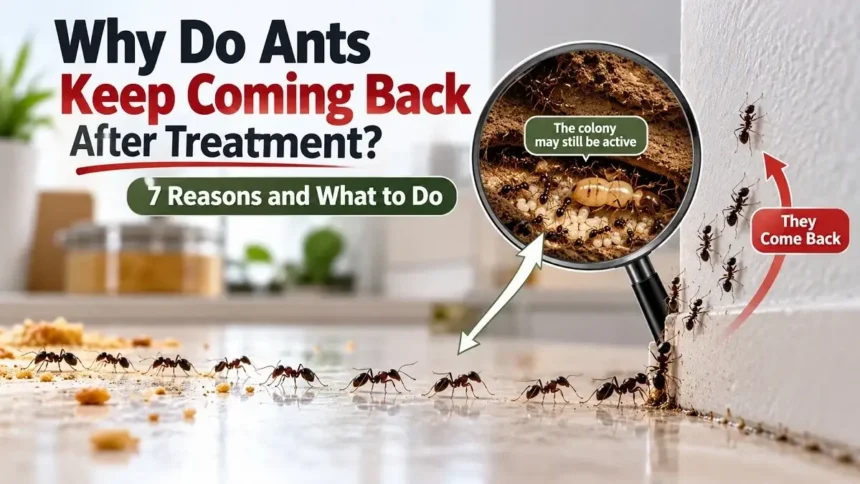
You treated the trail, cleaned the area, or put out ant bait. The ants disappeared, but a few days later they were back.
This often happens when the visible ants are controlled but the source of the infestation remains. A hidden colony, unsuitable bait, moisture, food, open entry points, or multiple nests can all keep the problem going.
- Why Do Ants Keep Coming Back After Treatment?
- 7 Reasons Ants Keep Coming Back
- Is It Normal to See Ants After Treatment?
- Why Do Ants Return to the Same Spot?
- Why Isn’t My Ant Bait Working?
- What to Do When Ants Keep Coming Back
- When Should You Stop DIY Treatment and Call an Exterminator?
- How to Keep Ants From Coming Back
- Frequently Asked Questions
- Stop the Cycle, Not Just the Ant Trail
Instead of treating every new trail the same way, use the ants’ behavior to work out why they are returning. That makes it easier to choose the right next step.
Why Do Ants Keep Coming Back After Treatment?
The ants moving through your home are usually foraging workers. The queen, brood, and most colony members may remain inside a protected nest, so killing the ants you see does not necessarily eliminate the source.
Bait takes a different approach. Workers feed on a suitable slow-acting bait and can carry it back toward other colony members. However, bait choice, placement, competing food, and the ant species can affect the result.
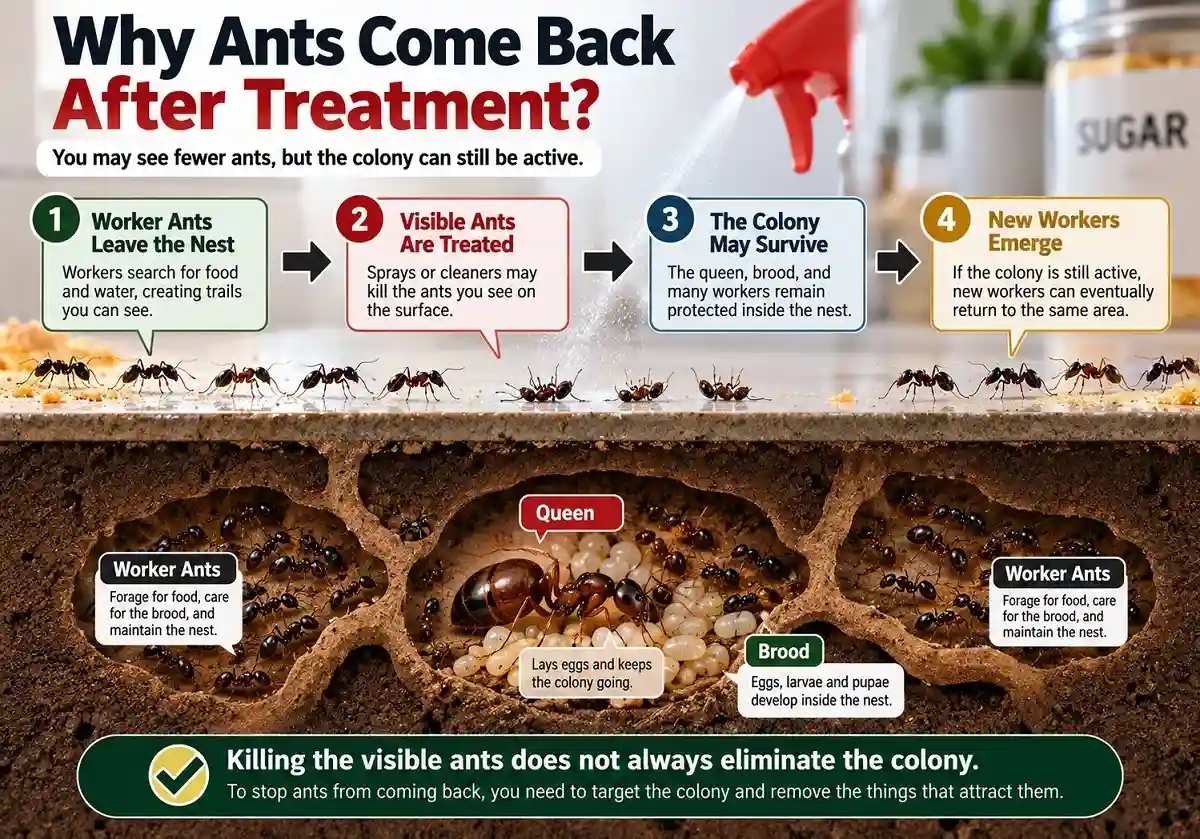
🐜 Why Ants Can Return After Treatment
Visible worker ants leave the nest
↓
The visible trail is treated
↓
The hidden colony may remain active
↓
New workers can create another trail
Visible control is not always colony control.
7 Reasons Ants Keep Coming Back
What happens after treatment can give you useful clues. These are seven common reasons ant activity returns.
1. You Killed the Workers, Not the Colony
Contact sprays can quickly kill foraging ants, but the nest may be somewhere the treatment never reaches. If the colony remains active, replacement workers can eventually appear.
2. The Ant Bait Has Not Had Enough Time
Ant bait is intentionally slower than a contact spray. Workers need time to find it, feed, and carry it back toward the colony, so continued activity shortly after placing bait does not automatically mean it failed.
Follow the product label and look for a gradual decline rather than expecting the trail to disappear overnight.
3. You Are Using the Wrong Bait
Ant feeding preferences vary. Some ants may readily take sweet bait at one time but show more interest in protein- or fat-based food at another.
If workers repeatedly pass a bait without feeding, consider its type, freshness, and placement rather than simply adding more of the same product.
4. Food or Water Is Still Available
Crumbs, grease, sugary spills, pet food, garbage, dripping faucets, condensation, and plumbing leaks can keep an area attractive. They may also compete with bait for the ants’ attention.
5. Entry Points Are Still Open
Ants can enter through small openings around doors, windows, foundations, baseboards, pipes, and utility lines. An active route can continue bringing workers indoors even after the first visible group is gone.
Trace the route before sealing it so you have a better idea of where the activity is coming from.
6. There Is More Than One Nest
Some infestations involve multiple nesting sites or queens. Carpenter ants, for example, may establish satellite colonies away from a main nest, which can make activity seem to move from one area of the house to another.
7. The Treatment Does Not Suit the Ant Species
Correct identification matters because species can respond differently to control methods. Pharaoh ants are a notable example because colonies can split through budding, and certain spray treatments may encourage them to spread into new areas.
Before repeatedly changing products, try to determine which ant you are dealing with and choose a method appropriate for that species.
🔎 Quick Diagnosis
| What You Notice | Possible Reason |
|---|---|
| Trail disappears, then returns | The colony may still be active |
| Ants gather around bait | The bait may need more time |
| Ants walk past bait | Bait type or placement may be wrong |
| Ants keep visiting one room | Food, water, or an entry route may remain |
| Activity appears in different areas | Multiple nesting sites may be involved |
Is It Normal to See Ants After Treatment?
It can be, especially when you are using bait. The important signal is not whether every ant disappears immediately but whether activity changes over time.
A steady decline can indicate progress. If activity stays high for an extended period, the ants never accept the bait, or trails begin appearing elsewhere, reassess the treatment rather than automatically applying more product.
Why Do Ants Return to the Same Spot?
Foraging ants can leave chemical trails that help other workers find useful resources. If the same location still provides food or moisture, the route may remain attractive.
Clean the previously active surface, remove the resource, and watch where the ants enter and leave. That gives you more useful information than simply wiping away each new trail.
Why Isn’t My Ant Bait Working?
Bait performance depends on more than strength. Ant feeding preferences, placement, competing food, contamination, and the presence of multiple colonies can all affect acceptance.
If possible, first identify the type of ant. Then observe what workers actually do around the bait before deciding what to change.
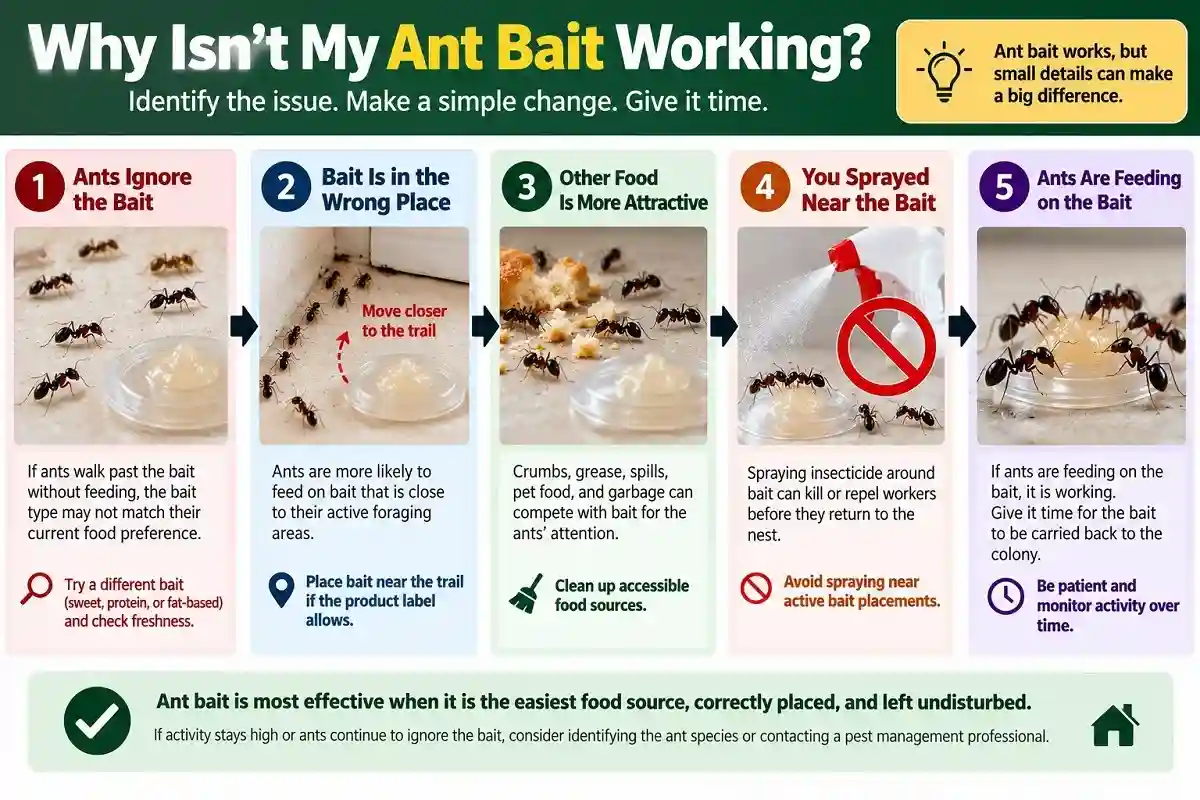
🧭 Ant Bait Troubleshooting
Ants do not reach the bait?
Check placement and move it closer to an active trail if the label allows.
↓
They reach it but do not feed?
The bait may not match their current food preference.
↓
They choose other food?
Remove accessible crumbs, grease, spills, and pet food.
↓
Ants are feeding on the bait?
Follow the label and avoid disturbing the process unnecessarily.
Avoid spraying insecticide around active bait placements. Killing or repelling workers before they return toward the nest can work against the purpose of using a transferable bait.
What to Do When Ants Keep Coming Back
Instead of repeating the same treatment, troubleshoot the infestation in a logical order.
Step 1: Follow the Active Trail
Before wiping the ants away, watch where they enter, feed, and disappear. Pay attention to cracks, baseboards, plumbing openings, doors, and windows.
Step 2: Identify the Ant if Possible
Use size, color, trail behavior, and nesting location as clues. Identification is especially important if you suspect Pharaoh ants or carpenter ants.
Step 3: Remove Competing Resources
Clean accessible food, manage pet food and trash, and check for dripping fixtures, damp cabinets, condensation, or plumbing leaks.
Step 4: Use a Suitable Bait
If bait is appropriate for the species, place a product labeled for the intended location near active foraging areas. Follow all label directions and keep pest-control products away from children and pets as directed.
Step 5: Monitor the Result
Give slow-acting treatment time to work and watch the overall trend. A declining trail is more useful evidence than what happens during the first few hours.
Step 6: Correct Moisture Problems
Repair leaks and address persistently damp materials or poorly ventilated areas that may provide favorable conditions for ants.
Step 7: Seal the Route
After activity is under control, close cracks and openings around doors, windows, pipes, foundations, and utility lines to reduce future access.
🛠 Ant Control Action Plan
Follow the Trail
↓
Identify the Ant
↓
Remove Food & Water
↓
Use Suitable Bait
↓
Monitor Activity
↓
Fix Moisture
↓
Seal Entry Points
When Should You Stop DIY Treatment and Call an Exterminator?
Consider professional help when you cannot identify the species or locate the source, suspect several nests, or continue seeing significant activity after correctly following a treatment plan.
Carpenter ant activity around damp or damaged wood also deserves closer attention because nesting sites can be difficult to locate. If cost is part of the decision, typical ant exterminator cost can help you compare professional treatment with another round of DIY products.
🏠 DIY or Professional Help?
| DIY May Be Reasonable | Consider an Exterminator |
|---|---|
| Small, localized activity | Repeated or widespread activity |
| You can trace the trail | You cannot locate the source |
| Activity is declining | Several nests may be involved |
| Species is reasonably clear | Species is uncertain or carpenter ants are suspected |
How to Keep Ants From Coming Back
Once the active infestation drops, shift your attention to prevention. Keep food stored securely, clean spills and crumbs, manage trash and pet food, and correct moisture problems.
Seal accessible exterior gaps and openings around utility lines after the active route is under control. These exclusion measures can help prevent ants from entering your home again.
Ant pressure can also change with weather and season. Knowing the best time to treat ants can help you prepare for periods when activity is more likely.
If ants are appearing across several parts of the house, a broader strategy to get rid of ants permanently may be more useful than treating each trail as a separate problem.
Frequently Asked Questions
Why do ants come back after I spray them?
The spray may affect foraging workers without reaching the nest. If the colony remains active, another group of workers can appear later.
Does seeing ants after treatment mean it failed?
No. Slow-acting bait requires time. Judge progress by whether overall activity declines rather than expecting immediate disappearance.
How long does ant bait take to kill a colony?
There is no universal timeline. Species, colony size, bait acceptance, available food, and the number of nests can all affect how long control takes, and some bait programs may require weeks or longer.
Why are ants ignoring my bait?
The bait may not match their current feeding preference, may be poorly placed, or may be competing with a more attractive food source.
Will ants come back if the queen survives?
They can, but colony structure varies by species and some colonies contain multiple queens. That is why effective treatment should focus on the colony rather than only visible workers.
How do I stop ants from coming back permanently?
You cannot guarantee that another ant will never enter the house, but controlling the active colony, removing food and moisture, and reducing entry routes can greatly lower the chance of another infestation.
Stop the Cycle, Not Just the Ant Trail
If ants keep coming back, use the returning trail as a clue instead of immediately repeating the same treatment. Identify the ants when possible, determine what is attracting them, and choose a control method suited to the situation.
If activity remains significant despite a properly followed treatment plan, or the source cannot be located, a pest management professional can investigate nesting sites that may be difficult to find on your own.