7 DIY Ant Control Methods Under $5 That Really Work
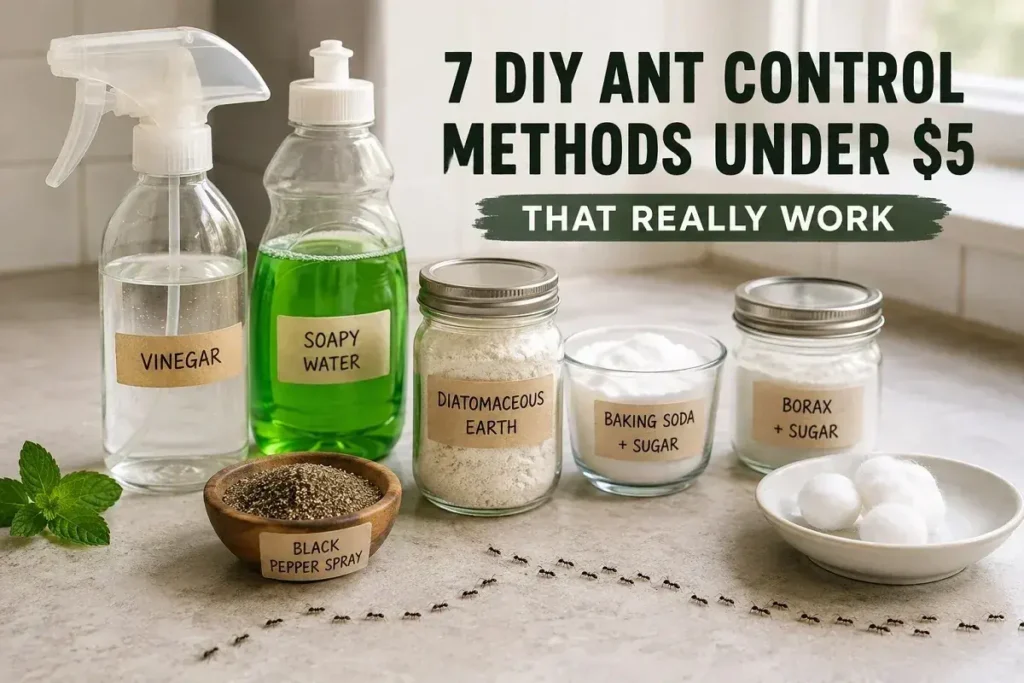
Dealing with ants? Try DIY ant control under $5 with 7 natural remedies made from things you already have at home.

In this guide
Ants are a common, frustrating problem, whether they’re marching across your kitchen counters, showing up in the bathroom, or trailing in from a crack near the door. They raid your pantry and find every crumb you missed. And they keep coming back no matter what you try. The good news?
You don’t need harsh chemicals or a big grocery run to fight back. DIY ant control under $5 is easier than it sounds: these methods use simple household items you probably already own, most cost less than a coffee, and they work on indoor trails as well as outdoor entry points. Below is what actually works, what’s just okay, and what to skip, along with the exact recipes for each one. If you’re dealing with a bigger or repeat infestation, our full guide on how to get rid of ants permanently covers finding the nest, sealing entry points, and stopping ants from coming back for good.
This article focuses on the cheap, natural fixes themselves. Quick answer: spray visible ants with soapy water or vinegar. To wipe out the colony, set out a borax and sugar bait and give it 3 to 5 days. Keep all of these off cutting boards and other food-prep surfaces.
Is It Really an Ant?
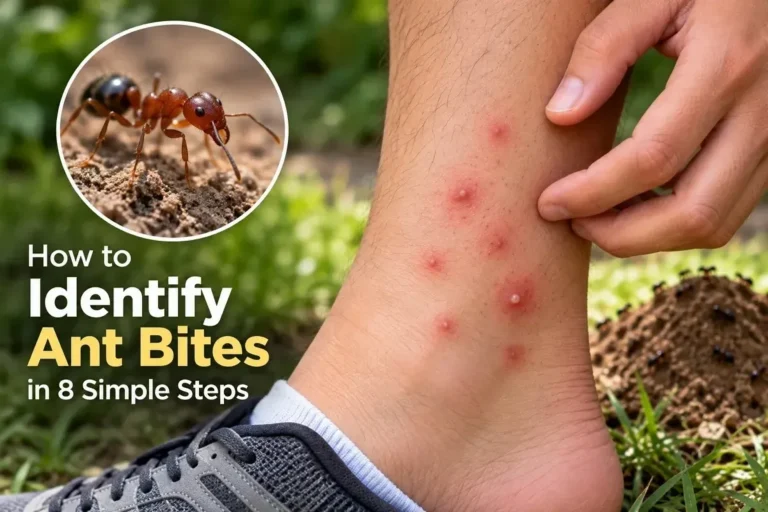
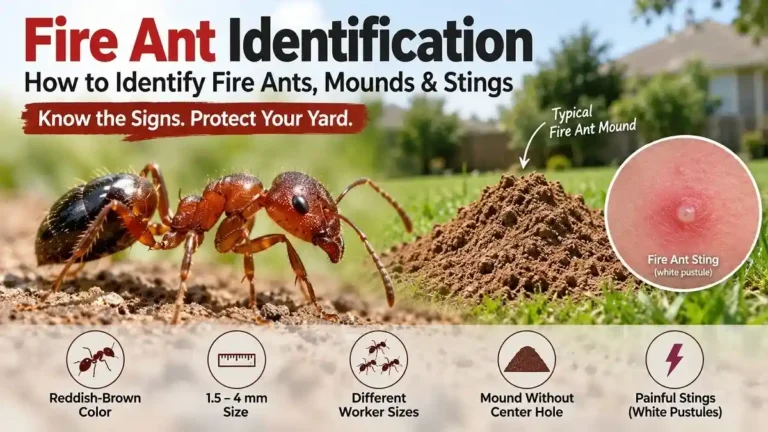
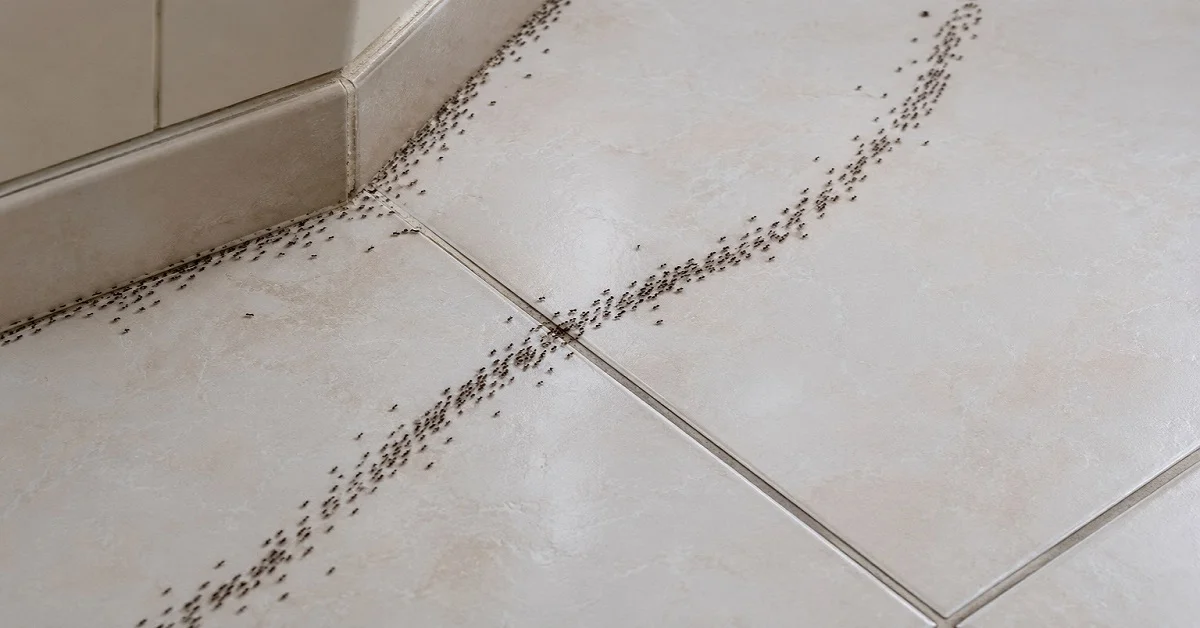
Before you start, make sure you’re dealing with ants and not termites. Ants have a bent, elbow-shaped antenna and a thin “waist” between body sections; termites have straight antennae and a thicker, more uniform body. Watch out for reddish-brown ants with a painful sting, too — that’s likely fire ants. Their bites can trigger serious allergic reactions, so keep kids and pets away and consider calling a professional if you spot them indoors.
Not sure exactly which species you’re dealing with? See our types of ants guide for a full breakdown.
The 7 Best Methods
1. Vinegar Spray
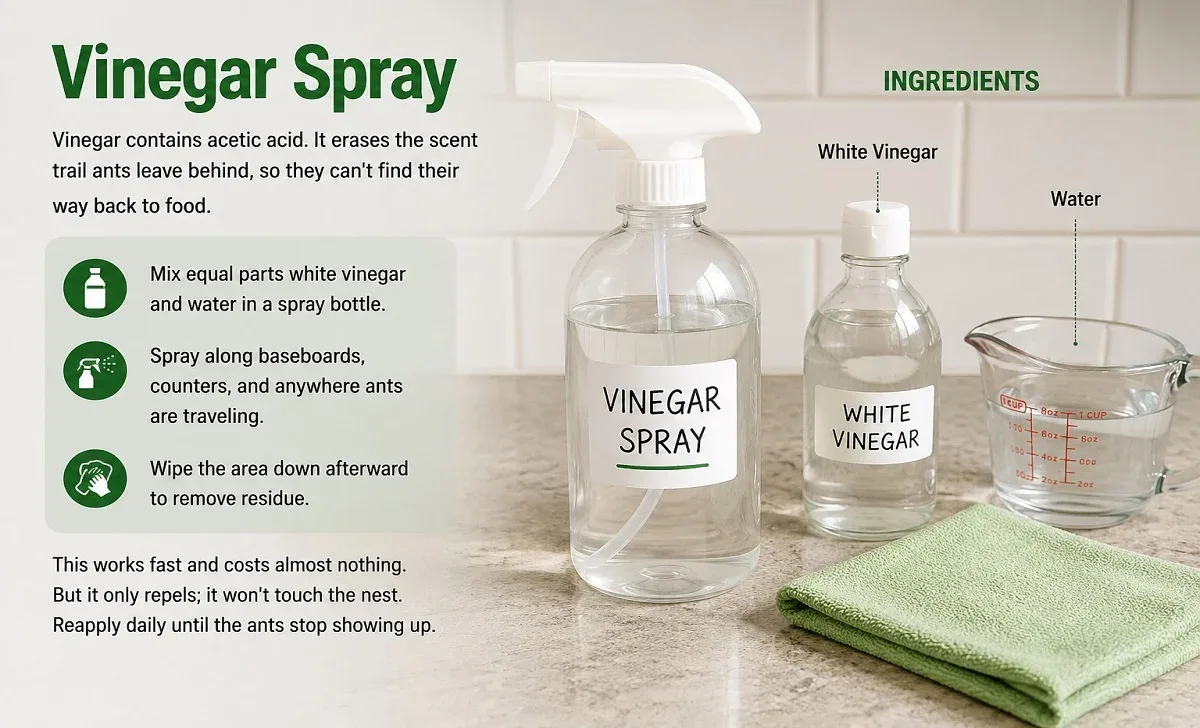
Vinegar contains acetic acid. It erases the scent trail ants leave behind, so they can’t find their way back to food.
- Mix equal parts white vinegar and water in a spray bottle.
- Spray along baseboards, counters, and anywhere ants are traveling.
- Wipe the area down afterward to remove residue.
This works fast and costs almost nothing. But it only repels; it won’t touch the nest. Reapply daily until the ants stop showing up.
2. Soapy Water Spray
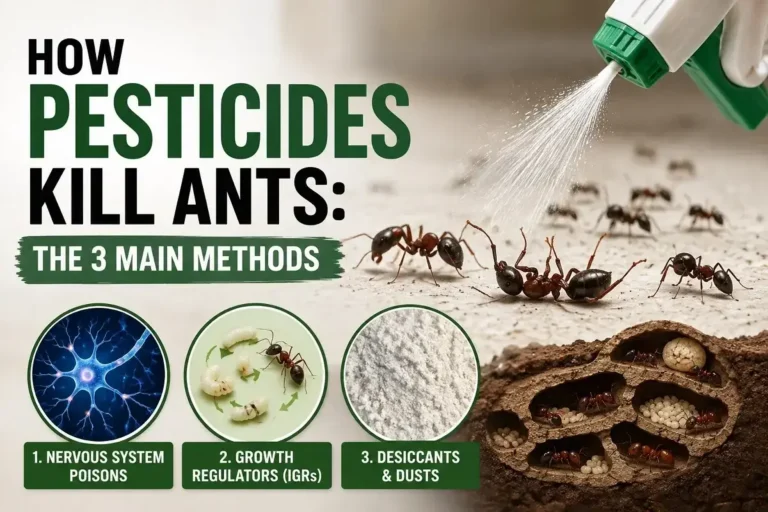
Dish soap breaks down the waxy coating on an ant’s body. Without it, the ant dries out and dies within seconds.
- Mix 2 tablespoons of liquid dish soap with 2 cups of water.
- Pour into a spray bottle and shake gently.
- Spray directly on any ants you see, then wipe them up with a damp cloth.
It’s one of the fastest ways to kill ants on contact. It just won’t reach the ones hiding in the nest, so pair it with a bait for that.
3. Diatomaceous Earth
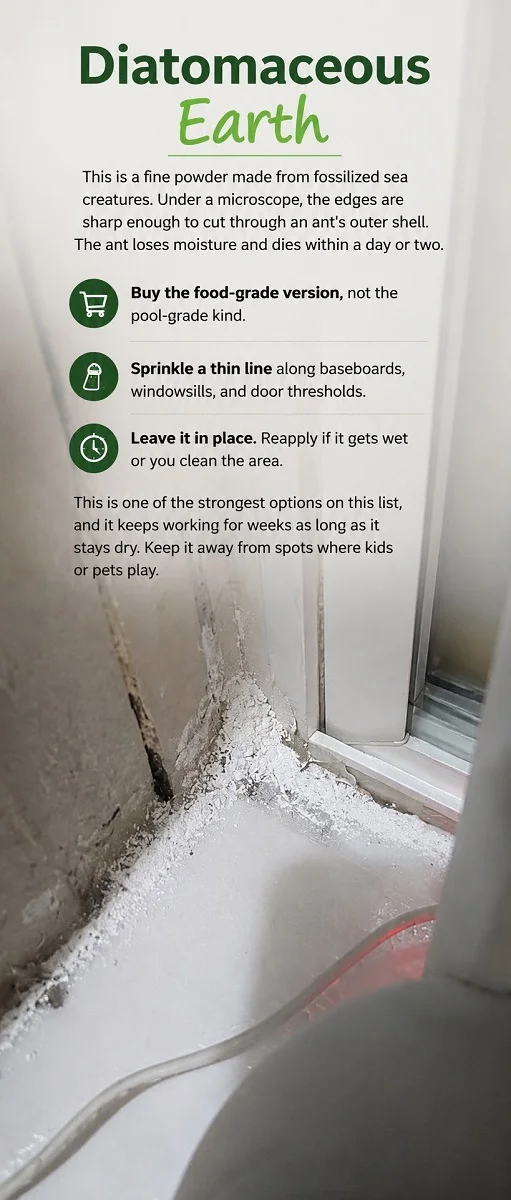
This is a fine powder made from fossilized sea creatures. Under a microscope, the edges are sharp enough to cut through an ant’s outer shell. The ant loses moisture and dies within a day or two.
- Buy the food-grade version, not the pool-grade kind.
- Sprinkle a thin line along baseboards, windowsills, and door thresholds.
- Leave it in place. Reapply if it gets wet or you clean the area.
This is one of the strongest options on this list, and it keeps working for weeks as long as it stays dry. Keep it away from spots where kids or pets play.
4. Borax and Sugar Bait
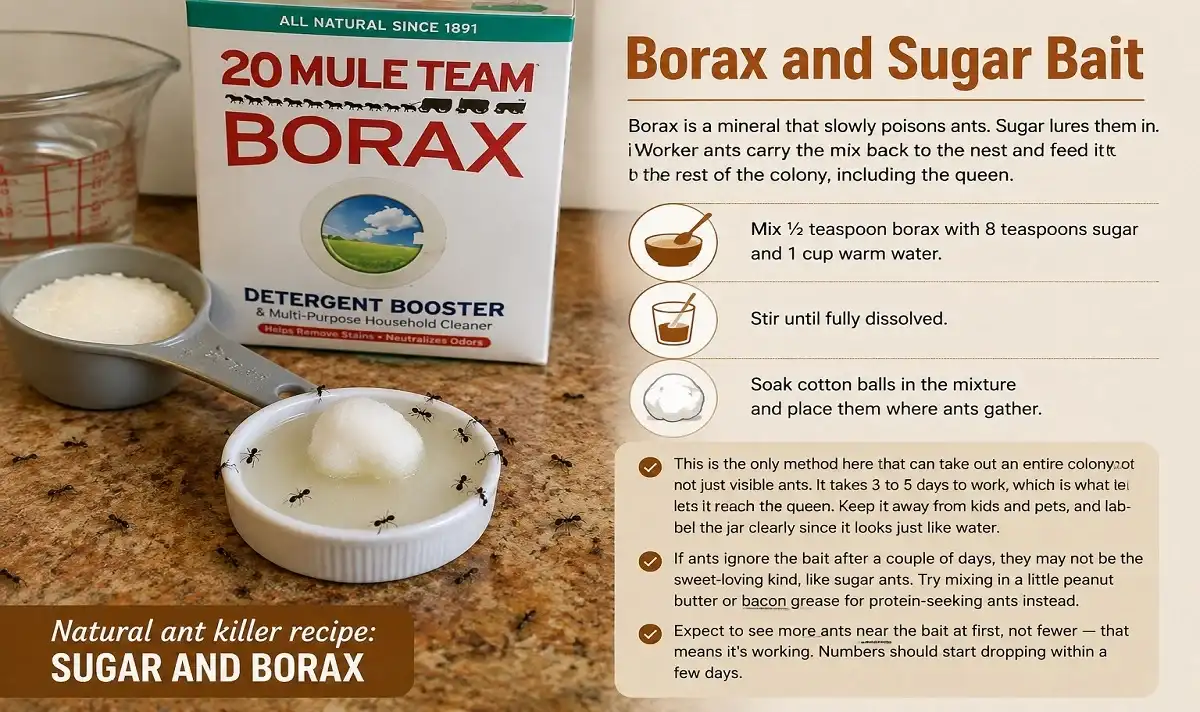
Borax is a mineral that slowly poisons ants. Sugar lures them in. Worker ants carry the mix back to the nest and feed it to the rest of the colony, including the queen.
- Mix ½ teaspoon borax with 8 teaspoons sugar and 1 cup warm water.
- Stir until fully dissolved.
- Soak cotton balls in the mixture and place them where ants gather.
This is the only method here that can take out an entire colony, not just visible ants. It takes 3 to 5 days to work, which is what lets it reach the queen. Keep it away from kids and pets, and label the jar clearly since it looks just like water. Note: this borax recipe uses a different ratio from the boric-acid mix in our homemade bottle trap guide — borax and boric acid aren’t interchangeable, so follow one recipe at a time.
If ants ignore the bait after a couple of days, they may not be the sweet-loving kind, like sugar ants. Try mixing in a little peanut butter or bacon grease for protein-seeking ants instead. Expect to see more ants near the bait at first, not fewer — that means it’s working. Numbers should start dropping within a few days.
5. Black Pepper Spray
Black pepper contains piperine, which irritates ants and can kill on contact. The strong smell also throws off their scent trail.
- Mix 1 tablespoon of ground black pepper with 1 cup of water.
- Spray directly on ants and along their trail.
- Reapply as needed.
A small student study at Texas A&M University found the spray did kill ants — a small, informal test, not large-scale research, but real testing all the same.
6. Baking Soda and Sugar
The idea: baking soda reacts poorly with an ant’s digestive system once eaten, while the sugar gets it to eat the mix in the first place.
- Mix equal parts baking soda and powdered sugar.
- Place the mixture in a small lid or shallow dish.
- Set it along ant trails or near entry points.
This is the weakest method here. Most pest-control sources find little evidence it kills ants effectively, and it rarely reaches the colony. Try it if you already have both on hand, but don’t rely on it alone.
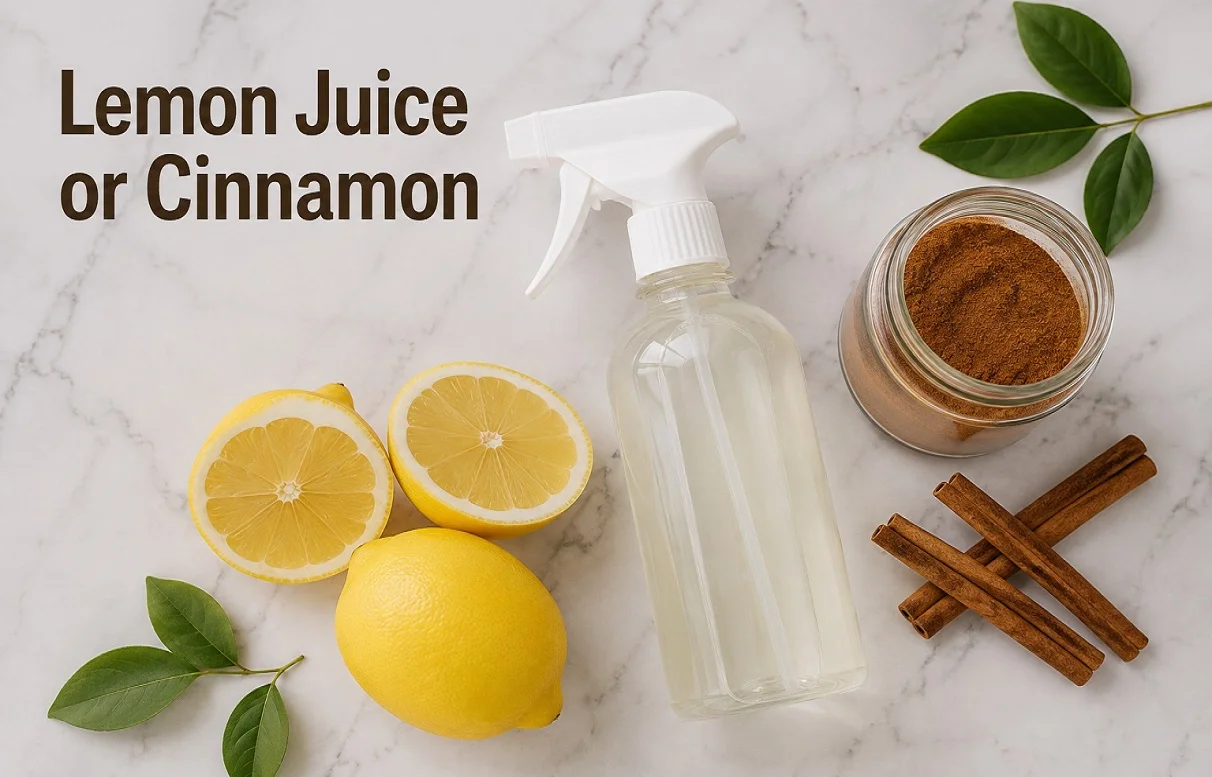
7. Lemon Juice or Cinnamon
Both have strong scents that can mask an ant trail and make it harder for ants to find their way in.
- Lemon: mix 1 part lemon juice with 3 parts water. Spray around entry points.
- Cinnamon: sprinkle it along windowsills and door frames, or draw a line across entry points with a cinnamon-oil-dipped cotton swab.
These are mild, mostly anecdotal fixes. They may keep ants out of a small area for a short while, but they won’t kill ants or stop a real infestation on their own.
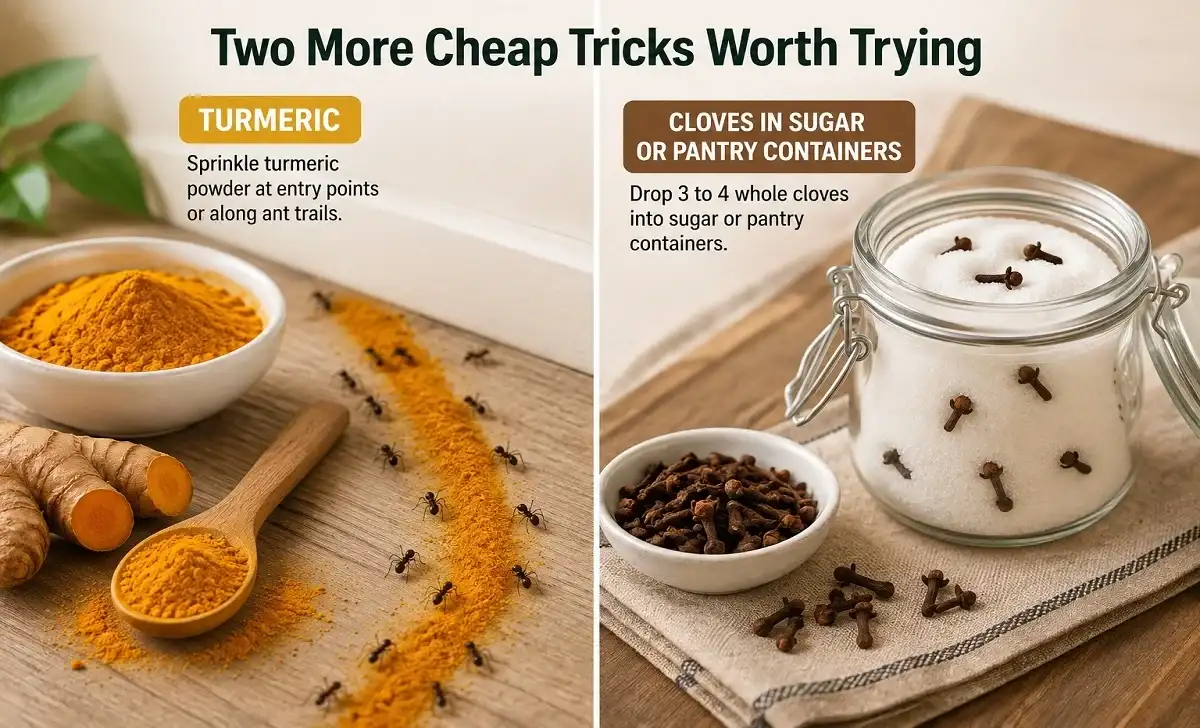
Two More Cheap Tricks Worth Trying
These are less commonly tested than the seven above, but both have real backing.
Turmeric
Turmeric contains curcumin, a compound ants tend to avoid. Small studies have found it repels ants and, in higher concentrations, can be toxic to them.
- Sprinkle turmeric powder directly at the entry point or trail where ants are getting in.
- Reapply after cleaning the area or if it gets disturbed.
It works as a barrier, similar to diatomaceous earth, and is safe around kids and pets.
Cloves in Sugar or Pantry Containers
Cloves contain eugenol, an oil that ants strongly dislike. It won’t kill them, but it keeps them out of wherever it’s placed.
- Drop 3 to 4 whole cloves directly into your sugar jar or another pantry container.
- Replace them every few weeks, or once the smell fades.
This is a repellent, not a killer, so it works best for protecting stored food rather than clearing an active infestation.
Cost and Effectiveness at a Glance
| Method | Approx. Cost | Kills Colony? | Pet-Safe? |
| Vinegar Spray | Pennies | No | Yes |
| Soapy Water | Pennies | No | Yes |
| Diatomaceous Earth | ~$4 | No | Yes |
| Borax and Sugar | ~$5 | Yes | No, keep away from pets/kids |
| Black Pepper Spray | Under $1 | No | Yes |
| Baking Soda and Sugar | ~$2 | Unlikely | Yes |
| Lemon Juice or Cinnamon | Under $2 | No | Yes |
| Turmeric | Under $2 | No | Yes |
| Cloves | Under $2 | No | Yes |
Which One Should You Actually Use?
It depends on what you’re trying to do:
- Repellents (vinegar, lemon, cinnamon) keep ants away for now.
- Contact killers (soapy water, black pepper) kill the ants you can see, right away.
- Barriers (diatomaceous earth) stop new ants from getting in over time.
- Bait (borax and sugar) is the only one that reaches the whole colony.
For best results, combine a few: wipe trails with vinegar, kill visible ants with soap, set out borax bait for the colony, then lay down diatomaceous earth to block new entry points.
How to Stop Ants From Coming Back
Getting rid of the ants you have is only half the job. Make your home less appealing to the next ones:
- Wipe down counters and sweep floors daily, in the kitchen and anywhere else ants show up.
- Store food in containers with tight lids.
- Take out the trash often and keep bins clean.
- Fix leaky pipes; ants need water too.
- Seal cracks around windows and doors with caulk.
- Rinse recyclables before storing them.
- Wipe up dead ants after treatment, since they can attract other pests.
Cut off the food and water, and ants have no reason to stick around. If they keep returning, the colony may still be active nearby. Our guide on how to get rid of ants permanently covers tracking down the nest and sealing entry points properly.
When to Call a Professional
Home remedies handle most small ant problems. But if you’re still seeing ants after 2 to 3 weeks of steady effort, especially with a colony inside a wall, it may be time to bring in help. Look for an exterminator who uses low-toxicity treatments, and let them know if you have kids, pets, or health concerns in the home.

Evan Brooks
Evan Brooks enjoys writing about ants and the way they live, build colonies, and adapt to different environments. His articles cover common ant species, nests, queens, seasonal activity, and everyday questions. He believes simple...
View all guides →