Homemade Ant Trap With A Plastic Bottle That Works
This homemade ant trap uses a plastic bottle and a boric acid bait that ants carry back to the nest, which may help reduce the colony, not just the ants you see.

In this guide
- Before You Start
- DIY Ant Trap Step By Step
- How The Trap Works
- Boric Acid Bait Recipe (And What To Do If You Only Have Borax)
- Plastic Bottle Vs Bottle Cap: Which Trap Works Better
- What To Expect: A Realistic Timeline
- Mistakes That Ruin Your Ant Trap
- How The Main Methods Compare
- Tips To Keep Ants From Coming Back
- How To Make An Ant Trap Without Boric Acid Or Borax
- Frequently Asked Questions
- Final Verdict: Is This Method Worth Trying
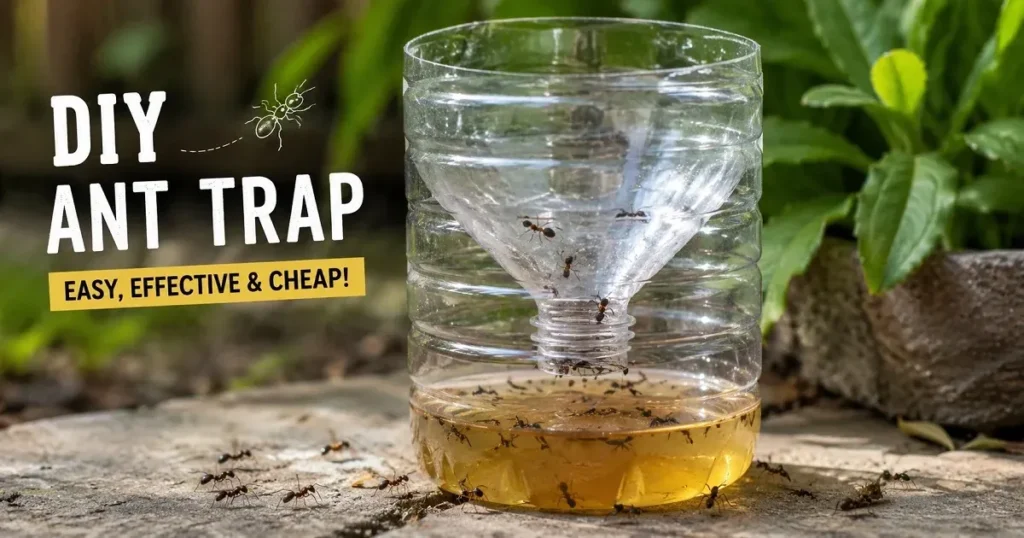
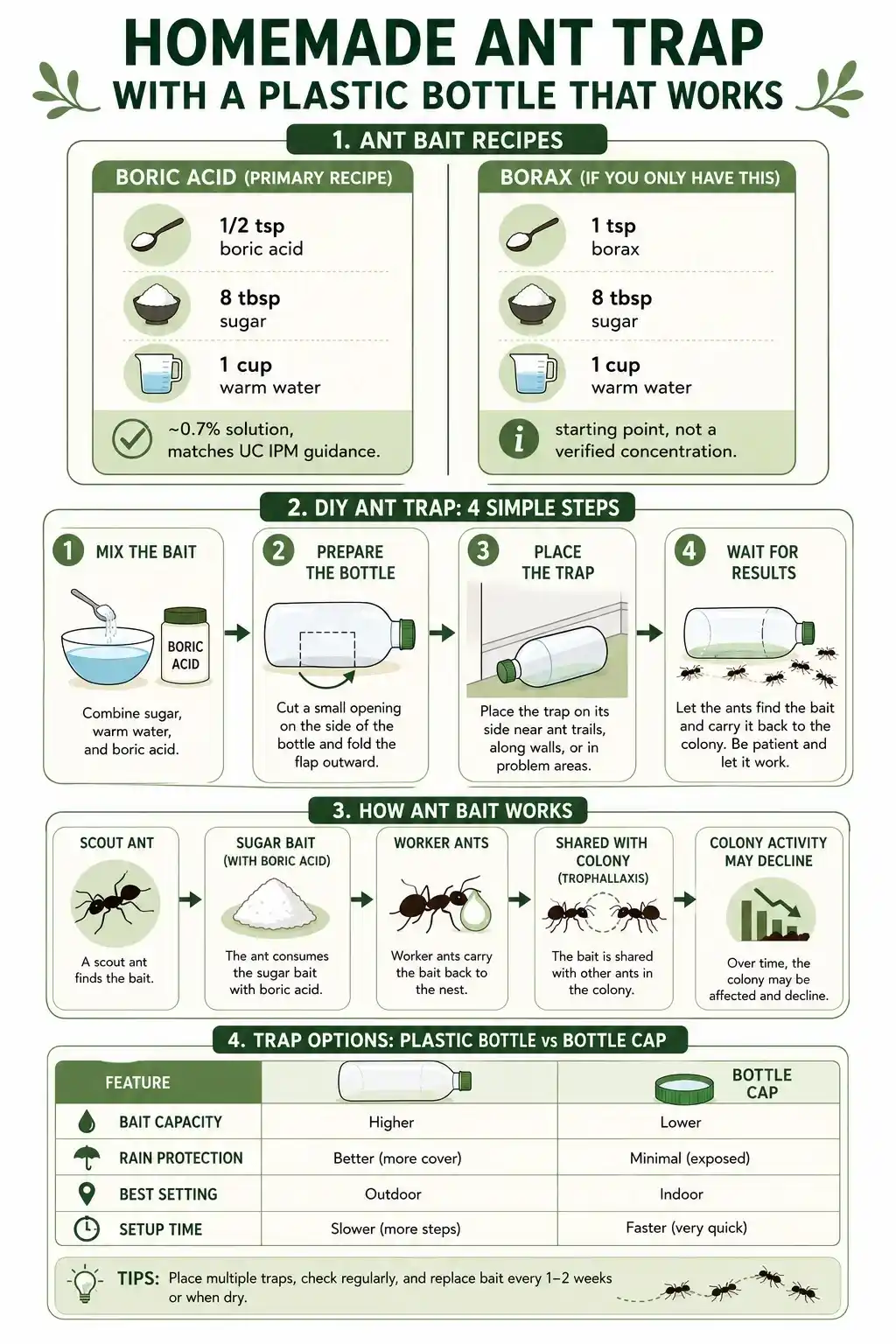
To make a homemade ant trap, dissolve 8 tablespoons of sugar into 1 cup of warm water, then mix in 1/2 teaspoon of boric acid. Pour it into an empty plastic bottle, cut a small opening for ants to enter, and place the bottle near the ant trail. Worker ants can carry the bait back to the nest, so ant activity may decline over several days. This homemade trap is not a labeled commercial pesticide product, so keep it away from children and pets the same way you would any pesticide product.
Before You Start
This homemade trap is not a labeled commercial pesticide product. Commercial bait stations are generally easier to use safely because the bait is enclosed and the product label provides specific directions; UC IPM describes them as the safest and easiest option for most households. If you go the homemade route instead, keep the trap away from food-preparation surfaces and anywhere children or pets can reach it. Wash your hands after handling boric acid or borax, and store any leftover powder in its original, labeled container.
DIY Ant Trap Step By Step
Here’s the full method, from empty bottle to working trap. The plastic bottle doesn’t kill ants by itself, it simply holds and protects the liquid bait while giving ants a way to reach it.What You Need
- An empty plastic bottle with a cap. For indoor use, a 500ml bottle tucks into corners more easily. For outdoor use, go with 1L or larger so you refill less often.
- A transparent bottle, so you can check bait levels without opening it.
- A wide neck, which makes pouring and cleaning easier.
- Sugar, warm water, and boric acid (see ratio above; see the section below if you only have borax).
- Scissors or a small knife, plus gloves.
Step 1 – Mix The Bait
Combine your sugar, water, and boric acid inside the bottle. Close the cap tightly and shake until well mixed.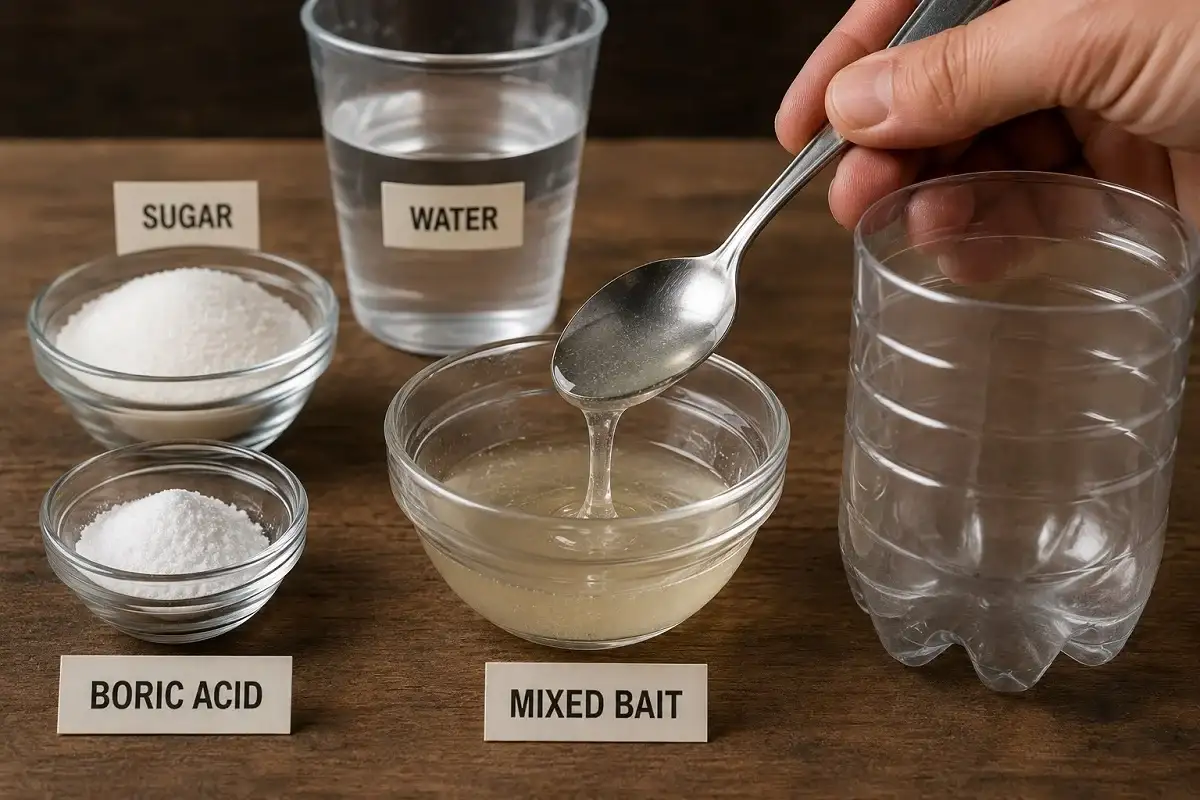 Pro Tip: If you’re unsure about your ratio, mix a smaller test batch first. It’s easier to adjust a tablespoon of mixture than to waste a full bottle of bait.
Step 2 – Prepare The Bottle
Cut a small opening in the side of the bottle, roughly the width of a pencil, just big enough for ants to climb in and out. Leave the flap bent slightly outward so it acts as a small roof and keeps rain or dust out.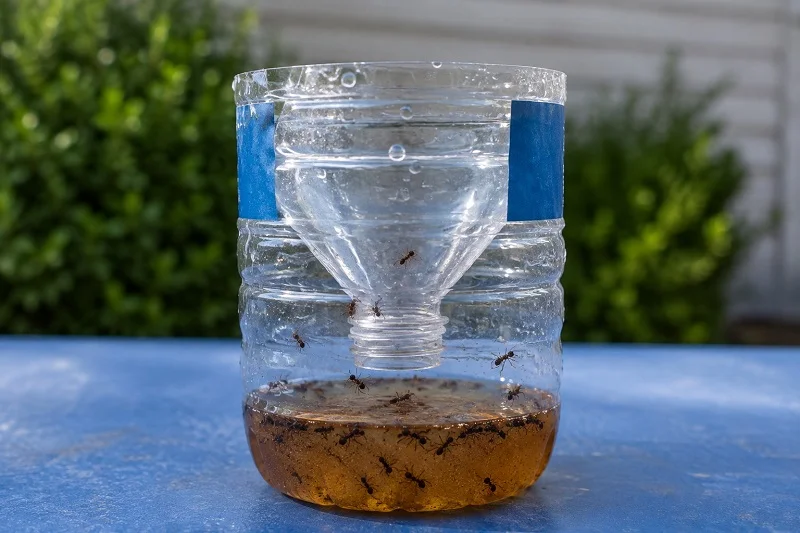 Pro Tip: A smaller entrance can help limit exposure of the bait to air and weather.
Step 3 – Place The Trap
Set the bottle on its side near the ant trail, along a wall, near a door, or beside a plant bed. Keep it out of reach of kids and pets.
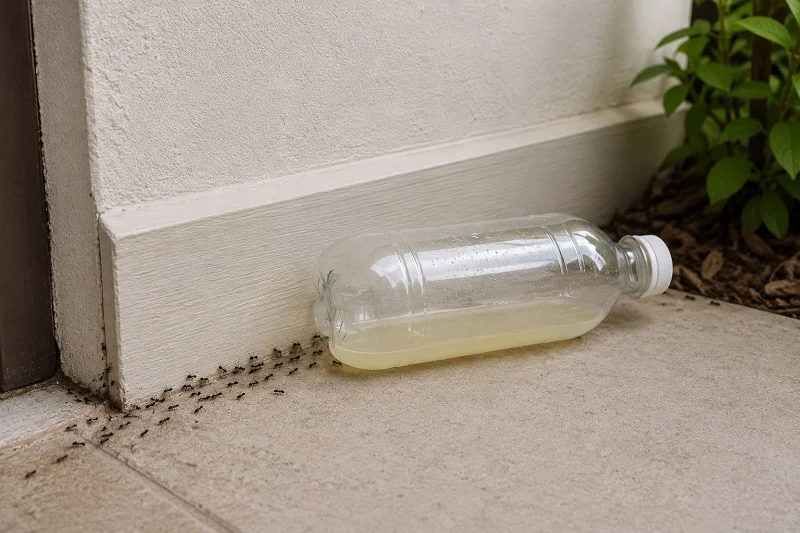
Pro Tip: Follow the visible ant trail back toward its entry point before placing the trap.
Step 4 – Wait For Results
Leave the trap undisturbed for several days. You may see more ants at first if they accept the bait and recruit other workers. That doesn’t necessarily mean the trap is failing.
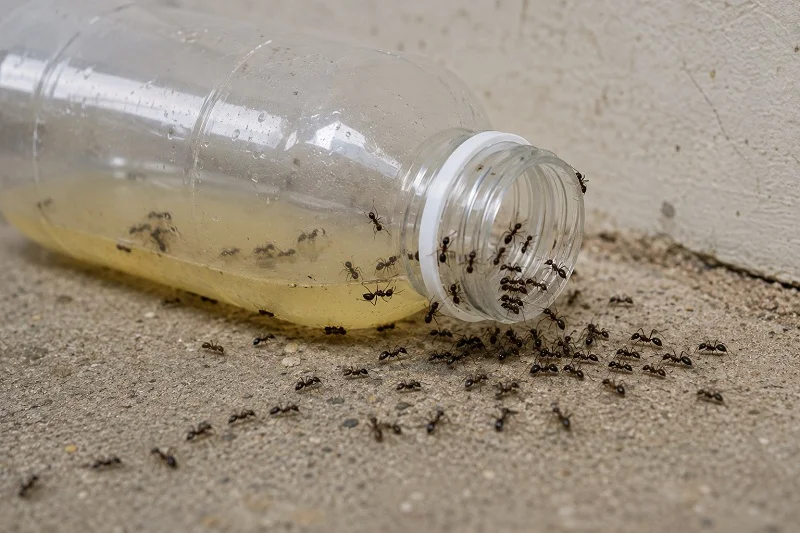
Pro Tip: Try to avoid killing ants near the trap. An ant that survives long enough to walk home has a chance to deliver bait to the colony.
How The Trap Works
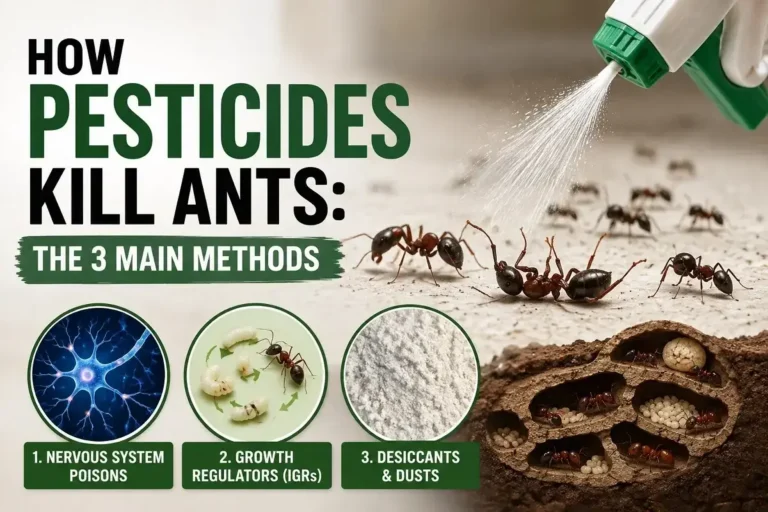
Sprays mainly kill ants that are exposed to them. A slow-acting bait works differently: worker ants can carry the bait back to the nest, where it can be shared with other colony members. This may expose queens and other ants inside the colony, although killing the queen is not guaranteed. Because the queen usually remains inside the nest, worker ants are an important route for getting bait into the colony.Sweet liquid bait can work well for many sugar-feeding household ants. If ants ignore it, their food preference may be different, and a protein or grease-based bait may work better instead.
Boric Acid Bait Recipe (And What To Do If You Only Have Borax)
The recipe in the Quick Answer, 1/2 teaspoon boric acid dissolved into 8 tablespoons sugar and 1 cup warm water, works out to roughly 0.7% boric acid. That’s in line with the 0.5% to 1% range UC IPM associates with effective liquid borate bait. UC IPM also notes that concentrations above 1% can become less effective, since they may repel ants rather than attract them.If you only have borax, don’t substitute it teaspoon-for-teaspoon for boric acid. They’re different compounds, and how well a bait works depends on the final concentration and the ant species involved, not just which chemical is used. A commonly used homemade version is 1 teaspoon of borax in the same sugar-water base above, but this ratio isn’t backed by the same specific research as the boric acid recipe, so treat it as a starting point rather than a verified figure. For a simpler borax-only bait with its own ratio, see 7 DIY ant control methods under $5. Keep it on the lighter side and adjust if ants seem to avoid it.
Plastic Bottle Vs Bottle Cap: Which Trap Works Better
Some tutorials use just a bottle cap instead of a full bottle. Both work on the same bait principle, but they suit different situations.A full bottle holds more bait. For outdoor placement, a bottle can provide more protection from rain than an exposed bottle cap, but the bait should still be placed somewhere sheltered. A bottle cap is quicker to set up and works fine tucked into an indoor corner, but it dries out faster.
What To Expect: A Realistic Timeline
Days 1 to 3: You may see more ants if they accept the bait and recruit other workers. Don’t remove the trap just because activity increases.Days 4 to 7: Ant traffic near the trap often starts to level off as the bait spreads through the colony. Some sources report noticeably fewer ants within 5 to 10 days.Beyond that: Depending on the ant species, colony size, bait acceptance, and nest location, noticeable control can take several weeks. Don’t assume the trap has failed just because ants are still present after the first week or two.If ants rush to the bait in the first day but vanish within hours instead of building steady traffic, the mix may be too strong. Try reducing the concentration rather than adding more.
Mistakes That Ruin Your Ant Trap
Adding too much boric acid or borax. If ants start dying right at the trap within a few hours, the mix is likely too strong. Cut back and try again.Placing the trap in the wrong spot. If ants aren’t using it within a day or two, move it closer to their trail.Cleaning up too soon. Cleaning the trail too soon can disrupt the ants’ route to the bait.Leaving the trap within reach of kids or pets. Boric acid and borax are less risky than many pesticides, but they can still cause irritation, or worse, if swallowed in quantity.
How The Main Methods Compare
| Method | Targets The Colony | Pet Consideration | Works Fast |
|---|---|---|---|
| Homemade bottle trap | Can target the colony | Keep inaccessible to pets | No, days to weeks |
| Store-bought bait station | Can target the colony | Follow product label | No, days to weeks |
| Contact spray | No, surface ants only | Follow product label | Yes, instant |
| Dish soap spray | No, surface ants only | Keep away from pets | Yes, instant |
Tips To Keep Ants From Coming Back
- Seal cracks around windows, doors, and baseboards where ants get in.
- Store sugar, honey, and other sweet foods in airtight containers.
- Wipe up spills right away instead of leaving them overnight.
- Keep pet food bowls clean, since pet food attracts ants just as much as human food does.
For a deeper prevention plan, see our guide on How to Get Rid of Ants Permanently in Your House.
How To Make An Ant Trap Without Boric Acid Or Borax
Prefer to skip both ingredients? Diatomaceous earth cuts into an ant’s exoskeleton without any chemical poison. A dish soap spray kills on contact but only handles ants you can see. A vinegar solution wipes out the scent trail ants follow, stopping new ones from finding their way in. None of these reach the queen the way a slow-acting bait does, so they work best for prevention. See our 7 DIY Ant Control Methods Under $5 for more chemical-free options.
Frequently Asked Questions
What is the best homemade ant trap?
A slow-acting sugar-and-boric-acid bait can be effective for ants that accept sweet liquid bait. The plastic bottle simply provides a homemade container for the bait.
What kills ants in your house immediately?
A direct spray of soapy water or a commercial contact spray kills ants on the spot. Neither one touches the nest, though, so ants often come back within days unless you also treat the colony.
Can ants chew through plastic water bottles?
Most ants can’t chew through a rigid, sealed plastic bottle. They’re far more likely to get in through the cap threads or a small crack. Thin plastic bags and films are a different story, since some ant species can gnaw through those.
Do liquid ant traps actually work?
They can, when ants find and feed on them. Give a liquid bait several days to work before deciding it isn’t effective, unless the product label says otherwise.
Why are more ants showing up around my trap?
This is common in the first few days and isn’t necessarily a sign of failure. Scouts may be recruiting nestmates to the bait source, and that traffic typically drops once the bait starts spreading through the colony. See the timeline above for what to expect week by week.
Final Verdict: Is This Method Worth Trying
A homemade ant trap built from a plastic bottle can work because it targets the colony instead of just the ants on your counter. It costs almost nothing, takes a few minutes to build, and uses ingredients most people already have. The bait does the work, the bottle is just the container that holds it.Give it at least a week before judging the results, but don’t assume it has failed if ants are still present. Depending on the ant species, colony size, bait acceptance, and nest location, noticeable control can take several weeks. If the infestation is large, spread across multiple rooms, or involves carpenter ants near wood structures, check what an ant exterminator typically costs before deciding between DIY and a professional call.If the trap works, don’t stop there. Seal entry points and remove food sources so another colony doesn’t move in to replace the one you just cleared.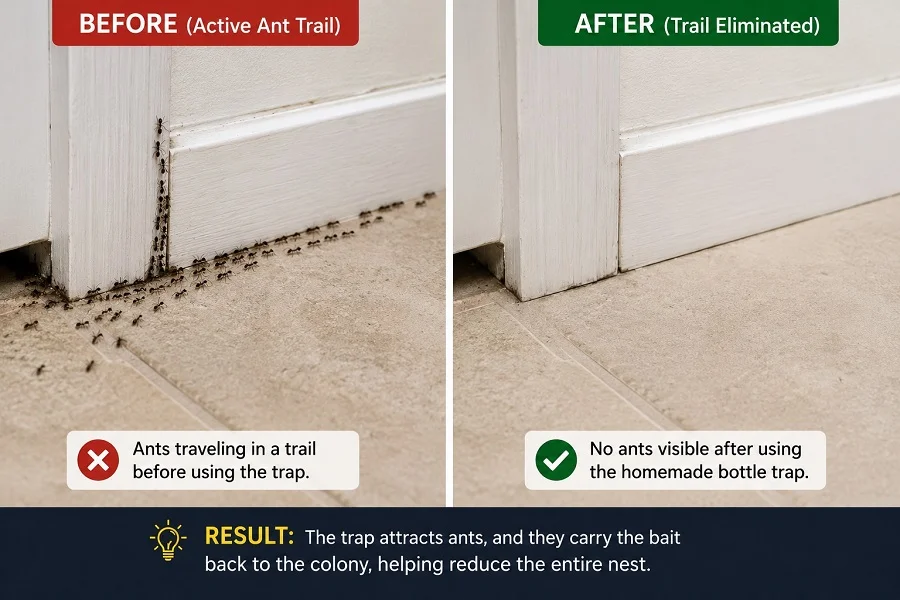

Evan Brooks
Evan Brooks enjoys writing about ants and the way they live, build colonies, and adapt to different environments. His articles cover common ant species, nests, queens, seasonal activity, and everyday questions. He believes simple...
View all guides →