Ants in the Bathroom With No Food? Find the Cause and Fix It
Seeing ants in the bathroom with no food around? Learn what attracts them, where they come from, and how to stop them from coming back.

In this guide
- Why Are There Ants in My Bathroom With No Food?
- Where Are the Ants Coming From?
- Are Ants Really Coming Up Through the Drain?
- What Kind of Ants Are in Your Bathroom?
- Are They Ants or Termites?
- Why Won’t the Ants Leave My Bathroom?
- How to Get Rid of Ants in the Bathroom
- Why Did More Ants Appear After I Put Down Bait?
- Should I Spray Ants That Are Eating the Bait?
- How Long Does Ant Bait Take to Work?
- What Not to Do When You Find Bathroom Ants
- How to Keep Ants From Coming Back
- What If Ants Are in My Bathroom and Kitchen?
- When Bathroom Ants May Signal a Bigger Problem
- Frequently Asked Questions
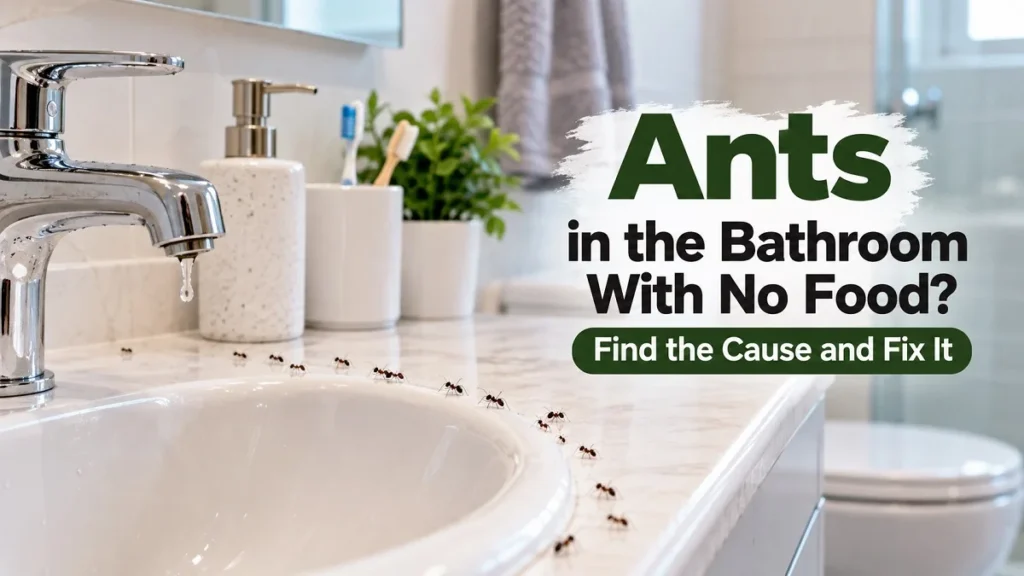
You keep your bathroom clean. There are no crumbs, open food, or dirty dishes. So why are ants still crawling around the sink, shower, or toilet?Food may not be what they are looking for. Ants can enter bathrooms in search of water, while leaks, damp areas, plumbing gaps, or a nearby nest can keep them coming back.The key is to find what is attracting them and where they are entering. Once you deal with the source instead of just the ants you can see, you have a much better chance of stopping the problem.
Why Are There Ants in My Bathroom With No Food?
A bathroom can attract ants even when there is no obvious food. Water, warmth, shelter, and small amounts of hidden residue can make the room worth exploring.If ants appear repeatedly, watch where they travel. Their trail can give you clues about what is attracting them and where they are getting inside.
Moisture and Water
Start with water. A dripping faucet, damp shower area, condensation, or plumbing leak can provide a reliable source of moisture.Check under the sink and around the toilet, tub, and shower. Pay attention to areas that stay damp long after the bathroom has been used.
Hidden Food and Organic Residue
A bathroom may look food-free to you but not necessarily to an ant. Some household ants can feed on materials such as toothpaste and soap.Residue can also collect around fixtures, trash bins, cabinets, and drains. Regular cleaning removes another possible reason for ants to keep exploring the room.
Cracks and Plumbing Gaps
The ants may simply be using your bathroom as an entry point. Small openings around pipes, baseboards, windows, tiles, and wall penetrations can create convenient routes.Watch the trail instead of guessing. If several ants repeatedly disappear into the same crack, you may have found an entry point.
A Nest May Be Nearby
Seeing ants does not automatically mean a colony is living inside the bathroom. They may be traveling from outdoors or another part of the building.However, some species can nest in wall voids and other concealed areas. Moisture around bathrooms can make certain locations especially suitable.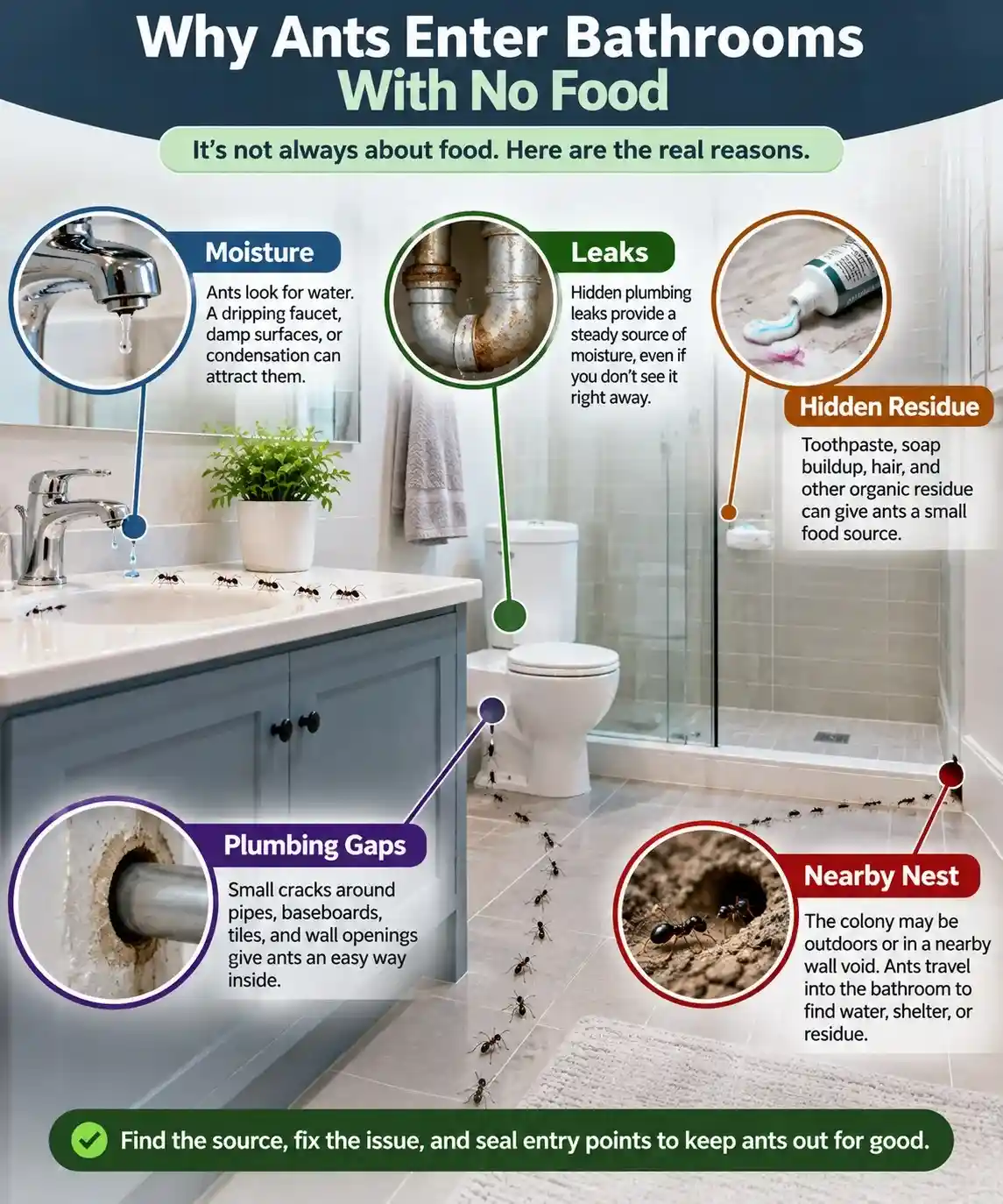
Where Are the Ants Coming From?
Before reaching for a spray, spend a few minutes watching the ants. Follow the trail in both directions if possible.Look under the sink, behind the toilet, along baseboards, around shower edges, and where plumbing enters the wall. Also inspect windows and damaged caulk.If they disappear beneath a cabinet or through a pipe opening, that area deserves closer attention. Finding the route makes the next steps much easier.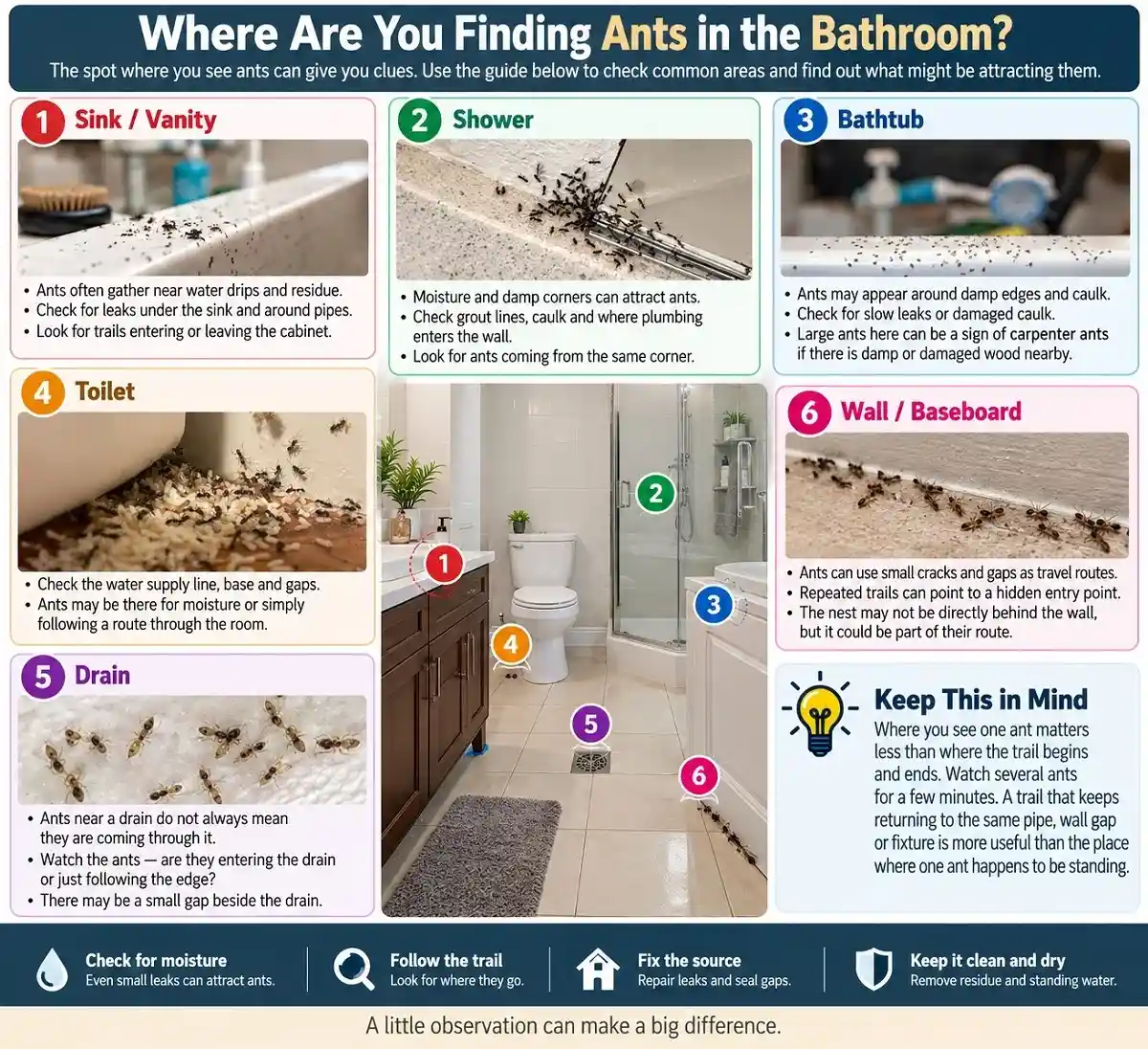
Are Ants Really Coming Up Through the Drain?
Ants clustered around a sink or shower drain can make it look as though they are coming directly through the plumbing. That should not be your first assumption.The drain area may simply offer moisture or residue. Ants can also reach the same area through gaps around plumbing, cabinets, walls, or flooring.Dry and clean the area, then observe the next trail before taking action. The direction the ants travel is more useful than assuming the drain itself is the source.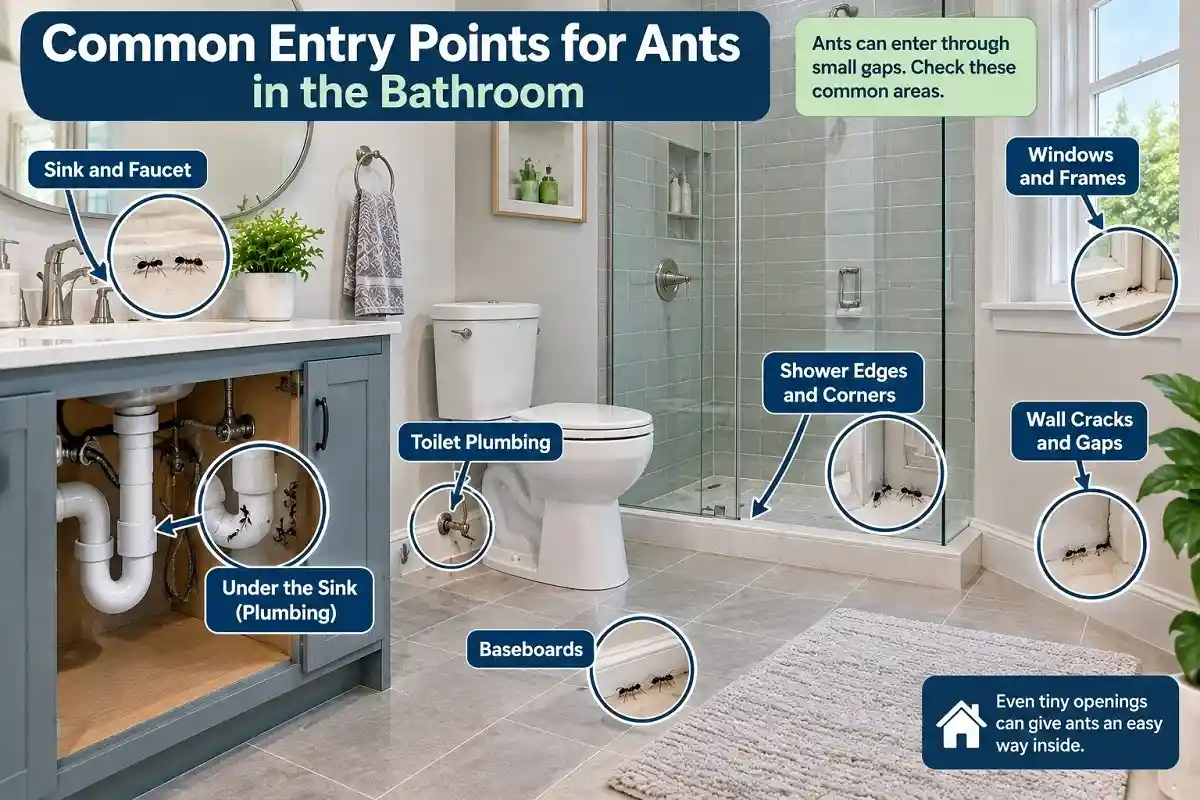
What Kind of Ants Are in Your Bathroom?
Identifying the ant can help you understand where it may be nesting and how serious the problem could be.If you are unsure, use this guide to identify the type of ant before choosing a treatment.
Tiny Black or Brown Ants
Small dark ants may be several different household species. Color alone is usually not enough for reliable identification.Pay attention to their size, trail pattern, where they appear, and what attracts them. These details can help narrow down the possibilities.
Pharaoh or Other Tiny Indoor Ants
Very small yellowish or pale ants require extra care. Pharaoh ants, for example, can establish nests in small indoor voids near warmth and moisture.Random pesticide spraying can make a Pharaoh ant problem harder to control because stressed colonies can split into additional nests. Correct identification is important before treatment.
Carpenter Ants
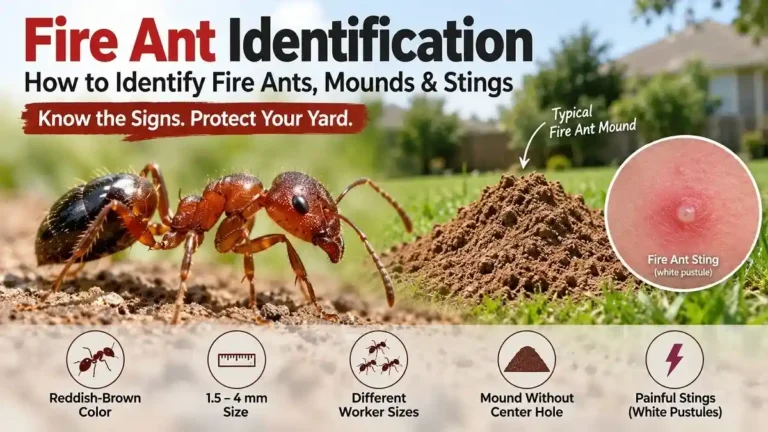
Large ants around a bathroom deserve closer attention, especially when there has been a leak or moisture damage.Carpenter ants commonly nest in moist or decayed wood, and bathrooms can provide suitable locations behind tiles or around tubs, sinks, and showers.If you confirm the species, dealing with the nest and moisture problem is more important than killing individual workers. For a confirmed infestation, see how to get rid of carpenter ants.
Quick reference — match what you see to what it might mean:
| What You See | What to Consider | What Else to Check |
|---|---|---|
| Tiny pale or yellow ants | Pharaoh ants are one possibility where they occur | Very small size, indoor trails and activity around water |
| Small brown or dark ants | Several household species can look similar | Trail, entry point and feeding behavior |
| Large dark ants | Carpenter ants are one possibility | Damp or damaged wood and coarse sawdust-like debris |
| Winged insects | Reproductive ants or possibly termites | Waist, antennae and wing shape |
Are They Ants or Termites?
This question becomes especially important when the insects have wings. Winged ants and termite swarmers can look similar from a distance, but their body shape can help you tell them apart.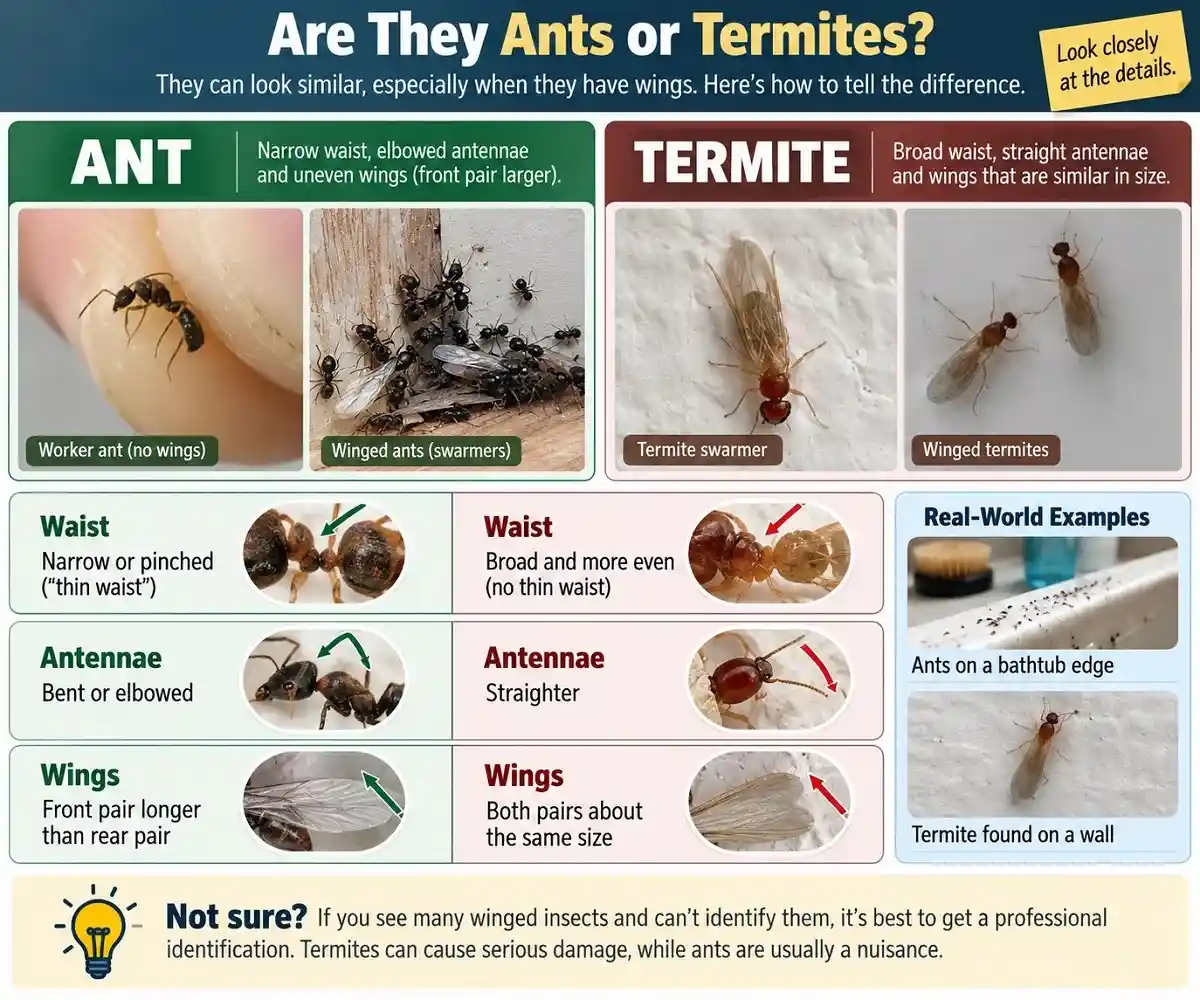
- Waist: ants have a narrow or pinched waist, while termites have a broader body.
- Antennae: ant antennae are bent or elbowed; termite antennae are straighter.
- Wings: winged ants usually have longer front wings, while termite wing pairs are closer to the same length.
Do not rely on color alone. If many winged insects are emerging indoors and you cannot identify them, get them checked before treating them as ordinary bathroom ants.
Why Won’t the Ants Leave My Bathroom?
You clean the bathroom. The ants disappear. Everything looks fine. Then they come back.The problem is that removing the ants you can see does not always remove the reason they are there.A hidden water source may still exist. An entry route may still be open. The colony may be somewhere else, allowing new workers to keep following the same path.If ants disappear after cleaning but return to the same place later, do not assume you need a stronger cleaner.Ask a better question: “Why can the next group of ants still get here?”That moves your attention from the visible workers to the source of the problem.Because a clean bathroom and an ant-proof bathroom are not the same thing.Regular cleaning helps remove residue and standing water, but bathroom cleaner cannot repair a leaking pipe, close a hidden wall gap, or remove a colony living somewhere else.
What to Do During Your Daily Bathroom Routine
- Wipe up water around the sink.
- Let the shower and tub dry as much as possible.
- Clean toothpaste and other residue around the sink.
- Avoid leaving wet towels or bath mats bunched on the floor.
- Notice any area that always seems to stay damp.
What to Check Each Week
Look under the vanity, around accessible plumbing, beside the toilet, and along shower or tub edges. Check for water marks, damaged caulk, damp material, or an ant trail returning to the same opening.If one area is always wet, find out why it stays wet. That is more useful than simply adding more cleaner.
How to Get Rid of Ants in the Bathroom
Work through the problem in a logical order, starting with the source rather than the ants you can see.
Step 1: Remove Water and Moisture
Repair dripping faucets and leaking pipes. Dry standing water around sinks, tubs, showers, and toilets.Ventilation matters too. If the bathroom remains damp for hours after a shower, use the exhaust fan or improve airflow where practical.
Step 2: Clean Hidden Residue
Clean around faucets, drains, cabinets, shower edges, and trash containers. Remove toothpaste, soap buildup, and other residue.This reduces potential attractants and makes new ant activity easier to spot.
Step 3: Use Ant Bait Near Active Trails
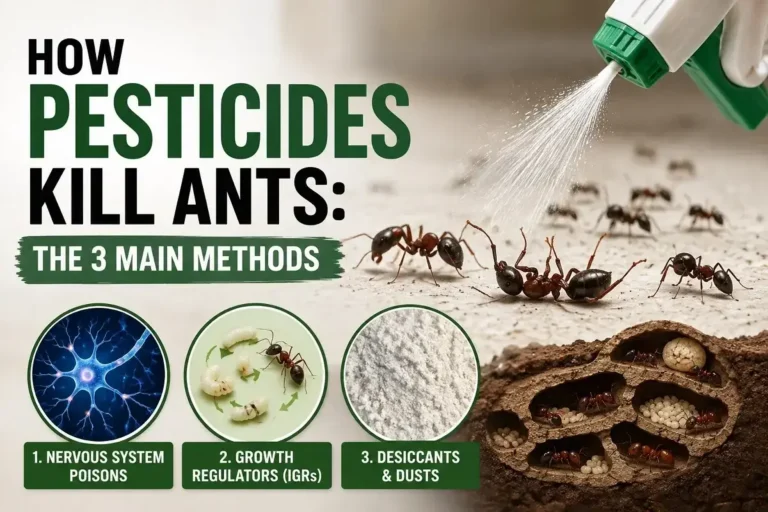
For many common indoor ants, bait can reach more of the colony than simply spraying visible workers. Foraging ants feed on the bait and can carry it back to the nest.Place an ant bait labeled for indoor use where activity has been observed, following its label directions. Keep pesticide products and bait stations away from children and pets as directed on the product label.Do not spray insecticide around an active bait station. Repellent or fast-killing treatments can interfere with ants reaching and carrying the bait.
Step 4: Seal Entry Points — Timing Matters
Once the infestation is under control, close the routes ants were using. Seal appropriate cracks and gaps around plumbing, baseboards, windows, and other openings.Also fix damaged caulk and continue watching previously active areas. Sealing without dealing with the underlying attraction or colony may not solve the whole problem.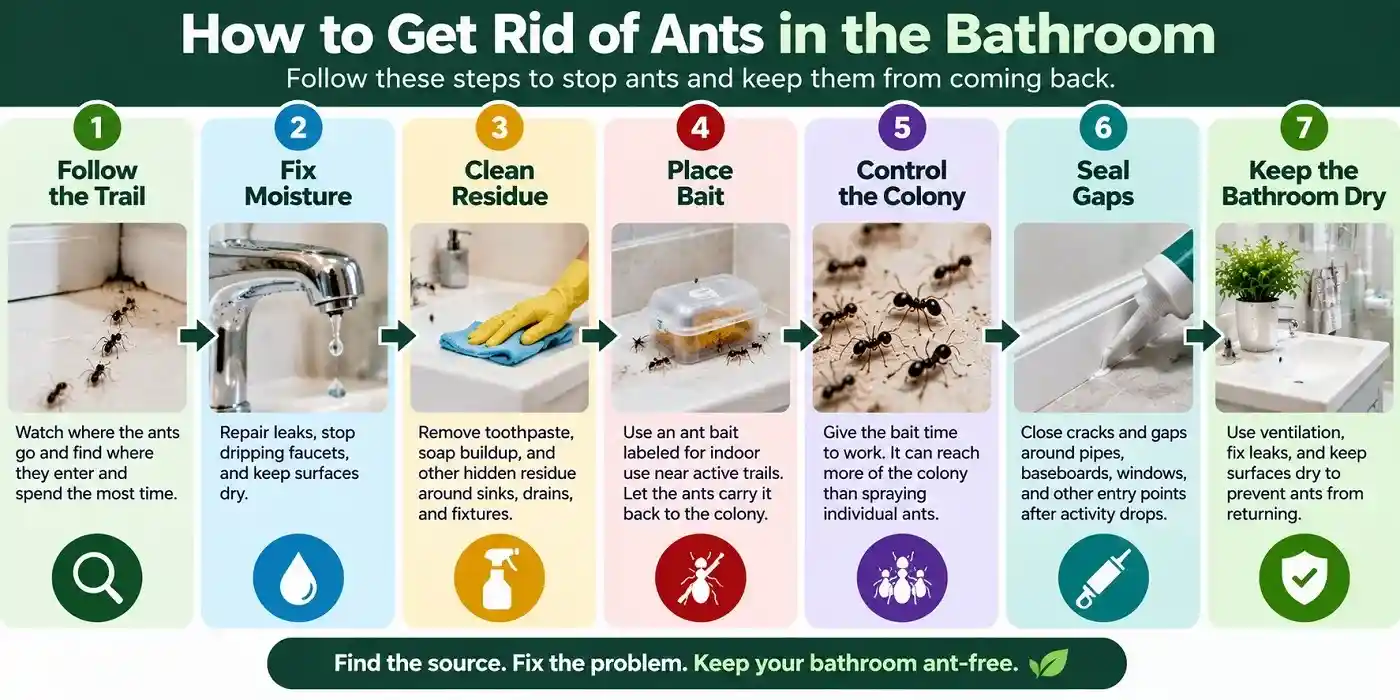
Timing matters: do not seal every active opening the moment you find it. If ants are using that route to reach bait, blocking it during treatment can interrupt the trail carrying bait back toward the colony. And fix moisture problems at the same time — caulking a gap while leaving a leak behind it solves only half the problem.
Why Did More Ants Appear After I Put Down Bait?
You may see a few ants, place bait nearby, and find dozens or even hundreds around it a few hours later. It can look as if the bait made the infestation worse.The bait did not create a new colony overnight.Workers that find an attractive food source can recruit other workers. A colony that was already nearby may suddenly become much more visible once its workers discover the bait.That is also why many ant baits are designed to work slowly. The aim is not simply to kill the first worker that feeds. Workers need time to return toward the colony, where the bait may reach other colony members.So do not judge bait only by how many ants appear during the first few hours. Ask whether they are actually feeding on it, then follow the product label and watch the overall activity over time.
Should I Spray Ants That Are Eating the Bait?
If ants are actively feeding on bait, avoid spraying that feeding trail just because you can suddenly see more ants.A contact spray may kill the workers you can see before the bait has a chance to move farther into the colony. A repellent product around the bait may also stop other workers from reaching it.Contact sprays are designed to deal quickly with ants you can see. Slow-acting baits are intended to reach beyond those visible workers.That does not mean every spray is bad or every bait works for every ant. It means you should not mix treatments at random. Always follow the product label.
How Long Does Ant Bait Take to Work?
Do not expect every ant to disappear by the next morning.The time needed depends on the ant species, colony size, number of colonies, bait type, and whether the ants continue feeding on it. Some infestations improve fairly quickly, while difficult indoor infestations can take longer.Instead of watching the clock, watch the trend. You want to see the trail becoming weaker and the total number of ants falling over time.If ants never feed on the bait, activity continues to spread, or large numbers remain after the product has had the time stated on its label, reassess the treatment.
What Not to Do When You Find Bathroom Ants
Do not assume that killing the visible ants means the infestation is gone. The workers you see may represent only part of a much larger colony.Be especially careful if you suspect Pharaoh ants. Some insecticide treatments can cause their colonies to split, making control more difficult.Also avoid ignoring persistent moisture. If ants keep concentrating around the same damp area, investigate why that location remains wet.
Do Home Remedies Work for Bathroom Ants?
Vinegar, lemon, baking soda, bleach, essential oils, and other DIY tricks are often suggested for ants.Some may remove ants from a surface or disturb a trail for a while. But judge any remedy by a more useful question:Did it solve the infestation, or did it only make the visible ants disappear?If ants avoid one treated spot but return through another crack a few days later, the source is still there.Use household products for their intended cleaning jobs. For a repeated infestation, focus on the colony, moisture source, and entry route rather than switching from one DIY trick to another.
Can Bathroom Cleaning Products Get Rid of Ants?
A household cleaner may remove ants from a surface or disturb the trail they are following. But that is not the same as controlling the colony.Use bathroom cleaners for cleaning and pest-control products according to their labels. Avoid mixing several treatments around the same active trail.
How to Keep Ants From Coming Back
Once the activity stops, make the bathroom less attractive. Keep sinks and counters dry, repair leaks, clean drains and fixtures, and replace damaged caulk where needed.Seal obvious gaps around pipes and other entry points. Similar exclusion measures can also help prevent ants from entering your home through other rooms.Continue checking the bathroom for new trails. Catching a few returning ants early is easier than dealing with an established infestation.For a broader household problem, these steps for how to get rid of ants permanently can help you address activity beyond the bathroom.When the final trail disappears, go back to the places that gave you clues.Fix the leak. Replace damaged caulk where needed. Seal suitable gaps. Keep the sink and shower reasonably dry, and check old entry points from time to time.You do not need to turn your bathroom into a sterile room. You need to remove the things that made the space useful to ants and close the routes that allowed them to keep coming back.And if you spot one or two ants again, do not immediately wipe them away.Watch where they go first. A small trail can show you where the next problem is starting.
What If Ants Are in My Bathroom and Kitchen?
If ants are appearing in both rooms, stop thinking of the infestation as one bathroom problem.The bathroom may provide water while the kitchen provides food. Ants may travel between the two through walls, cabinets, floor edges, plumbing areas, or other hidden routes.This matters even more in apartments and shared buildings, where some indoor ants can move through connected parts of the structure.If heavy activity is happening in several rooms, tell the landlord or building manager as well as dealing with the problem inside your unit.
When Bathroom Ants May Signal a Bigger Problem
A few ants entering through a window gap are different from repeated activity coming from a wall.Pay closer attention if you see large carpenter ants, many winged ants indoors, coarse sawdust-like material, moisture-damaged wood, or ants consistently emerging from an inaccessible void.Carpenter ants are particularly associated with moisture and damaged wood. An experienced pest management professional can help locate a hidden nest when the source cannot be found.Persistent activity also deserves professional attention when baiting, sanitation, moisture control, and exclusion have not solved the problem.
When Should I Call an Exterminator?
A few ants beside the sink do not always mean you need professional pest control. But there is a point where continuing to try different DIY treatments no longer makes sense.Consider professional help if:
- large numbers of ants keep appearing every day;
- ants are active in several rooms;
- they repeatedly emerge from walls or hidden spaces;
- you cannot tell what type of insect you have;
- properly used treatment is not reducing activity;
- large ants appear around damp or damaged wood;
- you suspect pharaoh ants or another difficult indoor species;
- or the insects may actually be termites.
If you live in an apartment, also contact building management when the infestation is heavy or spread across several rooms. The colony, moisture problem, or entry route may exist outside your unit.
Frequently Asked Questions
Are ants in the bathroom a sign of a water leak?
Not always. Ants can enter for several reasons, and their presence alone does not prove you have a leak.However, repeated activity around the same damp wall, cabinet, or plumbing fixture is a good reason to inspect the area for excess moisture.
Can ants live inside bathroom walls?
Yes, some species can nest in wall voids or other concealed spaces. Others may simply travel through walls while coming from a nest elsewhere.Consistent trails disappearing into the same wall opening can justify a closer inspection.
Why are tiny ants around my bathroom sink?
The sink provides water, and small amounts of residue may also be present nearby. Gaps around plumbing can give ants another convenient route into the room.Clean and dry the area, then watch where the next ants come from.
Will ants go away if I keep the bathroom dry?
Keeping the bathroom dry can remove an important attraction, but it may not eliminate an established colony.If activity continues, locate the trail, check entry points, identify the ant when possible, and use an appropriate control method.

Evan Brooks
Evan Brooks enjoys writing about ants and the way they live, build colonies, and adapt to different environments. His articles cover common ant species, nests, queens, seasonal activity, and everyday questions. He believes simple...
View all guides →