11 Early Signs of Bed Bugs (How to Tell If You Have Them)
Spot bed bugs early: 11 signs including bites, blood stains, fecal spots, shed skins and eggs, plus how to inspect your mattress tonight.

In this guide
You wake up with itchy red marks on your arms, and by noon you have checked the mattress twice and found nothing.
That uncertainty is the worst part.
Most people live with bed bugs for weeks before they connect the dots. The earliest signs hide in seams and cracks, and the bites themselves are unreliable witnesses.
This guide walks through the 11 earliest signs, from bite patterns and blood stains to the damp-cloth test that tells droppings apart from dirt. You will learn which signs prove an active infestation, which ones are false alarms, and exactly how to inspect your bed tonight.
The 11 Early Signs
1. Itchy bites in lines or clusters
Bites are usually the first thing people notice.
They show up as small, red, itchy welts on skin that was exposed during sleep. Check the arms, neck, shoulders, and legs. They tend to appear in lines or small clusters where the bug fed several times in one area.
People sometimes describe three bites in a row as breakfast, lunch, and dinner. It is a memorable image, but the pattern is not reliable. Bites can appear singly, in pairs, or scattered.
The US EPA calls bites a poor indicator on their own, because they can look like mosquito or chigger bites, eczema, or even hives.
Marks often show up hours or days after the feeding, sometimes as long as two weeks. Many people barely react at all, and that delay is one reason infestations go unnoticed.
2. Small blood stains on sheets and pillowcases
Look for tiny rust-colored spots on your sheets. They come from bugs crushed during the night after feeding, or from bugs passing leftover blood while they feed.
Fresh stains look reddish. Older ones turn brown.
3. Dark fecal spots on mattress seams and furniture
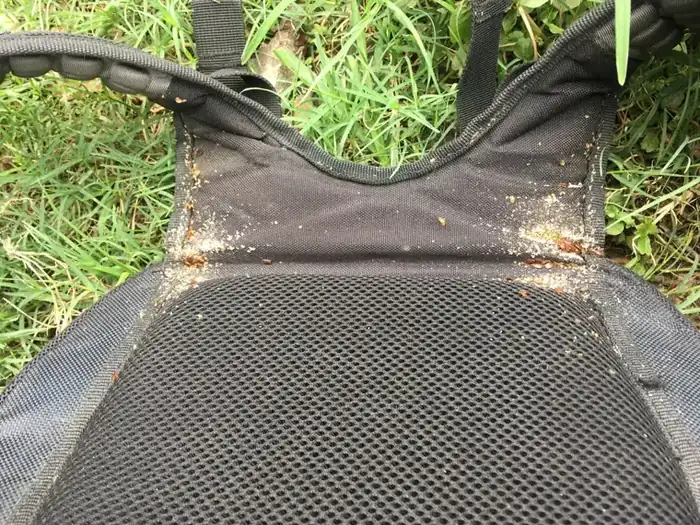
Bed bug droppings look like small black dots, as if someone touched the fabric with a fine-tip marker.
You will find them clustered along mattress seams, behind headboards, and in the joints of bed frames. That is where the bugs hide by day. Even after washing, the spots can linger like magic-marker stains.
To test one, wipe it with a damp cloth. Fecal spots smear because they are digested blood. Ordinary dirt does not.
4. Telling fecal spots apart from mold, dirt, and rust
This is where most false alarms happen.
- Mold spreads in fuzzy patches in damp areas, not in tight clusters along seams.
- Dirt wipes away dry.
- Rust sits on metal and does not smear.
If the spots cluster where bed bugs hide and smear when dampened, take them seriously.
5. Translucent shed skins
As nymphs grow, they molt and leave behind hollow, papery shells shaped like the bug.
Finding several in one spot means young bugs are actively growing there. Each nymph sheds five times before adulthood, so skins in different sizes point to a breeding population, not a single stray bug.
6. Tiny white eggs glued into seams
Eggs are about a millimeter long, pearl-white, and glued down where they are laid.
Check mattress seams, tufts, and cracks in the bed frame. Loose white specks that brush away easily are probably not eggs.
7. Empty eggshells left behind
After hatching, the shells stay glued where they were laid. They look like tiny white husks, slightly translucent.
Shells with no live bugs nearby suggest past activity. Check the area again after a few days.
8. Live bugs, the only certain proof
Nothing confirms an infestation like a living bed bug.
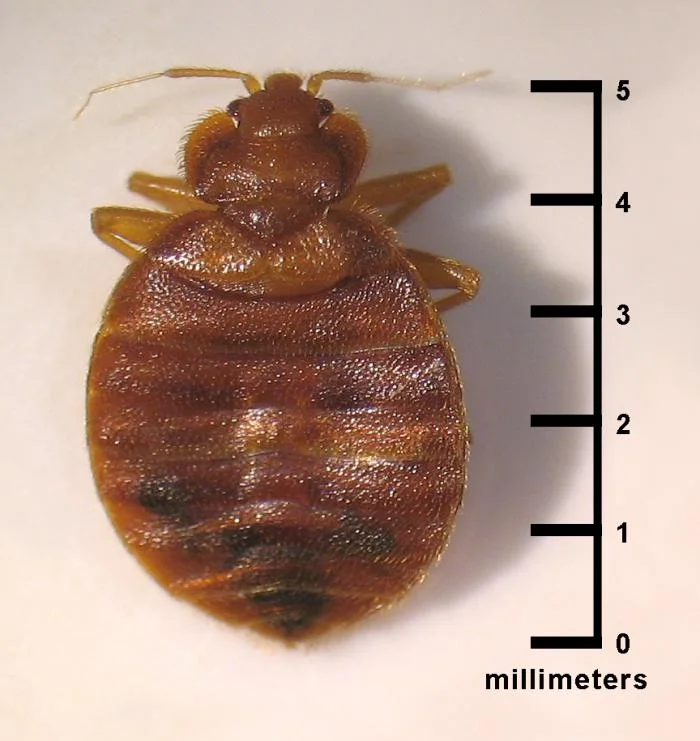
Adults are apple-seed-sized and reddish-brown. Nymphs are smaller and paler.
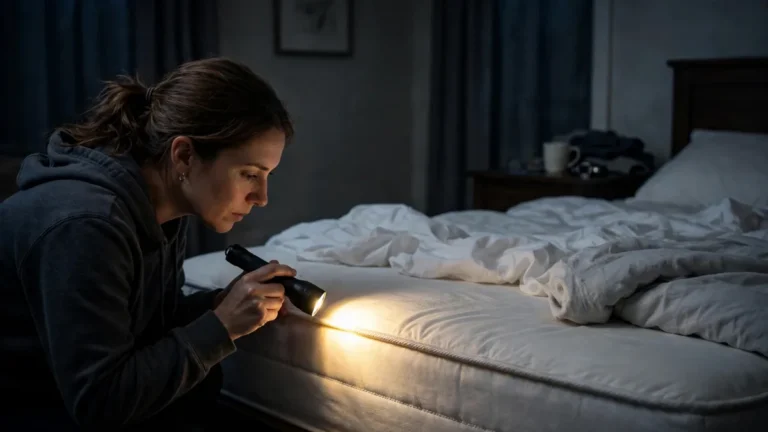
Check at night with a flashlight, since that is when they come out to feed. One live bug means there are almost certainly more hiding nearby.
Compare what you found with the close-up descriptions in our bed bug identification guide.
9. A sweet, musty odor
Heavy infestations can produce a sweet, musty smell. People describe it as coriander or cilantro, raspberries or almonds. A very heavy one can smell like rust or damp laundry.
This is the least reliable sign on the list.
You will not smell anything from a small or early infestation. Plenty of bedrooms smell musty for other reasons.
10. Signs turning up away from the bed
When an infestation grows, the evidence spreads.
Fecal spots turn up on baseboards, shed skins behind nightstands, blood spots on a couch. Once signs appear in more than one room, the population has had time to expand.
11. Rust-colored marks on bed frames and headboards
On wood and painted surfaces near hiding spots, look for rusty smears where bugs were crushed or where fecal matter built up over time. These marks survive cleaning longer than spots on fabric, so they can reveal an older infestation.
Which Signs Prove an Active Infestation?
Not every sign means bugs are there right now.
Live bugs, fresh eggs, and dark fecal spots that still smear point to current activity. Old shed skins, dry blood stains, and empty shells could be leftovers from a problem that was already treated.
When you find only old evidence, inspect again after a few nights before deciding what to do.
Why Early Infestations Go Unnoticed
Four things work in the bed bug’s favor.
They feed at night while you sleep, and the young nymphs are nearly invisible at 1 to 2 millimeters. Bite marks show up late, if at all, and the first signs hide in seams and cracks you never look at.
By the time most people connect the dots, the population has been growing for weeks.
How to Inspect for Them
Work with a bright flashlight and, if you have one, a magnifying glass.
- Start with the mattress. Run the light along every seam, tuft, and fold.
- Check the box spring, bed frame joints, and headboard.
- Move outward to nightstands, baseboards, and nearby furniture.
Daytime inspections work fine as long as you look inside the hiding spots rather than at open surfaces.
For extra confirmation, place interceptor traps under the bed legs. They catch bugs over several nights and confirm what a visual check misses.
What to Do When You Find Signs
First, do not panic.
Do not drag the mattress or furniture into another room. Moving infested items spreads the bugs.
Take photos of what you found and note where each sign was. Keep the evidence undisturbed, then inspect every sleeping area before choosing a treatment that gets rid of them permanently.
The 11 Signs at a Glance
| # | Sign | Clue |
|---|---|---|
| 1 | Itchy bites | Lines or clusters on exposed skin |
| 2 | Blood stains | Tiny rust spots on sheets |
| 3 | Fecal spots | Dark dots on seams; smear when damp |
| 4 | Look-alike check | Rule out mold, dirt, and rust |
| 5 | Shed skins | Translucent shells in hiding spots |
| 6 | Eggs | White, 1mm, glued into seams |
| 7 | Eggshells | Empty husks left behind |
| 8 | Live bugs | The only certain proof |
| 9 | Musty odor | Sweet smell; heavy infestations only |
| 10 | Spread signs | Evidence beyond the bedroom |
| 11 | Rust marks | Smears on frames and headboards |
Frequently Asked Questions
Do bed bugs leave white droppings?
No. Bed bug droppings are dark, not white. White specks are usually eggs, shed skins, or ordinary debris.
Do bed bugs only live in beds?
No. Beds are the starting point, but growing infestations reach nightstands, couches, baseboards, and wall voids.
How long can they go unnoticed?
Weeks or even months, especially if no one reacts to the bites.
Do interceptor traps work?
For detection, yes. They catch bugs traveling to and from the bed, which confirms activity. They do not eliminate an infestation on their own.
What if I see signs but have no bite marks?
Trust the physical evidence. Many people do not react to bites, so signs without bites still warrant a full inspection.

Caleb Morris
Caleb Morris covers bed bugs with a practical approach. His articles explain bites, eggs, hiding places, life cycles, and other topics people search for every day. He believes useful content should answer real questions...
View all guides →