What Do Bed Bugs Look Like? Size, Color & Pictures
See what bed bugs look like at every life stage, with real photos of adults, nymphs, eggs and shed skins, plus the size and color clues that confirm an ID.

In this guide
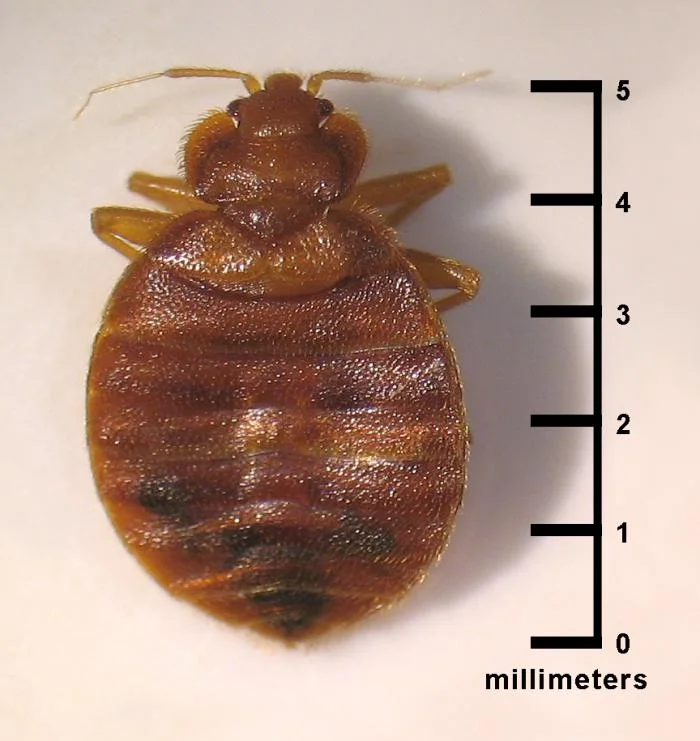
An adult bed bug, Cimex lectularius, is about the size and shape of an apple seed. Flat and oval, reddish-brown, with six legs and no wings.
Nymphs are smaller and paler, almost translucent until they feed. Eggs are pinhead-sized white grains tucked into seams and cracks.
Bed bugs are nocturnal. They hide by day and feed at night on sleeping people, and unlike lice they do not live on the body.
If what you found matches that description, the sections below walk through each life stage so you can check with confidence.
Key Takeaways
- Adult bed bugs are apple-seed-sized (5 to 7 mm), flat, oval, and reddish-brown, with six legs and no wings.
- Nymphs are smaller and nearly translucent until they feed; eggs are 1-mm white grains hidden in seams and cracks.
- Bed bugs are nocturnal. They hide by day and feed at night, and they do not live on the body like lice.
- Shed skins, dark fecal spots, and rusty blood stains confirm activity better than bites alone.
- Anything with wings, eight legs, or the ability to jump is not a bed bug.
What Adult Bed Bugs Look Like
Adults have a flat, oval body that looks a little like an apple seed, with a segmented abdomen and a smaller head.
Six legs and two antennae extend from the front half. They have no wings, so anything that flies or jumps is not a bed bug.
That flat shape lets them squeeze into gaps as thin as a credit card, which is why they are so hard to find.
A related tropical species, Cimex hemipterus, looks nearly identical and occasionally arrives in luggage after international travel.
Size
Adults measure about 5 to 7 millimeters long.
The apple seed comparison works because the size and shape match. Like the seed, the bug is oval, slightly tapered at one end, and flat when it has not fed recently.
Color: Fed vs Unfed
An unfed adult is brownish, sometimes described as mahogany or rust-colored.
After feeding, the body darkens to a deep red and stretches longer and more balloon-like as it fills with blood.
This color shift confuses people. The same bug can look quite different before and after a meal.
If you find a dark red, elongated bug and a flatter brown one in the same spot, they may both be bed bugs at different points in the feeding cycle.
Baby Bed Bugs (Nymphs)
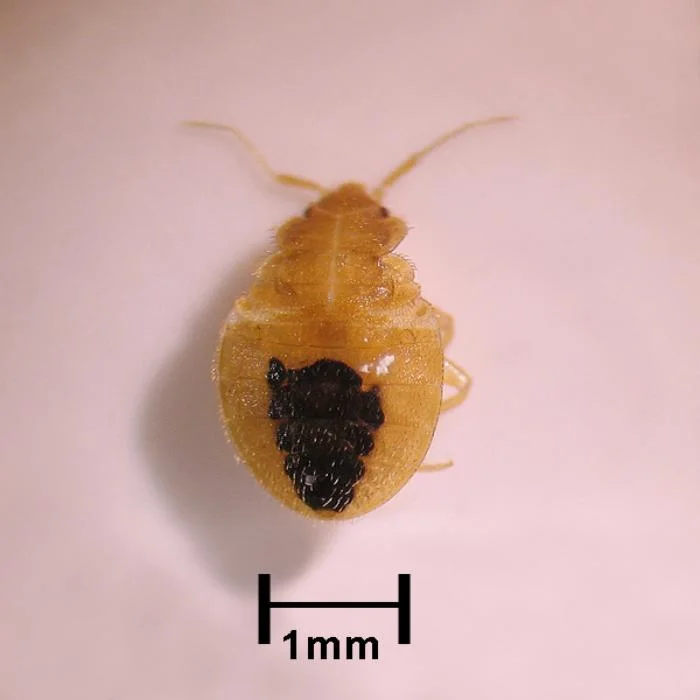
Nymphs are simply smaller, paler versions of the adults.
A newly hatched nymph is about 1.5 millimeters long, close to a poppy seed, and nearly translucent or straw-colored. After it feeds, its abdomen turns bright red, then darkens over the next few days.
Bed bugs pass through five nymph stages, growing larger with each one. By the fifth stage they reach about 4.5 millimeters, roughly a sesame seed, and look like small adults.
Every stage except the egg feeds on blood, so even the tiniest translucent nymph can bite.
Bed Bug Eggs
Eggs are about 1 millimeter long, pearl-white, and shaped like tiny grains of rice.
Females lay them in clusters and coat them with a sticky substance. You will usually find them glued inside mattress seams, behind headboards, or along the edges of box springs rather than sitting loose on a sheet.
Fresh eggs look pearly and plump. Eggs that never hatched look shriveled and yellowish.
Finding eggs matters because it means breeding is happening, not just a single bug that wandered in.
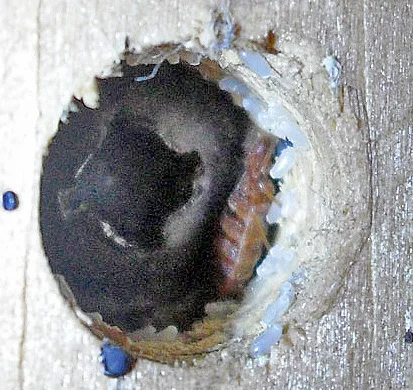
Actual Size Comparison
Millimeters mean little without something familiar next to them. Use this chart when you are holding a ruler or comparing against a photo.
| Stage | Length | Everyday comparison |
| Egg | ~1 mm | Pinhead |
| Young nymph | ~1.5 mm | Poppy seed |
| Older nymph | ~4.5 mm | Sesame seed |
| Adult | 5 to 7 mm | Apple seed |
A useful rule: no bed bug at any stage is bigger than a grain of rice. If the insect you found is clearly larger, it is something else.
Can You See Bed Bugs With the Naked Eye?
Adults, yes.
At 5 to 7 millimeters they are plainly visible on a light sheet or mattress seam. Older nymphs are visible too, though you may need to look closely.
Young nymphs and eggs are where people miss them.
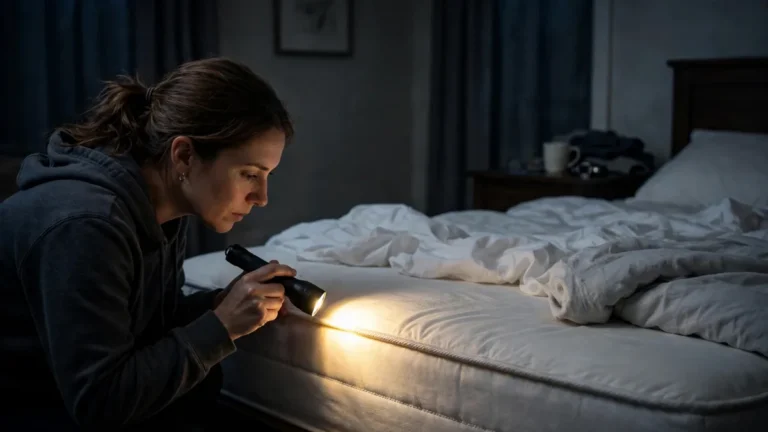
A 1.5-millimeter translucent nymph blends into fabric, and 1-millimeter eggs hide inside seams. For those, use a bright flashlight held at a low angle across the surface and, if you have one, a magnifying glass. Check seams, tufts, and folds rather than open flat areas.
Signs They Leave Behind
Sometimes you find the evidence before you find the bug. Four signs show up again and again:
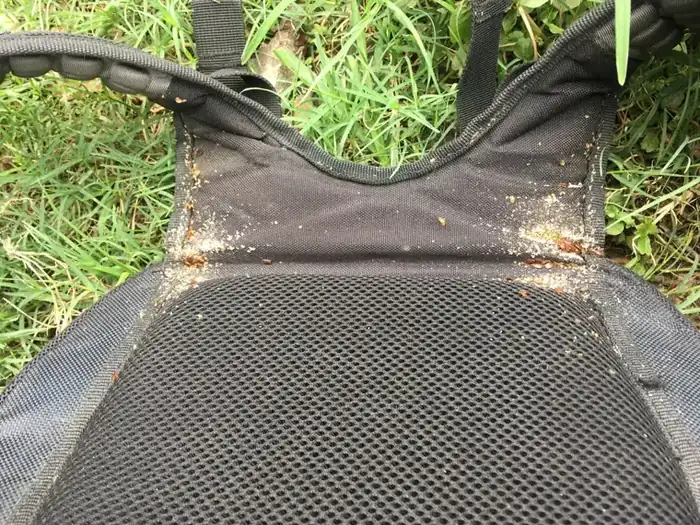
- Shed skins. As nymphs grow they molt, leaving behind hollow, translucent shells shaped like the bug itself. Piles of these in a seam mean active growth nearby.
- Dark fecal spots. Small black or dark brown specks on sheets, mattress seams, or walls near the bed. They look like someone dotted the fabric with a fine-tip marker. They often smear when wiped with a damp cloth, which helps tell them apart from ordinary dirt.
- Rusty blood spots. Small reddish smears on sheets or pillowcases, usually from a bug crushed during the night.
- Musty odor. Larger infestations can give off a sweet, musty smell, sometimes compared to coriander. You will not notice this with only a few bugs around.
These signs tell you bed bugs are or were present, but a full inspection of hiding spots confirms whether the problem is current.
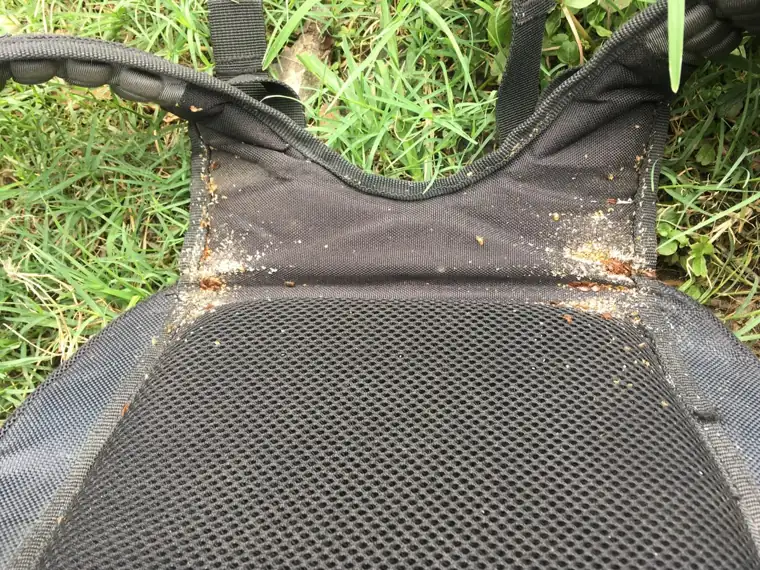
Bugs Commonly Mistaken for Bed Bugs
Several household insects get blamed for bed bug sightings. A quick way to rule them out:
- Carpet beetles. Similar size, but rounder and often mottled or patterned. Their larvae are hairy, which bed bug nymphs never are.
- Bat bugs. Nearly identical to bed bugs and need a microscope to separate reliably. They live near bats or birds rather than beds.
- Booklice. Much smaller (around 1 mm), pale, and usually found in damp books or paper, not bedding.
- Baby cockroaches. Longer and more cylindrical where bed bugs are flat, with antennae much longer than a bed bug’s, and they move fast.
- Chiggers. Similar shape at a glance, but far smaller. You need magnification to make out a chigger’s body; if you can plainly see legs and segments with the naked eye, it is not a chigger.
- Fleas. Smaller, darker, and built for jumping. If it jumps, it is not a bed bug.
- Ticks. Eight legs instead of six, and a different body shape entirely.
When in doubt between bed bugs, fleas, and ticks, a side-by-side comparison with photos settles it faster than any description.
How to Confirm What You Found
Work through these steps in order before deciding what you are dealing with:
- Catch one intact. Use a tissue or a piece of clear tape pressed gently, not a shoe. You need the body whole to check its shape.
- Check size and shape. Flat and oval like an apple seed, 5 to 7 mm for adults. Compare against the chart above.
- Count the legs and check for wings. Six legs, no wings, no jumping. Eight legs means a tick or mite; wings mean a beetle or fly.
- Look where it was found. Bed bugs stay close to where people sleep, such as mattress seams, box springs, headboards, and nightstands. A bug found far from any sleeping area is less likely to be one.
- Look for the signs. Shed skins or dark fecal spots in the same area back up the identification.
If it passes all five checks, treat it as a bed bug and move on to inspection and treatment. If it fails at step three, you are likely looking at one of the look-alikes above.
If you are still unsure, place the intact bug in a small sealed container and have a pest professional confirm the identification.
Frequently Asked Questions
How can you tell a male from a female bed bug?
Look at the tip of the abdomen with magnification. Males have a slightly pointed tip; females are more rounded. It takes a close look, and for most homeowners the distinction does not change what to do next.
Do bed bugs have wings? Can they fly or jump?
No. Adult bed bugs are wingless. They cannot fly or jump; they crawl from hiding spots to their host, which is why they stay close to beds and furniture.
Do baby bed bugs bite?
Yes. Every stage except the egg feeds on blood, including the smallest translucent nymphs.
Can bites alone confirm bed bugs?
No. Bite reactions vary from person to person, and many insects cause similar marks. Bites are a reason to inspect, not a diagnosis. Confirm with an actual bug or the physical signs described above. Bed bugs usually feed on exposed skin such as the neck, arms, and legs while you sleep, and the feeding itself causes no immediate pain, which is why bites are mostly noticed in the morning.
Can a clean home get bed bugs?
Yes. Bed bugs feed on blood, not dirt, and they spread through luggage, used furniture, and neighboring apartments. Housekeeping neither causes nor prevents them.
Do bed bugs spread disease?
They are not known to transmit disease to people. Bites can still cause itching, swelling, or skin infection from scratching, and a heavy infestation brings real stress and lost sleep.
What to Do Next
Once you have confirmed what you are looking at, the next move is a thorough inspection. Early warning signs tell you how far it has spread, and knowing the hiding spots tells you where to look.
From there, treatment options range from heat and targeted products to professional help, depending on the size of the problem.

Caleb Morris
Caleb Morris covers bed bugs with a practical approach. His articles explain bites, eggs, hiding places, life cycles, and other topics people search for every day. He believes useful content should answer real questions...
View all guides →