How to Get Rid of Bed Bugs Permanently (Step-by-Step Guide)
Get rid of bed bugs permanently with a proven plan. What to do tonight, heat and chemical treatment, costs, and the 3 to 6 week timeline explained.

In this guide
- What To Do Tonight
- First, Confirm They Are Actually Bed Bugs
- Can You Get Rid of Bed Bugs Yourself?
- How To Prepare the Room for Treatment
- Heat: The Temperatures That Kill Bed Bugs
- Chemical Treatment: What Works and What Does Not
- Your Mattress: Treat It, Do Not Throw It Away
- The Step-by-Step Elimination Plan
- How Long It Takes: The 3 to 6 Week Timeline
- Why Bed Bugs Come Back After Treatment
- How To Know the Treatment Worked
- What Bed Bug Treatment Costs
- When To Call a Professional
- How To Keep Bed Bugs From Coming Back
- Frequently Asked Questions
Bed bugs do not leave after one spray, one cleaning, or one bad night of itching.
Getting rid of them permanently takes a combination of heat, targeted treatment, and follow-up visits that are timed to the bugs’ own life cycle.
That sounds like bad news, but it explains why most people fail.
They try one thing, see a few bugs the next week, and assume nothing works. The truth is that the plan was often fine and the timing was wrong. This guide gives you the full plan.
It starts with what to do tonight, before any treatment happens.
It ends with how to keep them from coming back once they are gone.
Quick answer. Kill bed bugs permanently by combining methods. Heat above 120°F kills every life stage including eggs, while targeted insecticides and encasements handle the hiding spots heat cannot reach. Expect two or more treatments spaced about two weeks apart, because eggs hatch 6 to 10 days after treatment and survive most sprays.
What To Do Tonight
Treatment can wait a few days.
Tonight cannot.
A few hours of work this evening will shrink the problem and protect the rest of your home.
None of it needs a purchase.
- Strip the bed and bag the bedding where it sits, then carry the sealed bag straight to the laundry room.
- Wash everything in hot water and dry it on the highest heat setting for at least 20 minutes.
- Vacuum mattress seams, the bed frame, and the baseboards slowly, then empty the vacuum outside into a sealed bag.
- Pull the bed a few inches away from the wall and keep blankets from touching the floor.
- Reduce clutter around the bed so the bugs have fewer places to hide during the day.
Then sleep in your own bed. Moving to the couch or a spare room feels safer, but bed bugs follow body heat and carbon dioxide, and they will find you there and start a second infestation in a second room. Keeping the bed as the only feeding site keeps the problem contained.
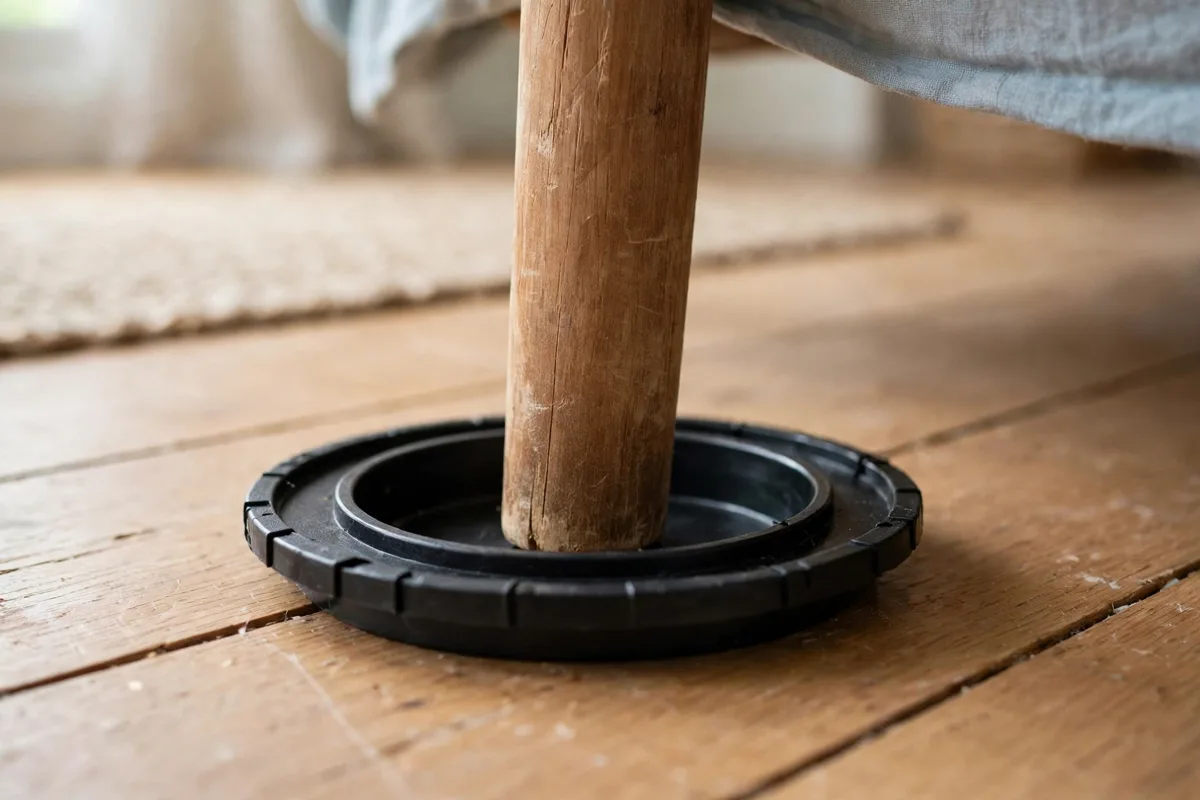
If you can, set interceptor traps under the bed legs before you sleep. They will catch some bugs tonight and tell you a lot about how serious this is.
First, Confirm They Are Actually Bed Bugs
Treatment is expensive and disruptive, so confirm the pest before you spend anything.
Carpet beetles, fleas, and roach nymphs get mistaken for bed bugs all the time.
A wrong identification means weeks of treating the wrong problem.
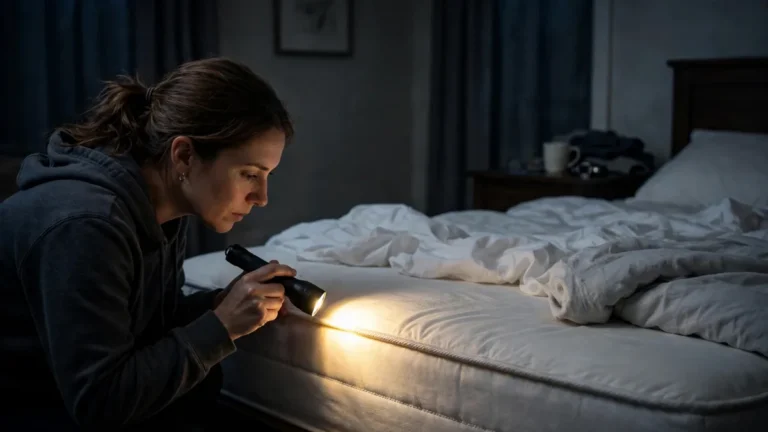
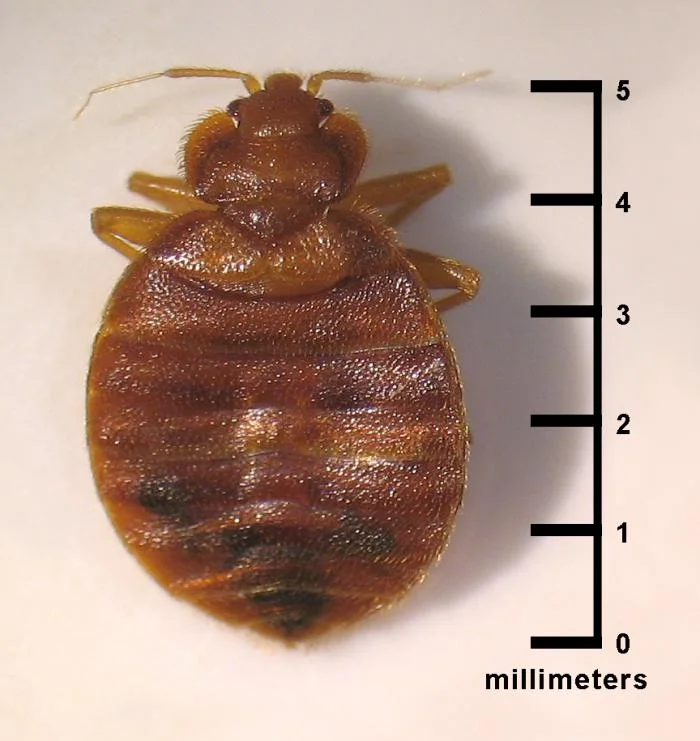
Adult bed bugs are about the size of an apple seed, flat and reddish brown, and they swell and turn a deeper red after feeding. They hide in mattress seams, tufts, and screw holes during the day, so finding a live one usually means checking the bed with a flashlight and probing the seams. If you are not sure what you are looking at, our guide to what bed bugs look like walks through the size, color, and shape at every life stage.
Bites alone cannot confirm anything.
Plenty of skin reactions look like bed bug bites, and no doctor can diagnose an infestation from a rash.
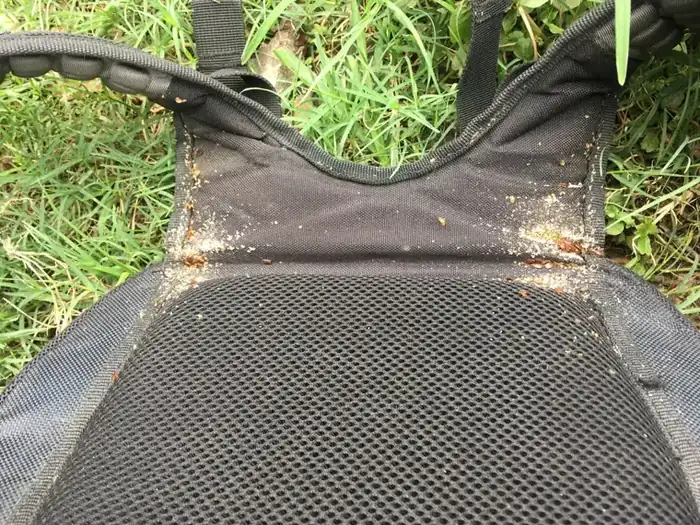
The physical signs are more reliable. Rusty spots on sheets, shed skins in the seams, and a sweet musty smell in a heavy infestation all point the same way, and our breakdown of the early signs of bed bugs shows what each one looks like before the problem grows.
One confirmed live bug is enough to act on.
Can You Get Rid of Bed Bugs Yourself?
Sometimes, yes. A mild problem caught in its first days, limited to one bed and one room, can sometimes be beaten with heat, steam, encasements, and relentless cleaning. That is the honest ceiling of DIY treatment.
Once bugs have spread into walls, outlets, furniture, and a second room, home treatment almost never finishes the job. Store-bought sprays cannot reach the deep hiding places where most of the population spends the day, and they do nothing to eggs. Every week of partial treatment also gives the survivors time to scatter further into the home.
Be honest about which situation you are in. The sections below work for both paths. The stopping point for DIY is real, though, and the cost section further down explains what professional help actually runs.
How To Prepare the Room for Treatment
Preparation decides whether treatment reaches the bugs or misses them.
Start with fabric.
Wash bedding, curtains, and clothing in hot water, dry everything on high heat, and seal the clean items in bags until the room is cleared.
Then declutter hard. Every stack of paper, pile of clothes, and crowded shelf is a hiding place that treatment cannot penetrate, and clutter is the most common reason treatments fail.
- Bag and launder all washable fabrics on the hottest settings the fabric allows.
- Clear the floors and empty the furniture in the infested room so every surface can be reached.
- Vacuum slowly along seams, edges, and baseboards, then empty the vacuum outside.
- Move furniture a few inches away from the walls to expose the edges where bugs hide.
- Plan for people and pets to be out of the room during any chemical application and until treated surfaces are dry.
Do not move infested items into another room to sort them.
Carry anything that must leave the room in a sealed bag, or you will seed a new infestation down the hall.
Preparation is unglamorous, and it is half the treatment.
Heat: The Temperatures That Kill Bed Bugs
Heat is the one method that kills bed bugs at every life stage, eggs included. Resistance does not apply, because the bugs are not poisoned.
They are cooked.
The catch is that heat only works when the coldest hiding spot reaches the lethal temperature and stays there.
A warm room with a cool mattress core is a failed treatment.
The numbers that matter come from university and agency guidance, and they are stricter than most people guess.
| Method | Temperature needed | Time needed | Notes |
|---|---|---|---|
| Heat treatment of rooms and items | 120°F at the core of the item | Held for 2 hours | University of Minnesota Extension guidance. The core temperature is what counts, not the air temperature. |
| Laundry drying | 122°F or higher | At least 20 minutes on high heat | Kills every life stage in bedding and clothing. Wash hot first, then dry. |
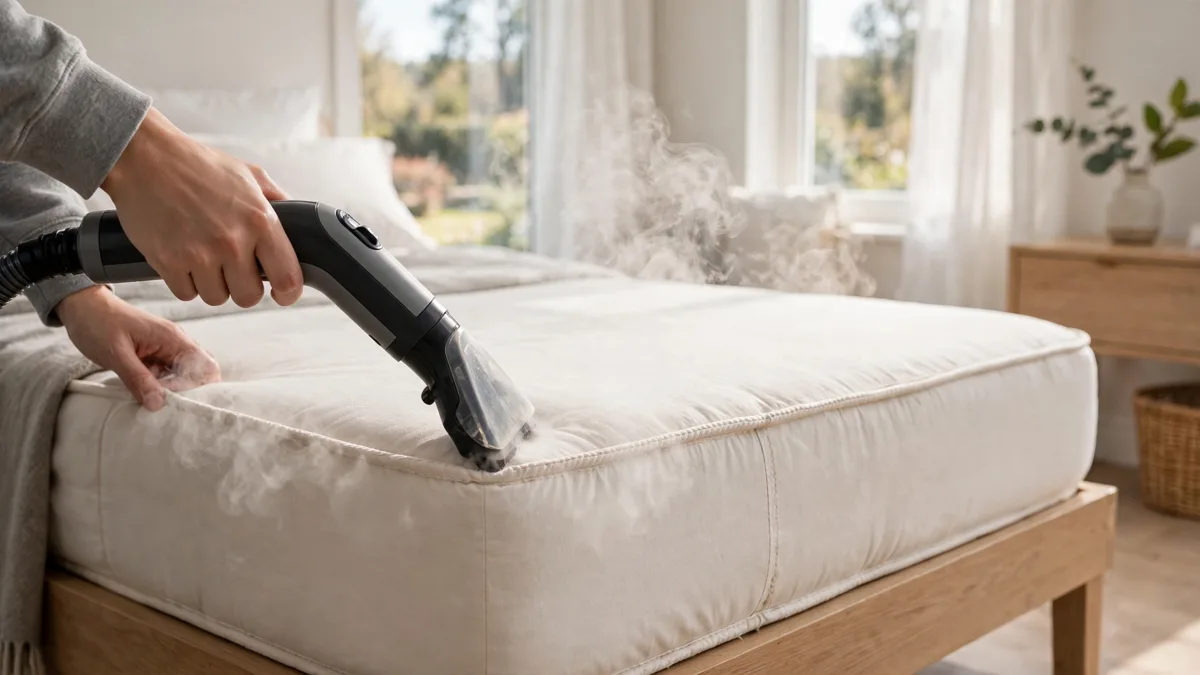
| Steam on seams and furniture | Around 160°F at the surface | Slow passes over seams and tufts | Steam kills on contact, so it has to touch the bugs and their eggs directly. |
| Freezing small items | 0°F | 3 full days in a sealed bag | U.S. EPA guidance for items that cannot be washed or heated. |
Professional heat treatment heats the whole room and holds it there while fans move the air around. Technicians place sensors in the hardest spots to heat and use them to prove the temperature was actually reached. That monitoring is the difference between real heat treatment and a space heater.
A standard home freezer often cannot hold 0°F, which is the detail that makes the freezing route fail quietly. Check yours with a thermometer before trusting it with a suitcase or a pair of shoes.
Chemical Treatment: What Works and What Does Not
Insecticides still do much of the work in professional treatment, mainly in the cracks and voids that heat and steam cannot reach. They are also the part of the process homeowners are least equipped to handle well.
Bed bugs across North America have developed strong resistance to pyrethroids, the active ingredients in most sprays sold in hardware stores. A product like that can flush bugs out of a seam, kill a few of them, and leave the resistant majority alive. Professionals work around resistance by rotating products, placing dusts inside wall voids, and applying residual treatments where bugs have to walk.
The label on a consumer can is not a strategy.
Any insecticide belongs only where its label allows, at the labeled rate, and away from sleeping surfaces unless the label says otherwise. Children and pets stay out of treated rooms until surfaces are dry and the label’s re-entry time has passed.
Why Foggers Make Things Worse
Total release foggers, sold as bug bombs, are the one product the U.S. EPA warns against in the strongest terms for this pest. The agency states that foggers should never be used as the only method to treat bed bugs.
The mist settles on open surfaces and never reaches the seams, voids, and screw holes where bed bugs spend the day.
Worse, the irritating cloud drives survivors deeper into the walls and into rooms that were clean. A fogger can turn a one-room problem into a whole-home problem in a single afternoon.
Skip the bug bombs entirely. Money spent on foggers is money taken away from encasements, interceptors, and the follow-up visit that actually ends the infestation.
Your Mattress: Treat It, Do Not Throw It Away
The first instinct is to drag the mattress to the curb.
Fight it.
Dragging an infested mattress through hallways and stairwells scatters bugs and eggs along the whole route, and in an apartment building it can seed them in shared spaces. A replacement mattress carried into a room that still has bugs in the frame and baseboards gets infested within days. You will have spent hundreds of dollars to give the survivors a clean new home.
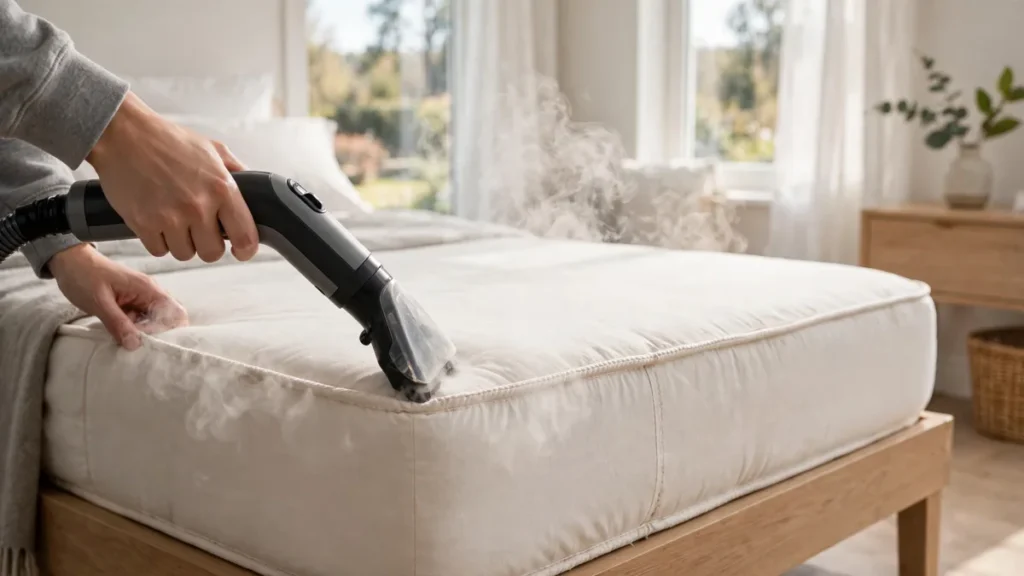
Treat the mattress you have instead. Vacuum the seams slowly, steam every seam and tuft, and let it dry fully.
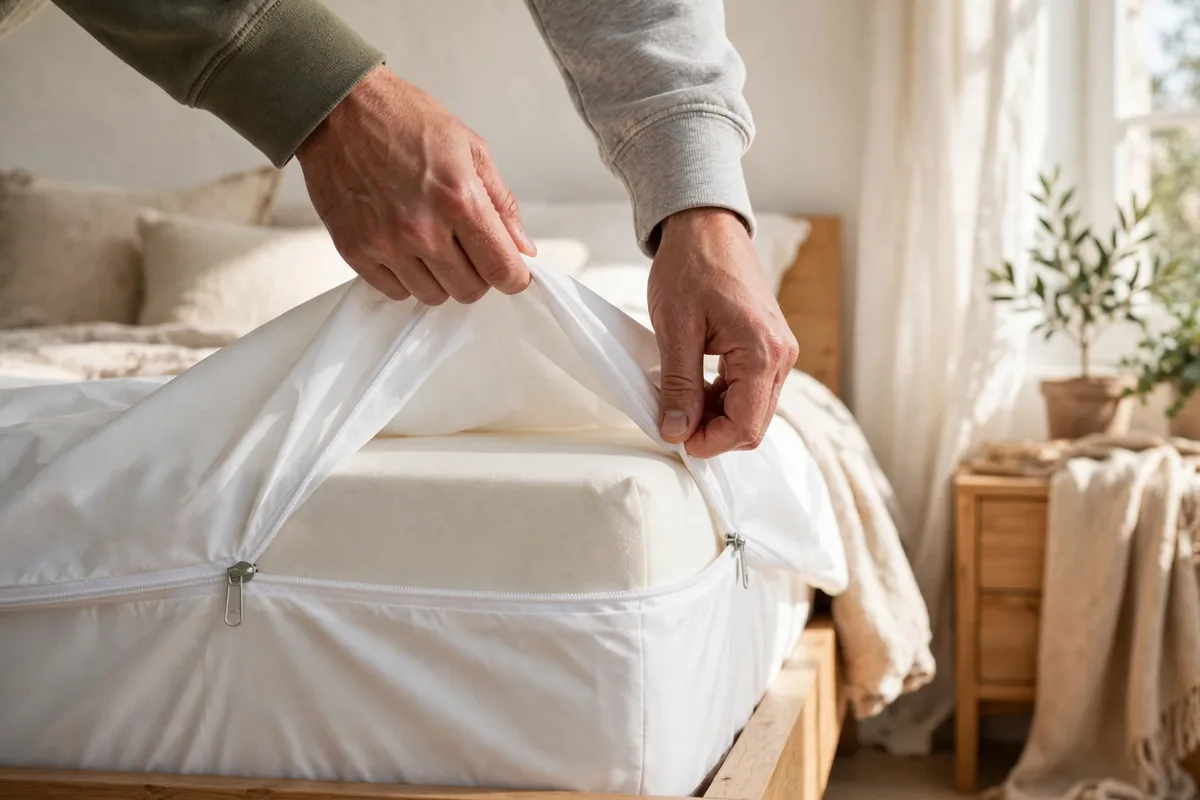
Then seal it inside a bed bug encasement and leave the encasement on. Bugs trapped inside cannot reach you to feed, and bugs on the outside have nowhere left on the mattress to hide.
Do the same for the box spring. It is often more infested than the mattress itself.
If a piece of furniture truly cannot be treated, wrap it fully in plastic before it leaves the room and mark it as infested so nobody takes it home. That is a last resort, not a first move.
The Step-by-Step Elimination Plan
Here is the full sequence, in the order that works. The steps repeat on a cycle, because the eggs already in the room are running on their own schedule.
- Confirm the pest and find every hiding spot in the room with a flashlight, checking seams, frames, outlets, and baseboard edges.
- Strip and hot-launder all bedding and washable fabric, then seal the clean items in bags.
- Vacuum the mattress, the frame, and the room edges slowly, and empty the vacuum outside into a sealed bag.
- Steam the mattress seams, tufts, and furniture joints where bugs hide during the day.
- Fit encasements on the mattress and box spring, and install interceptor traps under every bed leg.
- Treat cracks, voids, and edges, or bring in professional heat or chemical treatment for anything beyond one mild room.
- Repeat the inspection and treatment about two weeks later to kill the nymphs that hatched from surviving eggs.
- Monitor with the interceptors for at least six weeks after the last live bug is seen.
Skipping the repeat step is the most common way this plan fails. The first treatment always feels like the main event. The second one is what makes the result permanent.
How Long It Takes: The 3 to 6 Week Timeline
A mild, single-room problem can be under control in one to two weeks.
A typical established infestation takes three to six weeks of work, from the first treatment to a confirmed clear room.
Anyone who promises a finished job in one visit is selling, not treating.
The biology sets the calendar. Bed bug eggs hatch in about 6 to 10 days, and the egg shell shields the developing bug from most insecticides that kill adults on contact. The nymphs that emerge are tiny, hungry, and far easier to kill, which is why follow-up treatment lands about two weeks after the first pass.
Seeing a few small bugs in the week after treatment usually means the plan is working on schedule, not that it failed. Those are newly hatched nymphs walking into treated areas.
What matters is the trend. Live bugs should get fewer and smaller across the follow-ups, and the interceptors should stay empty for longer and longer stretches.
| Stage | What happens | What you should see |
|---|---|---|
| Day 1 | First treatment. Encasements go on and interceptors go under the bed legs. | Live bugs drop sharply within a few days. |
| Days 6 to 10 | Eggs that survived the first treatment hatch. | A few tiny nymphs may appear. This is expected. |
| Around week 2 | Follow-up treatment targets the new nymphs. | Nymphs are killed before they can mature and breed. |
| Weeks 3 to 6 | Monitoring with interceptors and weekly seam checks. | Empty traps and no live bugs mean the room is clearing. |
Why Bed Bugs Come Back After Treatment
When bugs return, there is almost always a specific reason, and it is rarely a mystery.
EPA guidance on failed treatments points to the same short list again and again.
- Eggs survived, because the shell protects them from many sprays, and they hatched days after the room was treated.
- Hiding places were missed, in outlet boxes, screw holes, baseboard gaps, and furniture joints that a quick treatment never reaches.
- Clutter blocked the treatment and shielded the spots underneath it from heat, steam, and spray alike.
- The bugs were resistant, so a pyrethroid-only plan killed the susceptible ones and left the resistant ones to rebuild.
- They were carried back in, inside a suitcase, a used chair, or a guest’s bag, after the room was already clear.
- There was no follow-up visit, so the egg schedule ran untouched.
Notice that none of these require the treatment itself to be weak.
They require the plan around it to be incomplete. That is fixable, and it is why a calm second pass beats a panicked switch to a new product.
How To Know the Treatment Worked
You cannot call a room clear because a week passed without a bite. Some people never react to bites at all, and others react days late.
Use evidence instead. Interceptor traps under the bed legs catch bugs traveling to and from the bed, and two well-known designs, ClimbUp and BlackOut, are the standard tools for this job.
Check the traps and the seams on a schedule, once a week, and write down what you find. A count that falls to zero and stays there is the strongest proof a homeowner can get.
A fresh round of the old signs, new fecal spots, shed skins, or a live bug sitting in a trap, means the cycle is not finished and another treatment is due. Our guide to the early signs of bed bugs is the reference to check against when you are not sure what you found.
Empty traps, clean seams, and no new spots. That is the finish line.
What Bed Bug Treatment Costs
Professional treatment is priced by the size of the home, the severity of the infestation, and the method used. It is rarely cheap, and it helps to know the real ranges before you start taking quotes.
The average cost of bed bug treatment is $1,000 per home in the United States, according to Pest Control Technology. That figure is the one the Florida Department of Agriculture and Consumer Services publishes in its consumer bed bug FAQ.
By method, chemical treatment typically runs about $300 to $1,500 for a home. Whole-home heat treatment typically runs about $2,000 to $5,000.
Those ranges show up across independent cost guides, including Angi and Remodeling Expense. The spread inside each range is mostly home size and how far the infestation has spread, so a single mild room sits at the low end of chemical pricing and a multi-room heat job sits at the top.
| Method | Typical cost | Notes |
|---|---|---|
| Chemical treatment | $300 to $1,500 | Usually two or more visits, priced by home size and severity. |
| Heat treatment | $2,000 to $5,000 | One long visit. Kills every life stage when the temperatures are held and monitored. |
| Average across methods | $1,000 per home | Pest Control Technology figure published by the Florida Department of Agriculture and Consumer Services. |
DIY is cheaper in cash and more expensive in time. Encasements, interceptors, a steamer, and laundry costs can stay under a few hundred dollars, but a failed three-month attempt usually ends with a professional bill on top of all of it. Get at least two quotes, and ask each company what the follow-up visits cost.
A quote that covers one visit is not comparable to a quote that covers the full cycle. Ask about the guarantee in writing, including how long it runs and what counts as a covered re-treatment.
When To Call a Professional
Call a professional when the bugs are in more than one room. Spread means hiding places you cannot see, and that is where home treatment stalls.
- Live bugs in two or more rooms, or in upholstered furniture away from the bed.
- A month of your own treatment with the interceptor counts refusing to fall.
- A home with infants, elderly residents, or anyone whose health makes chemical planning a bigger conversation.
- A rental home, where in many places the landlord carries the duty to treat, so check your lease and local rules before paying yourself.
- A move in or move out, where a written guarantee actually matters.
Choose a company that inspects before it quotes and explains its follow-up schedule without being asked. A company that gives a final price over the phone for a pest it has not seen is guessing with your money. Ask what products will be used, where they will be applied, how long people and pets stay out, and what the guarantee covers.
Write the answers down.
How To Keep Bed Bugs From Coming Back
A cleared room can be reinfested in one trip. Most new infestations start with travel or used furniture. The habits that prevent them are boring, cheap, and effective.
- Inspect the hotel bed on arrival and keep luggage off the bed and away from the walls.
- Launder travel clothes and dry them on high heat after trips, and unpack bags away from the bedroom.
- Inspect any used furniture before it enters the home, and think twice about upholstered pieces entirely.
- Leave the encasements on and keep the interceptors under the bed legs as an early warning system.
- Reduce clutter in bedrooms so new arrivals have fewer places to settle.
Keep checking the traps once in a while, even after the all-clear.
Catching two bugs in a trap early is a small job, while finding them after six quiet months means fighting the whole war again.
Frequently Asked Questions
Do I have to throw away my mattress or furniture?
Usually, no. Most mattresses and furniture can be vacuumed, steamed, treated, and encased, which costs far less than replacing them and works better, because the room itself still gets treated either way.
Can bed bugs survive professional heat treatment?
Not when the treatment is done correctly. Every life stage dies once the core temperature of its hiding place reaches the lethal range and stays there, which is why professionals monitor temperatures inside furniture and walls instead of trusting a thermostat.
Are bed bug treatments safe around kids and pets?
They can be, when the labels are followed. Professionals use targeted applications in cracks and voids rather than broadcast spraying, and everyone, pets included, stays out until surfaces are dry and the stated re-entry time has passed, so ask the company for those times before treatment day.
Why am I still seeing bugs a week after treatment?
Because eggs that survived the first treatment have hatched. That is expected, it is planned for, and it is the reason the follow-up visit exists, so judge the treatment by whether the numbers fall across the full cycle rather than by week one.
Do bug bombs or foggers work on bed bugs?
No. The EPA warns that foggers cannot reach the hiding places where bed bugs live and should never be the only treatment method, and the mist often scatters survivors into new rooms.
Permanent results come from a system, not a product. Confirm the pest, heat what can be heated, treat the hiding places, and come back on the eggs’ schedule until the traps stay empty.
Do that, and the room is yours again.

Caleb Morris
Caleb Morris covers bed bugs with a practical approach. His articles explain bites, eggs, hiding places, life cycles, and other topics people search for every day. He believes useful content should answer real questions...
View all guides →