What Do Bed Bug Bites Look Like? How to Tell & What to Do
Wondering if those welts are bed bug bites? Learn what they look like, how they differ from mosquito and flea bites, and why bites alone cannot prove bed bugs.

In this guide
- The Short Answer
- What Bed Bug Bites Actually Look Like
- Where Bed Bug Bites Show Up on the Body
- Do Bed Bug Bites Really Come in Lines of Three?
- Why Bite Photos Online Mislead People
- Bed Bug Bites vs Mosquito Bites vs Flea Bites
- Bites Alone Cannot Confirm Bed Bugs
- What to Do for the Itching
- When to See a Doctor
- Your Next Step
- Frequently Asked Questions
You woke up with itchy red welts, and now you are comparing your arm to photos online. The marks look close enough to the pictures to worry you.
The problem is that bite photos are one of the weakest tools for this job.
This article shows what bed bug bites usually look like and how they differ from mosquito and flea bites. It also covers the part most pages skip.
The real proof of bed bugs never comes from your skin.
The Short Answer
Bed bug bites usually show up as small red itchy welts on skin that was uncovered during sleep, often in loose groups, and reactions can take hours, days, or in some cases up to two weeks to appear. Bites alone cannot prove bed bugs. Live bugs, shed skins, or fecal spots are the proof.
What Bed Bug Bites Actually Look Like
Most bed bug bites look like small raised red welts with a slightly darker spot in the middle. On lighter skin they read as pink or red.
On darker skin they can look purple, brown, or barely different from the skin around them, which is one reason photos mislead people with deeper skin tones.
Size varies from a pinhead bump to a welt about the size of a pea. Swelling varies even more. One person gets flat marks that fade in two days, while a partner in the same bed gets large puffy welts that last over a week.
Some people do not react to bed bug bites at all.
The EPA notes that bite reactions vary so widely that many people never develop visible marks. A person can sleep in an infested room for weeks without a single spot to show for it.
Timing is the other trap. A bite from the night before may not itch until the following evening.
University extension guidance notes that a first reaction to bed bug bites can take days to appear. In some cases the marks take up to two weeks to show. By then most people blame a hotel stay, a new soap, or a mosquito from the yard.
Where Bed Bug Bites Show Up on the Body
Bed bugs feed on skin they can reach without crawling under clothing.
Pajamas and blankets decide the map. The usual spots are the face, neck, shoulders, arms, and hands. Bites also turn up on the back, chest, and legs when those areas sit uncovered during sleep.
Marks under tight clothing or under a watch strap are less typical of bed bugs. They deserve a second look at other causes.
Location helps you judge the story.
It never settles it, because mosquitoes bite exposed skin too and fleas favor the lower legs, so place alone is a clue rather than a verdict. Timing matters more, because bed bug bites are usually noticed on waking.
Do Bed Bug Bites Really Come in Lines of Three?
The famous pattern is a line or cluster of three bites, nicknamed breakfast, lunch, and dinner. The nickname is old and catchy.
It is only partly true.
A feeding bed bug sometimes gets disturbed and bites again a short distance away, which can leave two or three marks in a row. A group of bugs feeding in one spot can leave a loose cluster instead.
Plenty of bed bug bites also show up as single scattered welts with no pattern at all. Skin scrambles the evidence further. Two bites from the same bug can heal at different speeds, so an old bite and a fresh one can sit side by side and look like a pattern that never happened.
Treat a line or cluster as a reason to inspect the bed.
Do not treat it as proof of what bit you. Fleas and mosquitoes can leave grouped marks too, and grouped marks from any source look much alike in a photo.
Why Bite Photos Online Mislead People
Search for bed bug bite photos and you will find page after page of angry red welts.
Very few of those photos come with proof that a bed bug caused them. Most were uploaded because the marks looked dramatic, not because anyone confirmed the insect.
Rashes from allergies, folliculitis, scabies, and heat all get labeled as bed bug bites online.
Once a photo carries the wrong label, other sites copy it, and the error spreads. Your own skin adds another layer of confusion. The same person can react strongly to one bite and barely react to the next.
Even an honest photo of real bed bug bites may look nothing like yours. Use photos to learn the range of what bites can look like.
Never use them to make the call.
Bed Bug Bites vs Mosquito Bites vs Flea Bites
The table below sums up how the three bites usually differ. Read it as a set of tendencies, because every row has exceptions.
| Feature | Bed bug bites | Mosquito bites | Flea bites |
|---|---|---|---|
| Typical look | Small red welts, sometimes with a darker center | Puffy raised welts that swell fast | Small red spots, often with a lighter red halo |
| Where they land | Skin uncovered during sleep, face, neck, arms | Any exposed skin, day or night | Ankles and lower legs most often |
| Pattern | Loose clusters or short lines are common but not required | Scattered single bites | Groups around the ankles and waistband |
| When you notice them | On waking, or hours to days later | Within minutes of being outdoors | During the day, often after contact with pets or carpets |
| Itch | Mild to intense, and it can build over a day or two | Intense at first, then fades over hours to days | Strong and persistent for their size |
| Context clue | New marks keep appearing after nights at home or after travel | Time spent outside, especially around dusk | Pets in the home or wildlife nearby |
If the table points both ways, trust the inspection over the table.
Bite evidence narrows the list of suspects. It cannot close the case, and the next section covers what can.
Bites Alone Cannot Confirm Bed Bugs
This is the point the whole article turns on.
Bites, patterns, and photos can raise suspicion. They cannot confirm an infestation.
The EPA advises people not to rely on bites to decide whether bed bugs are present.
Reactions differ too much from person to person, and some people never react at all. Proof is physical. Live bed bugs in mattress seams, shed skins, rusty fecal spots on the mattress or headboard, and small blood spots on sheets are evidence that holds up.
Our guide to the early signs of bed bugs walks through each sign and how to check for it. Learning what the insect itself looks like helps the search.
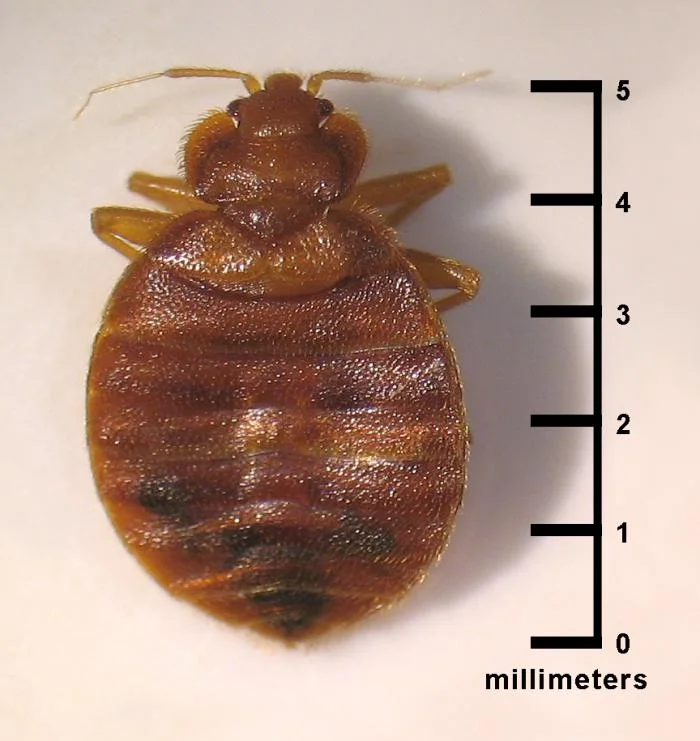
The bed bug identification guide shows the size, color, and shape to look for in the seams.
What to Do for the Itching
Wash the bites gently with soap and water. Clean skin lowers the chance of infection, and it is the step people skip when the itching starts at night.
Then leave the bites alone as much as you can.
Scratching breaks the skin and invites infection. It also makes welts last longer. A cold compress or a cool damp cloth can calm the itch while the swelling settles.
Over-the-counter options help many people.
Calamine lotion, hydrocortisone cream, or an oral antihistamine can ease itching, and the label directions on the package are the guide for using them. Most bed bug bites fade on their own within one to two weeks.
If yours spread, keep swelling, or start to hurt more after a few days, that change matters more than the bite itself.
When to See a Doctor
See a doctor or clinician if redness spreads outward from a bite, the area grows warm and more swollen after the first two days, or you see pus or red streaks. Those are signs of a skin infection such as cellulitis, and infections need medical care rather than home remedies.
Fever or feeling unwell also earns a visit.
So does a bite that will not heal, or a reaction that covers a large area or blisters across many bites. Trouble breathing, swelling of the lips or tongue, or dizziness after bites is an emergency, though reactions that severe are rare.
Bring the story, not a diagnosis. Tell the clinician when the marks appear, where you have slept, and whether anyone else at home has them, because that history helps more than the welts alone.
Nothing in this article can diagnose your skin.
A clinician who sees you in person is the right call when you are unsure.
Your Next Step
Stop studying your skin and start studying the bed.
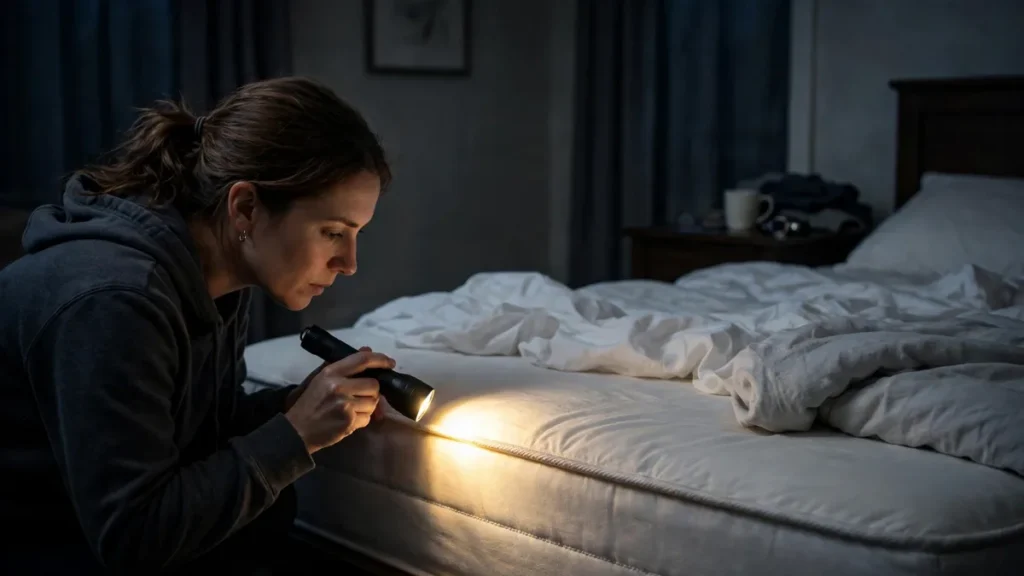
Pull the sheets back and check the mattress seams, the box spring, and the headboard with a flashlight. Look for live bugs, shed skins, and dark fecal spots along seams and inside joints and screw holes.
Find any of those and you have your answer, whatever your bites look like.
If the inspection turns up proof, move to removal rather than more bite watching. Our guide to getting rid of bed bugs permanently lays out the full process, from preparation to treatment to monitoring. If the inspection finds nothing, monitor for a few weeks and check again after travel or visitors.
Frequently Asked Questions
Can bed bugs bite through clothes?
Bed bugs do not bite through fabric the way a mosquito can.
They crawl to skin they can reach, which is why bites favor uncovered areas, and they can crawl under loose clothing to get there.
Do bed bug bites leave scars?
Most bites heal without a mark.
Scratching, infection, and picking at scabs are what leave lasting spots, so keeping your hands off is the best protection.
How long do bed bug bites last?
Most fade within one to two weeks. Very reactive people can keep marks longer, and fresh bites during an untreated infestation can make it feel as if the old ones never heal.
Can a doctor tell if a bite came from a bed bug?
No, not from the bite alone. A clinician can treat the reaction and rule out other skin conditions, and the home inspection is still what confirms or clears bed bugs.
Why do I have bites when my partner has none?
You may both be bitten while only one of you reacts. The CDC notes that bed bugs are not known to spread disease, and the EPA notes that many people show no marks at all, so a partner without spots does not clear the room.
Bites start the question. The mattress answers it.

Caleb Morris
Caleb Morris covers bed bugs with a practical approach. His articles explain bites, eggs, hiding places, life cycles, and other topics people search for every day. He believes useful content should answer real questions...
View all guides →