Why Do Mosquitoes Bite Me More Than Everyone Else?
Some people really do get bitten more. Learn what attracts mosquitoes, from breath and skin bacteria to blood type and genes, and what you can actually change.


In this guide
Two people sit on the same porch at dusk.
One goes inside with a dozen bites, and the other does not get touched.
If you are usually the first person, you have probably wondered whether mosquitoes genuinely prefer you.
You are not imagining it. Researchers who test this with real mosquitoes find the same thing your porch already told you.
Some people draw far more bites than others. The reasons are mostly measurable, and a few are probably working on you right now.
Quick answer. Some people are easier for mosquitoes to find, and it is not in your head. Mosquitoes track the carbon dioxide you breathe out, your body heat, and the scent your skin bacteria produce. Blood type and genes play smaller parts, and most of the big factors are fixed, but a few are under your control.

It Starts With Your Breath
Carbon dioxide is the signal that brings a mosquito to you in the first place.
A hunting female can detect the carbon dioxide in exhaled breath from dozens of feet away, and she flies upwind along that plume until she gets close.
Everything else in this article works at close range. Carbon dioxide is the long-range invitation.
The amount you release is not the same as everyone else’s. Larger adults exhale more carbon dioxide than smaller adults and children, which is part of the reason the bites at a family barbecue so often land on the grown-ups. It is the simplest reason of all, and the hardest to escape.
Exercise raises your output sharply.
Hard breathing, warmer skin and sweat all arrive together, which is why the person who mowed the lawn or finished a run becomes the main target afterward.
Pregnancy raises it too. A study in the Annals of Tropical Medicine and Parasitology found pregnant women attracted roughly twice as many malaria mosquitoes as women who were not pregnant, and the researchers linked the gap to greater breath volume and a warmer abdomen. The study was small and focused on one group of mosquitoes, so treat the size of that gap with care.
Heat, Sweat and the Smell of Your Skin
Once a mosquito gets close, she stops following your breath and starts reading your skin.
Heat and moisture guide that final approach. Warm skin, and the water vapor rising off it, tells her she has found a living host rather than a warm stone.
Sweat adds its own chemicals to the signal.
Lactic acid builds up in sweat during and after activity, and laboratory work going back decades has shown that mosquitoes are drawn to it, with ammonia and other sweat compounds adding to the mix.
The biggest close-range factor is one most people never think about.
The bacteria living on your skin break down sweat and skin oils, and the odors they release are different on every person.
Your skin has a scent profile, and your bacteria wrote most of it.
In research published in PLOS ONE, volunteers whose skin carried a heavy growth of bacteria from a narrow mix of species were bitten more by malaria mosquitoes. Volunteers whose skin carried a wider variety of bacteria were bitten less. Diversity, not cleanliness, was the protective pattern.
That profile is stubborn. A shower and a change of soap will alter it for a few hours, and then your usual bacteria rebuild it.
Does Blood Type Really Matter?
This is the factor people ask about most, and the honest answer is that it matters less than the headlines suggest.
It appears to be real, but it is not the main reason you are covered in bites.
The experiment behind most of the headlines appeared in the Journal of Medical Entomology. Researchers let Asian tiger mosquitoes land on volunteers and found that the mosquitoes settled on people with type O blood noticeably more often than on people with type A, with types B and AB in between.
Later work points to one possible explanation.
Some people secrete chemical markers of their blood group through their skin, and mosquitoes may be able to read those markers before they bite.
Only some people are secretors who leak those markers. That may explain why the blood type effect shows up clearly in some experiments and shrinks in others.
Two cautions belong with this finding.
The studies were small, used one or two mosquito species, and counted landings in a laboratory rather than bites across a whole evening outdoors. A modest edge in a cage does not turn every type O person into a magnet. Treat it as a tilt, not a destiny.
And none of it is changeable. Your blood type comes with you, so treat it as background, not as the explanation for your evenings.
Beer and Dark Clothing
Alcohol has a real effect, though a small one.
In a small study published in the Journal of the American Mosquito Control Association, volunteers who drank a single can of beer were landed on more often after drinking than before.
The researchers could not pin that rise on alcohol in the breath. Small shifts in body temperature and skin chemistry may do the work instead, and a study with so few volunteers needs more company before it becomes a rule. Either way, the effect belongs to that evening, not to who you are.
Clothing color works through the eyes rather than the nose. Mosquitoes hunt by sight once they are close, and dark clothing gives them a bold, easy shape to aim at.
A 2022 study published in Nature Communications makes the point neatly. Yellow fever mosquitoes that had smelled carbon dioxide flew toward red, orange and black targets and largely ignored green, blue and purple ones.
That work used one species in a laboratory. Read it as a nudge toward lighter colors at dusk, not as armor. It costs nothing to test on yourself.
Your Genes Set the Baseline
Underneath all of this sits inheritance.
A study in PLOS ONE compared identical and fraternal twins to see how attractive each was to yellow fever mosquitoes.
Identical twins, who share nearly all of their DNA, scored far more alike than fraternal twins did. The researchers concluded attractiveness to mosquitoes is partly inherited, most likely through the scent compounds a body produces.
Families notice this pattern on their own.
The bite magnet and the person nobody touches often turn out to be related.
The Sweet Blood Story Is Wrong
The most stubborn explanation of all is sweet blood, the idea that sugar in your blood or sweets in your diet make you the tastiest person present. There is no evidence behind it. The story survives because it feels like an explanation, not because it predicts anything.
A mosquito cannot taste your blood before she bites, and she cannot judge its sugar content through your skin. She finds you by gas, heat and skin odor, and she drinks the blood she reaches.
Blood sugar in a healthy body also stays inside a narrow range, dessert or no dessert. Eating less sugar will not move you down the menu, and the garlic, banana and vitamin tricks passed around online have not held up as protection in controlled tests.
Diet is the lever people reach for first. It is connected to almost nothing in this article.
The Bottom Line on What You Can and Cannot Change
Here is the part the forum threads leave out. The strongest signals you send are the ones you were born with or the ones your body produces all day, and the changeable factors are mostly the smaller ones.
| Factor | How much it matters | Can you change it? |
|---|---|---|
| Carbon dioxide output | Strong. It is the signal that guides mosquitoes to you from a distance. | Mostly no. You cannot breathe less, though output drops again once you rest after exercise. |
| Body heat and sweat | Moderate to strong at close range. | Partly. Cooling down and changing out of a sweaty shirt helps for a while. |
| Skin bacteria and scent profile | Moderate to strong at close range. | Mostly no. Washing changes it for a few hours at most. |
| Blood type O | Small to modest, based on small studies. | No. |
| Genes | They set your baseline level of attractiveness. | No. |
| Beer and alcohol | Small, based on one small study. | Yes, for that evening. |
| Dark clothing | Moderate at close range. | Yes. Lighter colors at dusk are an easy win. |
That split is frustrating. If mosquitoes love you, the cause is mostly chemistry you did not choose, not a mistake you are making and not something a diet can fix.
What you can do is work the edges. Wear lighter colors at dusk, take it easy on the beer on the worst evenings, cool down and change your shirt after exercise, and sit in moving air where you can. None of these touches the big signals, and together they add up to a quieter evening.
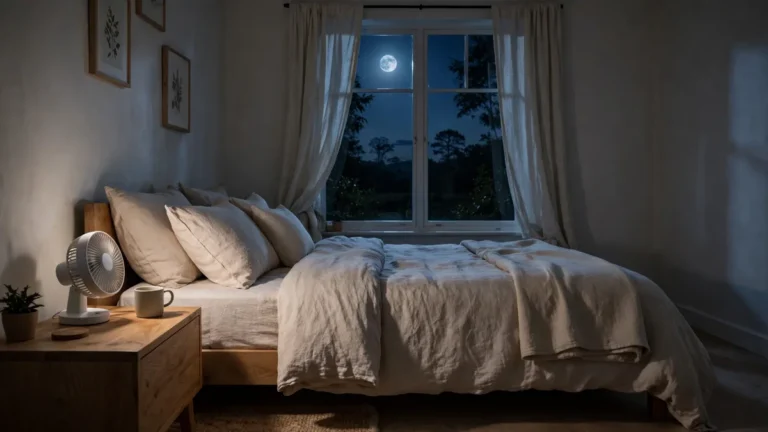
That last one earns its place. A fan breaks up your carbon dioxide plume, and mosquitoes are weak fliers that struggle to hold a course in a breeze.
Frequently Asked Questions
Is it really true that mosquitoes prefer some people?
Yes, and it shows up every time researchers test it. In controlled experiments, the same volunteers draw more landings week after week, while others are mostly ignored.
The difference comes from how much carbon dioxide a person releases and how their skin smells to a mosquito. It is biology, not bad luck.
Do mosquitoes really prefer type O blood?
Some studies say yes, and the effect is modest rather than dramatic. The best-known work found more landings on type O volunteers than on type A, but the experiments were small.
Blood type might move you a place or two in the queue. It does not explain why one person is covered and the next is untouched.
Can I eat or drink something to get bitten less?
No food or drink has held up in controlled testing. Sugar does not make your blood sweeter to a mosquito, and garlic, bananas and vitamin B have not worked as protection either.
One thing runs the other way. Beer made volunteers more attractive in one small study, so the only dietary lever with any evidence points toward drinking less of it on bad evenings.
Why do mosquitoes bite me and not my partner in the same room?
You and your partner are sending different signals.
Breath output, skin temperature and skin bacteria all differ between two people sharing a bed, and mosquitoes follow the stronger trail.
Reactions differ too. Some people barely react to a bite, so a partner who looks untouched may have been bitten and shows no welts at all.
What actually helps if I am a mosquito magnet?
Work the changeable list. Lighter clothing at dusk, a fan near where you sit, and a shower and fresh shirt after exercise all trim your signal.
Covering skin and using a repellent on what stays exposed handles the rest. Choosing between repellents deserves its own guide rather than a paragraph here.
If mosquitoes love you, the honest fix is to make them scarce rather than to make yourself invisible. Our complete guide on how to get rid of mosquitoes walks through clearing them from your house and yard, and our guide to mosquito bites covers what bites look like, how long they last, and when a reaction needs a doctor.

Miles Turner
Miles Turner writes about mosquitoes, their life cycle, breeding habits, and seasonal activity. He enjoys explaining why mosquitoes behave the way they do and turning research into practical information that readers can understand in...
View all guides →