
Mosquito Bites: What They Look Like, Skeeter Syndrome, and When to Worry
Mosquito bite or something worse? Learn what normal bites look like, what skeeter syndrome is, and the infection signs that mean you should see a doctor.

In this guide
- What a Mosquito Bite Looks Like
- Why Bites Itch and Swell
- How Long a Normal Bite Lasts
- Skeeter Syndrome, the Big Reaction With a Name
- Normal Bite, Skeeter Syndrome, or Infection
- How to Treat a Mosquito Bite at Home
- Remedies That Do Not Work
- When to See a Doctor
- What About West Nile Virus
- When You Never Saw What Bit You
- Frequently Asked Questions
- The Bottom Line
You felt nothing when it happened.
Then a bump rises on the skin, and the itching starts. By the next morning, a reaction that looks that big raises an obvious question about whether it can still be normal.
Most of the time, it can.
A mosquito bite is barely an injury from the bite itself. The bump, the redness, and the itch are your immune system reacting to proteins in the mosquito’s saliva.
That reaction follows a pattern, and the pattern is what separates a normal bite from one that needs attention.
Quick answer. A normal mosquito bite is a small, puffy, itchy bump that peaks within a day or two and fades inside a week. Wash it, cool it, and leave it alone. A bite that keeps spreading after two days, shows red streaks, feels hotter, or comes with fever is no longer a normal bite and needs a doctor.
What a Mosquito Bite Looks Like
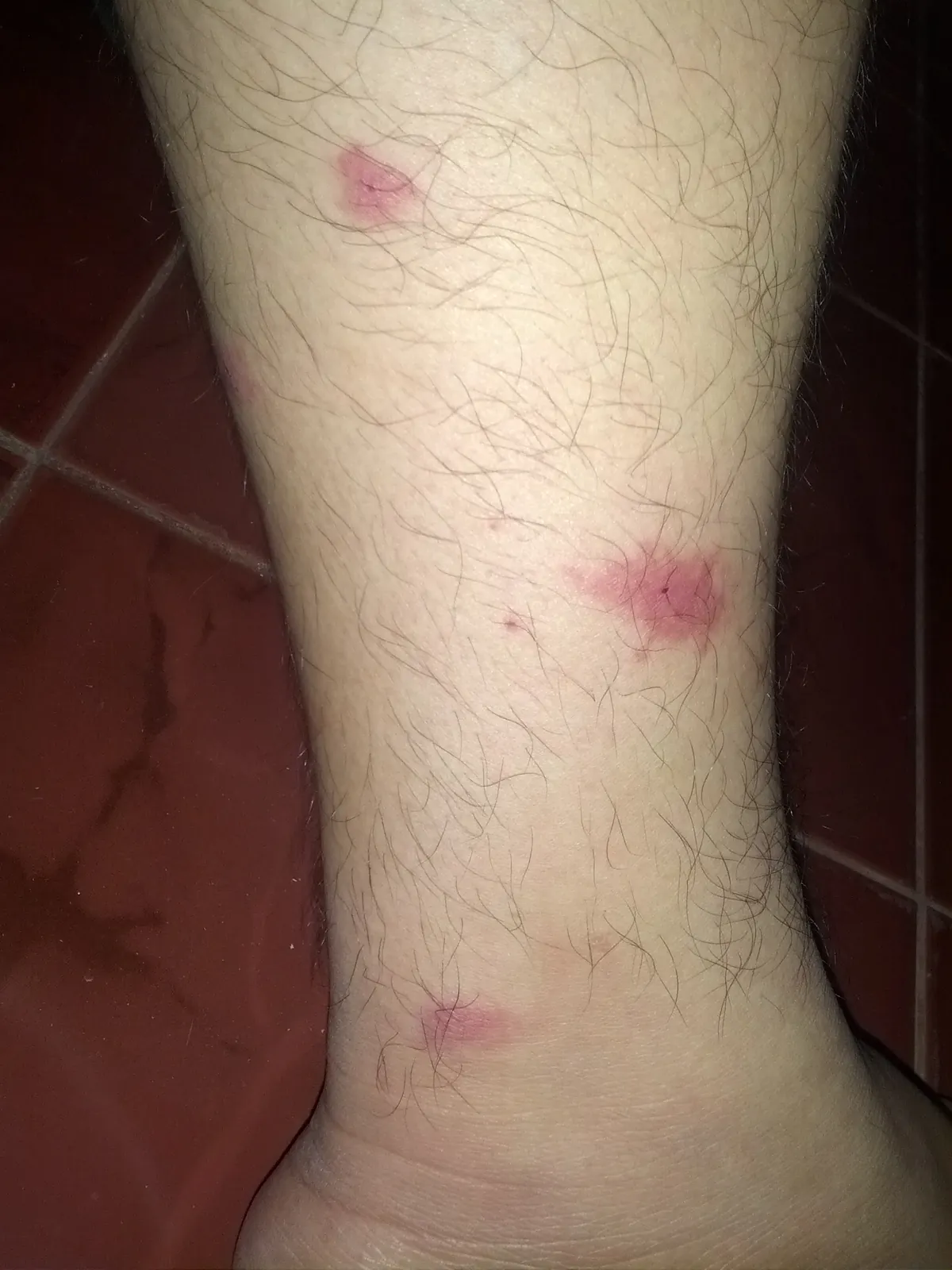
A fresh bite starts as a small raised bump, pale in the center and pink or red around the edges.
In the first minutes it can look almost white.
As blood flow to the spot increases, the color fills in.
A tiny puncture point sometimes sits in the middle, where the mouthparts went in.
Size varies more than most people expect. One person gets a bump the size of a pea, while the same kind of bite on another person swells to the width of a coin.
Where the bite lands matters as well.
Thin skin reacts more visibly than thick skin. A bite on an eyelid, an ankle, or a child’s forearm often looks dramatic even when the reaction underneath is ordinary.
Why Bites Itch and Swell
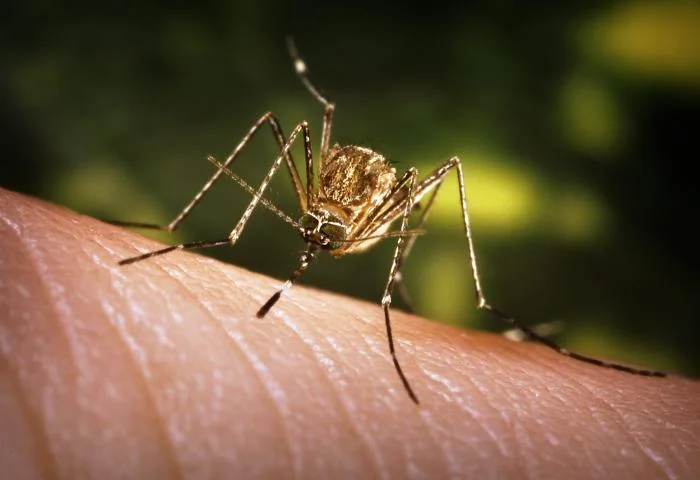
When a mosquito feeds, it injects saliva that keeps your blood from clotting while it drinks. Your immune system treats the proteins in that saliva as intruders, and it answers with histamine.
Histamine is the chemical that drives the itch, the swelling, and the redness.
People who live where mosquitoes are common often react less over the years, because repeated bites can dull the response. Young children sit at the other end of that scale, with immune systems that have met the saliva far fewer times.
Sensitivity is also partly inherited.
That is why two people can share a porch, collect the same number of bites, and look completely different the next morning. One shows a row of small dots. The other shows welts.
How Long a Normal Bite Lasts
The itch usually builds over the first few hours.
It peaks within 24 to 48 hours of the bite. After the peak, the bump shrinks a little each day.
For most people the bite is gone within three to ten days.
A faint flat mark can linger on the skin after the bump itself has flattened.
Scratching stretches that whole timeline out.
Broken skin heals more slowly, and it gives bacteria a way in. That is how an ordinary bite becomes a skin infection.
A bite that is still growing after the second day is heading the wrong way.
Skeeter Syndrome, the Big Reaction With a Name
Some bites swell far beyond that normal arc, and the reaction has a name. Skeeter syndrome is a large local allergic reaction to mosquito saliva, not a separate kind of bite and not, by itself, an infection.
The swelling can spread across much of a forearm or close an eye.
It often arrives with warmth, firmness, and itching that is hard to ignore. It tends to appear within hours of the bite and to peak over the following day or two.
Children develop it more often than adults do.
Because the swelling is large and warm, skeeter syndrome is the reaction most often mistaken for an infection.
The timing gives it away, since it swells early and fast rather than building slowly across several days.
A mild fever can ride along with a large reaction in a young child, which adds to the confusion. The swelling is still an allergy response, and it normally settles with home care while you watch it.
Normal Bite, Skeeter Syndrome, or Infection
The three reactions overlap, but they differ in timing, in spread, and in what they ask you to do.
| Reaction | What it looks like | Timing | What to do |
|---|---|---|---|
| Normal bite | Small puffy bump, pink or red, itchy more than painful | Itch peaks in 1 to 2 days, then fades across the week | Wash it, cool it, and leave it alone |
| Skeeter syndrome | Large swollen area, warm and firm, sometimes covering much of a limb | Swelling starts within hours and peaks in 1 to 2 days | Home care, an oral antihistamine, and close watching |
| Possible infection | Spreading redness, red streaks, rising warmth, growing pain, sometimes pus | Worse after day 2 instead of better | See a doctor the same day |
Cellulitis, the infection in the third row, is a bacterial infection of the skin. It usually gets its start where scratching has broken the surface.
Unlike an allergy reaction, it does not peak and fade. It keeps expanding.
If you are unsure which way a bite is going, draw a light pen line at the edge of the redness. Check it again in a few hours, and redness that has crossed the line is behaving like an infection. A photo taken at the same time makes slow spread easier to spot the next day.
Red streaks running away from the bite, warmth and pain that keep growing, or a fever settle the question. Those signs end the watching period, and the bite needs a doctor.
How to Treat a Mosquito Bite at Home
Home care has two jobs. Cool the itch down, and keep the skin over the bite unbroken.
- Wash the bite. Use soap and water soon after you notice the bite to clear bacteria away from the puncture point.
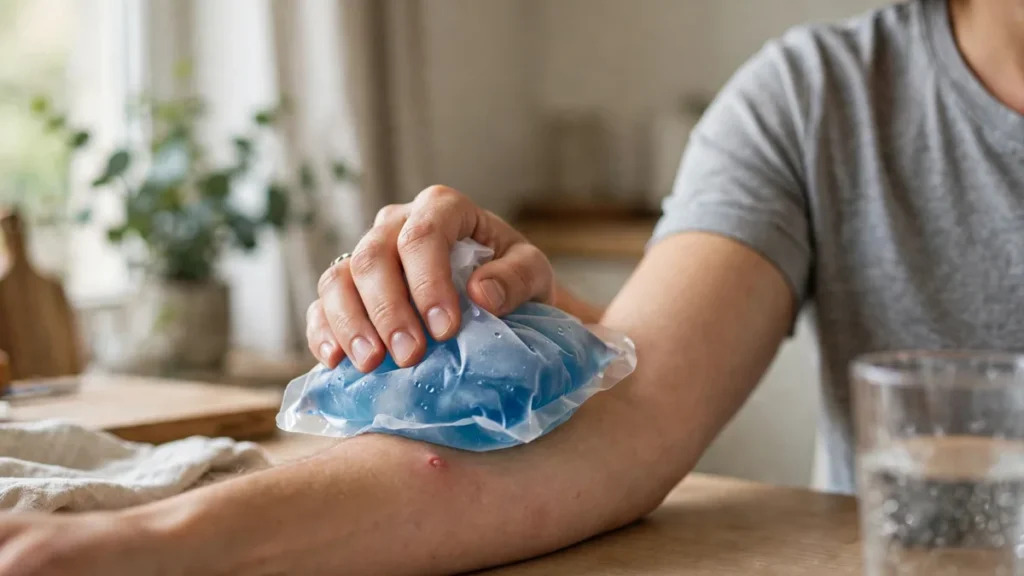
- Cool it down. Hold a cold compress, or a cloth wrapped around ice, against the bite for about ten minutes at a time. Cold dulls the itch and slows the swelling.
- Add hydrocortisone cream for stubborn itching. A thin layer of over-the-counter 1% hydrocortisone cream can calm both the itch and the inflammation.
- Use an oral antihistamine for large reactions. Tablets such as cetirizine or loratadine help when the itching is strong, widespread, or keeping you awake.
- Leave the skin alone. Scratching feels like relief for a minute and then makes everything worse, and it is the usual route from a bite to an infection.
Most bites need nothing beyond washing and a cold compress. Save the creams and the antihistamine tablets for bites that itch hard enough to disturb sleep or spread over a large area. Itching that steadily fades is the sign you can stop there.
For children, follow the age directions on the package of anything you use.
Remedies That Do Not Work
Every summer brings a fresh round of kitchen remedies for bites.
Baking soda paste, toothpaste, vinegar, and rubbing alcohol are the usual suggestions. None of them has solid evidence behind it for bite relief.
Some can leave skin drier and more irritated once the brief sting wears off, which makes the itching feel worse than before. Heated spoon tricks carry a real burn risk on skin that is already inflamed.
If a remedy stings, burns, or leaves the skin angrier, it is not helping.
Time is the honest explanation behind most remedy success stories. A bite that calms down an hour after a paste goes on was most likely going to calm down anyway. That is also why every remedy seems to work for somebody.
When to See a Doctor
Most bites never need medical care.
A short list of signs changes that.
- Redness that keeps spreading after the second day
- Red streaks running outward from the bite
- Warmth and pain that grow instead of easing
- Pus, or a blister that fills and breaks
- Fever alongside a bite that is getting worse
- Swelling severe enough to close an eye or make a joint hard to bend
People with diabetes or a weakened immune system should get a worsening bite checked sooner rather than later. Infections can advance faster for them, and early treatment is far simpler than late treatment.
Trouble breathing, or swelling of the lips or tongue, after any bite is an emergency, and it means calling emergency services right away.
What About West Nile Virus
The fear people attach to a bad bite is usually not the bite at all. It is disease, and in the United States that worry mostly means West Nile virus.
The picture the CDC publishes is calmer than the fear.
About 8 in 10 people infected with West Nile virus never develop symptoms at all, according to the CDC.
Most of the rest develop a flu-like illness with fever, headache, and body aches that passes on its own. Symptoms usually appear 2 to 14 days after infection, according to the CDC.
Severe illness from West Nile is rare.
When it happens, it affects the brain or the nervous system. The CDC identifies people over 60 and people with weakened immune systems as the groups at highest risk.
There is no home test for West Nile and no specific cure, so the symptoms matter more than the bite. A high fever arriving with confusion, a severe headache, a stiff neck, or new weakness in the days after heavy mosquito exposure is a reason to seek care promptly and mention the bites.
When You Never Saw What Bit You
One honest limit belongs in every bite guide, because bites alone cannot prove which insect made them. Skin reactions overlap, and the same bite looks different on different people. If new bumps keep appearing after nights at home and you never catch a mosquito in the act, look for signs of the insect itself, and our guide on what bed bugs look like shows the marks and hiding places that settle the question on that side.
Frequently Asked Questions
Why do my mosquito bites swell more than everyone else’s?
Your immune system sets the size of the reaction, not the mosquito. People with a stronger sensitivity to mosquito saliva, including many children, develop large welts from bites that leave barely a mark on someone else.
Is skeeter syndrome dangerous?
It is uncomfortable and dramatic, but it is an allergic reaction rather than an infection, and it usually settles within several days with home care. Most cases peak within two days and then shrink steadily. It becomes a medical problem when the signs of infection join it, such as spreading streaks, growing pain, or fever.
How do I know if my mosquito bite is infected?
An infected bite gets worse after the second day instead of better. Spreading redness, red streaks, rising warmth, pus, and fever point to cellulitis, and that combination means a doctor the same day.
Can I get West Nile virus from one bite?
It is possible but unlikely, and the CDC reports that most people infected with West Nile virus never feel sick at all. Watch for fever with a severe headache, confusion, or weakness in the two weeks after heavy exposure, and seek care if those appear.
Should I scratch or squeeze a bite to help it heal?
No. Scratching and squeezing break the skin, and broken skin is how a routine bite turns into an infection.
The Bottom Line
A mosquito bite is a small immune reaction with a predictable arc.
It rises fast, peaks within two days, and fades inside a week. Once you know that arc, the exceptions, the oversized allergy and the creeping infection, stand out in time to act.
The one fix that improves every reaction in this guide is having fewer bites to react to. Our complete guide to getting rid of mosquitoes covers the home and yard work that brings biting pressure down. Pest proofing your home then keeps the mosquitoes that remain outside from moving in with you.

Miles Turner
Miles Turner writes about mosquitoes, their life cycle, breeding habits, and seasonal activity. He enjoys explaining why mosquitoes behave the way they do and turning research into practical information that readers can understand in...
View all guides →