How to Pest-Proof Your Home: A Room-by-Room Prevention Guide
Pest-proof your home room by room. Seal entry points, cut off food and water, and remove shelter so ants, roaches, mice and spiders never settle in.

In this guide
Most pest problems start long before you see the first ant or mouse.
The bugs and rodents that end up inside are following food, water, and shelter, and your house offers all three.
Pest-proofing means taking those three things away, room by room, before there is a problem to treat.
This guide walks the house the way a pest would find it. You will start outside at the entry points, move through food, water, and shelter, and finish with a room-by-room checklist you can work through in a weekend. Nothing here needs a service contract or special tools.
Quick answer. Pest-proofing a home comes down to four jobs. Seal the gaps pests use to get in, store food so nothing can reach it, fix the water leaks and drips that keep pests alive, and clear the clutter and yard shelter where they hide. Do those four things well and most common household pests never get started.
Seal the Way In First
Every pest in your house walked, crawled, or squeezed in from outside. Closing those routes is the highest-value work in this guide, because it stops new pests instead of chasing the ones already inside.
The gaps are smaller than most people expect. According to the CDC, a mouse can fit through a hole about 1/4 inch across, roughly the width of a pencil, and rats need only about 1/2 inch.
If a pencil fits in the gap, a mouse fits too.
Walk the outside of the house slowly and check where pipes, cables, and vents pass through the walls. Look at the foundation line, the corners of garage doors, and window frames that no longer sit tight.
Where pests get in
- Gaps around plumbing, AC lines, and cable entries
- Worn door sweeps and gaps under exterior doors
- Torn window screens and unscreened vents
- Cracks where the foundation meets the siding
- Openings at the corners of the garage door
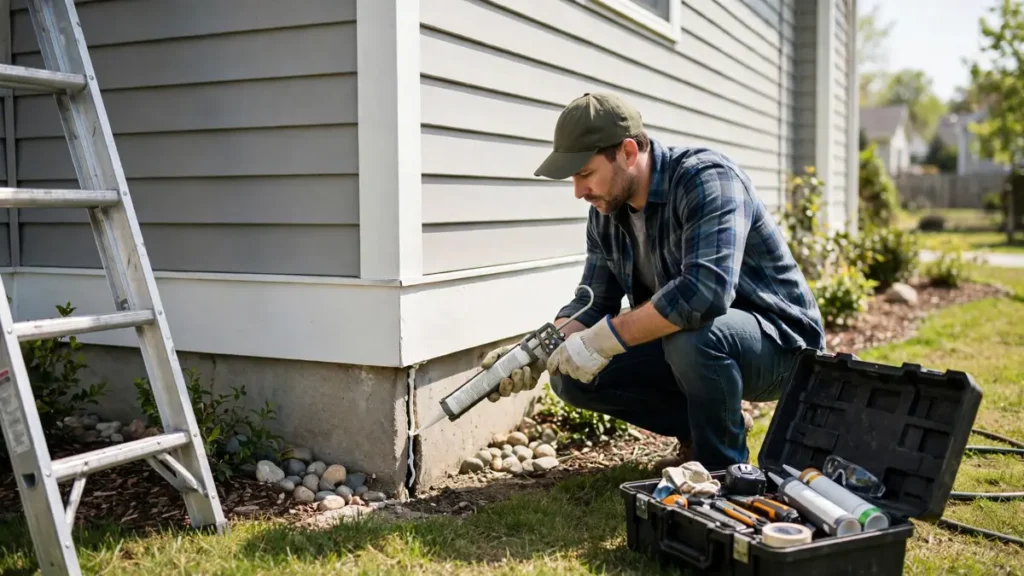
For small holes, the CDC recommends packing steel wool into the gap and sealing over it with caulk.
Rodents chew through foam and plain caulk on their own, so the metal layer is what makes the repair last.
Bigger openings need hardware cloth, sheet metal, or cement.
Fit a sweep under every exterior door so the bottom edge meets the threshold with no daylight showing.
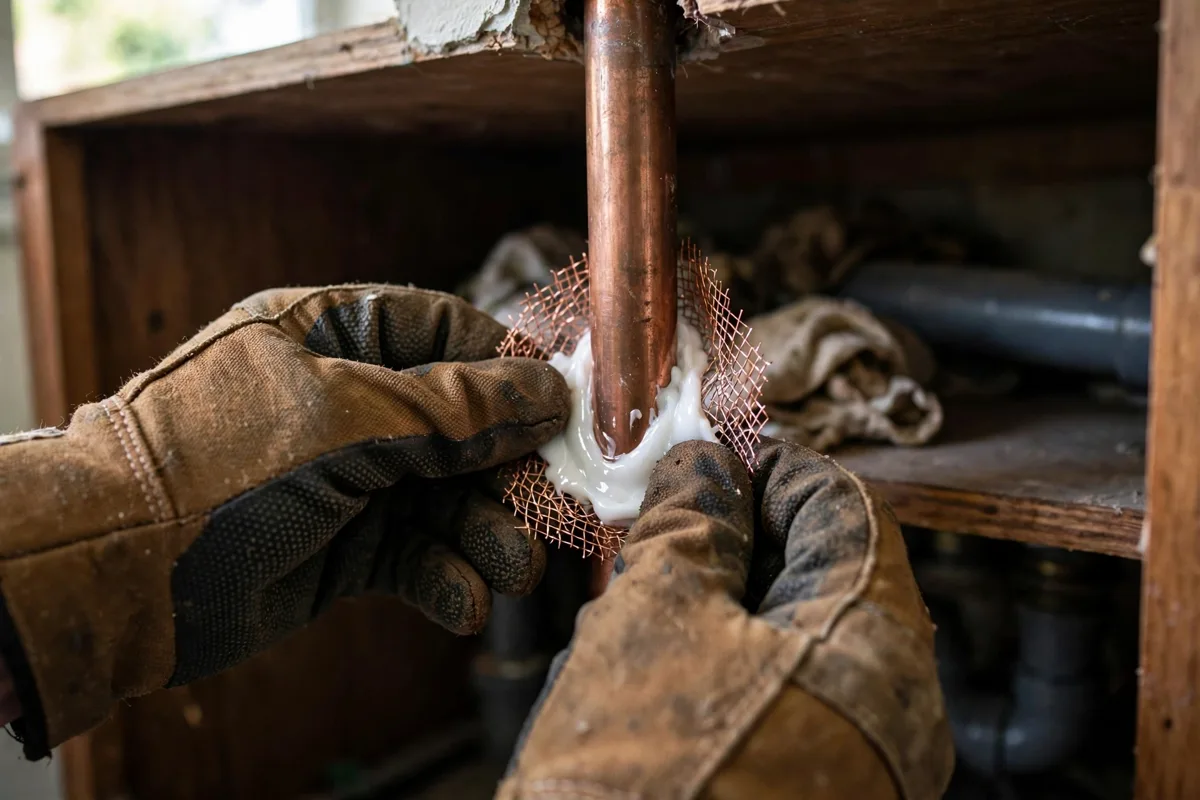
Do the same check inside around sink pipes and behind appliances, where holes are often cut wider than the pipe itself.
Cut Off the Food
A sealed house keeps new pests out, but food is what convinces scouts to stay and bring the colony. Kitchen habits decide whether that happens.
Flour, cereal, rice, and pet food belong in hard containers with tight lids, not in the bags they were sold in.
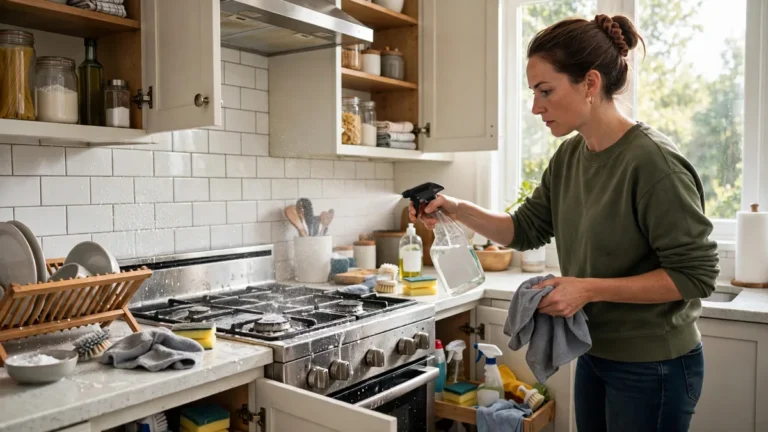
Wipe counters and stove tops at the end of the day, when crumbs and grease films are at their worst.
Run the same habit across floors under the table and around pet bowls.
Pet food left out overnight feeds everything from ants to mice.
Feed pets at set times, pick the bowl up when they finish, and store the bag in a sealed bin.
Take trash out before it sits long enough to smell, and keep the bin lid closed between runs.

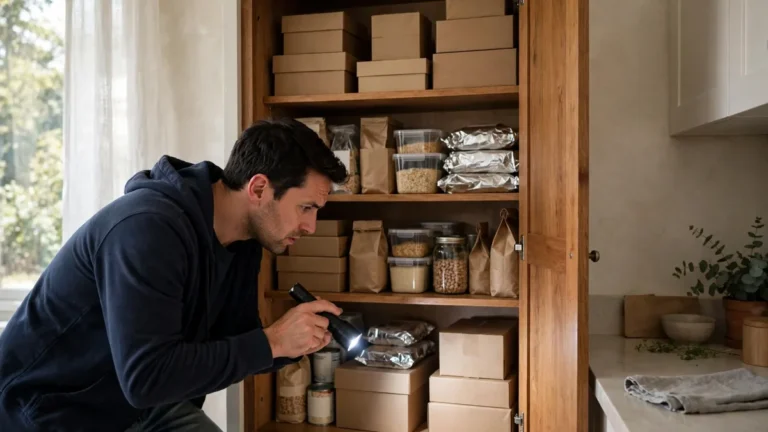
The pantry deserves one audit a season. Old opened packages at the back are where stored-food pests and cockroaches settle first, and they spread quietly from there. Anything opened and forgotten is an open invitation.
Our guide to keeping cockroaches out of an apartment covers the kitchen side of this in more depth.
Cut Off the Water
Many household pests can live far longer without food than without water.
That is why bathrooms, kitchens, and laundry rooms draw pests even in clean houses. A slow drip under a sink is a drinking fountain that never runs dry.
Fix leaking faucets, supply lines, and drain traps as soon as you find them. Check under every sink with a dry hand or a paper towel, since slow leaks hide for months.
Water sources to remove
- Dripping faucets and shower heads
- Leaks under sinks and behind toilets
- AC condensate lines and refrigerator drip pans that stay wet
- Standing water in plant saucers and pet bowls left for days
- Blocked gutters that hold water against the roof edge
Outside, tip out anything that holds rain for more than a few days, and clear gutters so water moves away from the house. Dry homes push pests back toward the yard, where they belong.
Ants scouting a bathroom are often following that water, not food. Our guide to preventing ants from entering your home covers that trail in detail.
Remove the Shelter
Clutter is housing. Cardboard boxes in a garage or attic give cockroaches and spiders protected space to breed where nobody looks for months. Swap cardboard for plastic bins with lids, and keep stored items off the floor where you can manage it.
Outside, stack firewood away from the house and off the ground.
Wood against the siding is a covered walkway that leads pests straight to the wall.
Trim shrubs and branches so nothing touches the house or the roof. Vegetation against the wall works as a bridge, and it holds moisture against the siding.
Inside, the quiet zones matter most. Behind the refrigerator, inside sink cabinets, and along basement walls.
Room-by-Room Pest-Proofing Checklist
Work this list room by room on a Saturday and the house is harder for pests to use by Sunday.
| Room | What to check and fix |
|---|---|
| Kitchen | Seal gaps around sink pipes. Move food into hard containers. Wipe crumbs and grease daily. Keep the trash lid closed. |
| Bathrooms | Fix sink and tub leaks. Seal around pipe entries. Keep wet items off the floor. |
| Bedrooms | Repair window screens. Clear clutter from under beds. Caulk gaps along baseboards. |
| Basement and attic | Screen the vents. Store belongings in plastic bins, not cardboard. Check for moisture and leaks. |
| Garage | Seal the door corners. Keep pet food and bird seed in bins. Move wood and boxes away from shared walls. |
| Yard | Tip out standing water. Clear the gutters. Cut branches back from the roof. Stack firewood away from the house. |
Repeat the outside pass twice a year, in spring and fall. Those are the seasons when pests test the house hardest, moving in ahead of the heat and the cold.
What Pest-Proofing Cannot Do
Prevention works before an infestation, not instead of treatment during one. If you already have an active colony or nest inside, deal with that first and seal the house after, or you can trap pests inside the walls. Whenever something is already living inside, sealing is step two, not step one.
Rodents are the clearest case. The CDC’s own order for rodent control is to trap up, seal up, and clean up, in that order.
When the pest is already established, start with the removal guide for that pest. Our complete guide to getting rid of ants permanently is the right first step for ant colonies, and heavy infestations of any pest are where a professional earns the fee.
Get two or three quotes if you call one. Ask each company what exclusion work is included, because that part is what keeps the problem from coming back.
Frequently Asked Questions
What is the first thing to do when pest-proofing a home?
Seal the entry points. Food and water habits matter, but a gap under the door undoes them every night, so close the routes in first and the rest of the work holds.
Can pest-proofing stop mice?
Yes, if the sealing is thorough. A mouse needs a gap of only about 1/4 inch, so door sweeps, hardware cloth on vents, and steel wool with caulk around pipes are the specific jobs that keep mice out.
How often should I repeat pest-proofing?
Walk the outside of the house every spring and fall, and fix new gaps as weather and settling open them. The inside habits, sealed food and dry sinks, are weekly rather than seasonal.
I rent my home. What can I do without changing the property?
Plenty. Hard food containers, tight trash habits, dry sinks, and cleared clutter are all in your control, and gaps and leaks can be reported to the landlord as maintenance issues with photos attached.
Does pest-proofing replace pest control treatments?
No. Proofing stops new problems and keeps a treated home from being reinfested, but an active infestation needs removal first.
The Bottom Line
None of this needs special equipment or a service contract. It needs one careful walk around the house, a tube of caulk, and habits that stop offering pests a free meal.
Start with the gaps. The rest gets easier from there.

Samuel Harper
Samuel Harper writes about the small pests that often appear in kitchens, basements, bathrooms, and storage areas. From pantry pests to silverfish and carpet beetles, his articles explain what attracts them, how to identify...
View all guides →