Why Cockroach Baits Stop Working: Bait Aversion Explained
Cockroach bait stopped working? Bait aversion makes German cockroaches refuse sweet gel baits. See why switching brands fails and what to use instead.

In this guide
Quick Answer: If cockroach bait worked at first and then the roaches stopped touching it, the bait didn’t go bad. In German cockroaches, a heritable taste change can make the sweet attractant in the bait taste bitter, so they eat around it. Switching brands rarely helps when the new bait uses the same base. Switch the food base or the method instead.
Your bait worked for a week or two. Then the dots sat untouched, and the roaches walked past them like the bait was furniture. That pattern has a name, and it is not a defective tube.
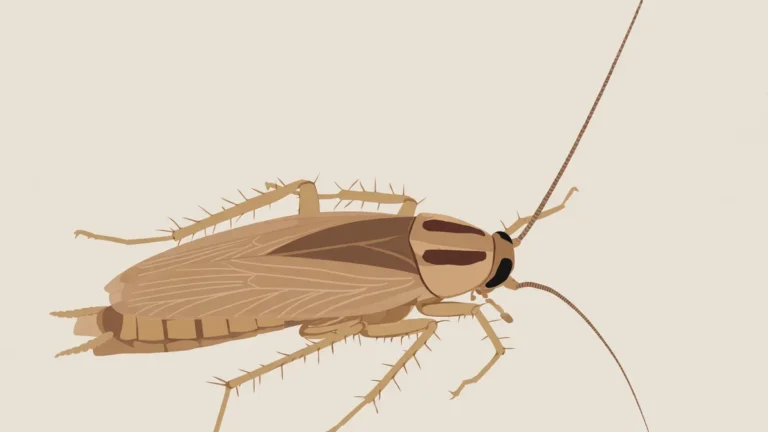
German cockroaches can inherit a changed sense of taste. The sugar mixed into most gel baits, the part that lures them in, registers as bitter to these roaches. They do not eat less because they are full. They avoid the bait the way you would avoid food that tastes wrong.
This article explains how that happens, why buying a different brand usually changes nothing, and what to switch to instead.
The Short Version: It’s Probably Not a Bad Bait
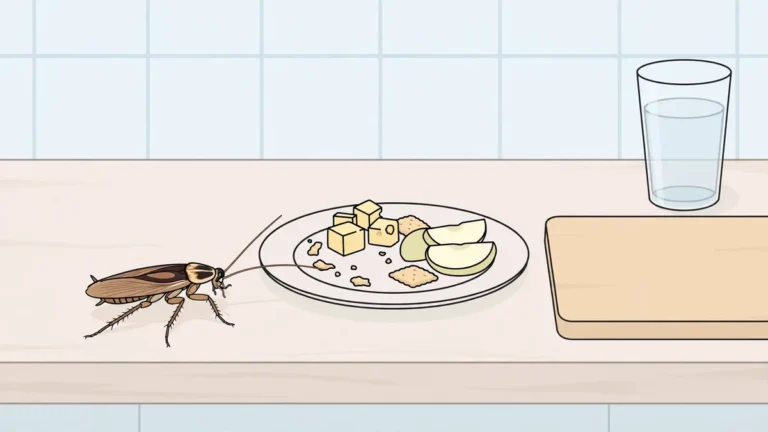
When bait works and then stops, most people blame the product. A dried-out tube, a bad batch, a brand that “doesn’t work anymore.” Sometimes the simple explanations are right, so rule them out first. Bait that has hardened or dried out loses its appeal. Bait placed in the open, away from the cracks and edges roaches actually travel, gets ignored. And if anyone sprayed a repellent insecticide near the bait, that alone can shut feeding down, because the spray contaminates the bait zone.
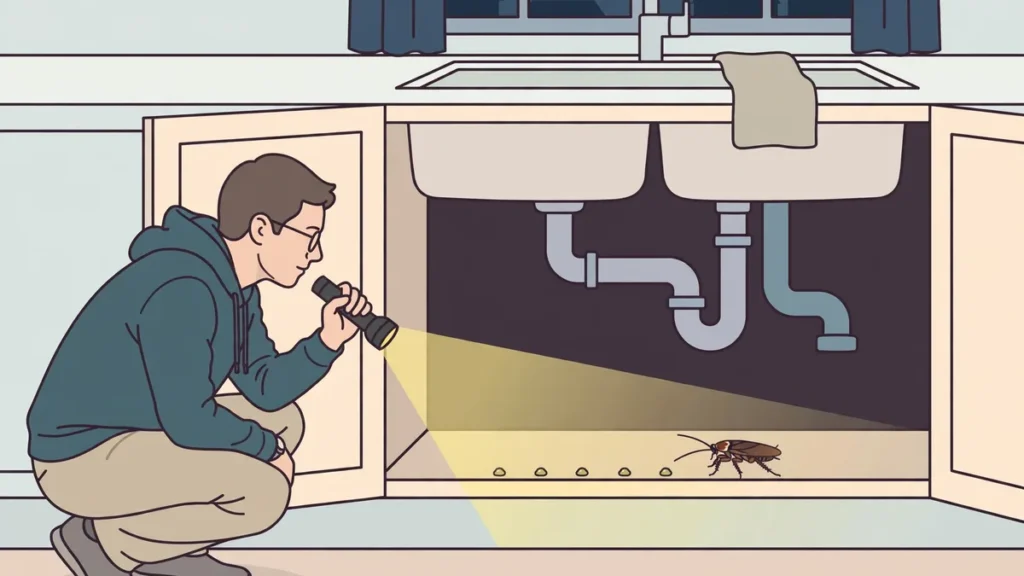
But if the dots are fresh, the placement is right, and roaches are clearly active nearby yet the bait goes untouched for a week or more, the bait itself is the likely problem. Not your technique. Not the brand’s quality control. Something in the bait is telling the roaches to stay away, and that something is usually the sweetener.
What Bait Aversion Actually Is
A cockroach tastes with chemical receptors, the same basic setup as your tongue. Some receptors say “sweet, eat this.” Others say “bitter, avoid this.” In a normal German cockroach, the sugar in bait hits the sweet receptor, the roach feeds, and the slow-acting poison does its work back at the harborage.
In a glucose-averse roach, the wiring is flipped. Sugar triggers the deterrent receptor instead, the one normally reserved for bitter, potentially toxic substances. The roach experiences the bait’s sweetener as bitter. It does not push through the bad taste the way a hungry person might finish a bitter meal. It eats around the bait or avoids it entirely, the way you would keep avoiding a food that tastes like soap no matter how hungry you were.
This is not learned behavior. A roach does not try the bait, feel sick, and remember. The flipped wiring is inherited, controlled by a single major gene, passed from parent to offspring like eye color. A roach is born tasting sugar as bitter or it is not.
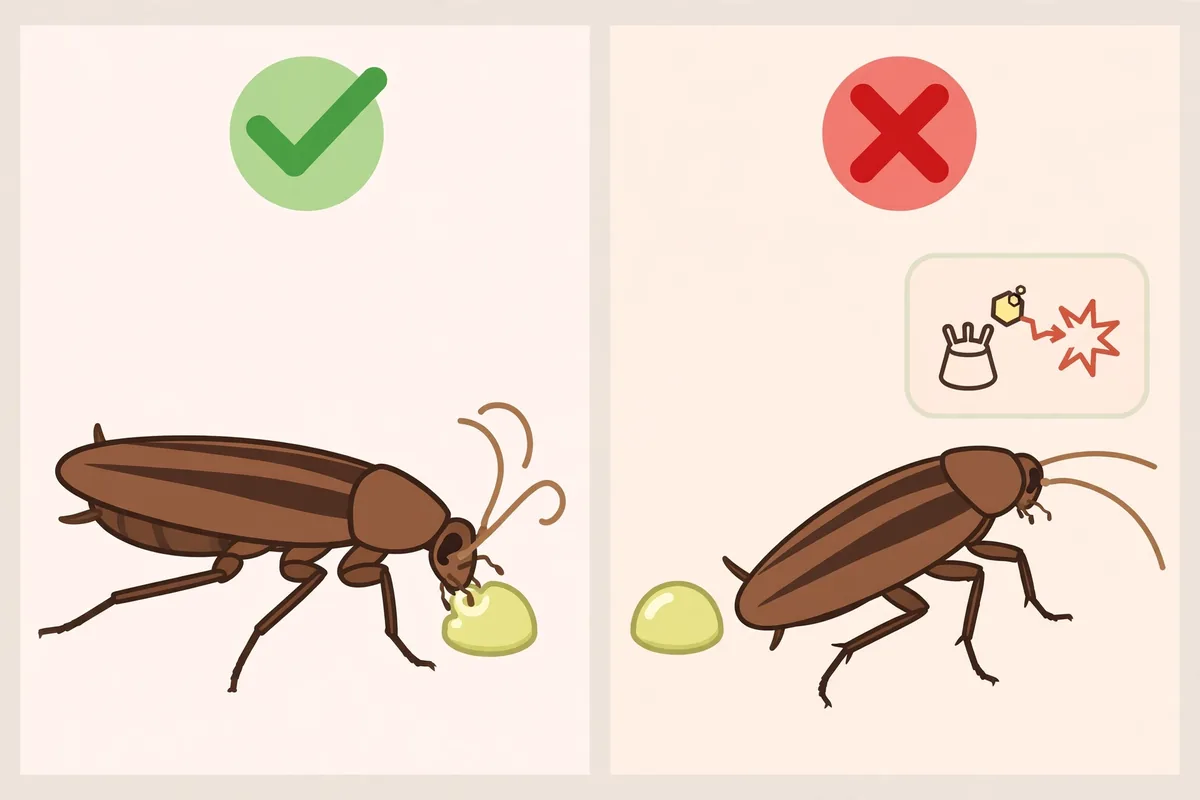
That gene used to be rare, and for good reason. Averse roaches grow more slowly and lay fewer eggs than normal roaches, so in a world without sweet baits they lose the reproductive race. Sweet baits changed the math. They killed the normal roaches and left the averse ones alive to breed. After enough generations of that selection, a population can end up dominated by roaches that find every sugar-based bait repulsive. The bait did not stop working because it got weaker. The roaches changed.
The Evidence It’s Real
The first documented case came from Florida in the early 1990s, in roaches collected from real infested buildings, not bred in a lab. Researchers found a population that refused glucose-containing baits while showing no resistance to the poison itself. The insecticide would still kill them. They would not eat it.
Breeding experiments confirmed the inheritance. Cross averse roaches with normal ones and the offspring reject glucose in predictable ratios, the signature of a single-gene trait. Learned avoidance would fade or vary. This did not.
The refusal is absolute in a way that rules out pickiness. Averse roaches reject glucose solutions even when starving, to the point of dying with food available. Hunger does not override the flipped signal.
By the late 1990s, field populations were turning up that ignored essentially every sweet gel bait on the market at the time. Different brands, different poisons, same result. That is the pattern to watch for at home: not one failed product, but a wall of them.
Why Switching Brands Usually Doesn’t Help
New box, same sugar. That is the trap. When bait stops working, the instinct is to buy a different brand, assuming the new one must be built differently. Usually it is not, at least not where it matters.
Most gel baits are built on sugar or carbohydrate attractants. The poison inside, fipronil, indoxacarb, hydramethylnon, or another active ingredient, gets the attention on the label, but it is not what the roach tastes first. The roach tastes the food base. And here is the part that surprises people: it is not the poison the averse roach is avoiding. It is the sweetener, the inert ingredient doing the luring. Change the poison and keep the sugar, and the averse roach still walks away.
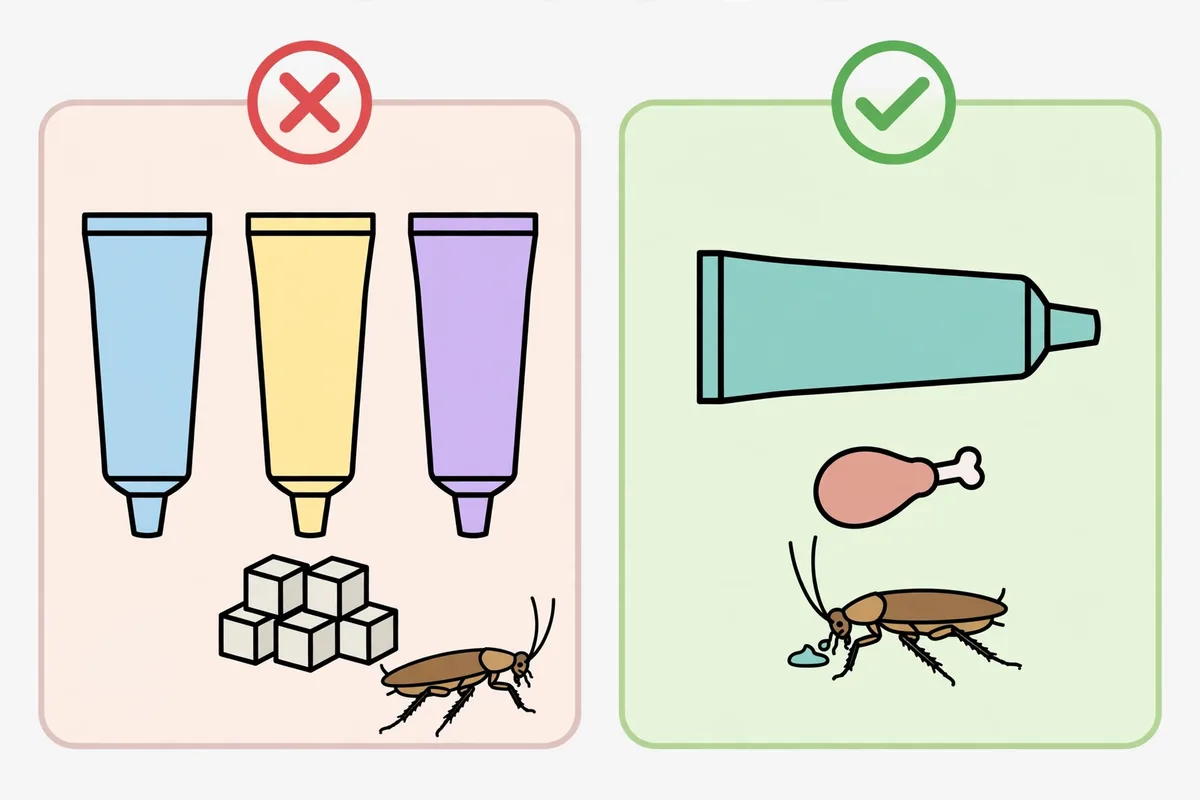
This is exactly why bait rotation failed when aversion first spread. Exterminators rotated through brand after brand and watched every one fail, because the brands shared the same sweet base. The industry’s answer was not a new poison. It was a new formulation, a bait built on a different food base that the averse roaches would still accept.
Brand switching can help in one case: when the new bait genuinely uses a different food base. That is the thing to check, and it is on the label, not in the brand name.
What to Do Instead: Switch the Food Base, Not the Brand
Stop shopping by brand and start shopping by food base. Pick up the tube and look at what the bait is built on. If your current bait is sugar or carbohydrate based and the roaches stopped feeding, your next bait should come from a different food category, such as a protein-based option. As a rough pattern, gel baits skew sweet while granular and solid baits skew protein, though manufacturers keep exact recipes proprietary, so treat that as a starting point for label reading, not a rule.
Change one thing at a time. Swap the bait, keep everything else identical, the same spots, the same sanitation routine, and give it a full week. If feeding resumes, you have your answer. If you change the bait, the placement, and the cleaning all at once, you will never know which change mattered.
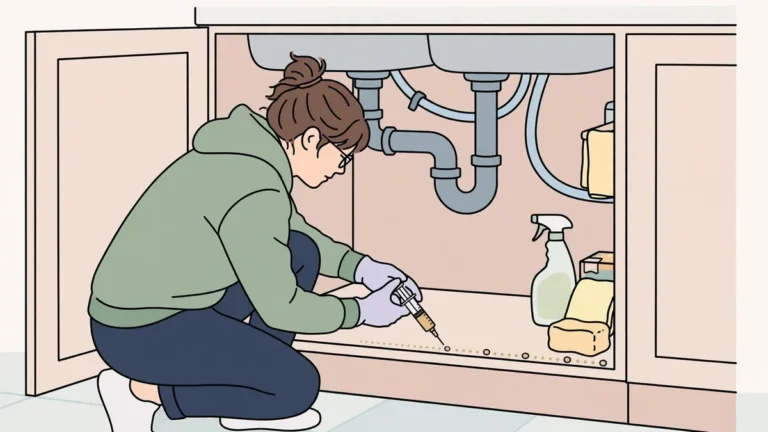
And keep the placement right while you test. A new formulation in the wrong spots fails for the wrong reason, and you will misread the result. Fresh dots in cracks, crevices, and harborage edges, the placement stays correct while the bait itself is the variable.
One honest limit: you cannot confirm aversion at home the way a lab can. What you are running is a practical test, not a diagnosis. Fresh bait, right spots, different food base, one week. Feeding restarts, and aversion was the likely cause. Nothing changes, and the next section is your move.
When to Stop Baiting and Change Methods
If a fresh bait on a different food base, placed correctly, still goes untouched, the bait route is exhausted for now. Continuing to buy tubes is the expensive loop this article is trying to break. The roaches are telling you, clearly, that bait is not their problem anymore. Believe them and change the method.
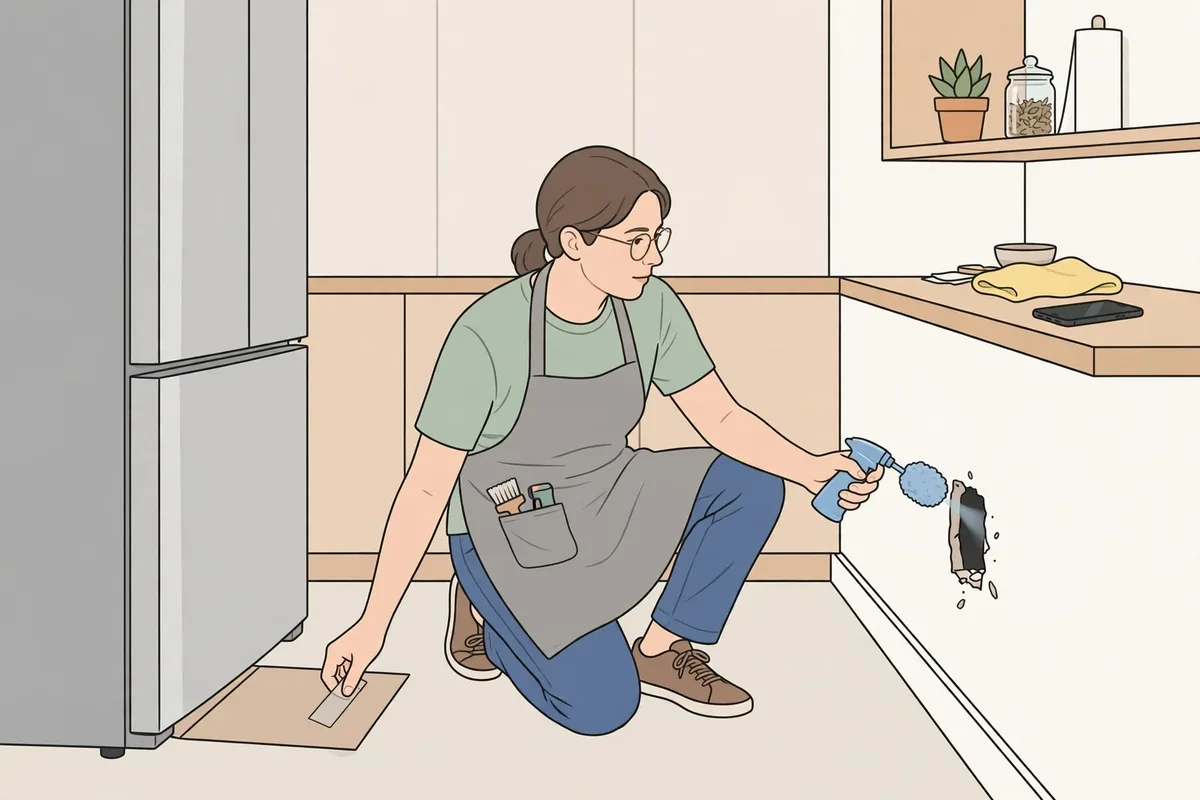
Non-bait tools do not depend on the roach’s sense of taste. Insect growth regulators disrupt reproduction regardless of what the roach eats. Desiccant dusts in wall voids kill on contact, no feeding required. Sticky traps keep monitoring the population so you know whether the new approach is working or the infestation needs a different scale of response.
That scale question is where deciding between DIY and a professional comes in. A pro brings baits you cannot buy retail, including formulations built specifically around aversion, plus the dusts and void treatments that make the non-bait approach work. If two bait formulations have failed and the population is not shrinking, that call is the rational next step, not a defeat.

Nathan Ellis
Nathan Ellis writes about cockroaches and other indoor pests that commonly appear in homes. His work explains different species, their habits, and the signs they leave behind. He enjoys turning detailed research into helpful...
View all guides →