Cockroach Gel Bait: How to Place It So It Actually Works
Where to place cockroach gel bait: dot size, how many spots per room and the hidden spots most people miss. Small dots on roach travel routes work best.

In this guide
Gel bait is the most effective do-it-yourself cockroach tool available, but only when it is placed correctly. Small dots in the right spots will outperform a big expensive treatment done carelessly. Most failed bait jobs come down to two mistakes: dots that are far too large, and dots put where people see roaches instead of where roaches actually travel.
This guide covers exactly where to put gel bait, how big each dot should be, and how many spots a room needs. Follow it and a single tube can protect a whole kitchen.
Quick Answer: Place gel bait dots about 1/4 inch across along cockroach travel routes: cabinet edges, hinges, pipe entries, and behind the fridge and stove. Use 10 to 30 spots per 100 square feet for a light problem, up to 40 for a heavy one. Check after two to three days, refresh eaten dots, and never spray insecticide over baited areas.
What Gel Bait Does, and What It Can’t Do
Gel bait works differently from a spray. A foraging cockroach eats a small amount, then carries the active ingredient back to the harborage before it dies. Other roaches feed on its droppings and body, so one feeding can eliminate several insects. This delayed action is the whole point. It takes hours to a few days, not minutes.
That also means gel bait is not a contact killer. If you want to see insects drop on the spot, bait will disappoint you. Judge it after a week, not after an hour. When placements start looking ragged or shrunk, that is feeding activity, which is exactly what you want to see.
How Big Each Dot Should Be
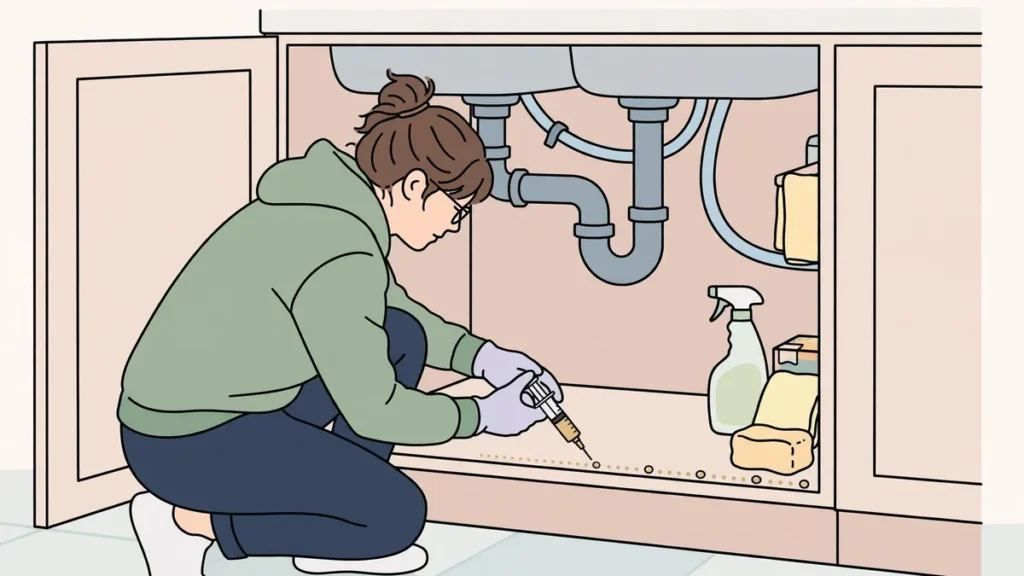
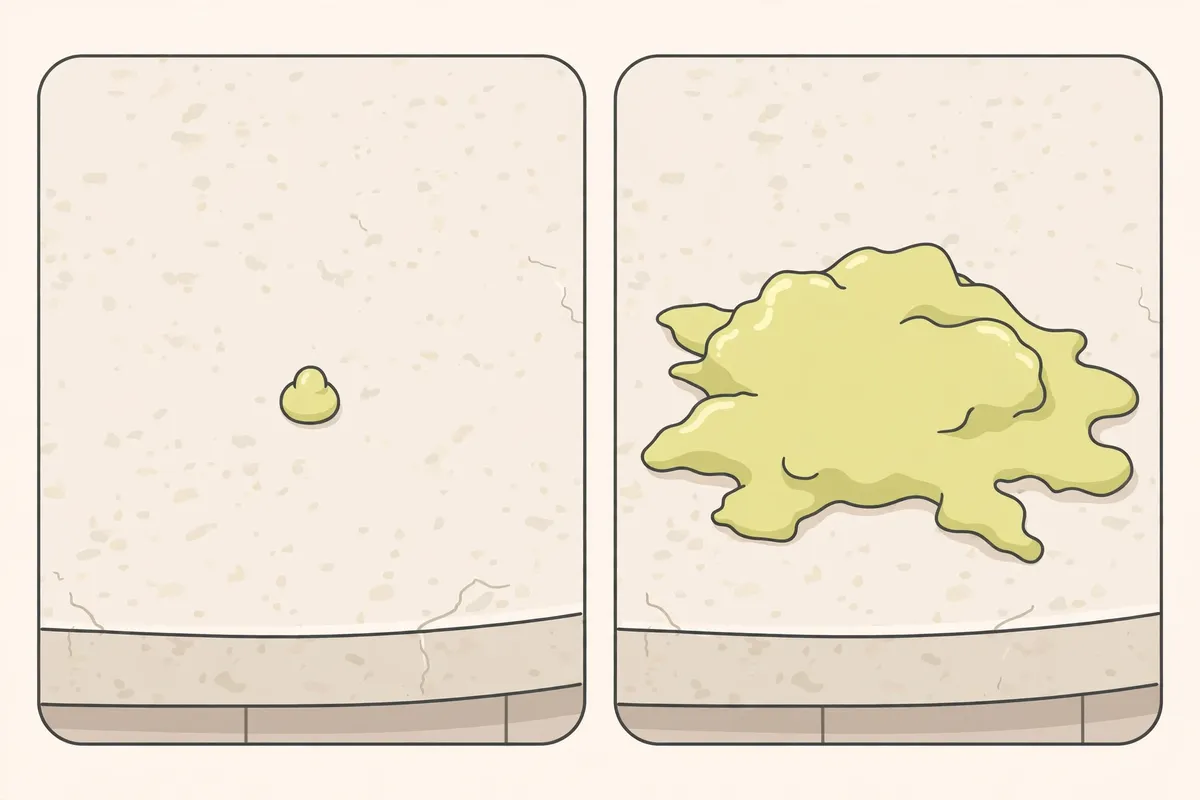
Almost everyone uses too much. The label directions for a widely used gel bait specify each spot at about 1/4 inch in diameter, roughly half a gram of product. Think of a small pea or a grain of rice. A bead application should be about 1/8 inch wide and 2 inches long.
Several small placements beat one or two large ones every time. Labels and extension guides agree on this point. A big blob dries out faster, looks suspicious to roaches, and wastes product. Many tiny dots along a route give every passing roach a chance to feed.
Where to Put Them: The Placement Map
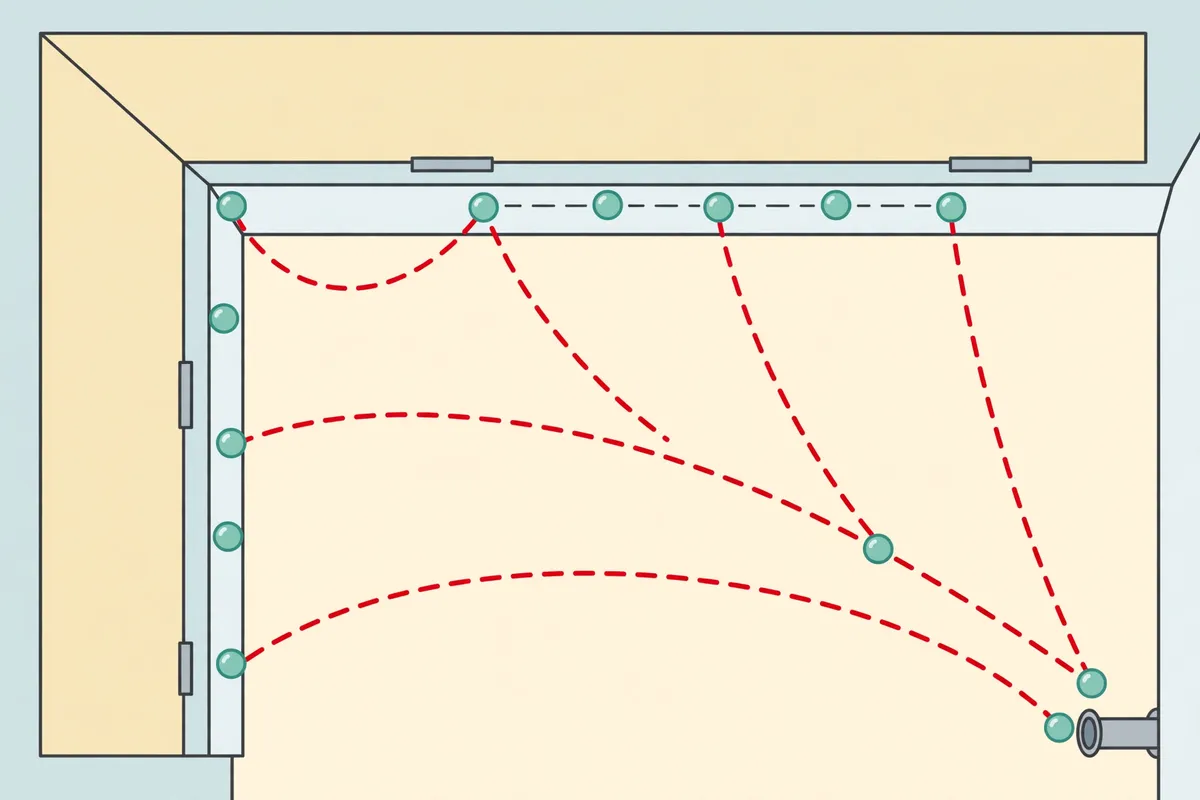
Roaches travel along edges, not across open space. They follow the line where a wall meets a cabinet, the underside of a shelf, the gap around a pipe. Place your dots on those routes and the insects will find them on their normal nightly rounds. Putting bait in the middle of a counter because you once saw a roach there is the classic mistake.
For a light to moderate problem, plan on 10 to 30 spots, or 5 to 15 beads, per 100 square feet. For a heavy infestation, raise that to 30 to 40 spots or 15 to 20 beads. Work room by room and keep a rough count so you know when you have done enough.
Cabinet edges and hinges
Run small dots along the inside edges of cabinet frames and near the hinges, where grease and crumbs collect. The upper corners inside cabinets are prime real estate. German cockroaches especially love the warm, tight spaces around hinges.
Pipe and plumbing entries
Every place a pipe passes through a wall or cabinet is a highway. Put dots around the escutcheon plates under sinks, behind toilets, and where water lines enter the wall. Roaches follow plumbing runs between rooms, so these spots intercept travelers.
Behind the refrigerator and stove
Pull the appliances out if you can. The warm compressor area behind the fridge and the grease zone behind the stove are two of the most productive baiting spots in any home. Place dots along the wall-floor joint and on the side panels, never on hot surfaces.
Trash and recycling areas
Dots go around the trash can, not in it. Place them on the wall behind the bin, under the rim of the cabinet that holds it, and along the baseboard nearby. Take the trash out nightly while baiting so the gel is the most attractive food around.
Door frames and baseboards
Finish the room by dotting the top corners of door frames and the wall-floor joint along baseboards, especially on walls shared with neighboring units. These are the routes roaches use to move between rooms.
The Spots Everyone Forgets
Once the main routes are covered, these overlooked harborages are worth a few extra dots:
- Drawer tracks and the underside of drawer boxes, where crumbs sift down out of sight
- The motor cover at the back of the refrigerator, warm and rarely disturbed
- Laundry areas, around the washer hoses and the dryer vent entry
- Cluttered garage corners and storage boxes near the door into the house
A few dots in each of these spots closes the gaps without over-baiting the room.
What Makes Bait Fail
When bait jobs fail, the bait is rarely the problem. These four mistakes account for most failures:
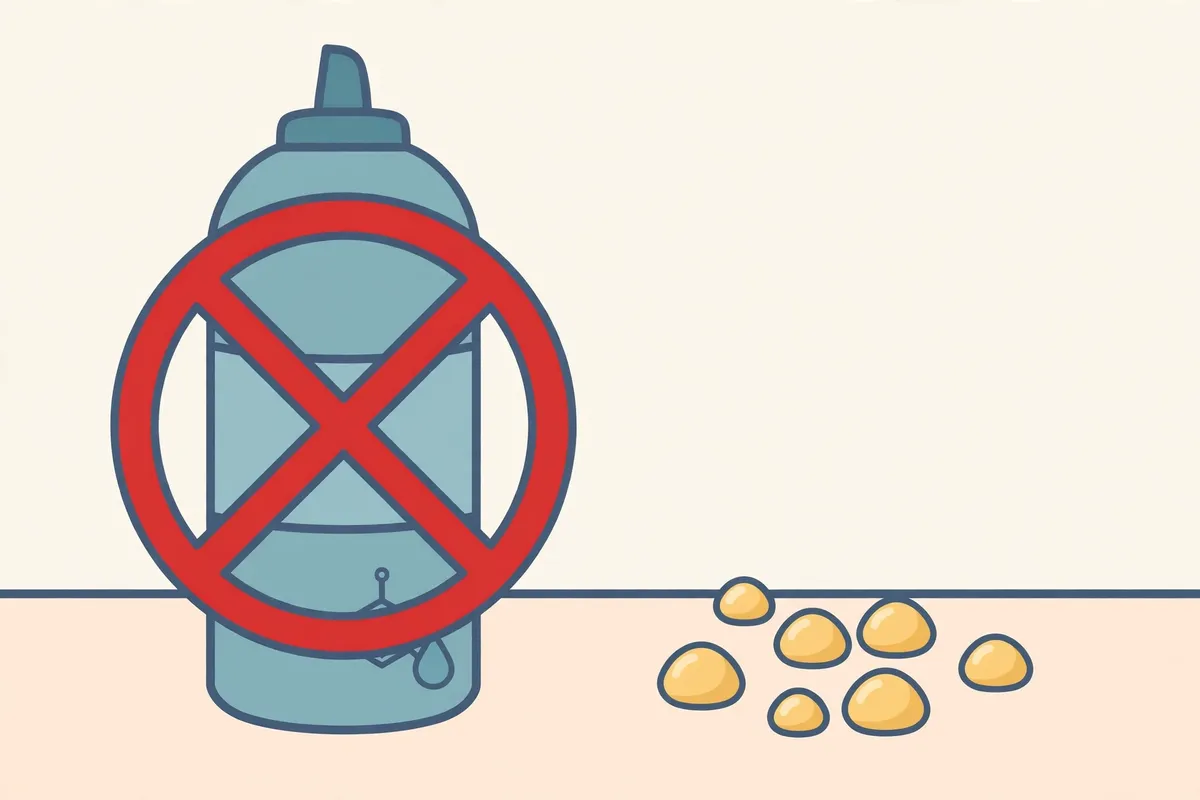
- One big blob instead of many small dots. It dries out, and roaches feed around it rather than on it.
- Spraying insecticide over baited zones. Residual sprays make bait repellent and scatter roaches away from it. Pick one method per zone. Bait zones stay spray-free.
- Leaving dried, months-old bait in place. Dried gel is ignored. Scrape it off and replace it during your checks.
- Baiting food-contact surfaces. Keep dots off cutting boards, dish racks, and anywhere food is prepared. The routes around those areas work equally well.
Check, Refresh, Rotate
Baiting is not a set-and-forget job. Check your placements after two to three days. Dots with ragged edges or visibly shrunken size mean roaches are feeding, so refresh those spots with fresh micro-dots before they are fully consumed. Move any untouched dots closer to fresh droppings or sightings.
After that first check, inspect monthly. Replace any gel that has dried out or become soiled. If feeding stops but roaches remain after a few weeks, the survivors may be avoiding that bait. That is a separate problem with its own science, and it gets its own guide next in this series.
When Bait Isn’t Enough
Gel bait handles most household infestations, but it has limits. A heavy German cockroach infestation deep inside wall voids, roaches spreading through a multi-unit building, or no real reduction after about three weeks of correct baiting are all signs to bring in a professional. A pro can treat voids you cannot reach and coordinate with neighbors, which no amount of dots will replace.
If your problem centers on the kitchen specifically, pair this placement method with thorough kitchen sanitation and exclusion. That combination is what makes bait dramatically more effective. Methods, timelines, and costs for the whole job are laid out in how to get rid of cockroaches.

Nathan Ellis
Nathan Ellis writes about cockroaches and other indoor pests that commonly appear in homes. His work explains different species, their habits, and the signs they leave behind. He enjoys turning detailed research into helpful...
View all guides →