What Does a Cockroach Look Like? Cockroach Pictures and Identification Guide
Not sure if that bug is a cockroach? Compare pictures and markings for size, pronotum stripes, wings and nymphs, and identify it in under a minute.

In this guide
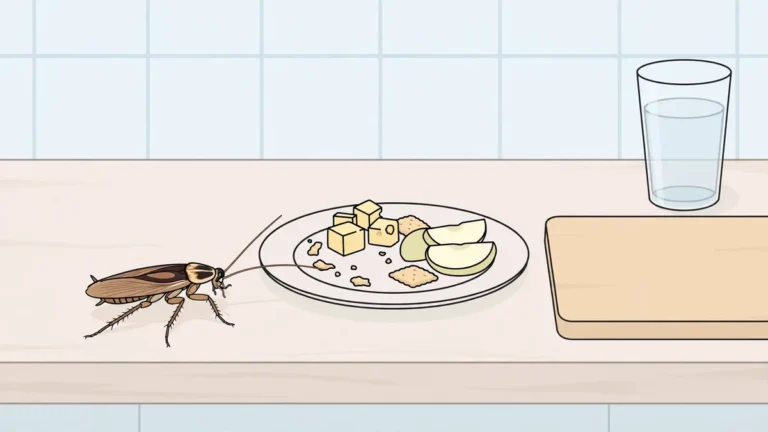
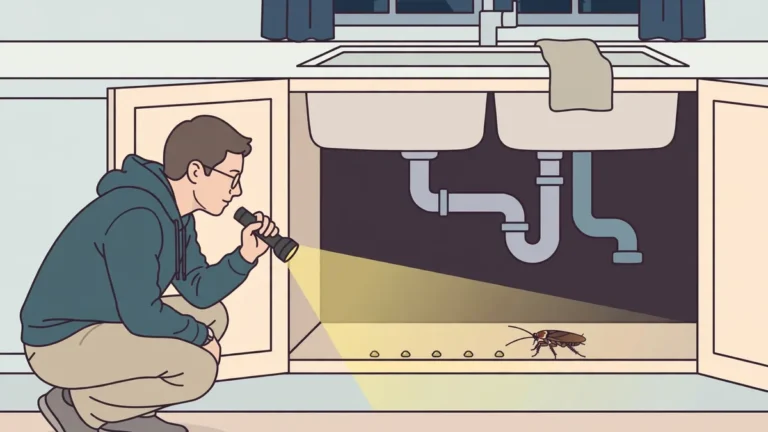
You saw a bug in your kitchen, or on the bathroom floor, or near the bed. It moved fast, or it sat still. Now you need to know what it is before you do anything about it.
Most of the time, the answer comes down to three things you can check in a few seconds: the antennae, the shield behind the head, and the shape of the body. Get those three right and you will know if it is a cockroach. Then one table in this article will tell you which kind it is.
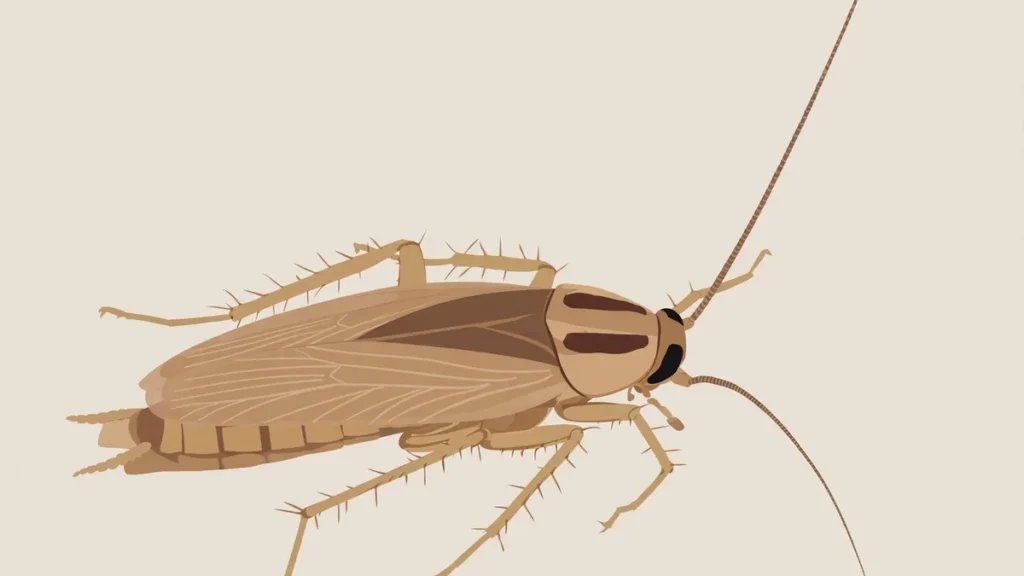
Quick Answer: A cockroach has a flat, oval body, six long spiny legs, and antennae nearly as long as its body. The shield behind its head carries the mark that names the species. German roaches are small and tan with two dark stripes on it. American roaches are large with a pale edge on it. Small, dark, and wingless means a nymph, a young cockroach.
The 3 Fastest Checks: Is It a Cockroach?
You may have only a few seconds before the bug runs for cover. Check in this order. Each check rules something out.
Check 1: the antennae. Look at the feelers on the head. A cockroach has two long, thread-like antennae, often as long as its whole body, and they move all the time.
Short, stubby antennae that stay still point somewhere else. A bed bug has short antennae. A beetle has short antennae too, often thick or clubbed at the end. Long and always moving means cockroach, and this check still works when you only saw the bug for two seconds.
Antennae can break off, so a missing antenna does not rule out a roach. Check the shield, the body, and the speed instead. But if the antennae were short from the start, it is probably a beetle or another look-alike.
Check 2: the shield behind the head. Look at the plate right behind the head. On a cockroach, the head hides under this shield when you look from above. The shield is called the pronotum. Beetles do not have it. Their heads stick out, and their backs are covered by hard wing cases instead.
Check 3: the body and the speed. A cockroach body is flat and oval, like it was pressed down from above. That flat shape lets it squeeze into gaps as thin as a coin. Its six legs are long and spiny, built for running. When a light comes on, a cockroach darts for the nearest crack. A bed bug crawls slowly. A beetle walks at a steady pace.
There is one bonus check if you get a close look. At the very tip of the abdomen, a cockroach has two short tail spikes called cerci. They sense air movement and warn the insect when something comes near. Bed bugs and beetles do not have them. Treat them as a confirmation, not a requirement, because you will not always see them.
If the bug passes all three checks, it is a cockroach. If it fails two or more of them, it is probably a look-alike, and the Common Confusions section below will help you name it.
Fast-ID Table: Which Cockroach Is It?
Five species show up in American homes. Start with size, then look at the marking. Size alone splits the five into two groups: small roaches about half an inch long, and large roaches about an inch or more.
| Species | Adult size | Key marking | Can it fly? | Where you find it |
|---|---|---|---|---|
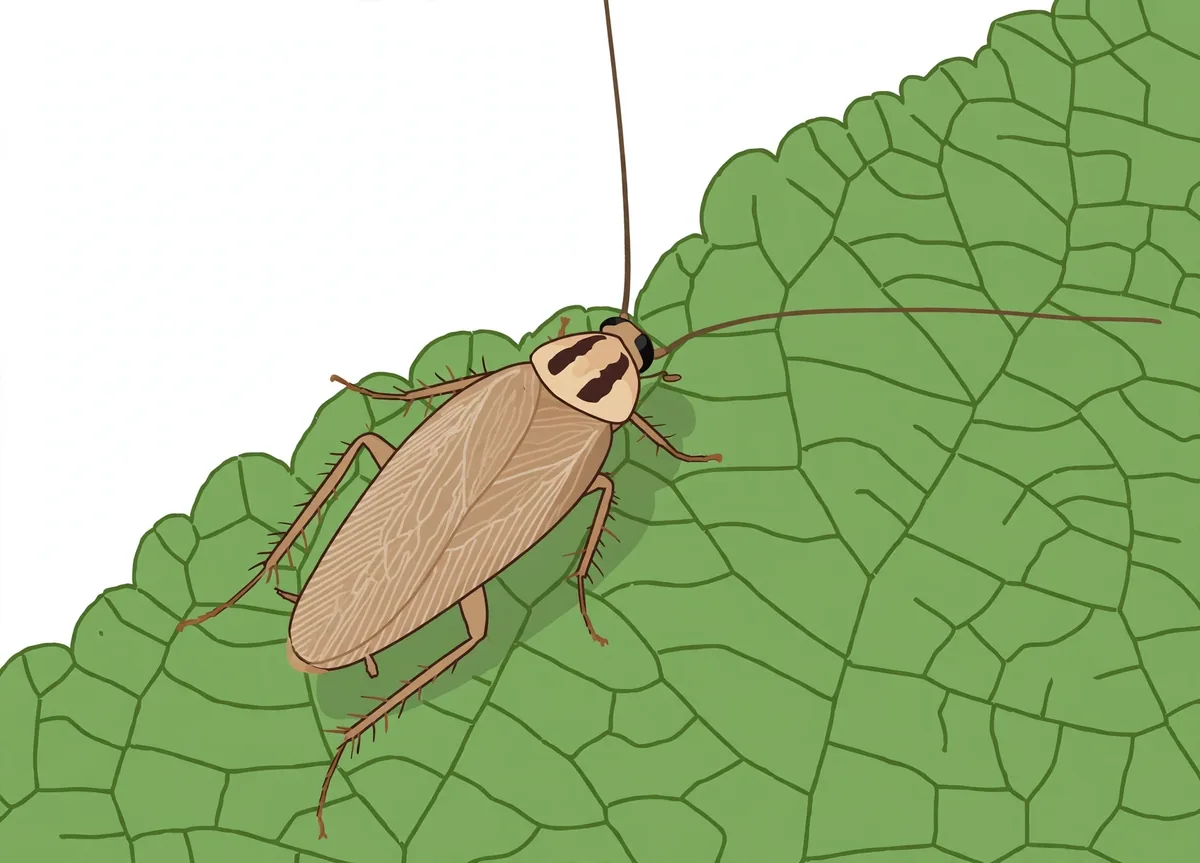
| German | 1/2 to 5/8 inch, about the size of a penny | Two dark parallel stripes on the shield behind the head | No, though it has full wings | Indoors only, kitchens and bathrooms |
| Brown-banded | About 1/2 inch, about the size of a penny | Two pale bands across the wings and abdomen | Males only | Indoors, warm dry places like upper cabinets and behind furniture |
| American | About 1 1/2 inches on average, up to about 2 inches, about the length of a thumb | Pale yellow edge on the shield behind the head, with a figure-8 pattern | Yes, both sexes, short flights or glides | Sewers, drains, basements, warm damp places |
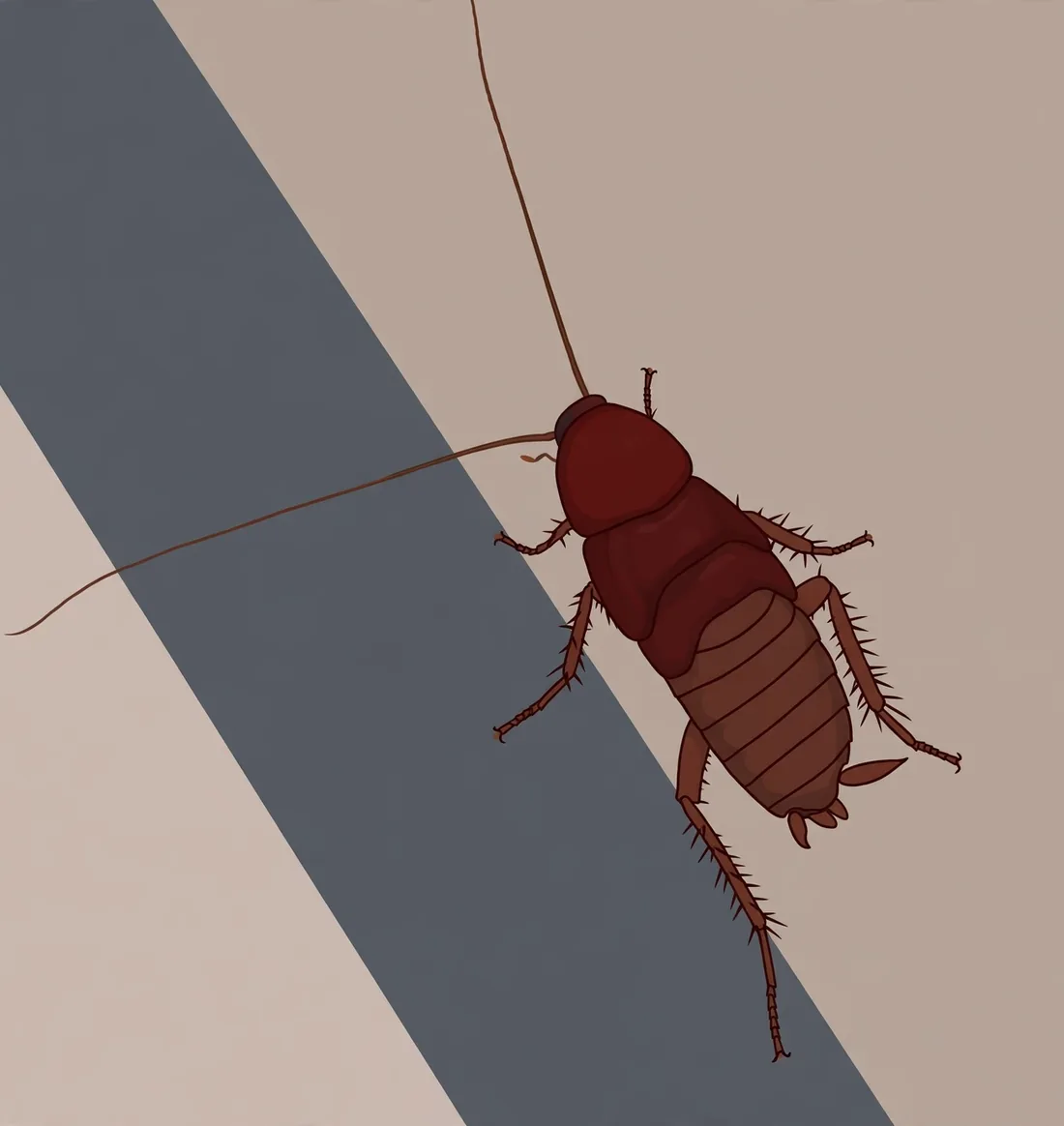
| Oriental | About 1 to 1 1/4 inches, about the size of a large grape | Uniform glossy dark brown to black, no stripes or bands | No | Cool damp places, basements, floor drains, crawl spaces |
| Smokybrown | About 1 1/4 to 1 1/2 inches | Solid dark mahogany brown, unmarked shield | Yes, good fliers | Outdoors and attics, leaf litter, mulch, tree holes |
Read the table in this order. First, size. A roach about half an inch long is German or brown-banded. A roach over an inch long is American, Oriental, or smokybrown. Then the marking, which the next section covers in detail.

One more species deserves a note. The Asian cockroach looks almost exactly like a German cockroach and is about the same size, and you cannot tell them apart from a photo alone.
Behaviour separates them: Asian roaches fly readily, are drawn to light, and live outdoors in lawns and leaf litter. German roaches do not fly and live indoors. If the small tan roach you saw flew toward a light outside, think Asian. If it ran under the fridge, think German.
Where you found the bug helps too, but it never proves the species on its own. Use it to narrow the table, then confirm with the marking.
The Pronotum: The Fastest Field Mark
The pronotum is the shield-like plate right behind the head. It hides the head when you look at the insect from above. Once you learn to look at this one part, you can name most cockroaches without measuring anything.
On a German cockroach, the shield carries two dark parallel stripes running front to back. They look like racing stripes, and they are the clearest German mark there is.
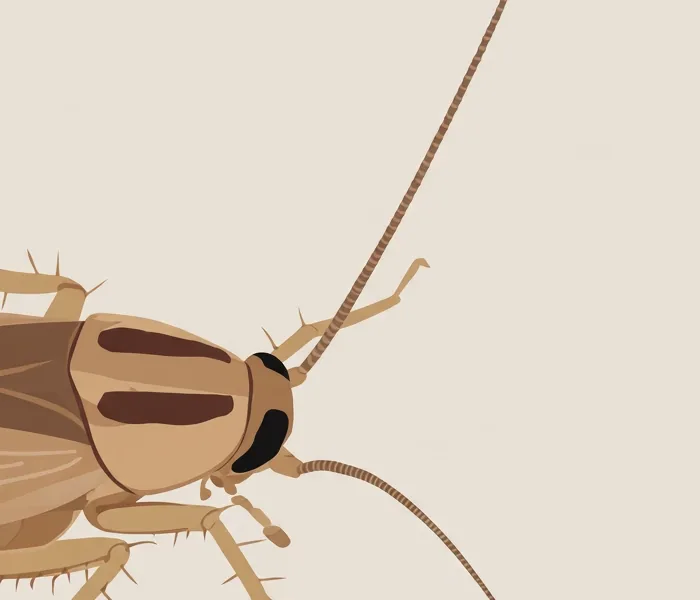
On an American cockroach, the shield has a pale yellow or light brown edge, and the middle of it shows a darker figure-8 pattern.
On an Oriental cockroach, the shield has no pattern at all. The whole insect is glossy dark brown to almost black, and the shield is the same uniform colour as the rest of the body. That plainness is itself the mark.
On a brown-banded cockroach, the mark is not on the shield alone. Two pale bands run across the wings and abdomen. Do not confuse bands with stripes. Stripes run front to back on the shield. Bands run across the body.
On a smokybrown cockroach, the shield is solid dark mahogany brown with no marks, like the Oriental, but the body is a warmer reddish brown rather than glossy black, and the wings are full and extend past the abdomen in both sexes.
German and American cockroaches are the two species readers confuse most, and their shields tell them apart.
Antennae, Wings, and Body Shape
Three more features confirm what the shield already told you. The antennae are long, thin, and thread-like, often as long as the body itself. They move constantly, feeling the air and the surface ahead.
The wings confuse people, because most adult cockroaches have them and most do not use them to fly. A cockroach has two pairs of wings. The outer pair is thick and leathery and lies flat on the back like a cover. The inner pair is thin and membranous and sits underneath.
On a cockroach, the wings are soft, overlap, and lie flat.
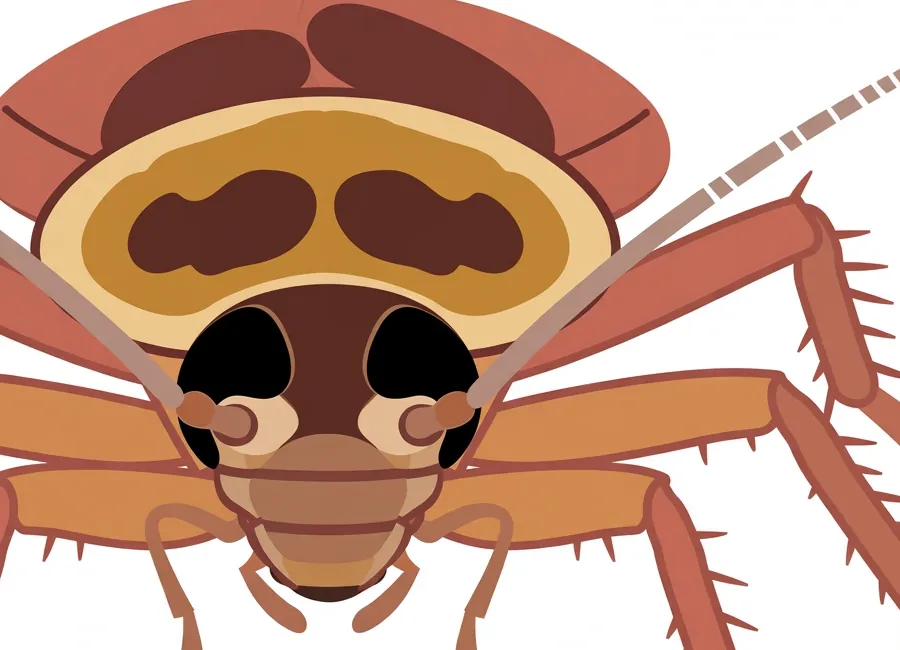
The body is flat and oval, with a small head tucked under the shield and six long, spiny legs.
A cockroach has six legs. The number alone does not identify it, because most insects have six legs. The antennae and the shield are the marks that do the work.
Do Cockroaches Fly?
Some do, and some never do, and the answer depends on the species. German cockroaches have full wings and do not fly. Oriental cockroaches cannot fly at all. The males have short wings and the females have only stubs. Brown-banded cockroaches split by sex: the males can fly and the females cannot.
American cockroaches can fly, both sexes, in short flights or glides in warm conditions. Smokybrown and Asian cockroaches are good fliers and are strongly drawn to light at dusk. Even the species that can fly rarely do it indoors. Roaches are far faster on their legs than in the air, and they run before they fly.
Males and females also differ in wing length in some species. Brown-banded females have short wings and broader bodies, while the males have full wings and can fly.
In most cases the difference is not a useful field mark for a beginner, and size plus the shield pattern will identify the species faster.
Nymphs: The Ones You Actually See
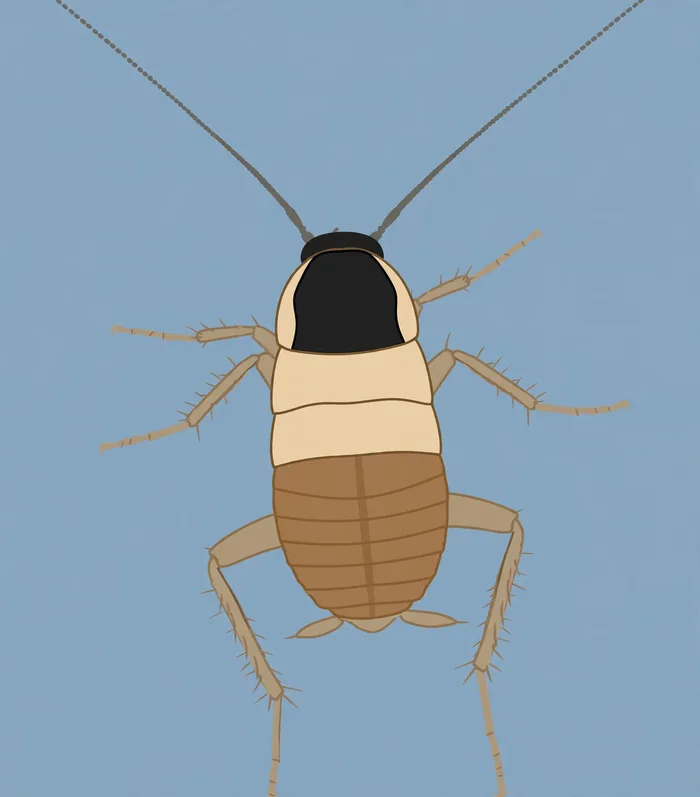
A baby cockroach is called a nymph. It looks like a smaller, wingless copy of the adult, with the same flat body and long antennae. Cockroaches grow by incomplete metamorphosis, which means there are only three stages: egg, nymph, and adult. There is no grub stage and no cocoon stage.
Nymphs are what you will see most often, because young roaches outnumber adults in a growing population. They are smaller, darker, and wingless, which is why people so often think they found a different bug. A nymph never has developed wings. That one fact separates nymphs from adults more reliably than size does.
German nymphs hatch at about 3 millimetres long, close to the size of a grain of rice. They are dark grey to black, with a pale stripe down the middle of the back.
As they grow, two dark stripes run down the body. A very young German nymph is so dark that the stripes are hard to see, so do not rule out a cockroach because you cannot see them.
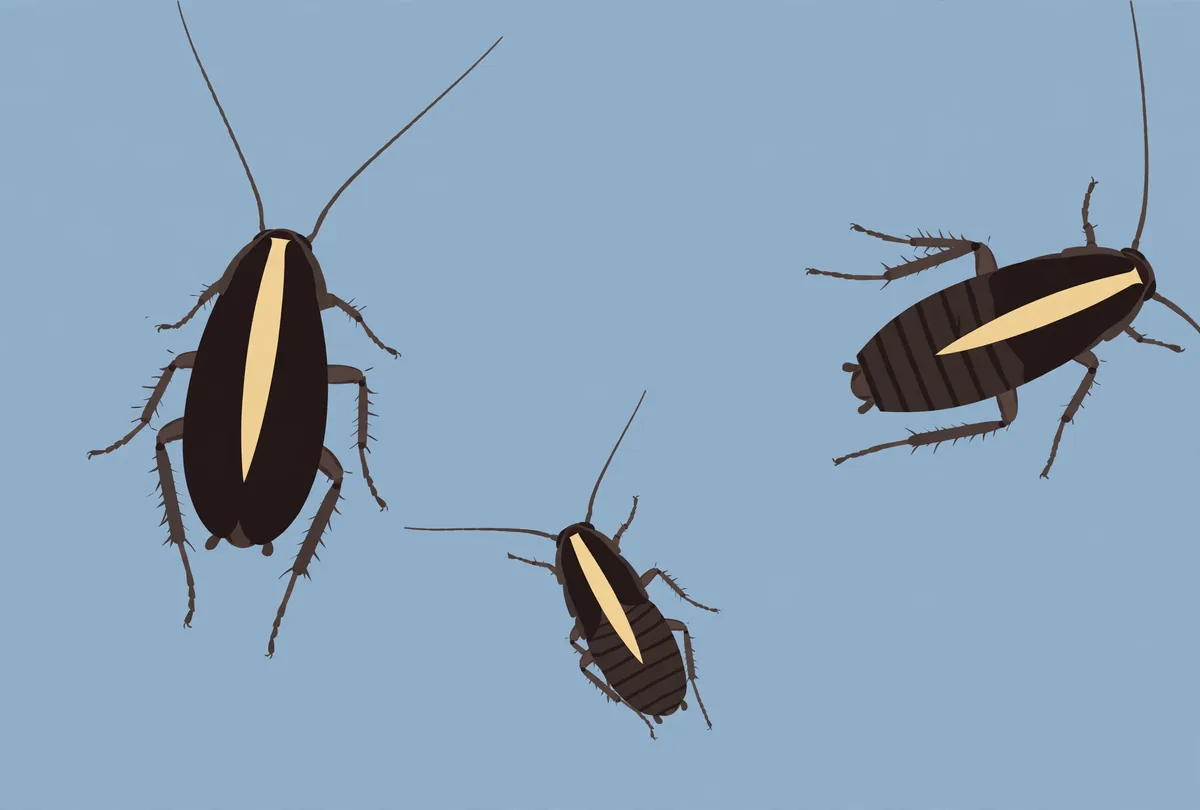
American nymphs start greyish brown and turn reddish brown after the first few molts. They grow much larger than German nymphs. Oriental nymphs stay dark brown to glossy black from the start. Brown-banded nymphs show the two pale bands across the body from the first stage. Smokybrown nymphs are uniformly reddish brown to black.
The smallest adults are German and brown-banded cockroaches at about half an inch. If the bug is smaller than half an inch and wingless, it is almost certainly a nymph.
Colour alone is a poor guide to nymphs. A nymph often differs in colour from the adult of its own species, and the same species can look different at different ages. Match the markings first, then the size, then where you found it. A small, dark, fast, wingless bug with long antennae in a kitchen cabinet is almost always a German nymph.
Nymph vs Bed Bug vs Beetle
This is the comparison that matters most, because the response to each of these three bugs is completely different. A bed bug problem and a cockroach problem are treated in entirely different ways, so getting this right saves time, money, and a lot of worry. The bed bug column in the table matches what bed bugs look like at every stage.
| Feature | Baby cockroach (nymph) | Bed bug | Beetle |
|---|---|---|---|
| Antennae | Long, about as long as the body, always moving | Short and stubby, mostly still | Short, often thick or clubbed |
| Body shape | Long and cylindrical, flat from above | Flat and oval, like an apple seed | Rounded, domed, hard-shelled |
| Wings or back | No wings, soft back, sometimes small wing pads | No wings, smooth back | Hard wing covers meeting in a straight line down the back |
| Movement | Very fast, darts for cover when the light comes on | Slow crawl | Slow to moderate, steady walk |
| Where you find it | Kitchen, bathroom, near food and water | Mattress seams, headboard, box spring, within a few feet of where people sleep | Near windows, pantry, or wandered in from outside |
Start with the antennae. They are the single most reliable check, and they work even on a very young nymph. Then look at the shape. A bed bug is flat and round like an apple seed. A cockroach nymph is longer, more like a tiny grain of rice with legs. Then watch how it moves. A nymph darts. A bed bug crawls.
What Seeing a Nymph Means
A nymph tells you more than an adult does. An adult cockroach can wander in from outside through a drain or a gap. A nymph cannot. It has no wings, it hatched at about 3 millimetres long, and it did not travel far to reach your kitchen floor. Eggs hatched inside the structure.
A single adult may be a stray. A nymph is evidence of a resident population. That does not mean you should panic, and this article does not cover treatment.
Common Confusions
Five mix-ups cover almost every wrong identification. Each one has a mark that settles it.
Roach Nymph vs Bed Bug
This is the confusion with the worst consequences, and it is covered in full in the comparison table in the Nymphs section above. The short version: check the antennae first, then the shape, then the speed, then where you found it.
Cockroach vs Beetle
Ground beetles are the roach impostors people meet most often, especially in gardens, porches, and hallways. The back gives them away. A beetle has hard, shiny wing covers that meet in a straight line down the middle of the back, often with fine grooves running along them. A cockroach back is soft and leathery, with wings that overlap flat instead of meeting in a line.
Beetles also have short antennae, a domed body rather than a flat one, and they move slowly and stiffly. If the back shows a straight centre line, it is a beetle. Longhorn beetles are the one exception to the antennae rule, because their antennae are as long as their bodies, but their cylindrical stiff bodies and hard wing covers still give them away.
Water Bug and Palmetto Bug: Nicknames, Not Species
A true water bug is a different animal entirely. It belongs to the family Belostomatidae, lives in water, and almost never comes indoors. True water bugs have no long antennae, short stubby ones tucked under the head instead.
Their front legs are shaped like pincers for catching prey, they have a beak for a mouth, and they are attracted to light. Some, like the giant water bug, grow up to four inches long.
But the “water bug” people talk about in a house is almost always a cockroach, usually an Oriental or an American, that likes damp places. If the bug has long antennae and runs from light, it is a roach, whatever anyone calls it.
A palmetto bug is a cockroach too. The name is a polite Southern word for a large roach, most often an American cockroach or a smokybrown cockroach, and in Florida sometimes the Florida woods cockroach. There is no separate insect called a palmetto bug. If someone tells you they have palmetto bugs, they have large cockroaches, and the identification in the table above still applies.
The White Cockroach Is Not an Albino
A white cockroach looks strange enough that people assume it is a rare species or an albino. It is neither. It is an ordinary cockroach that shed its old shell a short time ago. Cockroaches grow by molting. The hard outer shell cannot stretch, so the insect sheds it and forms a larger one. The new shell starts out completely white and soft, then hardens and darkens over several hours.
There is no documented case of a true albino cockroach. Albino animals cannot produce pigment at all, for life. A white roach has all the pigment it needs. The colour has not developed yet in the new shell, and it will be brown again within hours.
Wood Roaches: Real Cockroaches That Do Not Infest
Wood roaches are real cockroaches, and they confuse people every spring and summer. They are about half an inch to an inch long, with a flattened oval body, a head hidden under the shield, long antennae and legs, and a dark brown body with light-coloured bands on the edge near the head.
They live outdoors in wood piles, rain gutters, and trees near houses. The males sometimes fly to lights at night, which is how they end up on a porch or inside a door. But they cannot establish and reproduce in living spaces, because indoor conditions are too warm and dry for them. A wood roach indoors is a wanderer, not an infestation, and it does not need treatment.
What About the Egg Case?
Cockroaches do not lay single eggs the way many insects do. The female produces a protective capsule called an ootheca, a small leathery case that holds all the eggs in two neat rows. Finding one tells you a female bred nearby, even if you never see a live roach.
An egg case looks like a tiny purse or a small bean, about 5 to 12 millimetres long depending on the species, with a ridged seam along one edge where the nymphs break out. Fresh cases are lighter in colour and darken as they harden. The surface is hard and leathery, not soft or crumbly. An empty case looks similar but is split open along the seam, papery, and light.
The case differs by species. A German case is light tan and carried by the female until shortly before hatching, while an American case is dark brown and glued to a surface soon after it is produced. An Oriental case is slightly larger and very dark brown to black. The species-by-species case comparison is in how German and American egg cases differ.
Do not confuse an egg case with droppings. If you find pepper-like specks, the signs of a cockroach infestation explain what they mean. An egg case is a hard, ridged, bean-shaped object you can pick up.
Once You’ve ID’d It
Identification is the whole job of this article, and it ends here. If the bug is a cockroach, the next step is the species-first plan in How to Get Rid of Cockroaches: The Complete Home Guide, which starts by matching the treatment to the species you found.
If the bug is a bed bug, the response is different and roach treatment does not apply. If it is a beetle, a wood roach, or another look-alike, no cockroach treatment applies at all.

Nathan Ellis
Nathan Ellis writes about cockroaches and other indoor pests that commonly appear in homes. His work explains different species, their habits, and the signs they leave behind. He enjoys turning detailed research into helpful...
View all guides →