Are Cockroaches Dangerous? What the Health Risks Really Are
Are cockroaches dangerous? They rarely bite, but they spread bacteria and trigger allergies and asthma. See the real health risks and who is most at risk.

In this guide
Quick Answer: Yes, cockroaches can be dangerous, but rarely by biting. They do not sting and are not venomous. The real risks are the bacteria they carry onto food and surfaces, and the allergens in their droppings, saliva, and shed skins, which can trigger allergies and asthma, especially in children. Bites are rare and happen only in severe infestations.
Finding a cockroach in the kitchen raises one question before any other: is this actually dangerous, or only disgusting? The honest answer sits between the two extremes. Cockroaches are not out to hurt you. They do not hunt people, they do not sting, and no common house species is venomous. But they are a real health concern, and the reason has little to do with what most people picture.
The danger comes from where they have been and what they leave behind. A cockroach walks through drains, garbage, and decaying matter, then walks across your counters, dishes, and food. Its droppings, saliva, and shed skins break down into dust that you breathe in. That is the whole story, and this article lays it out plainly: what they carry, how often they bite, who is most at risk, and what to do about food they touched.
The Short Answer: Yes, But Not How You Think
Most people imagine the danger as a bite or a sting. That is the wrong picture. Cockroaches are scavengers, not predators. They avoid people and would rather run than bite. What makes them dangerous is contamination and allergens, two slow, invisible problems that build up while the infestation grows.
| Risk | How it happens | Who it hits hardest |
|---|---|---|
| Bacteria on food and surfaces | Roaches carry germs from drains and garbage onto counters, dishes, and open food | Everyone in the home, especially young children |
| Allergens and asthma | Proteins in droppings, saliva, and shed skins become part of household dust and get breathed in | Children, people with asthma or allergies |
| Bites | Rare nibbling in severe infestations, usually while a person sleeps | Infants and small children in heavily infested homes |
They are not poisonous either. A cockroach does not produce venom, does not inject anything, and does not release poison when disturbed. The illnesses linked to cockroaches come from the germs and allergens they carry, not from poison. And the musty smell of a bad infestation is a warning sign of how many roaches are present, not a danger by itself. The smell comes from their droppings and secretions. The risk is in the particles, not the odor.
Is the smell itself dangerous? No, not as a poison. The odor comes from pheromones, droppings, shed skins, and dead roaches, and it grows stronger as the infestation grows. In a severe infestation the fumes can bring on headaches, nausea, and eye, nose, and throat irritation, but the real health risk is still the allergens and bacteria in the waste, not the smell on its own.
How Cockroaches Actually Make You Sick
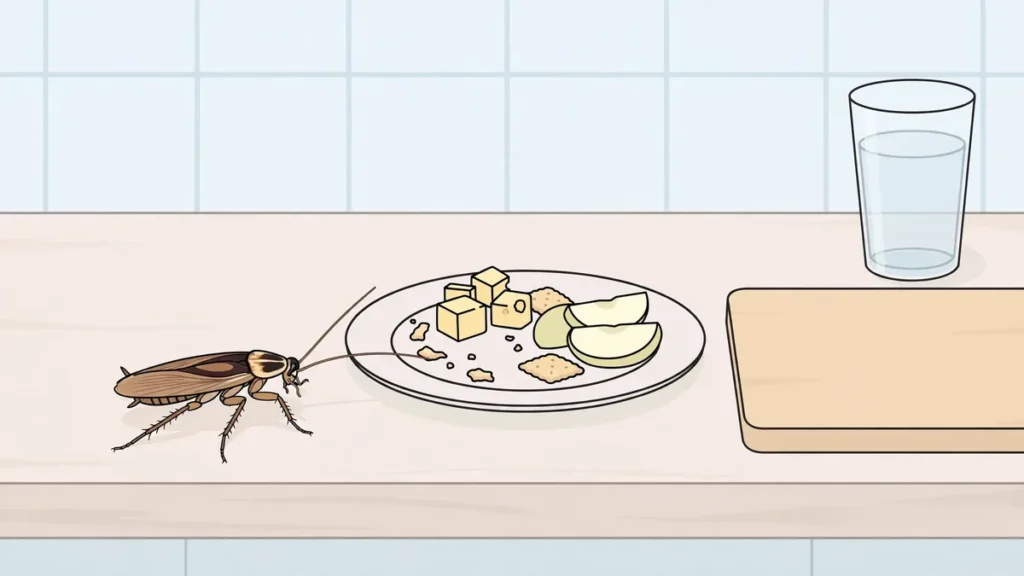
A cockroach is a mechanical carrier. That is the technical way of saying it moves germs from one place to another on its body and in its droppings, without being infected itself. It does not inject pathogens the way a mosquito does. It walks through a drain or a garbage bin, picks up bacteria on its legs and body, and deposits them on the next surface it crosses. At night that surface is often a kitchen counter, a plate, or an open food container.
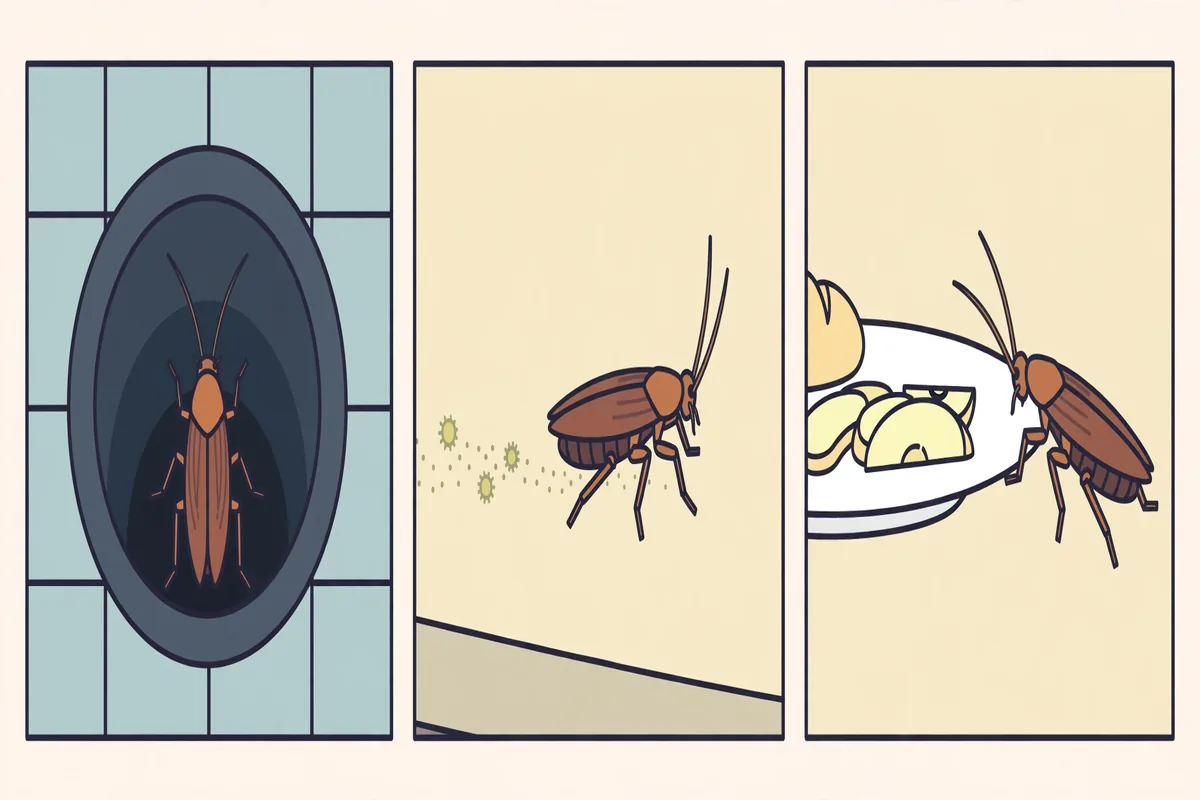
Public health agencies list cockroaches as carriers of bacteria that can cause salmonella, staphylococcus, and streptococcus infections when deposited on food. They have also been linked in public health literature to intestinal illnesses such as dysentery, diarrhea, cholera, and typhoid fever. Studies have found dozens of kinds of bacteria on cockroaches, including Salmonella and E. coli, the two names behind most food poisoning cases.
One honest limit belongs here. Finding bacteria on a cockroach does not prove that a particular stomach bug in your house came from a roach. Food poisoning has many sources, and a single sighting does not diagnose an infection. What the evidence does show is a clear pathway: filth to roach to food to mouth. The longer an infestation runs and the more access roaches have to food, the more that pathway matters.
Do Cockroaches Bite?
Yes, but it is rare enough that most people will never see it. Documented cases exist, and the species named in them are the American, German, and oriental cockroaches, all common in American homes. The pattern is consistent: bites happen in severe infestations where food is scarce, almost always while a person sleeps, and usually on fingernails, toenails, eyelashes, or callused skin. Roaches are after food residue and dead skin, not blood.
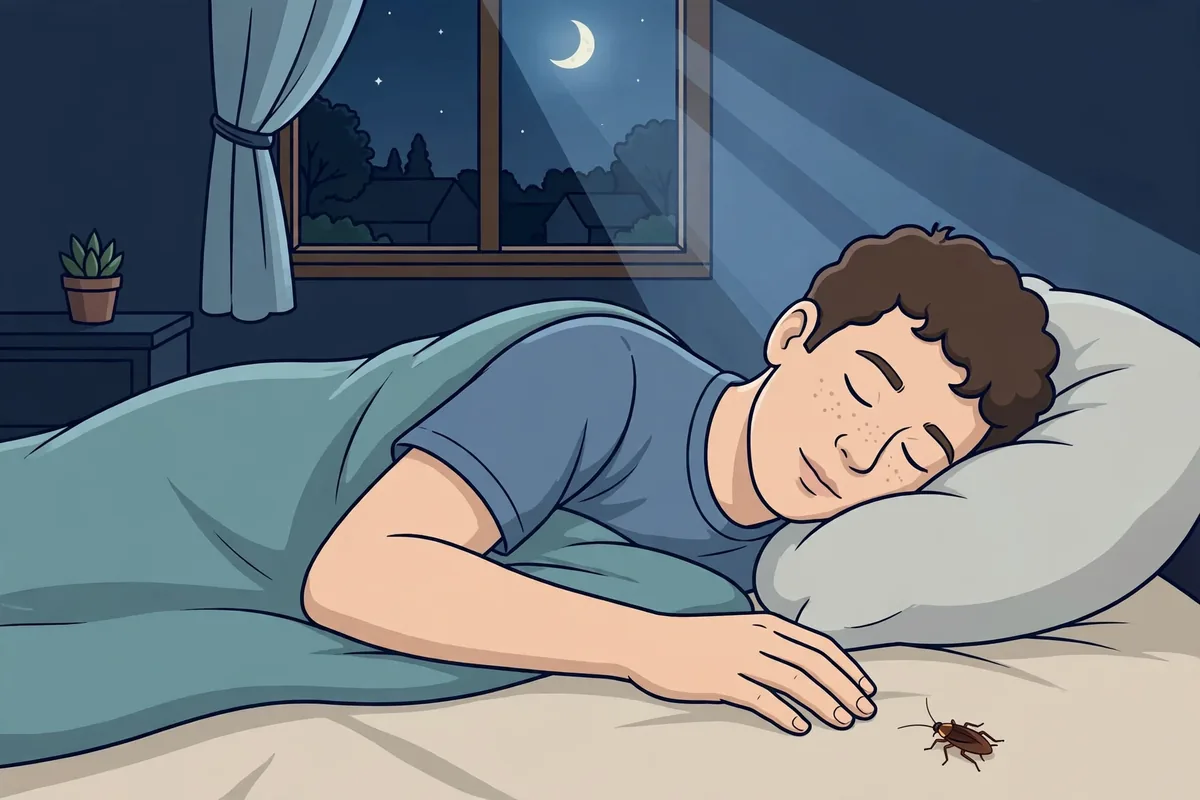
A cockroach bite looks like a small red raised bump, much like any other insect bite. It is not venomous, it does not pass on disease through the bite, and it usually heals on its own. Clean it with soap and water and leave it alone. Scratching is the main thing that turns a minor bite into a problem, because scratched skin lets bacteria in.
See a doctor if the area shows spreading redness, pus, fever, or pain that gets worse instead of better. That advice applies to any insect bite, not only to cockroach bites. This article is general information, not medical advice.
Allergies and Asthma: The Biggest Risk
If bites are the smallest risk, allergens are the largest. Cockroaches carry proteins in their body parts, saliva, feces, and shed skins that trigger allergic reactions in many people. When droppings and shed skins dry out and break down, the particles become part of household dust. Disturbed dust sends them into the air, where they are breathed into the nose and lungs.
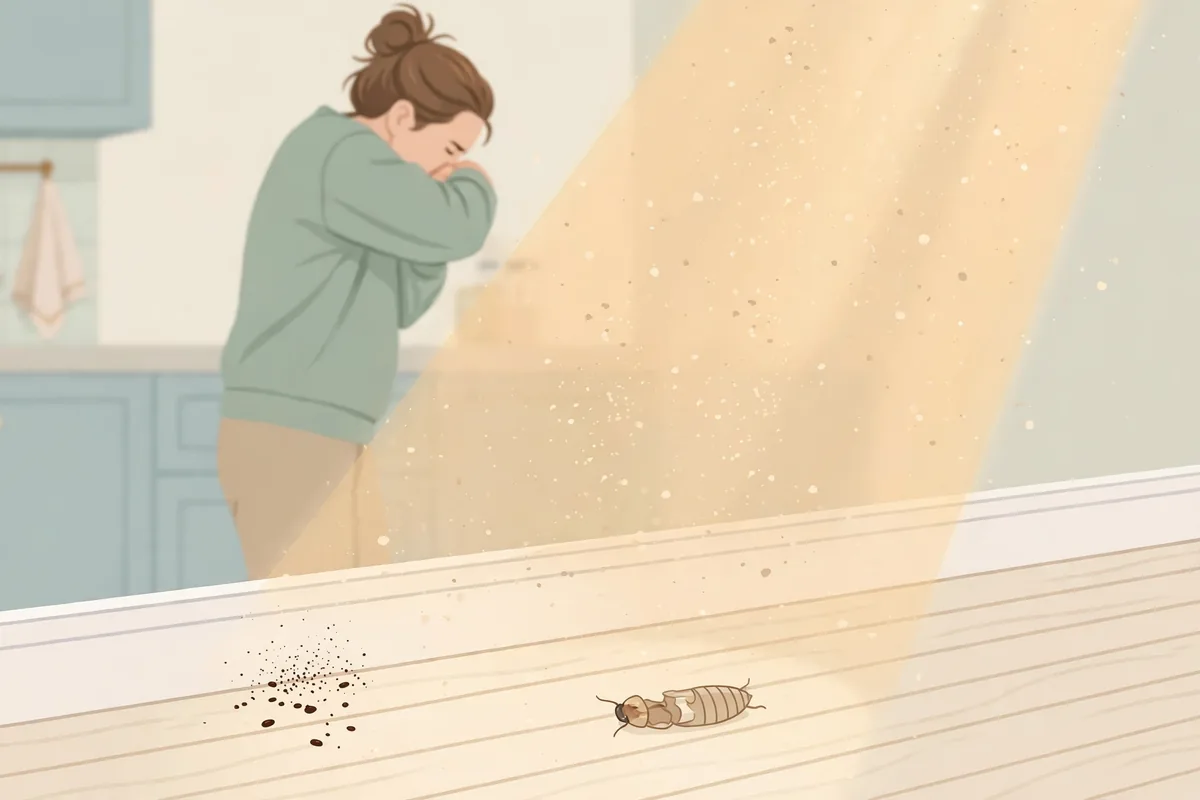
Studies show that cockroach allergy affects 17 to 41 percent of the population in the United States, and it is one of the most common causes of year-round allergy and asthma. Common symptoms are sneezing, a runny or stuffy nose, itchy red or watery eyes, an itchy nose or throat, and a cough. In people with asthma, exposure can bring on wheezing, chest tightness, shortness of breath, and nighttime symptoms. Children who are allergic to cockroaches and exposed to them need hospital care for asthma more often than other children with asthma.
The part people miss is that killing the roaches does not remove the allergen. The residue stays in cabinets, floor joints, and harborages until it is physically cleaned out. Washing affected surfaces with soapy water and a clean rinse removes cockroach allergens. A cleaner that is not rinsed off only spreads them around. If breathing symptoms get worse at home, especially at night or in the kitchen, talk to a doctor about whether cockroach allergens could be a factor.
Who Is Most at Risk?
Risk is not spread evenly across a household. Babies and young children face the most exposure. They crawl on floors where droppings and allergens settle, put hands and toys in their mouths, and have developing lungs. Children living in heavily infested homes are more likely to develop asthma symptoms and to miss school days because of them.
People who already have asthma or allergies come next. For them, cockroach allergens are a direct trigger, and a flare-up can follow a rise in exposure. Older adults with breathing conditions face the same problem. Healthy adults without allergies may notice nothing at all from a small infestation, which is one reason roach problems go unaddressed for so long.
Pets sit in a different category. A dog or cat that eats a cockroach will usually be fine, though it may get a stomach upset. The bigger risk to pets is not the roach but the control products: gel baits, traps, and sprays can harm pets if eaten, so place them where pets cannot reach and follow the label. Do not leave pet food out overnight, since it attracts roaches to the bowl.
As for species, the roach most American homes meet indoors is the German cockroach, which lives only in association with people and breeds in kitchens and bathrooms. It is the most common cockroach in the United States. That does not make it more venomous than the others, because none of them are venomous. It makes it the species most likely to be living close to your food and your children, which is why the allergy link is strongest with German cockroaches. The differences between the common species are covered in the German and American cockroach comparison.
Food a Cockroach Touched: What to Do
The morning-after question is practical, not theoretical. If a cockroach walked across uncovered food, throw that food out. The bacteria it may have left behind cannot be seen, and reheating does not reliably make the question go away. The same applies to uncovered drinks left out overnight and to pet food in an open bowl.
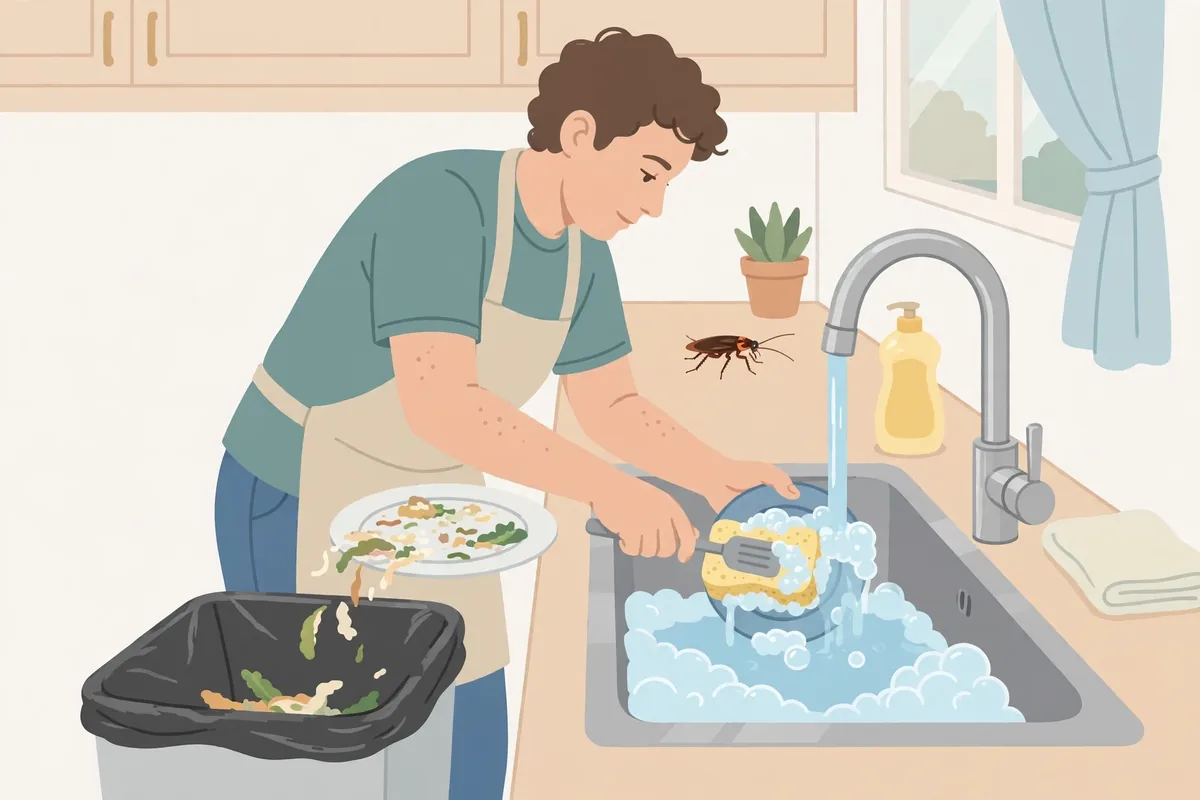
Food in sealed containers or unopened packages is a different case. Wipe the outside of the container with soap and water before opening it. Wash any dishes, utensils, and cutting boards the roach may have crossed, and wipe down the counter or shelf with soap and water. This is the same cleaning that removes allergens, so one round of washing handles both problems.
After that, the useful response is prevention rather than worry about one meal. Store food in sealed containers, do not leave dirty dishes out overnight, and fix the leaks that give roaches water. The kitchen is where food contact matters most, and getting rid of cockroaches in the kitchen covers the cleaning and exclusion steps in detail.
What to Do Next
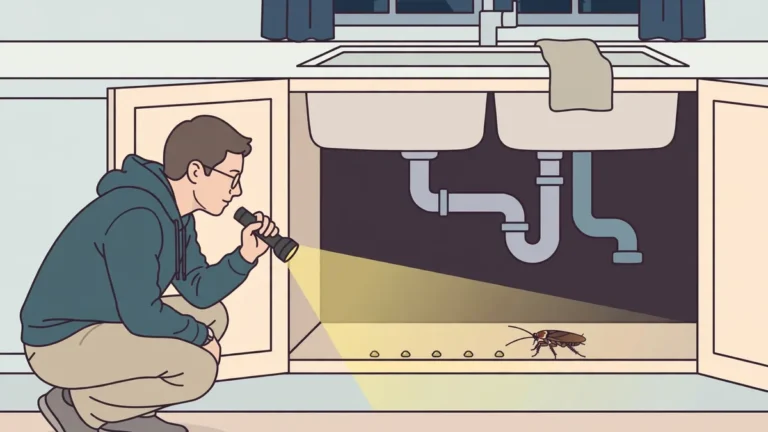
Knowing the risks is only useful if it leads to the next step. If you have seen roaches more than once, start by confirming how far the problem goes. The signs of a cockroach infestation show what to look for beyond a single sighting: droppings, egg cases, shed skins, and that musty smell.
Then follow a plan instead of reacting to each sighting. How to get rid of cockroaches starts with identifying the species and works through bait, exclusion, and monitoring. If the infestation is severe, if roaches keep returning after correct baiting, or if someone in the home has asthma that worsens indoors, calling a professional is the rational next step, not a defeat. The risk does not fall because the roaches are out of sight. It falls when the population, the food contact, and the allergen dust are all dealt with.

Nathan Ellis
Nathan Ellis writes about cockroaches and other indoor pests that commonly appear in homes. His work explains different species, their habits, and the signs they leave behind. He enjoys turning detailed research into helpful...
View all guides →