Cockroach Life Cycle: Eggs, Nymphs and Adults
One German female produces about 200 eggs, and the cycle takes about 100 days. See the full cockroach life cycle by species, and why treatment takes weeks.


In this guide
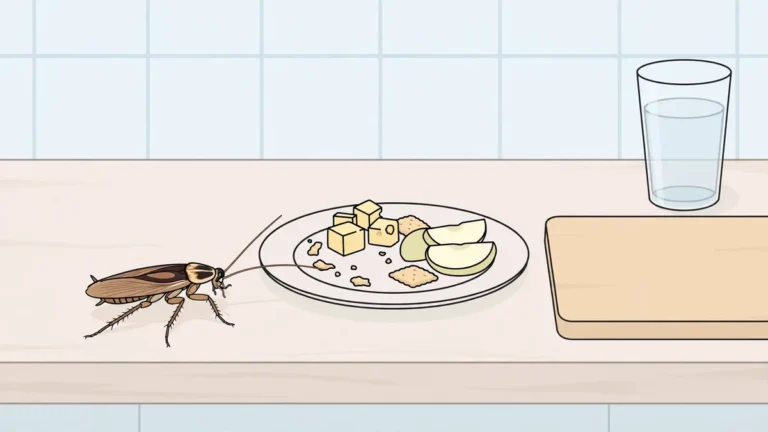
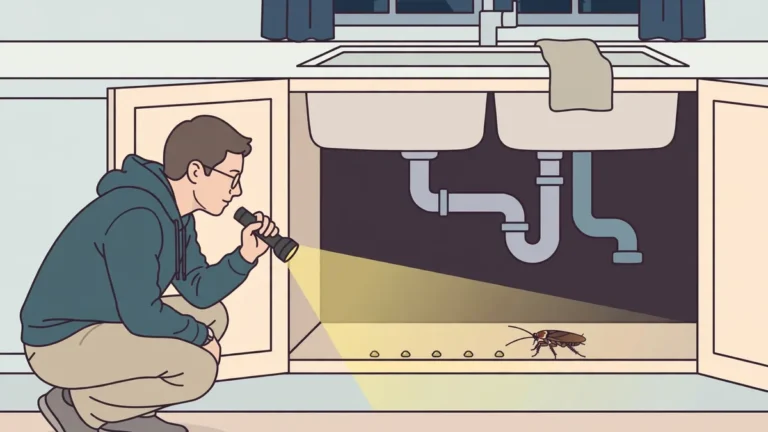
You saw one cockroach, probably at night in the kitchen, and now you want to know what it means. One roach is rarely one roach, and the reason is the life cycle: egg, nymph, adult, with no pupal stage in between.
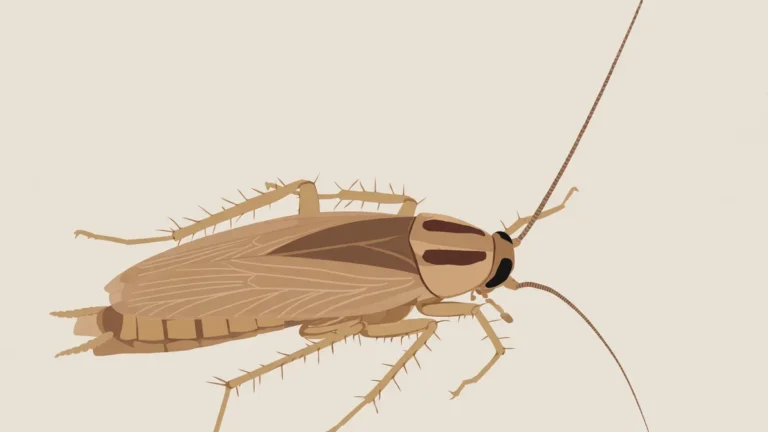
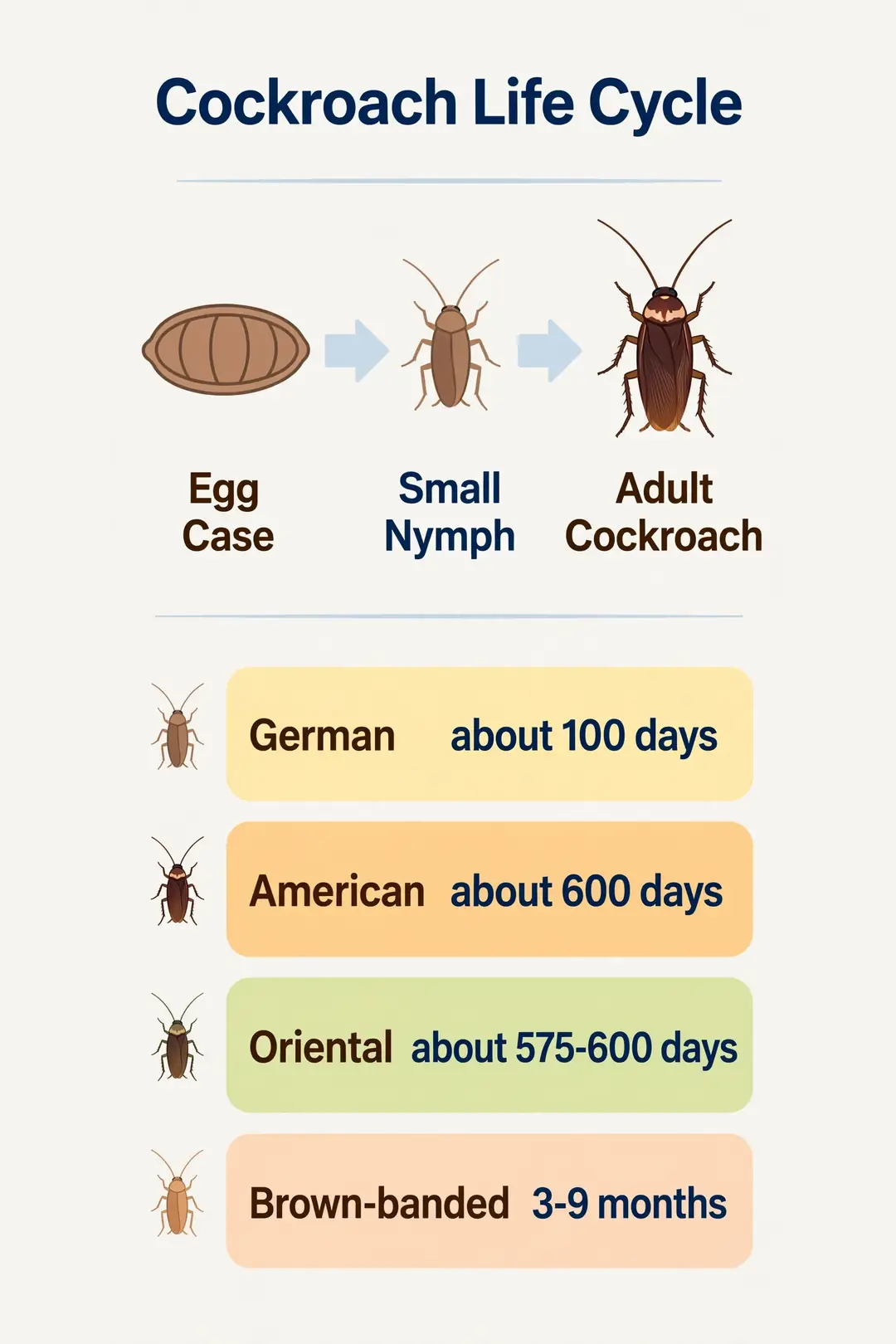
A German cockroach, the small tan roach most kitchens see, goes from egg to adult in about 100 days. One German female produces about 200 eggs in her lifetime. The big American cockroach is slower, taking about 600 days to reach adulthood, but it lives longer once it gets there.
This article walks the three stages in order, gives the timing for the four common species, and shows why the cycle is the reason treatment takes weeks.
Quick Answer: A cockroach goes through three stages: egg, nymph, and adult. There is no pupal stage. A German cockroach goes from egg to adult in about 100 days, and one German female produces about 200 eggs in her lifetime. An American cockroach takes about 600 days to reach adulthood.
The Life Cycle in 30 Seconds
The whole cockroach life cycle fits in one table. The figures below are for the German cockroach, the fast breeder most homes see. This three-stage pattern is called incomplete metamorphosis, which means there is no pupal stage between nymph and adult.
| Stage | What happens | How long |
|---|---|---|
| Egg (ootheca) | The female carries the case until the eggs hatch | 20-30 days |
| Nymph | The young roach grows by molting, shedding its shell several times | about 50-60 days |
| Adult | The roach mates and the female lays the next egg cases | 20-30 weeks (female) |
That is the fast end of the scale. An American cockroach takes about 600 days to reach adulthood, and then lives about 1-2 years as an adult. Add the German figures together and a German female lives roughly 8-10 months from egg to death.
Stage 1: Eggs
Every cockroach starts in an egg case called an ootheca. It is a small, hard capsule that holds a row of eggs, and the female either carries it or hides it somewhere safe. How she handles the case decides how fast the roaches spread.
What Does an Egg Case Look Like?
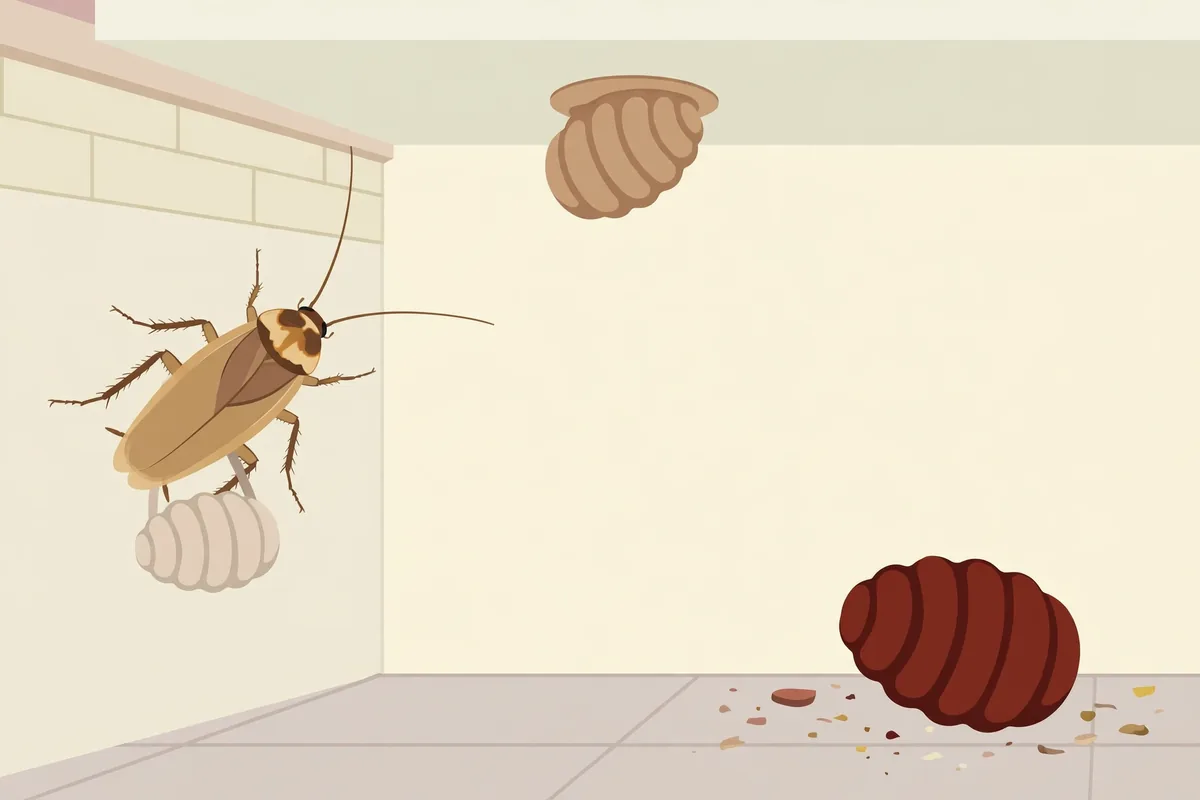
An egg case is a small, purse-shaped capsule, darker than the roach that laid it. A German case is light beige. An American case is brown when it is laid and turns black within a day or two. An Oriental case is dark red-brown. A brown-banded case is light brown and darkens soon after it is laid. A case is easy to miss because it is small and dark, and females hide it where you rarely look.
A German case is about 8 mm long, roughly the size of a grain of rice, and an American case is about the same length. An Oriental case is about 3/8 inch long, and a brown-banded case is about 1/4 inch long.
Where you find a case depends on the species. A German female carries hers, so you will usually see the case on the roach herself. An American female drops or glues hers in a crack or crevice near food. An Oriental female drops hers in debris or food in a sheltered place. A brown-banded female glues hers to ceilings, beneath furniture, or inside closets and other dark places.
To match the case to the adult roach that laid it, compare it with what a cockroach looks like for each species.
How Many Eggs, How Long to Hatch?
The number of eggs in one case and the time they take to hatch differ by species. The table below gives the figures for the four common ones.
| Species | Eggs per case | Cases per female in her lifetime | Carried or deposited? |
|---|---|---|---|
| German | 30-40 | 4-8 | Carried until shortly before hatching |
| American | 14-16 | No single figure | Carried briefly, then dropped or glued |
| Oriental | about 16 | 8 on average | Carried 12 hours-5 days, then dropped (does not glue) |
| Brown-banded | about 13 on average | about 14 | Carried about 30 hours, then glued |
Two notes on the table. Sources disagree too widely on the American female’s lifetime case count to give one figure, so that cell carries no figure. Other counts put the brown-banded case at 14-18 eggs, against the average of about 13.
The carried case is the German roach’s advantage. She keeps the eggs with her until they are ready to hatch, so the whole batch stays warm and safe. The other species leave their cases in cracks, debris, or on ceilings, where the eggs wait weeks or months to hatch. German eggs hatch in 20-30 days. American eggs take about 6-8 weeks. Oriental eggs take 42-81 days. Brown-banded eggs take 37-103 days.
Stage 2: Nymphs
A nymph is a young cockroach. It looks like a small adult, but it has no working wings and it cannot lay eggs. It grows by molting, which means it sheds its outer shell and grows a bigger one, over and over, until the final molt turns it into an adult.
The nymph stage is the longest part of the cycle for most species, and it is the stage you see most. Nymphs are smaller than adults and they stay close to shelter, which is why a small wingless roach in a kitchen is almost always a nymph, not a new species. A newborn German nymph is about 3 mm long.
A separate guide will show how to tell a nymph from a bed bug or a beetle.
How Many Molts?
Each molt is one growth step, called an instar. The number of molts differs by species. German roaches molt 5-6 times, most frequently 6. American roaches molt 6-14 times. Oriental roaches molt 7-10 times. Brown-banded roaches molt 6-8 times.
Fewer molts is one reason the German roach grows up so fast. An American nymph takes about 6-12 months to reach adulthood, and an Oriental nymph takes about 1 year.
Why Is That Roach White?
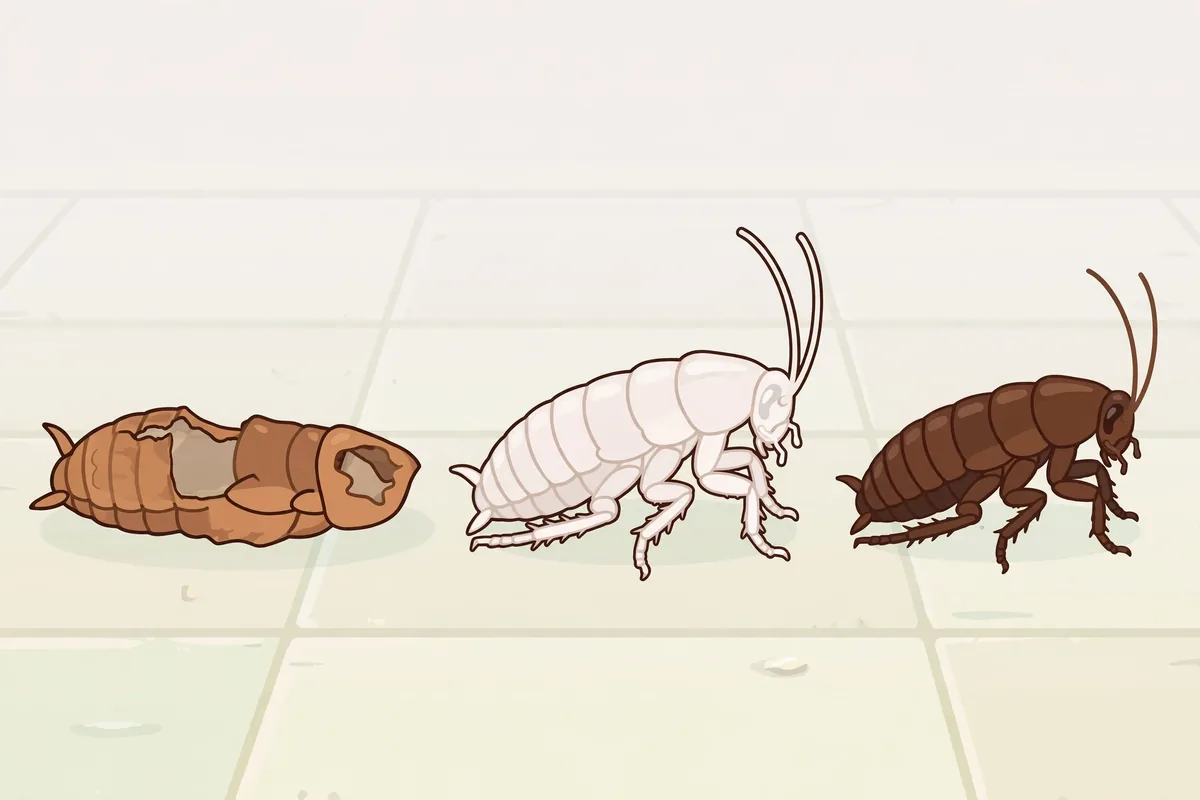
A white roach is a roach that has molted very recently. Right after molting, the new shell is soft and white, and it hardens and darkens within a few hours. It is not a different species, and it is not an albino roach. It is the same roach, caught in the hours after it shed its old shell.
Stage 3: Adults
After the final molt, the roach is an adult. Adults mate soon after, and the female starts making egg cases. A German female makes 4-8 cases in her lifetime. An Oriental female makes about 8. A brown-banded female makes about 14.
Adult lifespans differ as much as the rest of the cycle. A German female lives 20-30 weeks as an adult, while a male lives 90-140 days. An American adult lives about 1-2 years. An Oriental female lives 5-26 weeks. A brown-banded female lives 13-45 weeks.
The adult stage exists to make the next egg case, and that is the loop that matters. Killing the adults you can see never ends an infestation on its own, because the cases they already laid are still waiting to hatch.

How Long Does the Whole Cycle Take?
Here is the full cockroach life cycle timing for the four common species, in one table. “Adult lifespan” always means the time from the final molt to death. “Egg-to-adult” always means the time from the egg being laid to the final molt.
| Species | Egg incubation | Nymph stage | Instars | Adult lifespan | Egg-to-adult total |
|---|---|---|---|---|---|
| German | 20-30 days | about 50-60 days | 5-6, most frequently 6 | 20-30 weeks (female); males 90-140 days | about 100 days |
| American | about 6-8 weeks | about 6-12 months | 6-14 | about 1-2 years | about 600 days |
| Oriental | 42-81 days | about 1 year | 7-10 | 5-26 weeks (female) | about 575-600 days |
| Brown-banded | 37-103 days | 8-31 weeks | 6-8 | 13-45 weeks (female) | 3-9 months |
The German roach is the fastest for three reasons. It has fewer molts, the female carries the case until it hatches, and it thrives in warm kitchens. Warmer temperatures shorten development, and heat and moisture together speed growth and reproduction. The German roach grows fastest at around 80 degrees F.
The numbers vary because temperature, food, and water change how fast a roach grows. The table gives typical indoor figures. In a cool room, every stage takes longer. In a warm, damp kitchen, the German cycle can run at its fastest, which is why a kitchen infestation grows faster than one in a cool basement.
The American and Oriental roaches take about 600 days to reach adulthood, which is why a big roach in a basement is often months old before you ever see it. Their slow cycle is also why they take longer to clear: the nymph stage alone runs for months, and new adults keep appearing long after the first treatment.
One Roach Means How Many?
Take one German female and do the math. She makes 4-8 egg cases in her lifetime, and each case holds 30-40 eggs. Take the middle of both ranges, 6 cases at about 35 eggs each, and the total comes to about 210 eggs. That matches the lifetime figure: one German female produces about 200 eggs in her lifetime.
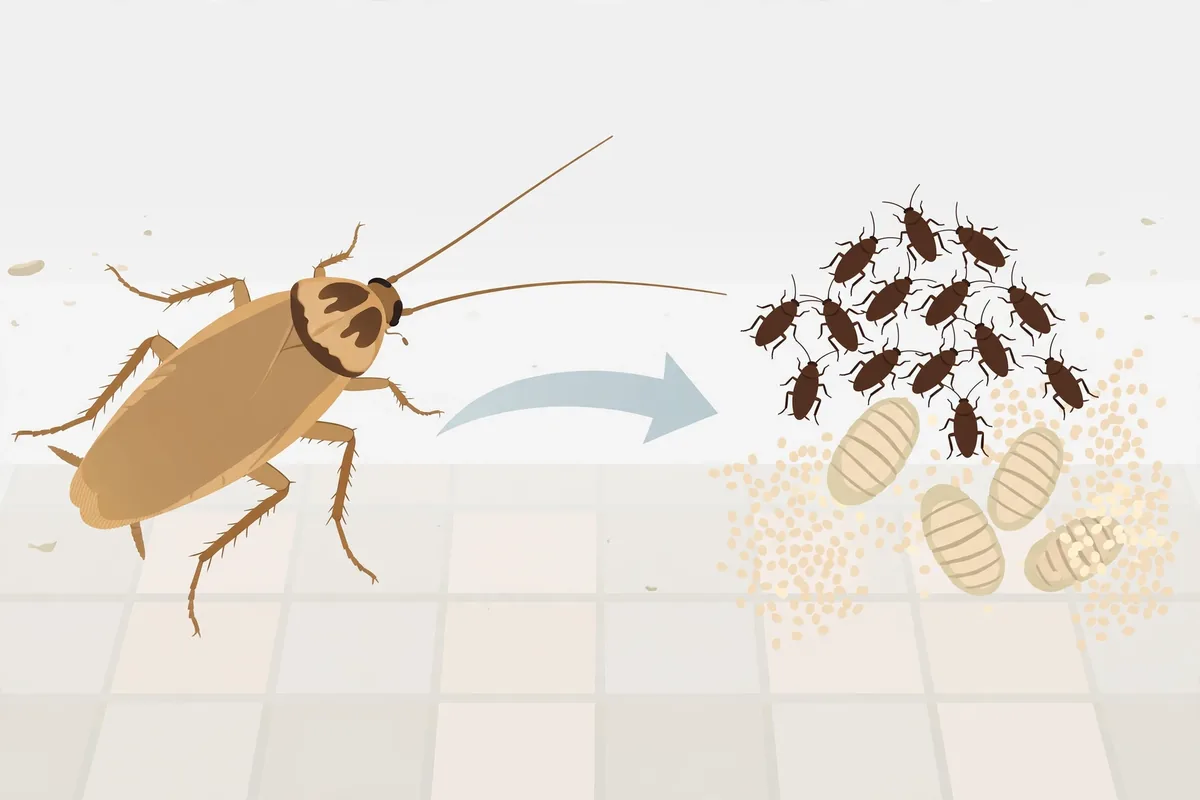
Not every egg becomes an adult, and no honest number exists for how many survive. But the scale is the point. One female’s output is measured in the hundreds, and her daughters mature in about 100 days. A German roach seen today can have adult daughters in about 100 days, and the population grows from there.
In a growing infestation, about 80% are nymphs and about 20% are adults. For every adult you see, there are about four nymphs you do not. That is why the roaches you see are usually small and wingless, and why the adults you see are only a small part of what is there.
One roach seen in daylight is a stronger warning. Cockroaches come out at night and hide during the day, so a roach out in daylight usually means there are a lot of them around. If you see cockroaches during the day, the population is probably large.
The other species multiply more slowly, but the numbers are still large. An American female produces about 150 young in her lifetime. An Oriental female produces about 200 offspring. A brown-banded female produces about 600 descendants in a year.
Why Treatment Takes Weeks
Three timing reasons, all from the cycle above.
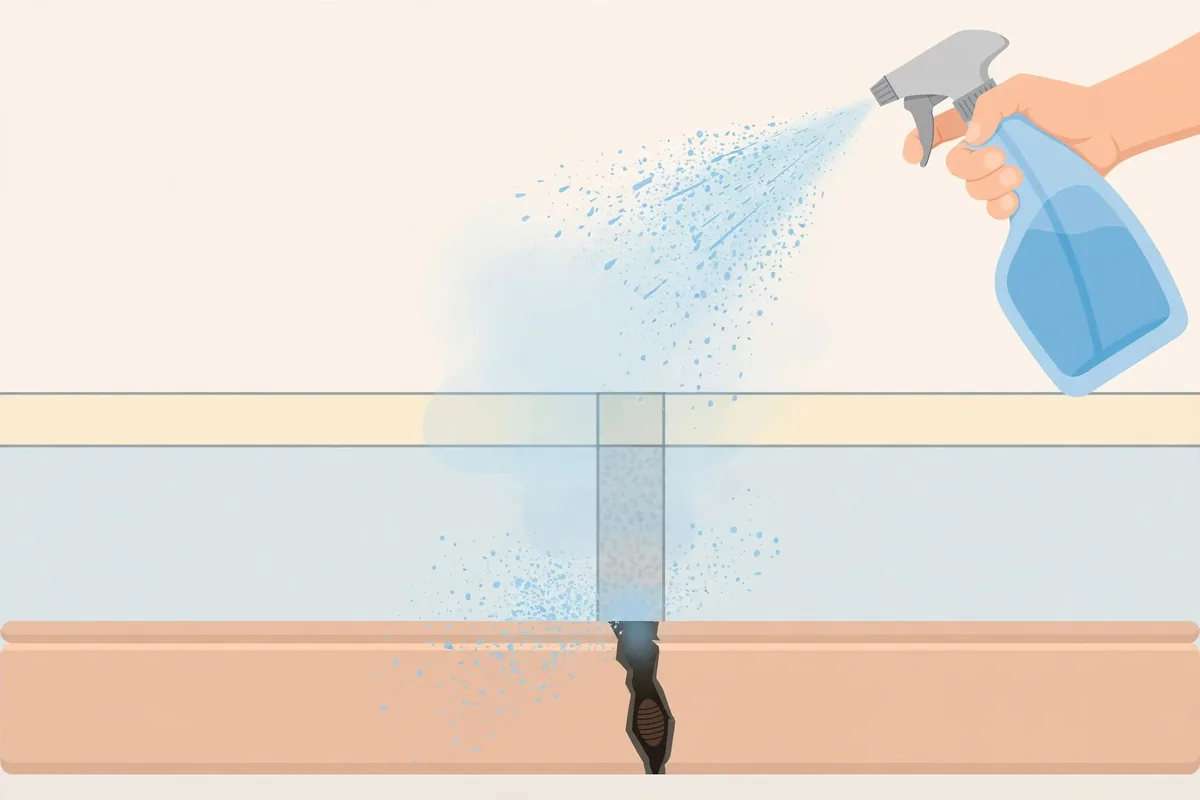
First, the egg cases are laid where sprays cannot reach. Females tuck cases into cracks and crevices, and the nymphs hatch after the treatment has worn off. A spray that kills the roaches out in the open does nothing to the cases hidden behind the wall.
Second, nymphs keep maturing on different schedules. A German nymph takes about 50-60 days to become an adult, an American nymph takes about 6-12 months, and an Oriental nymph takes about 1 year. With many overlapping generations in one home, new adults keep appearing for weeks after the first treatment.
Third, bait has to stay out across the whole cycle, because it has to reach the roaches that hatch after the first round. That is why one bait placement does not end it, and why the method matters as much as the timing.
A German infestation comes back faster because the cycle is shorter. An American or Oriental infestation takes longer to build and longer to clear, because the nymph stage alone runs for months.
The full removal plan is how to get rid of cockroaches. For bait, cockroach gel bait placement shows where to put it, and if roaches stop taking the bait, cockroach bait aversion explains why that happens.
What to Do Next
If you need to remove them, follow how to get rid of cockroaches.
If the bug you saw was small and wingless and you are not sure what it is, compare it with what a cockroach looks like.
If you found an egg case, check the signs of a cockroach infestation to see what else to look for.

Nathan Ellis
Nathan Ellis writes about cockroaches and other indoor pests that commonly appear in homes. His work explains different species, their habits, and the signs they leave behind. He enjoys turning detailed research into helpful...
View all guides →