How to Get Rid of Cockroaches: The Complete Home Guide
How to get rid of cockroaches at home with gel bait, sanitation, sealing and traps. Identify German and American roaches and know when to call a pro.

In this guide
Cockroaches anywhere beyond a single kitchen sighting need a whole-home plan, not a can of spray. The most important first step is identifying which species you are dealing with, because the right method depends on it.
The plan itself is straightforward: cut off their food and water, place bait where they travel, seal the gaps they use to get in, and monitor with traps. Expect a visible drop in activity within one to two weeks, and full elimination in four to eight weeks. Before you start, it is worth knowing the health risks of cockroaches: they rarely bite, but the bacteria they carry onto food and the allergens in their droppings are the real concern.
Not sure you even have roaches yet? Check the signs of a cockroach infestation first. Otherwise, start with the species check below.
Quick answer: To get rid of cockroaches, identify the species, remove food and water sources, apply gel bait in cracks and crevices where roaches travel, seal entry points, and monitor with sticky traps. Skip foggers and never spray near bait. Expect visible results in one to two weeks and complete elimination in four to eight weeks.
Which Cockroach Do You Have? Start Here
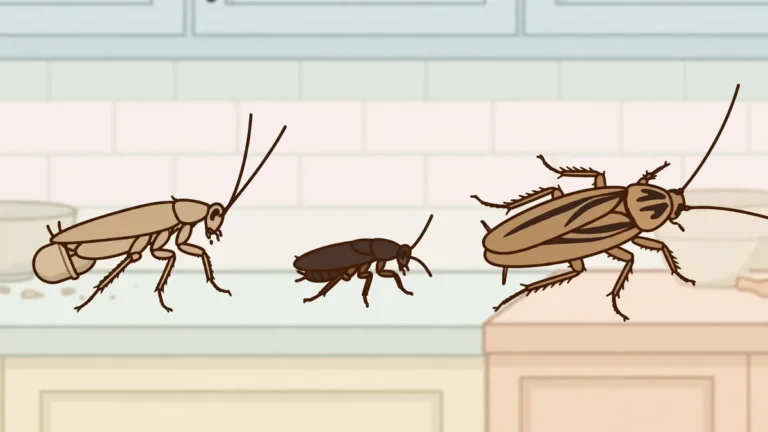
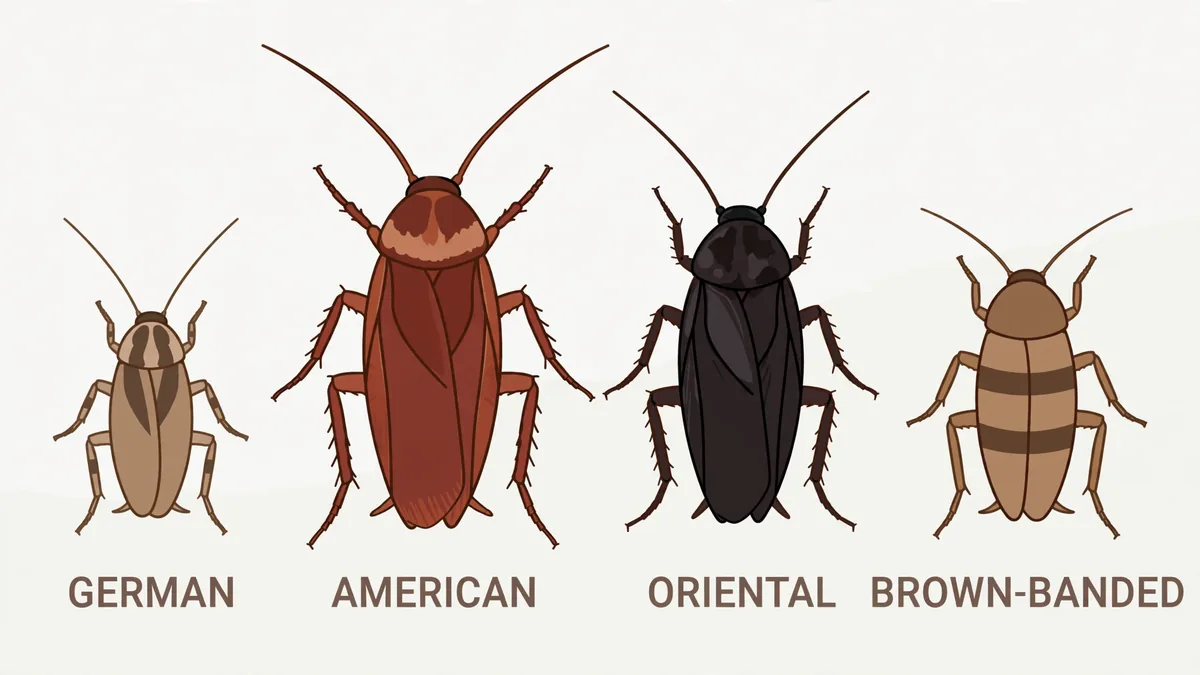
Most people call every roach a German cockroach. That mistake leads to the wrong treatment. An Asian cockroach flies toward light, a German one stays indoors, and an American cockroach probably came up through a drain. Two minutes of identification saves weeks of wasted effort.
| Species | Size | Where you’ll see it | What changes |
|---|---|---|---|
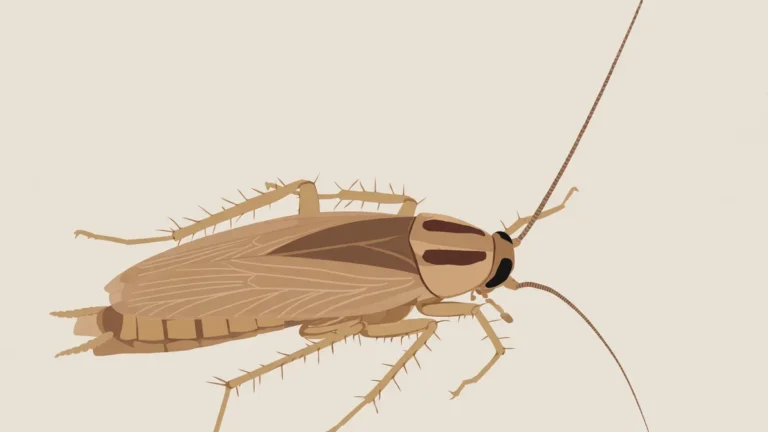
| German cockroach | About 1/2 inch; light brown with two dark stripes behind the head | Kitchens, bathrooms, near appliances and plumbing | Indoor treatment; bait-focused plan |
| American cockroach | 1 to 1.5 inches; reddish-brown with a pale mark behind the head | Basements, drains, sewers | Perimeter and drain work matter most |
| Oriental cockroach | About 1.25 inches; dark brown to black, glossy | Damp basements, ground-level drains | Moisture control plus exterior treatment |
| Brown-banded cockroach | About 1/2 inch; light brown | Bedrooms, living rooms, up high near electronics | Treat elevated hiding spots, not only the kitchen |
Sizes (German 10 to 15 mm; American 2.5 to 3.8 cm; Oriental about 31 mm). Can’t tell which one you have? Start with the general plan below, it works against all four, and the species only changes the emphasis. If you’re choosing between the two most common ones, comparing German and American cockroaches side by side settles it.
The 5-Step Whole-Home Plan
Work the steps in order. Each one makes the next more effective: bait works better when competing food is gone, and sealing works better once you know where they’re traveling.
What you need:
- Gel bait (follow the product label)
- Sticky monitoring traps
- Caulk and steel wool or foam sealant
- Airtight food containers
- Basic cleaning supplies
Step 1. Cut Off Food and Water
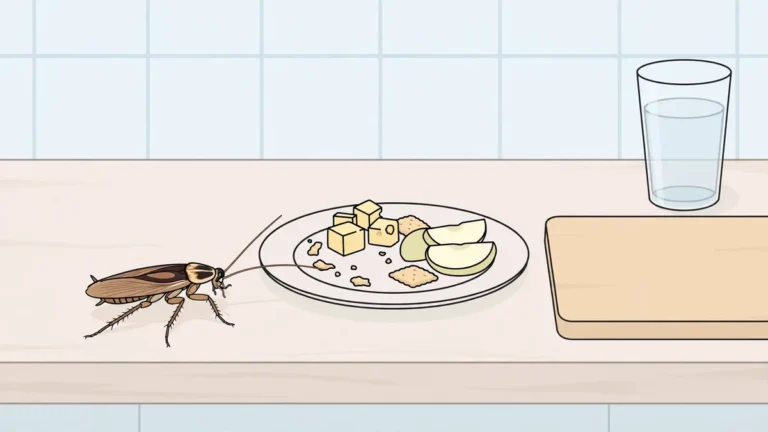
Sanitation is the foundation. Without removing what attracts them, no treatment provides lasting results. Wipe counters and stovetops every night, move pantry goods into sealed hard containers, never leave dishes in the sink overnight, and take the garbage out daily in cans with tight lids.
Water matters even more than crumbs. Cockroaches can survive a month without food but only about a week without water, so fix dripping faucets, dry sinks before bed, and repair leaking pipes before you buy anything else.
Step 2. Place Bait Where They Travel
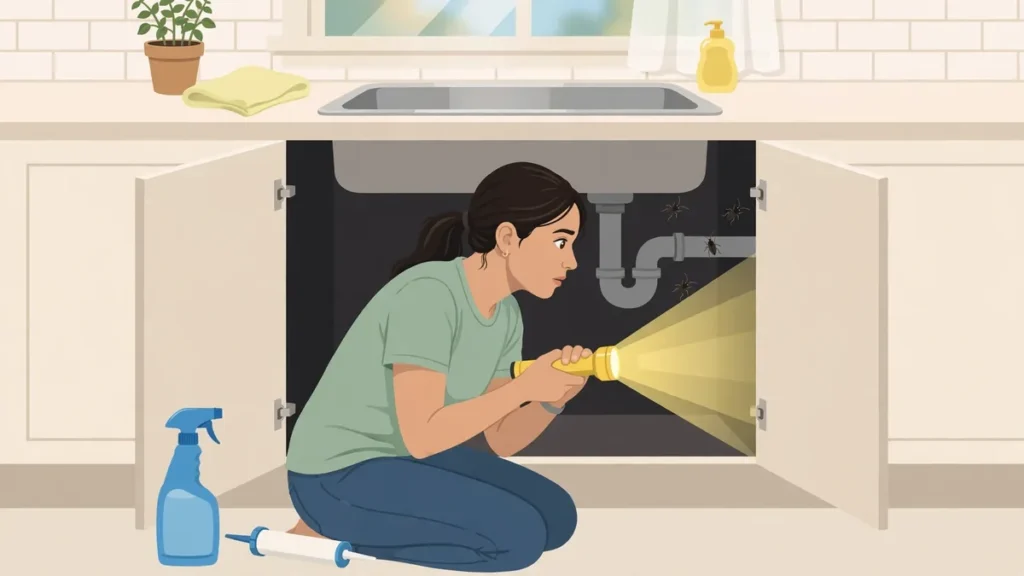
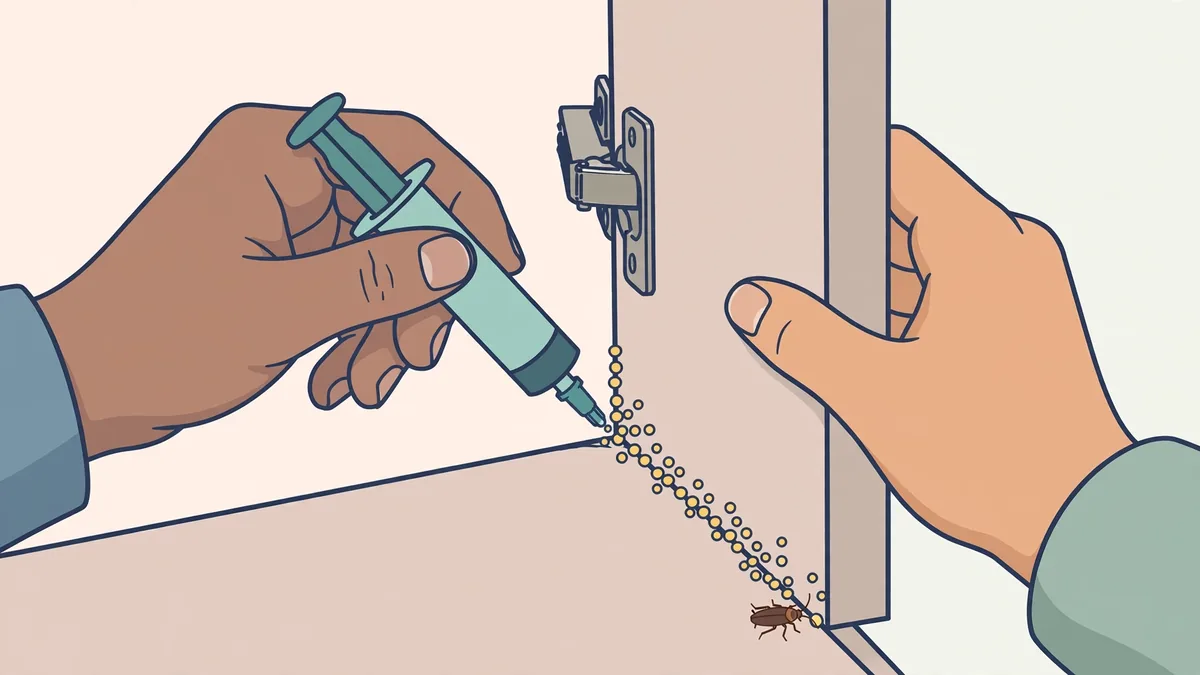
Gel bait is the core of the plan. It works through secondary kill: roaches that feed on poisoned roaches die too. Place small dots in the cracks, crevices, and corners where you’ve seen activity, behind appliances, under sinks, along baseboards and plumbing penetrations, not out in the open where roaches rarely walk.
One rule decides whether bait works: never spray insecticide near it. Spray residue drives roaches away from bait placements and can scatter them into new rooms, which is why sprays should not be your primary treatment.
Step 3. Seal Entries and Fix Moisture
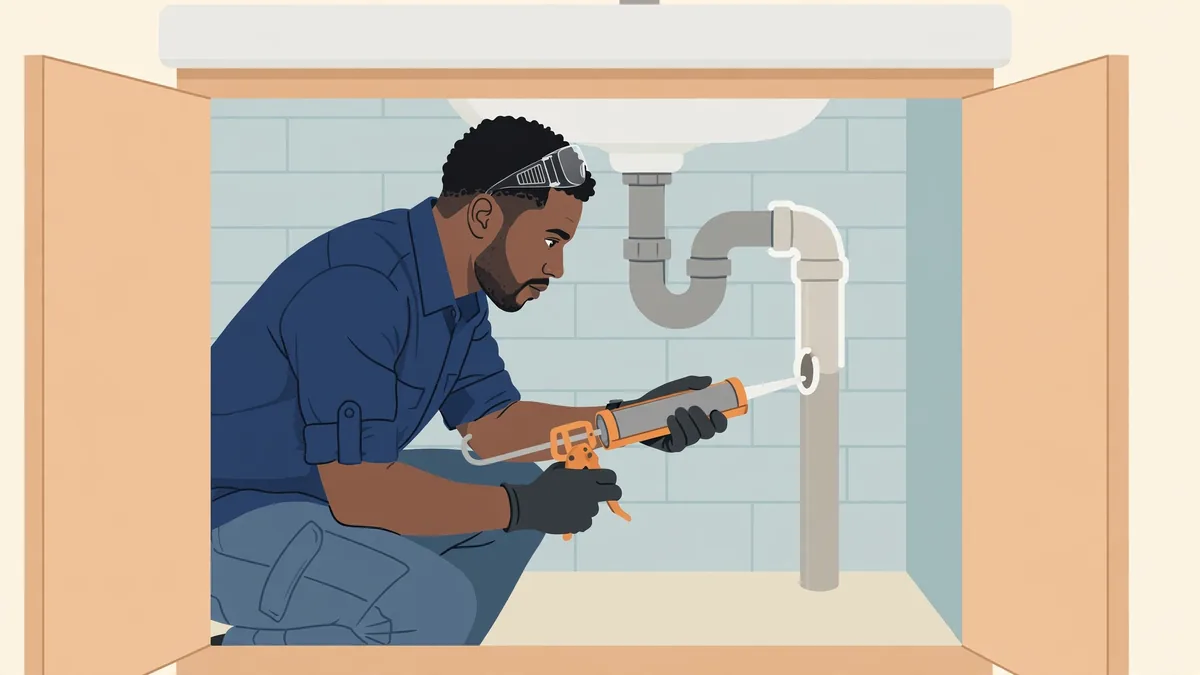
Roaches get inside through surprisingly small gaps. Caulk cracks and crevices, fit door sweeps, repair torn window screens, and fill gaps around pipes with steel wool or foam sealant. Keep drain traps filled with water so sewer roaches can’t come up through dry drains.
Step 4. Monitor With Sticky Traps
Traps don’t control roaches. They tell you where the roaches are and whether your plan is working. Slide sticky traps under sinks, behind appliances, and along baseboards, then check them after 24 to 48 hours. The number and location of catches tells you where to focus the bait.
Step 5. Follow Up on Schedule
Recheck traps weekly and refresh bait as it dries out. Replace placements every few months or sooner if they harden. Steady follow-up is what separates a plan that works from one that stalls halfway.
If the kitchen is the main battlefield, that room’s hiding spots and routines deserve the full-detail treatment.
Bait vs Spray vs Traps: What Actually Works
Not every method pulls its weight. The common options compare as follows, so you spend effort only on what works.
| Method | How it works | Best for | Watch out |
|---|---|---|---|
| Gel bait | Slow-acting poison carried back to the nest; secondary kill | German roaches, kitchens, apartments | Useless if you spray repellent nearby |
| Boric acid / desiccant dust | Thin layer in voids; ingested while roaches groom | Wall voids, behind outlets, under appliances | A thick pile gets avoided, a thin layer is the point |
| Insect growth regulators | Stop nymphs from maturing; break the reproductive cycle | Combined with bait for heavy infestations | Don’t kill adults on their own |
| Contact sprays | Kill roaches on contact | One visible roach right now | Scatter roaches and contaminate bait, never the main plan |
| Foggers / bug bombs | Fill the room with pesticide | Nothing reliably | Rarely reach harborages; can spread contamination |
| Sticky traps | Catch roaches and show where activity is | Monitoring progress | Not a control method |
The pattern across every reliable source is the same: bait plus sanitation plus exclusion does the work, while sprays and foggers mostly get in the way.
What Doesn’t Work: Skip These
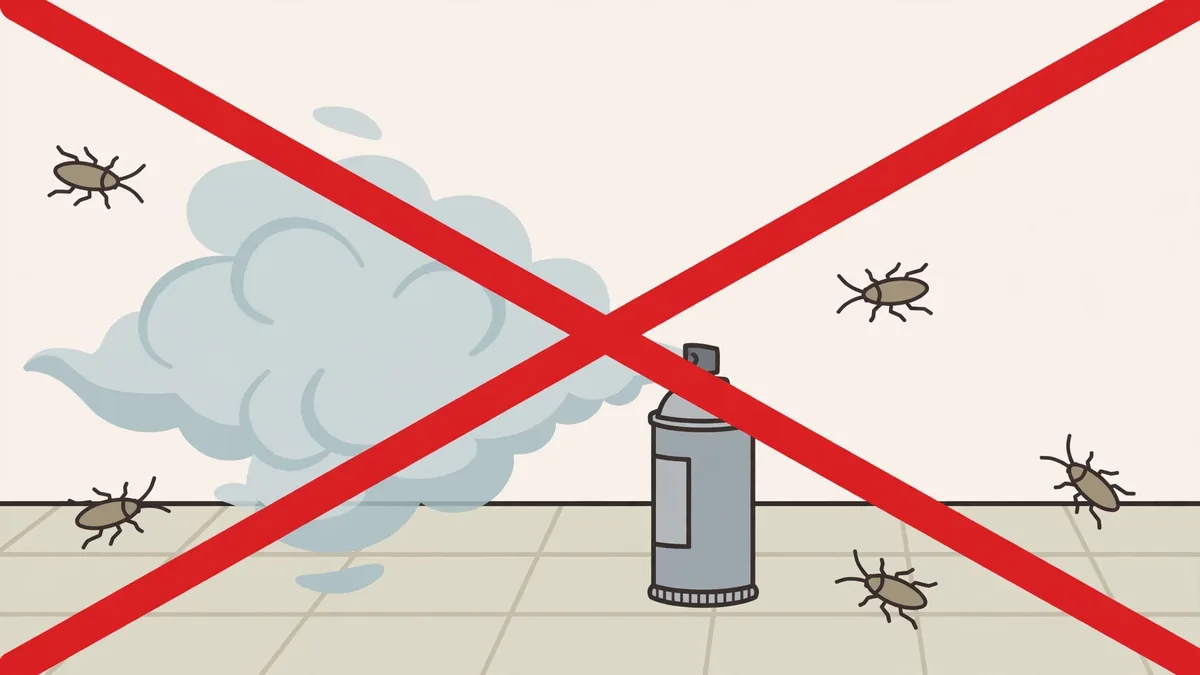
- Bug bombs and foggers. They rarely reach the cracks where roaches actually live. The fallout can push roaches into new rooms and ruin your bait placements. Pest professionals consider them counterproductive.
- Spraying repellent insecticide around bait. The residue makes roaches avoid the bait entirely, which wastes your best weapon.
- One big blob of bait in the open. Roaches travel along edges and cracks. Bait belongs where they walk, in small placements, not as a decoration in the middle of the floor.
- Treating outdoor roaches with indoor spray alone. American and Oriental roaches coming up through drains need drain and perimeter work. Another round of kitchen spraying won’t touch the source.
DIY or Call a Professional?
Most early infestations in a single-family home are very DIY-able with the plan above. Call a professional when the infestation spans multiple rooms, when trap counts haven’t moved after about three weeks of steady effort, or when you suspect a heavy German infestation inside wall voids, those need commercial tools and access you don’t have.
In a multi-unit building, coordinate with neighbors and management. Shared walls and plumbing let roaches reinfest from adjacent units no matter how well you treat your own, so solo treatment often fails through no fault of the method.
How Long Until They’re Gone?
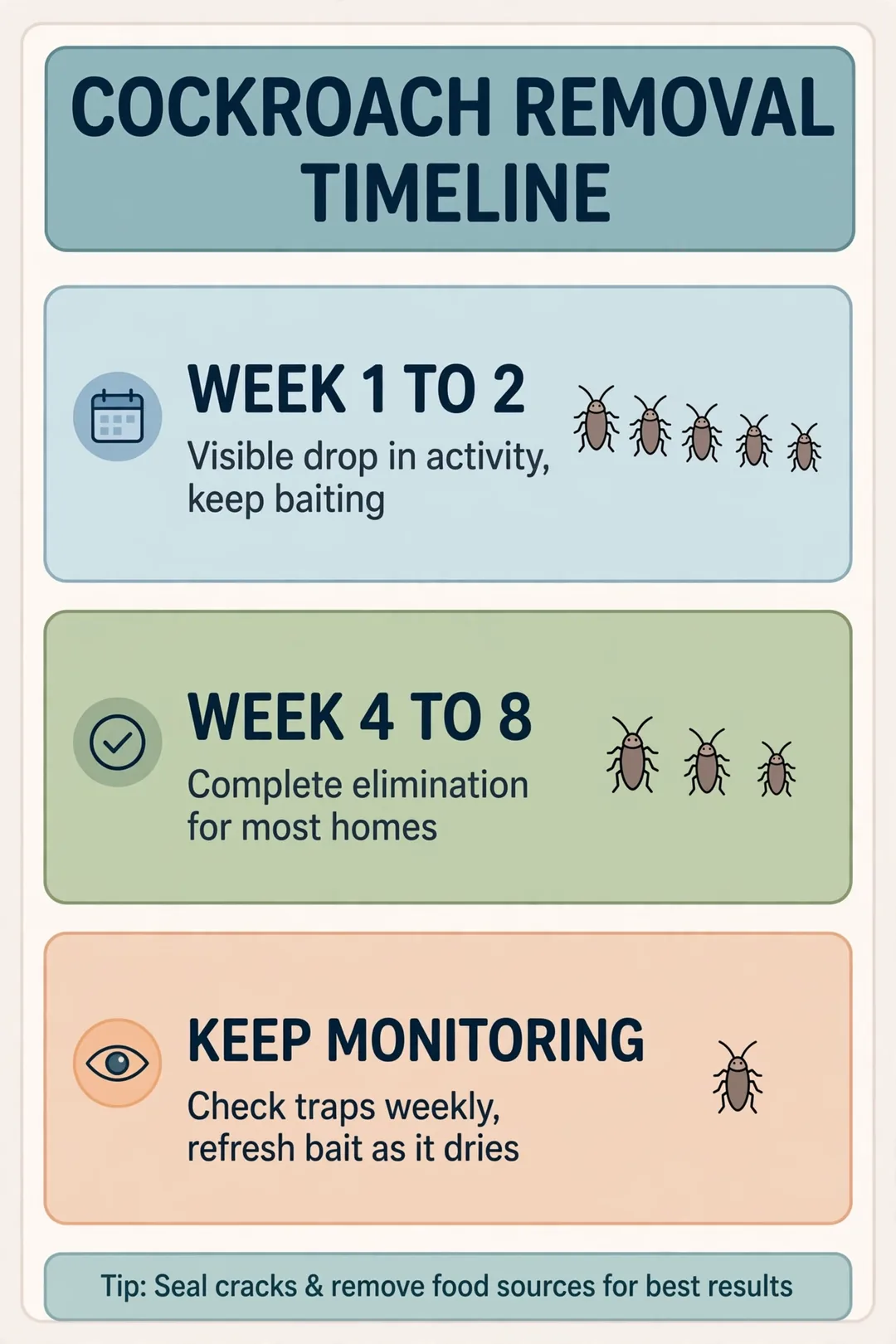
With the plan above, expect a significant drop in activity within one to two weeks. Complete elimination typically takes four to eight weeks depending on severity and species, German cockroaches clear faster thanks to their shorter life cycle, while American cockroaches can need several months of steady treatment.
Judge progress by trap counts, not sightings. A roach wandering out in daylight often means the treatment is flushing them from hiding, not that it’s failing. If bait worked well and then mysteriously stopped, that’s a documented failure mode called bait aversion, it gets its own guide in this cluster.
Special Cases: Kitchen and Apartment
If the kitchen is where you see them most, pair this plan with a kitchen-specific routine covering that room’s hiding spots, cleaning, and bait placements.
Renters, or anyone avoiding harsh chemicals, can prevent roaches with sealing, desiccant dust, and traps. No spray required.
Start with identification, work the five steps in order, and let the traps tell you when you’ve won.

Nathan Ellis
Nathan Ellis writes about cockroaches and other indoor pests that commonly appear in homes. His work explains different species, their habits, and the signs they leave behind. He enjoys turning detailed research into helpful...
View all guides →