5 Ways to Get Rid of Ants in Your Yard Without Damaging the Lawn
Learn how to get rid of ants in your yard with lawn-safe methods that target colonies without damaging healthy grass.

In this guide
- 1. Use Slow-Acting Bait When Ants Are Spread Across the Lawn
- 2. Target a Single Problem Nest Instead of Treating Every Blade of Grass
- 3. Use the Two-Step Method When Fire Ants Cover More Than One Part of the Yard
- 4. Remove the Food and Water That Keep Ant Trails Active
- 5. Fix Thin, Bare Lawn Areas That Make Ant Mounds Easier to Establish
- Choose the Treatment Based on What You Actually See in the Yard
- Skip These Popular Ant Remedies If Protecting the Grass Is the Priority
- Make the Yard Less Attractive After the Colony Is Under Control
- Call a Professional When the Lawn Problem Is Bigger Than a Few Nests
- Final Thoughts
Ant mounds can make a healthy lawn look untidy, interfere with mowing, and become a bigger problem when the ants sting or repeatedly move toward the house. The tricky part is getting rid of the problem colonies without scorching the grass, damaging nearby plants, or treating more of the yard than necessary.
If you want to know how to get rid of ants in your yard without damaging the lawn, focus on the colony rather than every worker ant you can see. One nest in a corner of the lawn needs a very different response from dozens of colonies spread across the grass.
I would start by watching the ants for a few minutes before applying anything. Follow active trails toward soil openings, mounds, pavement edges, landscape beds, or other places where workers disappear. Locating the source often saves you from treating healthy turf that was never part of the problem.
1. Use Slow-Acting Bait When Ants Are Spread Across the Lawn
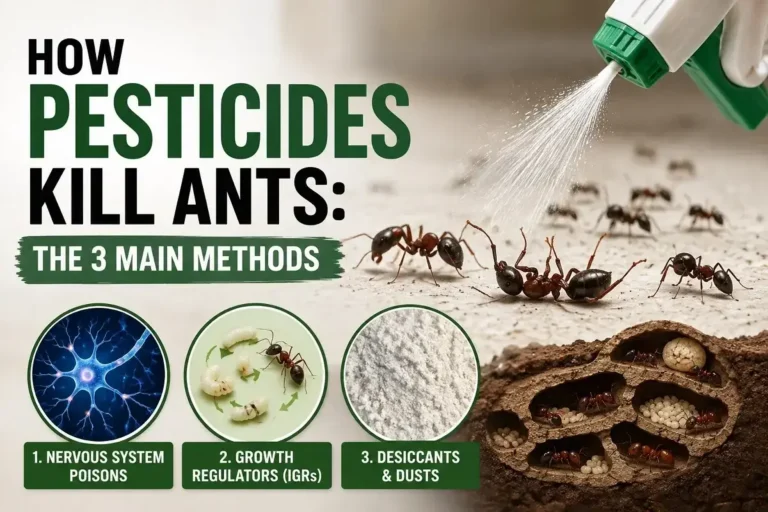
Ant bait is often more useful than repeatedly spraying workers crawling through the grass. A bait combines an attractive food with a slow-acting insecticide. Foraging ants collect it and carry or share it with other members of the colony.
The slow action is what makes bait useful. If workers die before returning to the nest, you may reduce visible activity without affecting enough of the colony to stop the problem.
For yard ant control, choose a bait specifically labeled for the ant species and outdoor area you intend to treat. Depending on the product, that may mean placing bait stations near active trails or using granular bait labeled for turf.
Best for: Several nests, recurring ant trails, or colonies that are difficult to locate individually.
Why it suits a lawn: Bait can target colony activity without requiring you to drench large areas of healthy grass with contact insecticide.
Main limitation: It takes time. Ants first need to find and accept the bait, so visible activity may continue for days or several weeks.
💡 Give the Bait Time to Travel
Avoid spraying a fast-acting insecticide directly around active bait unless the product directions specifically allow it. Killing workers too quickly can interfere with bait transfer back to the colony.
I would also avoid dumping bait directly onto a mound unless the label tells you to. Placing it where workers are actively foraging usually makes more sense because they need to pick it up willingly.
2. Target a Single Problem Nest Instead of Treating Every Blade of Grass
If only one or two colonies are causing trouble, a targeted nest treatment is usually more sensible than applying insecticide across the entire yard.
Watch the workers until you find where they enter and leave. The nest may sit beneath a mound, inside a small opening in the turf, beside a paving stone, or underneath an object along the lawn edge.
Once the nest is located, choose a product whose label specifically allows treatment of lawns or outdoor ant nests. Depending on the formulation, treatment may involve granules, dust, or liquid applied directly to the affected area.
A quick spray over the top of a mound is not necessarily enough. Underground colonies can extend beyond the visible loose soil, so the application needs to reach the nest in the way the product instructions describe.
Best for: One or a few clearly located nests.
Why it suits a lawn: Only a small part of the turf receives treatment.
Main limitation: This approach becomes less practical when ants are scattered across a large area.
One confirmed nest usually calls for one targeted treatment, not a blanket application across the lawn.
I would not treat a harmless little mound at the far edge of the yard simply because ants are present. Outdoor ants are part of the landscape, and control makes more sense when colonies create mounds, stings, repeated indoor invasions, or another real nuisance.
3. Use the Two-Step Method When Fire Ants Cover More Than One Part of the Yard
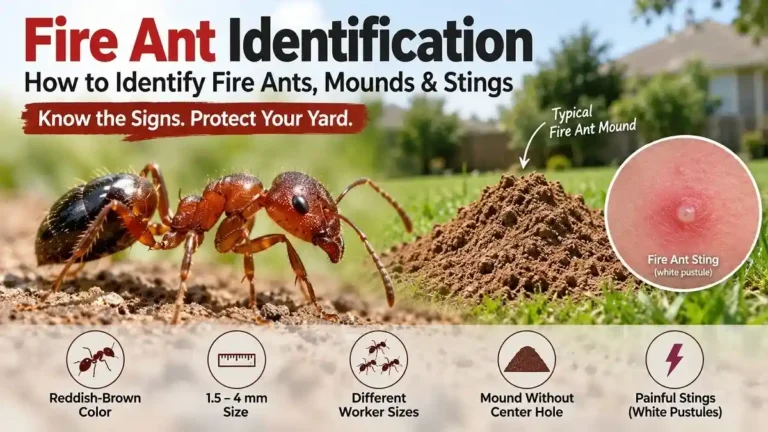
Fire ants need a more specific strategy because a lawn can contain several colonies, including smaller ones that have not yet produced large, obvious mounds.
For widespread fire ant activity, a well-established approach combines broadcast bait with targeted treatment of the mounds that remain active afterward.
First, apply a granular bait specifically labeled for fire ants and broadcast lawn use. Foraging workers collect it and carry it into colonies throughout the treatment area. After the bait has had time to work, individual problem mounds that remain can be treated separately with an appropriate mound product.
This makes more sense than immediately drenching every visible mound, because the biggest mound is not necessarily the only colony in the yard.
Best for: Multiple confirmed fire ant colonies across a lawn.
Why it suits a lawn: The bait handles broad colony pressure, while direct treatment is reserved for the remaining problem spots.
Main limitation: Correct identification matters. Not every reddish or mound-building ant is a fire ant, so use this guide to common ant types before choosing a species-specific treatment.
Use an appropriately labeled fire-ant bait across the affected lawn while workers are actively foraging.
After the bait has had time to work, spot-treat the troublesome mounds that remain active.
Do not assume that applying extra bait will work better. Fire-ant baits can be used at relatively low rates, so label directions matter more than how much product looks sufficient to the eye.
Weather also matters. Many granular baits are a poor choice immediately before heavy rain or irrigation, so check the product directions before application and review the best time to treat ants for seasonal timing.
4. Remove the Food and Water That Keep Ant Trails Active
Some yard ant problems stay active because the landscape keeps providing easy food and moisture. In those cases, killing ants without correcting the attractant can turn into an endless cycle.
Check the areas around the lawn for:
- Leaking faucets, hoses, or irrigation fittings
- Pet food left outdoors
- Open or dirty trash containers
- Fallen or overripe fruit
- Food residue around grills and patios
- Plants covered with aphids, scales, or other honeydew-producing insects
Honeydew is especially easy to overlook. Ants often travel onto shrubs, trees, and garden plants because sap-feeding insects produce a sugary liquid they can feed on. If ants are moving up and down one plant all day, inspect the stems and undersides of leaves instead of assuming the lawn is the main source.
Best for: Ants repeatedly foraging around patios, fruit trees, shrubs, bins, pet bowls, or foundation areas.
Why it suits a lawn: Removing attractants can reduce activity without applying pesticide to healthy grass.
Main limitation: This will not immediately eliminate an established underground colony.
Before you treat more grass, check for:
Leaking outdoor water sources
Food or pet bowls left outside
Fallen fruit and food residue
Honeydew-producing pests on plants
5. Fix Thin, Bare Lawn Areas That Make Ant Mounds Easier to Establish
A healthy lawn will not make every outdoor ant disappear, but turf condition can influence how noticeable some mound-forming species become.
Thin grass and exposed soil leave more open ground where nesting activity and displaced soil are easy to establish. Maintaining fuller turf can therefore help reduce recurring nuisance mounds after the active colony problem has been brought under control.
Repair bare patches where practical, use a mowing height suited to your grass type, and correct drainage or irrigation problems based on what the lawn actually needs.
The goal is healthy turf, not constantly wet soil. Overwatering can weaken grass and create other lawn problems without reliably solving an ant infestation.
Also remove unnecessary rotting timber, scrap wood, and deteriorating landscape materials near lawn edges. If large ants repeatedly appear around damp wood instead of soil mounds, the problem may involve carpenter ants rather than an ordinary lawn-nesting species.
Best for: Recurring nuisance mounds in thin or patchy grass and long-term prevention.
Why it suits a lawn: The method improves turf condition instead of adding another pesticide treatment.
Main limitation: Better lawn care will not quickly eliminate an established colony that already needs direct control.
Choose the Treatment Based on What You Actually See in the Yard
| What You See | Best Starting Point | Why |
|---|---|---|
| One obvious nest | Targeted nest treatment | Avoids treating healthy turf unnecessarily |
| Several colonies or trails | Slow-acting bait | Can reach more than the workers you see |
| Widespread fire ants | Two-step fire ant treatment | Targets both widespread colonies and remaining mounds |
| Ants around food, plants, or wet areas | Remove attractants first | May reduce foraging without treating the grass |
| Recurring mounds in thin turf | Improve lawn condition after control | Helps reduce easy nesting areas over time |
If I had one small nest in otherwise healthy grass, I would start with the nest rather than the entire lawn. If ants were appearing everywhere, bait would make more sense. The size and location of the problem should drive the treatment—not the desire to use the strongest option available.
Skip These Popular Ant Remedies If Protecting the Grass Is the Priority
Some household remedies can kill individual ants, but that does not make them reliable or lawn-safe colony treatments.
Boiling water: It can kill ants and brood that it reaches, but it can also burn grass roots and nearby plants. That trade-off makes it a poor choice in the middle of healthy turf.
Strong soap or detergent mixtures: Household cleaning products are not automatically suitable lawn insecticides. Concentrated mixtures may injure vegetation, while killing workers on contact does not prove the nest has been eliminated.
Vinegar: Strong acidic solutions can damage desirable grass and plants. Temporary disappearance of workers is not the same as colony control.
Baking soda, baby powder, coffee grounds, grits, or artificial sweeteners: These remedies appear frequently online, but popularity is not the same as reliable evidence that they will eliminate an established lawn colony.
Repeated broad spraying: Contact sprays may kill visible ants quickly, but unnecessary broad-spectrum treatment can also expose beneficial insects and increase the chance of pesticide moving away from the target area.
Locate the actual colony.
Use products labeled for turf.
Treat only the area that needs control.
Boiling water on healthy grass
Off-label pesticide use
Blanket treatment for one minor nest
Make the Yard Less Attractive After the Colony Is Under Control
Even successful treatment cannot keep an outdoor property permanently free of ants. New colonies can establish later, so prevention is mainly about reducing the conditions that repeatedly bring nuisance ants into high-use parts of the yard.
- Repair leaking outdoor faucets and irrigation fittings.
- Clean food residue around grills, patios, and outdoor eating areas.
- Keep trash containers closed and reasonably clean.
- Remove fallen fruit and unnecessary decaying wood.
- Check plants for aphids and other honeydew-producing insects.
- Maintain healthy turf and repair bare areas where practical.
- Watch lawn edges, paving, and foundation areas for renewed trails.
If ants are repeatedly entering the house, manage the outdoor source while also following these steps to prevent ants from entering your home. Treating grass alone will not solve an open route into the building.
Call a Professional When the Lawn Problem Is Bigger Than a Few Nests
DIY control is reasonable for many ordinary lawn ant problems, but professional help makes sense when colonies keep returning despite correctly applied treatment, you cannot locate the source of heavy activity, or stinging ants make the yard difficult to use safely.
You should also investigate further if large ants repeatedly travel between the lawn and damp or damaged wood around the home. That may point to carpenter ants rather than a normal soil-nesting lawn colony.
A pest professional can identify the ant, determine where the colony is actually located, and choose between bait, direct nest treatment, or another targeted approach without treating the entire property unnecessarily.
Final Thoughts
You do not need to turn the whole lawn into a treatment zone just because ants are present. The better approach is to identify which colonies are actually causing a problem and use the smallest effective treatment that can reach them.
For one known nest, target the nest. For scattered colonies, consider bait. For widespread fire ants, use a species-specific strategy. Then fix the food, moisture, or turf conditions that are helping the problem return.
That keeps the focus where it belongs: controlling troublesome ants while protecting the lawn you are trying to save.

Evan Brooks
Evan Brooks enjoys writing about ants and the way they live, build colonies, and adapt to different environments. His articles cover common ant species, nests, queens, seasonal activity, and everyday questions. He believes simple...
View all guides →