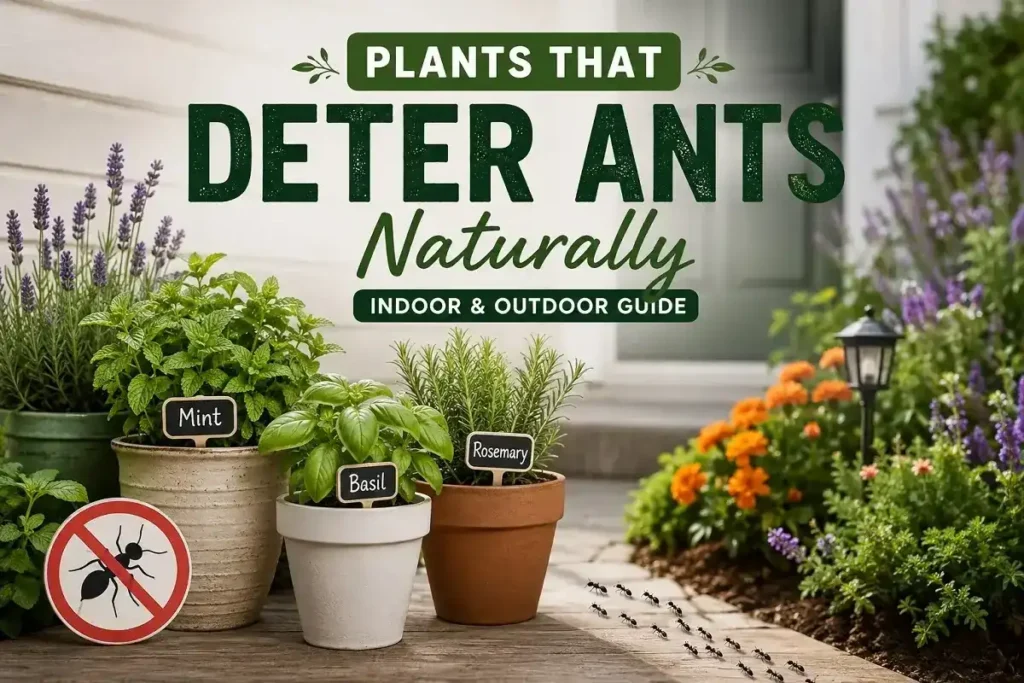
Plants That Deter Ants Naturally: Indoor & Outdoor Guide
Plants that deter ants work best when placed the right way. See the top indoor and outdoor picks, where to plant them, and what to do if ants return.

In this guide
- How Do Plants Keep Ants Away?
- Best Plants to Keep Ants Out of Your House
- Best Plants to Keep Ants Out of Your Yard
- Exactly Where Should You Place Them?
- Do These Plants Still Work in Cold Climates?
- What Kills Ants Without Harming Your Plants?
- What Is an Ant’s Worst Natural Enemy?
- Common Mistakes to Avoid
- When Plants Aren’t Enough
- Frequently Asked Questions
- Final Thoughts
Yes, plants like mint, lavender, and rosemary can help keep ants out of your home and yard. They work by masking the scent trails ants use to find food and enter through doors, windows, and cracks in your foundation. Indoors, a few potted herbs on a windowsill work best. Outdoors, planting them near entry points and garden borders creates a wider barrier.
They won’t remove a colony that’s already inside your walls. But they’re a solid first layer of defense you can add today, without chemicals near your kitchen or kids’ play area.
This guide covers the best plants for indoors, the best for outdoors, exactly where to place them, and what to do if ants keep coming back anyway.
How Do Plants Keep Ants Away?
Ants find food by following a pheromone trail — a chemical scent path laid down by other ants in the colony. Strong-smelling plants release essential oils that overpower this scent, so ants can’t lay down or follow a clear trail.
This is why placement matters more than the plant itself. A pot of mint sitting far from your door won’t do much. The same pot right next to the doorway can block ants before they get inside.
Best Plants to Keep Ants Out of Your House
These are the plants that actually make sense indoors — they tolerate low light, grow in small pots, and won’t take over your kitchen counter.
| Plant | Why It Works | How to Use It Indoors |
|---|---|---|
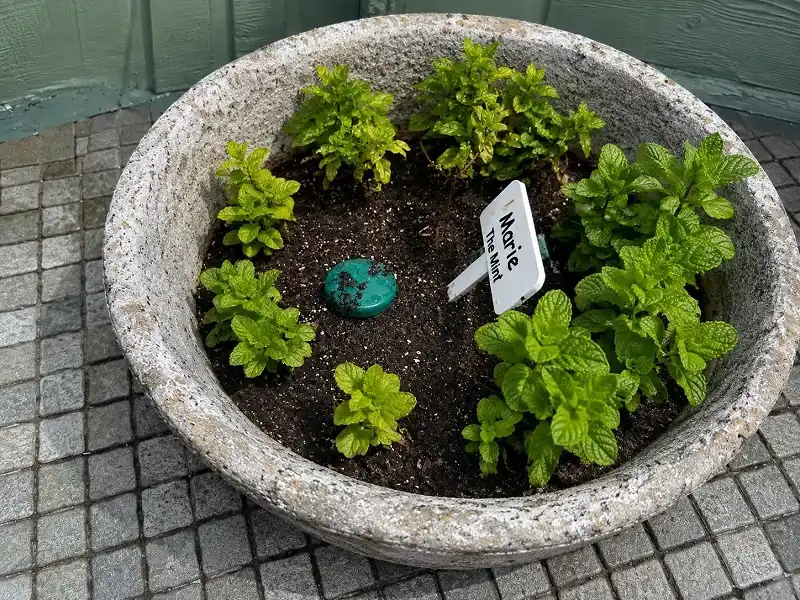
| Mint (peppermint/spearmint) | Menthol scent masks pheromone trails | Pot on windowsills near doors, or by the kitchen |
| Basil | Pungent oils mask food smells that attract ants | Small pot on the kitchen counter |
| Bay laurel | Dried leaves release oils that form a scent barrier | Loose leaves in pantry corners or drawers |
| Rosemary | Woody, oil-rich scent overwhelms an ant’s sense of smell | Pot near the kitchen entry or a sunny window |
| Lavender | Floral scent confuses scout ants without smelling harsh indoors | Pot near indoor windows or entryways |
A quick note on mint: it spreads through underground runners even in a pot, so keep it in its own container and trim it back regularly.
Best Plants to Keep Ants Out of Your Yard
Outdoors, you have more room to work with, so these plants can go in beds, borders, or containers near your patio.
| Plant | Why It Works | Best Outdoor Spot | Grows Well In |
|---|---|---|---|
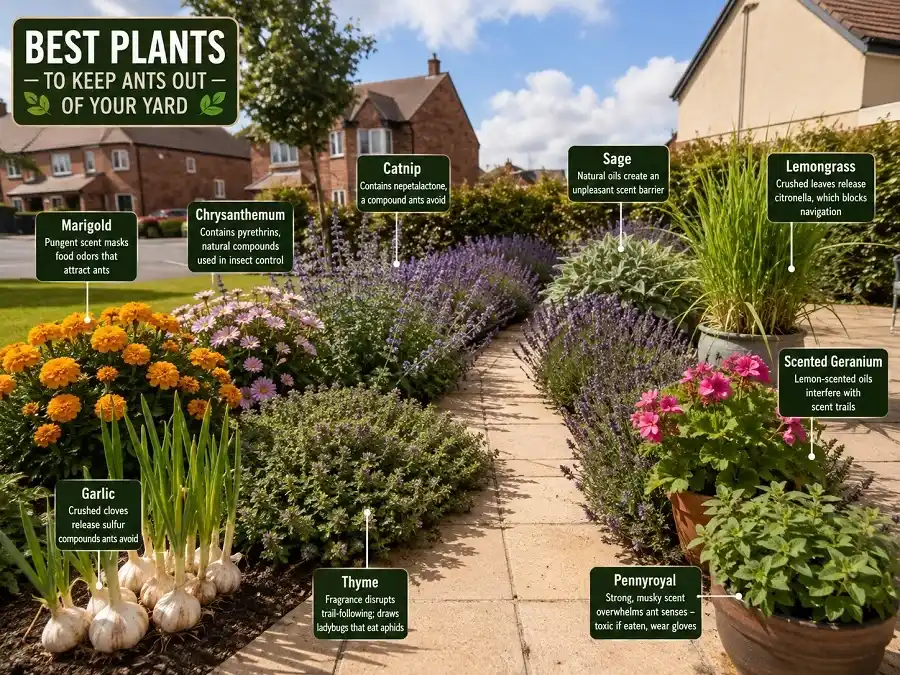
| Thyme | Fragrance disrupts trail-following; also draws ladybugs, which eat aphids | Ground cover along paths | Zones 5–9 |
| Catnip | Contains nepetalactone, a compound ants avoid | Garden borders | Zones 3–7 |
| Sage | Natural oils create an unpleasant scent barrier | Garden borders | Zones 4–10 |
| Lemongrass | Crushed leaves release citronella, which blocks navigation | Near patios and entryways | Zones 10–12, or annual in cooler zones |
| Garlic | Crushed cloves release sulfur compounds ants avoid | Near ant trails (cloves must be crushed) | Zones 4–9 |
| Marigold | Pungent scent masks food odors that attract ants | Around vegetable beds | Most zones (annual) |
| Chrysanthemum | Contains pyrethrins, natural compounds used in some insect-control products | Garden beds | Zones 5–9 |
| Scented geranium | Lemon-scented oils interfere with scent trails | Patio containers | Zones 9–11, or potted |
| Pennyroyal | Strong, musky scent overwhelms ant senses — toxic if eaten, wear gloves | Patios, in a pot only | Zones 6–9 |
Not every ant species reacts the same way. Fire ants, in particular, often ignore mild deterrents that work on smaller house-invading species. If you’re not sure what kind of ant you’re dealing with, our guide to common ant species can help you identify it first.
Exactly Where Should You Place Them?
Placement is what makes the difference between a plant that helps and one that just sits there.
- Front and back doors – Potted mint, rosemary, or lavender right next to the entrance blocks the most common way ants get in.
- Window sills – Both indoors and outdoors, ants often use window gaps as entry points. A small pot on either side helps.
- Foundation cracks and gaps – Plant outdoor herbs like thyme or catnip close to any visible gaps in your foundation or siding.
- Kitchen counters – Basil or bay leaves near food prep areas add a light barrier where ants are usually heading anyway.
- Garden borders – Marigolds or thyme planted around vegetable beds keep ants from using your garden as a route toward your house.
Do These Plants Still Work in Cold Climates?
Some of these plants die back outdoors in colder regions. Pennyroyal, lemongrass, and scented geraniums won’t survive a zone 3 or 4 winter.
For cold climates, the hardiest options are mint, catnip, sage, and chrysanthemums — all of these tolerate zones as low as 3. If you want to keep tender plants like rosemary or lemongrass around, grow them in pots and bring them indoors before the first frost, then set them back outside once ants become active again in spring.
What Kills Ants Without Harming Your Plants?
Plants alone won’t remove an active nest. A few plant-safe methods work well alongside them.
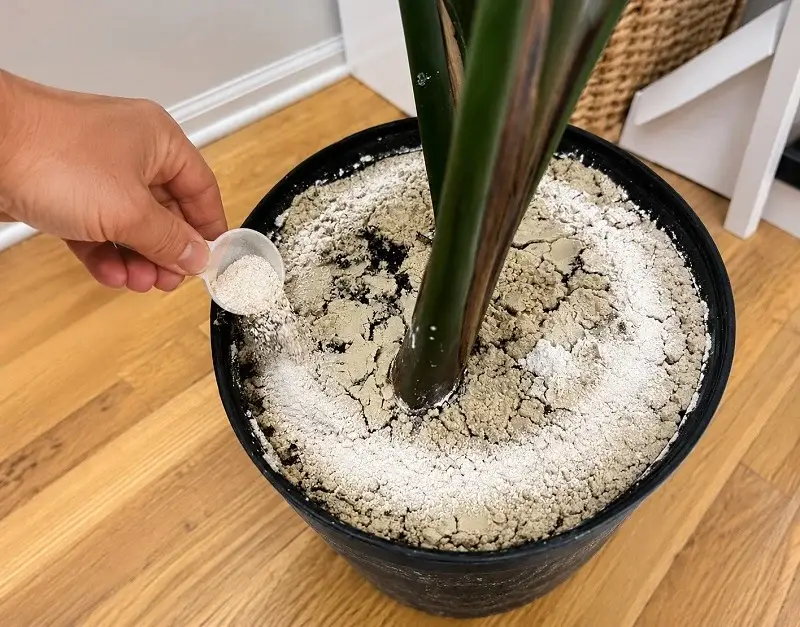
Food-grade diatomaceous earth dehydrates ants on contact and is safe to sprinkle around plant roots. A simple borax-and-sugar bait, placed away from stems, draws ants in and can kill the colony over time. A neem oil soil drench disrupts ants without harming earthworms or nearby roots.
Used coffee grounds also help. Sprinkled in a thin layer around plant bases, they mask scent trails, though they work better as a mild deterrent than a full solution. Replace them every couple of weeks.
What Is an Ant’s Worst Natural Enemy?
Ants have several natural predators, including ladybugs, lacewings, ground beetles, and spiders. Birds and certain parasitic wasps also feed on ants or their larvae.
Encouraging these predators helps with more than just ants. Many of them, especially ladybugs and lacewings, also eat aphids — the same insects ants often protect and feed on in your garden.
Common Mistakes to Avoid
Planting whole garlic bulbs. Garlic only repels ants once the cloves are crushed or cut open. An intact bulb sitting in the soil releases very little scent.
Ignoring aphids on nearby plants. Ants often guard aphid colonies because aphids produce a sugary waste called honeydew, which ants feed on. If you see ants climbing a plant, check for aphids first — treating them often reduces ant activity on its own.
Expecting plants to remove an existing colony. Repellent plants work best for prevention. Once ants have already built a nest nearby, plants alone usually won’t clear it out.
When Plants Aren’t Enough
If ants keep coming back despite doing everything above, or you’re dealing with fire ants or a large outdoor nest, it’s worth taking the next step. Getting rid of an ant colony for good usually means finding the nest and treating it directly, not just the ants you see on the surface.
Timing also matters. Spring and early fall tend to be the most effective windows for treating an active colony, since that’s when ant activity is highest. Our guide on choosing the right season to treat ants explains why.
If the ants you’re seeing indoors are large and appear near wood trim or window frames, they may not be responding to garden plants at all. Carpenter ants tunnel through damp or damaged wood instead of foraging for food the way most garden ants do. Our carpenter ant guide explains what to check for.
If the problem feels bigger than a weekend project, it helps to know what professional treatment usually costs before deciding. Our breakdown of ant exterminator pricing covers that.
Frequently Asked Questions
What do ants hate the most naturally?
Ants tend to avoid strong-smelling plants and substances, including peppermint, lavender, rosemary, cinnamon, vinegar, and citrus peels. These scents interfere with the pheromone trails ants use to find food.
What is an ant’s worst natural enemy?
Ladybugs, lacewings, ground beetles, and spiders are among the most common natural predators of ants. Birds and some parasitic wasps also prey on ant colonies.
What kills ants but not plants?
Food-grade diatomaceous earth, a borax-and-sugar bait placed away from stems, and a diluted neem oil soil drench all kill ants without harming most garden plants.
Do coffee grounds keep ants away from plants?
Used coffee grounds can help mask ant scent trails when sprinkled around plant bases, but they work as a mild deterrent rather than a way to eliminate ants completely.
Are there native plants that deter ants?
Some, though options are limited compared to common garden herbs. Mountain mint (Pycnanthemum), native to much of North America, has a scent similar to peppermint and works as a native alternative.
Final Thoughts
The plants that actually help depend on where you use them. A few potted herbs by your doors and kitchen handle the indoor side. A wider ring of outdoor plants near your foundation and garden beds handles the rest. Together, they’re a practical first layer of defense — not a full solution, but a real one.
If ants keep returning despite your best efforts, or you’re dealing with black ants inside your house or a stubborn outdoor nest, combining these plants with safe baits — or targeted treatment when needed — gives you the best long-term result.

Evan Brooks
Evan Brooks enjoys writing about ants and the way they live, build colonies, and adapt to different environments. His articles cover common ant species, nests, queens, seasonal activity, and everyday questions. He believes simple...
View all guides →